
Loading, please wait...
LOT 0718
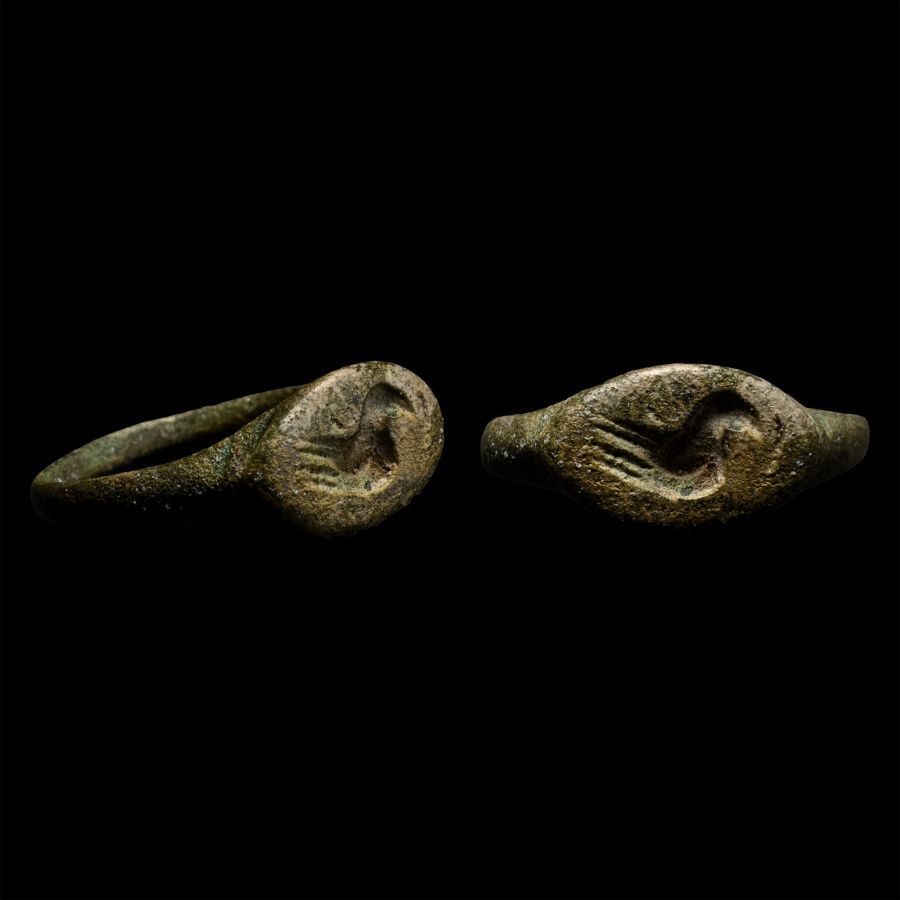
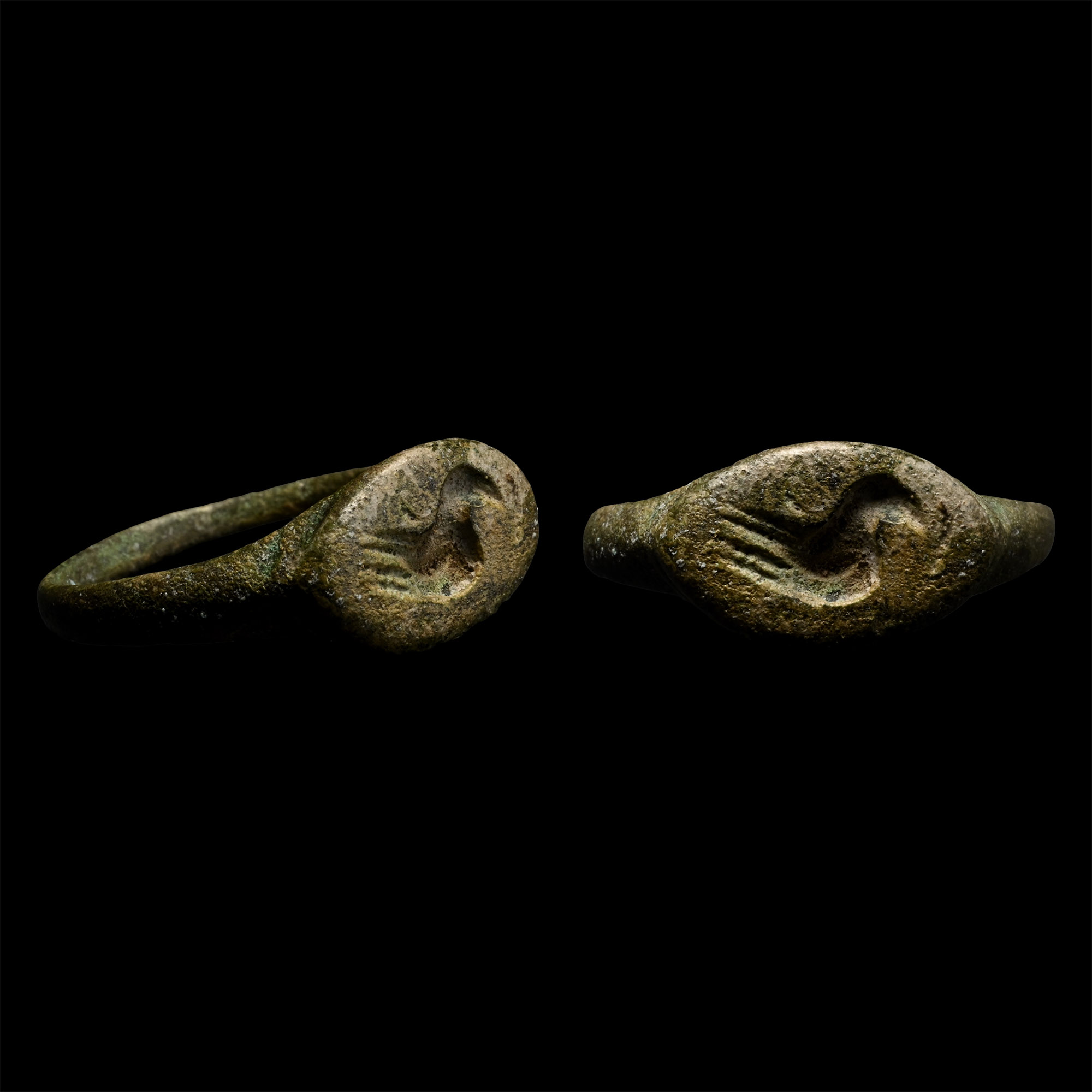
Roman Bronze Ring with Bird
4TH CENTURY A.D.
1 in. (3.98 grams, 24.21 mm overall, 19.16 mm internal diameter (approximate size British S, USA 9, Europe 20, Japan 19)).
Comprising a slender hoop and a raised lentoid-shaped bezel with a standing bird, probably a dove. [No Reserve]
ProvenanceAcquired on the UK and EU art market before 2000.
From the private collection of a Surrey, UK, gentleman.
See Bequest, F., Catalogue of the finger rings Early Christian, Byzantine, Teutonic, Mediaeval and later, London, 1912, no.15, for the typology.
FootnotesA considerable proportion of rings of the Late Roman Christian Empire are signets, with portraits, names or monograms, and emblems such as the cross, the fish, the dove, i.e. early Christian symbols, and most of these have the designs cut in a metal bezel.
CONDITIONTimeLine Auctions follows a vetting process to ensure the authenticity and legality of all items, reinforcing our commitment to integrity and responsible trading. Each antiquity, antique, and coin lot undergoes thorough examination by a vetting committee of at least ten external specialists, professional trade association members, scientists, and archaeologists: Our Vetting Process
AUCTIONS:
TimeLine is a leading auction house specialising in antiquities, ancient art, collectables, natural history, coins, medals, and books. Our auctions offer museums, collectors, historians, and enthusiasts the opportunity to acquire unique and historically significant pieces.
-

Roman Amethyst Gemstone of Jason and the Golden Fleece
1st-2nd century A.D.Sold for (Inc. bp): £7,150
Plano-convex type with incuse image of naked Jason advancing beneath an overhanging tree with Golden Fleece suspended in its branches; supplied with a museum-quality impression. 0.79 grams, 13 mm
Private English collection, formed between the late 1970s and early 1990s. Private collection, London, UK. -
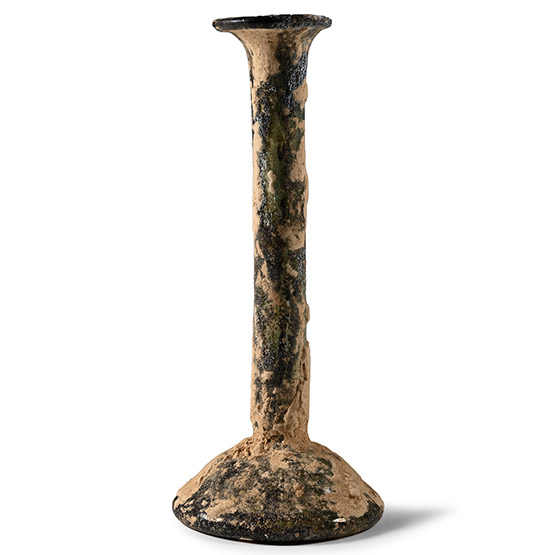
Roman Glass Vessel
1st-3rd century A.D.Sold for (Inc. bp): £65
Tall thin translucent pale green vessel with wide foot and dimpled base, tapering stem and flared rim. 27.6 grams, 12.5 cm
From a London, UK, collection, 1990s.
Similar bottles were produced in Roman Cyprus. Hayes had divided the Cypriot products into three classes on the basis of the character of the glass. This example belongs to the third class, i.e. ‘very thin-walled pieces in a pale fabric, almost colourless in parts’. -
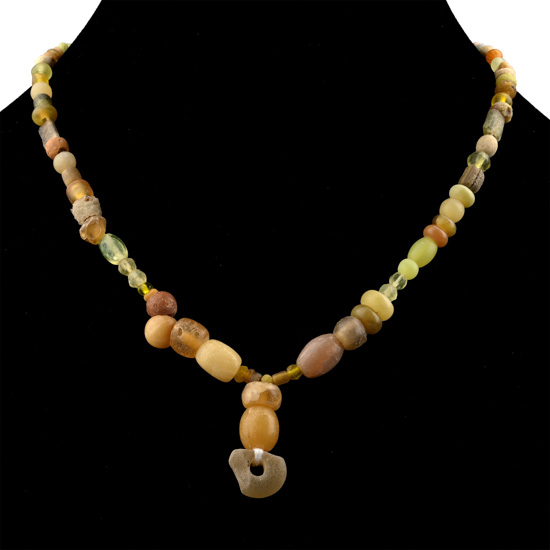
Roman and Other Yellow Glass Bead Necklace String
1st-4th century A.D. and laterSold for (Inc. bp): £52
Composed mainly of oblate, spherical, and other beads, the central feature composed of three larger beads; restrung. 19.7 grams, 38.3 cm
From London, UK, gallery collection, 1990s.
