
Loading, please wait...
LOT 0736
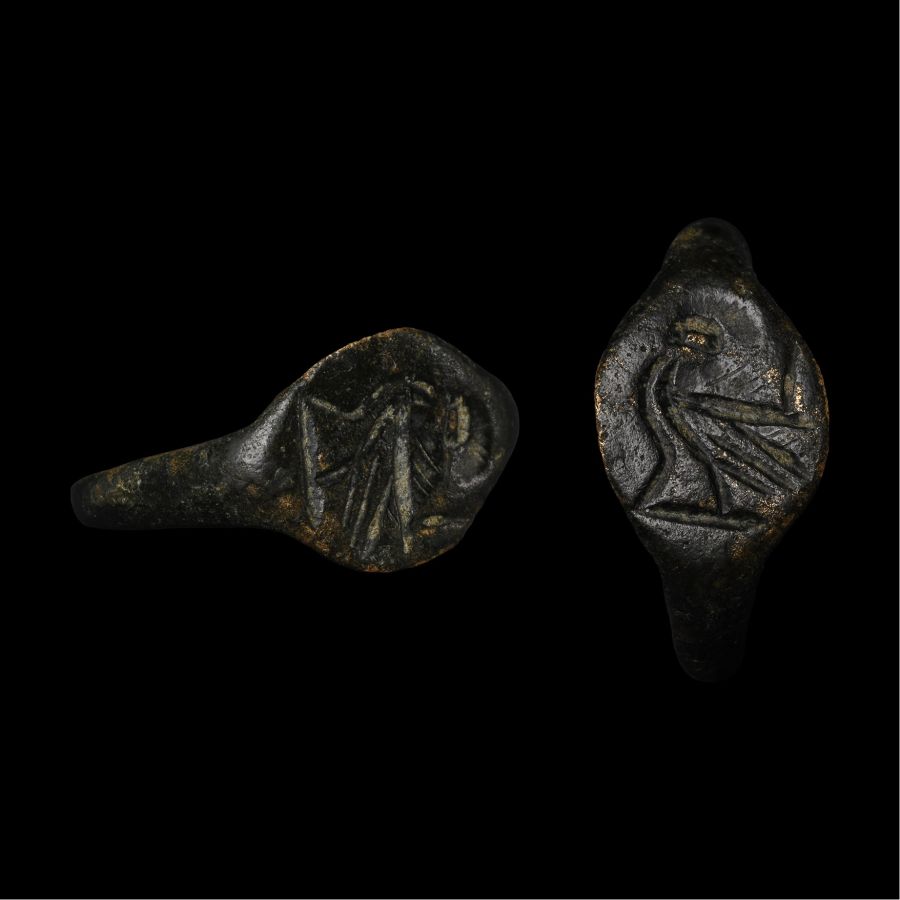
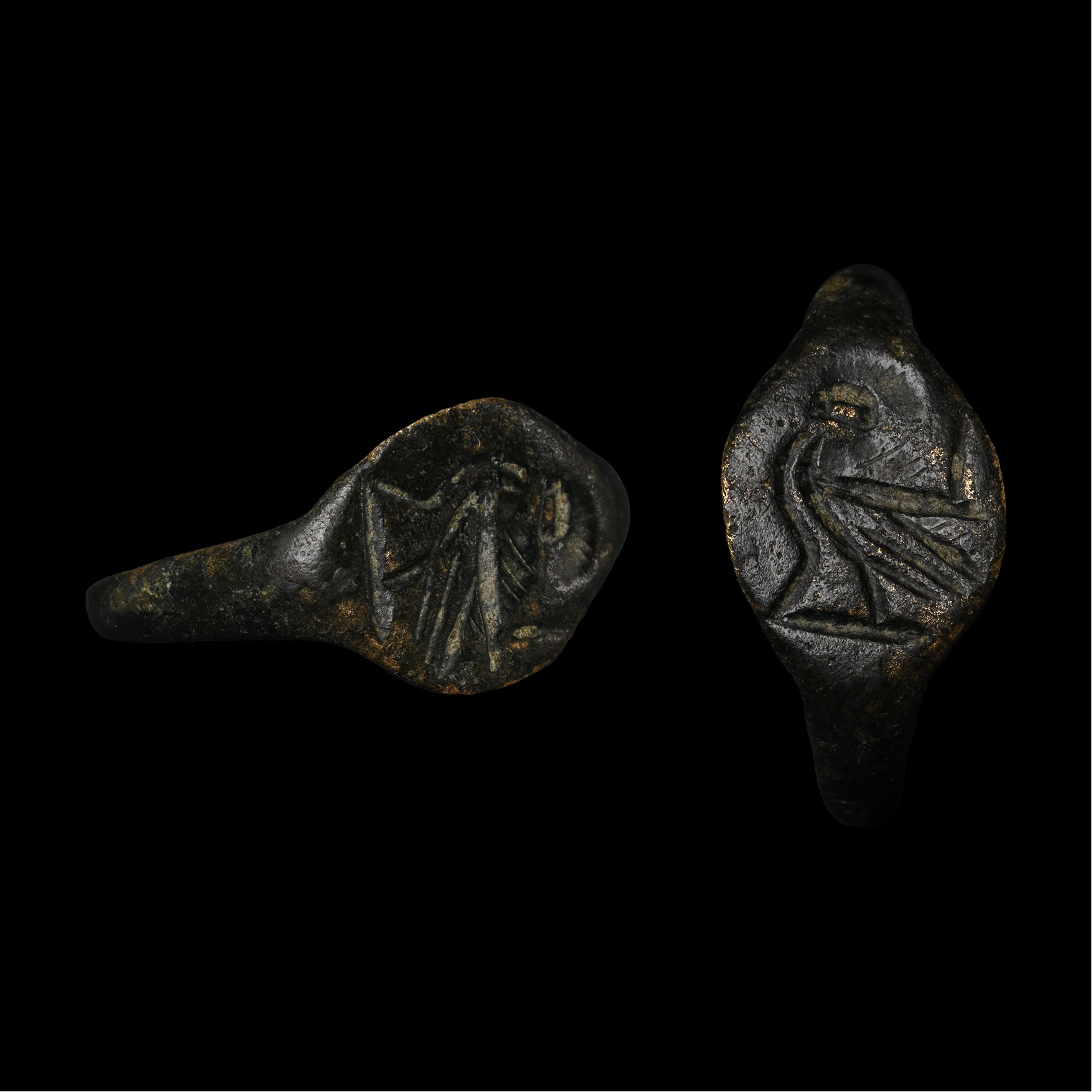
Roman Bronze Ring with Bird
1ST CENTURY B.C.-1ST CENTURY A.D.
7/8 in. (2.45 grams, 22.07 mm overall, 18.10 mm internal diameter (approximate size British M, USA 6, Europe 12.46, Japan 12)).
Ellipsoid bezel with incuse figure of a perching bird in profile. [No Reserve]
ProvenanceUK private collection before 2000.
Acquired on the UK art market.
Property of a London gentleman.
TimeLine Auctions follows a vetting process to ensure the authenticity and legality of all items, reinforcing our commitment to integrity and responsible trading. Each antiquity, antique, and coin lot undergoes thorough examination by a vetting committee of at least ten external specialists, professional trade association members, scientists, and archaeologists: Our Vetting Process
AUCTIONS:
TimeLine is a leading auction house specialising in antiquities, ancient art, collectables, natural history, coins, medals, and books. Our auctions offer museums, collectors, historians, and enthusiasts the opportunity to acquire unique and historically significant pieces.
-

Roman Bronze Horse Whorl Brooch
3rd-4th century A.D.Sold for (Inc. bp): £72
With horse-head decoration to each arm, each head with punched ring-and-dot eye, and a similar motif to the centre; catchplate and hinged pin to verso. 11.6 grams, 32 mm
Acquired on the London art market in the late 1980s-1990s. From the family collection of an East London, UK, gentleman. -

Roman Glass Janus Flask
Circa 1st-2nd century A.D.Estimate: £1,000 - 1,400 (+bp*)
Opening Bid: £556
Formed as two addorsed heads with a short cylindrical neck and flaring mouth; both heads with abundant hair framing the face. 57 grams, 99 mm high
Formerly in North American collection, 1990s. Ex Lyon and Turnbull, Edinburgh, Scotland. -

Late Roman Green Glass Vessel
4th-6th century A.D.Sold for (Inc. bp): £46
Bulbous in profile with dimpled underside, blown construction, everted rolled rim. 13.2 grams, 64 mm
Acquired from Allan Cherry, Bournemouth, UK, 2006. Ian Wilkinson collection, Nottinghamshire, UK.
Similar flasks and bottles were produced in Roman Asia Minor; this is a typical example of a type found in all corners of the empire. These were decorated in many ways including applying additional pieces of glass, by cutting the surface, or (as in our case) by moulding the vessels when they were blown.
