
Loading, please wait...
LOT 0797
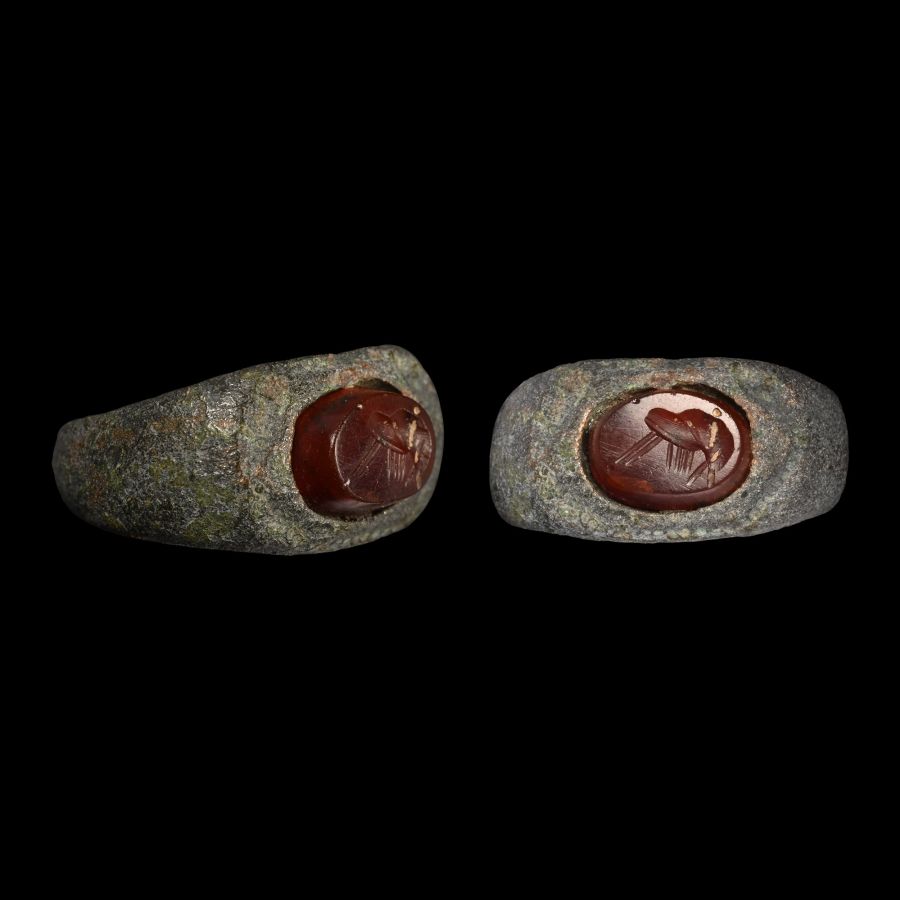
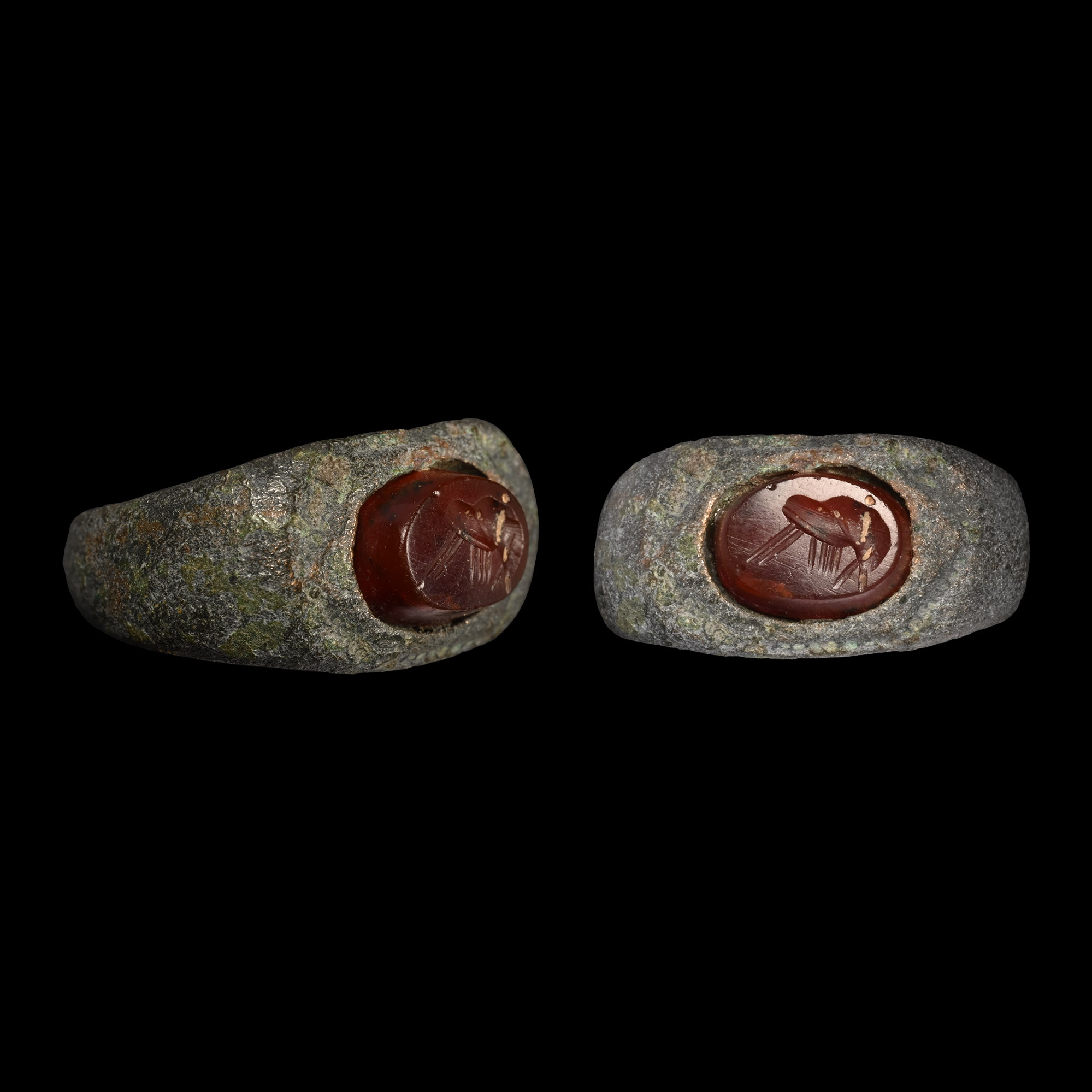
Roman Bronze Ring with Bird Gemstone
2ND-3RD CENTURY A.D.
3/4 in. (4.77 grams, 20.24 mm overall, 16.39 mm internal diameter (approximate size British J, USA 4 3/4, Europe 8.69, Japan 8)).
With inset carnelian gemstone, incuse profile bird motif.
ProvenanceEx German art market, 2000s.
Acquired from an EU collector living in London.
From the collection of Surrey, UK, gentleman.
This lot is accompanied by an illustrated lot declaration signed by the Head of the Antiquities Department, Dr Raffaele D’Amato.
Cf. Chadour, A.B., Rings. The Alice and Louis Koch Collection, volume I, Leeds, 1994, item 318, for type.
CONDITIONTimeLine Auctions follows a vetting process to ensure the authenticity and legality of all items, reinforcing our commitment to integrity and responsible trading. Each antiquity, antique, and coin lot undergoes thorough examination by a vetting committee of at least ten external specialists, professional trade association members, scientists, and archaeologists: Our Vetting Process
AUCTIONS:
TimeLine is a leading auction house specialising in antiquities, ancient art, collectables, natural history, coins, medals, and books. Our auctions offer museums, collectors, historians, and enthusiasts the opportunity to acquire unique and historically significant pieces.
-
Romano-British Buffware Mortaria from Nene Valley
2nd-3rd century A.D.Sold for (Inc. bp): £780
With broad squat body, lip inside the curved rim, ribbed pouring lip; repaired. 2.41 kg, 34.5 cm wide
Found Nene Valley, Peterborough, UK. From an old English collection. Acquired from Helios Gallery in 2011. Ian Wilkinson collection, Nottinghamshire, UK, formed since 1985. This lot is accompanied by an illustrated lot declaration signed by the Head of the Antiquities Department, Dr Raffaele D’Amato. -
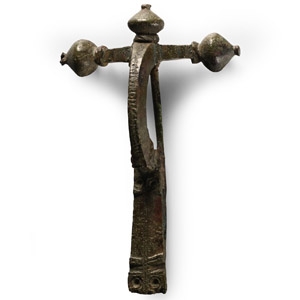
Roman Bronze Crossbow Brooch
4th century A.D.Sold for (Inc. bp): £111
With onion knop finials, deep bow, stepped junction with foot, trapezoidal foot with ring-and-dot motifs and integral catch; hinged pin to reverse. 17.4 grams, 59 mm
Acquired from Coincraft, London, UK. From the private collection of Kenneth Machin (1936-2020), Buckinghamshire, UK; his collection of antiquities and natural history was formed since 1948; thence by descent. Accompanied by an original certificate of authenticity from Coincraft. This lot is accompanied by an illustrated lot declaration signed by the Head of the Antiquities Department, Dr Raffaele D’Amato. -
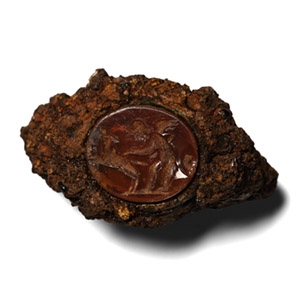
Roman Carnelian Gemstone with Cupid and Dog
2nd-3rd century A.D.Sold for (Inc. bp): £169
Fragment of iron hoop and bezel, inset carnelian cloison with intaglio scene of a putto restraining a barking dog. 2.49 grams, 22 mm
From the Fadel family collection, London, UK, 1970s. This lot is accompanied by an illustrated lot declaration signed by the Head of the Antiquities Department, Dr Raffaele D’Amato.
