
Loading, please wait...
LOT 0833
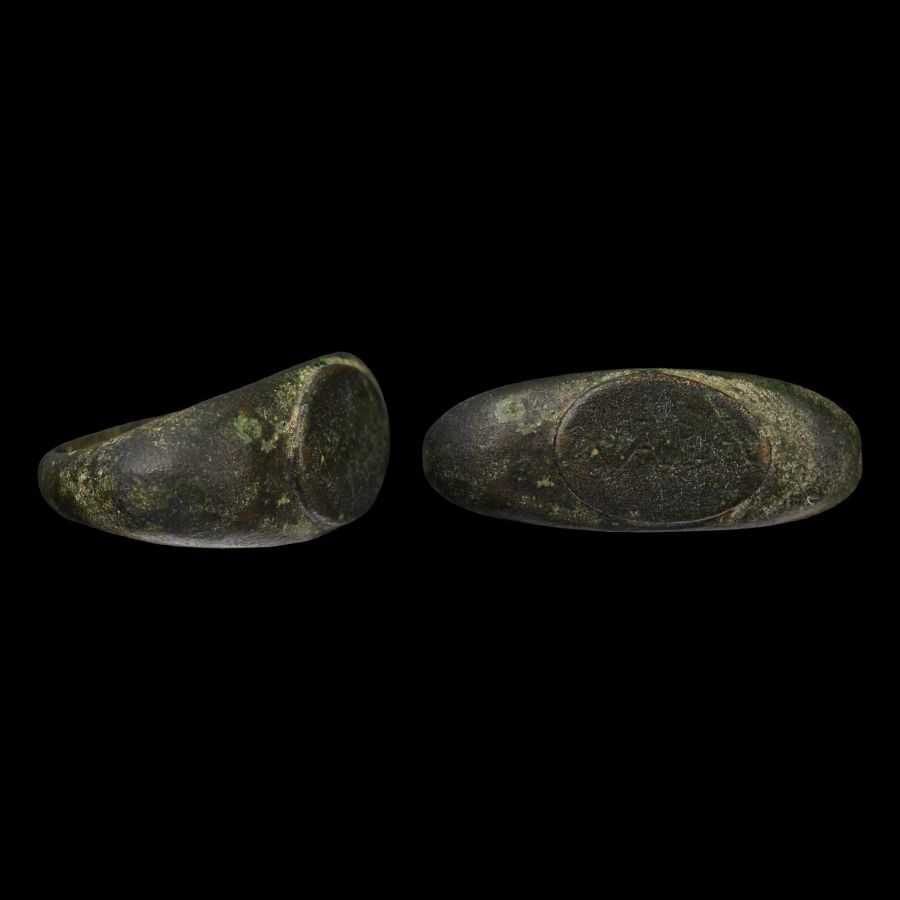
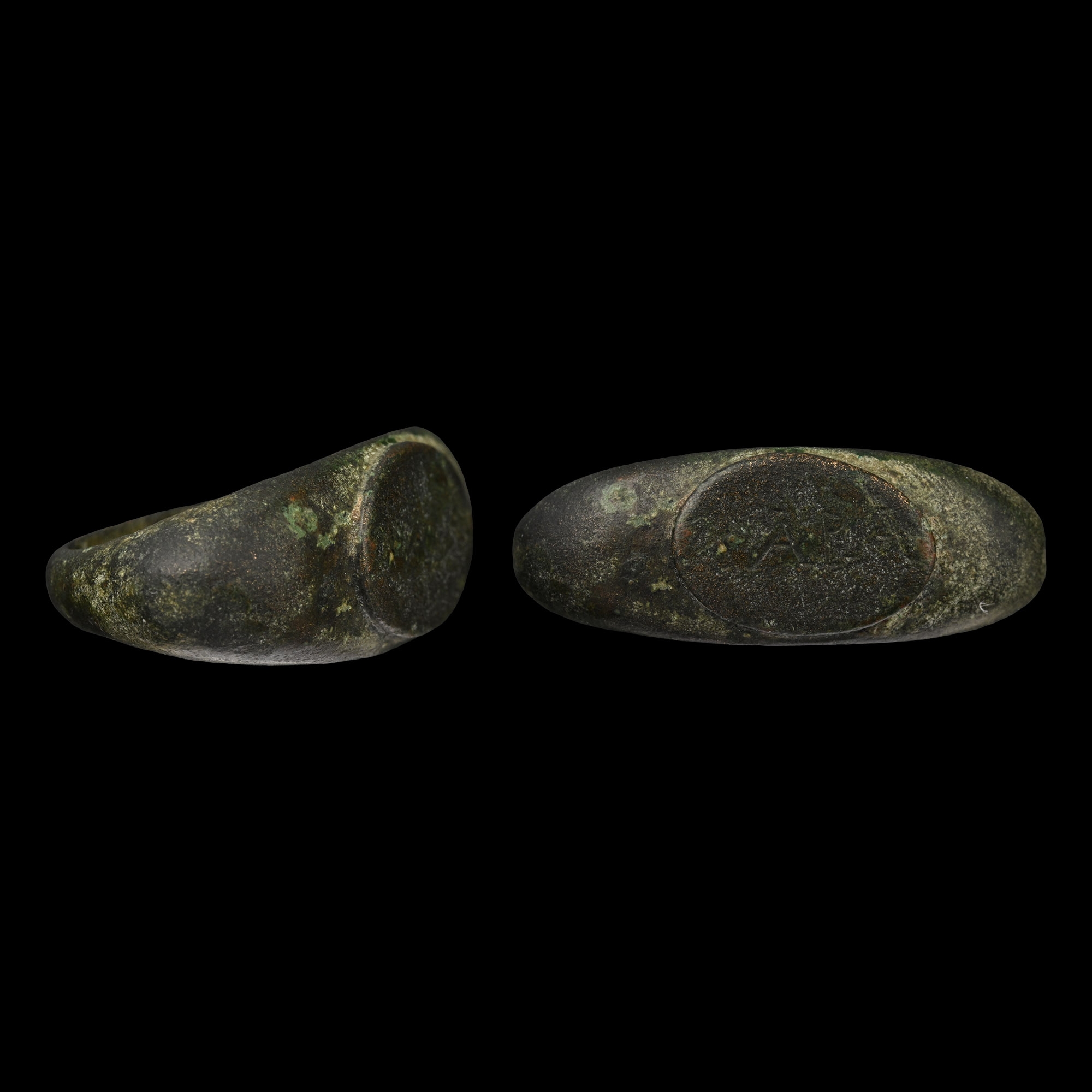
Roman Bronze Ring with APA
2ND-3RD CENTURY A.D.
1 in. (7.43 grams, 26.67 mm overall, 18.25 x 13.32 mm internal diameter (approximate size British H, USA 3 3/4, Europe 6.18, Japan 6)).
Keeled hoop with angled shoulders, oval bezel with incised legend 'APA[I]', probably an abbreviated personal name. [No Reserve]
ProvenanceAcquired on the London art market in the late 1980s-1990s.
From the family collection of an East London, UK, gentleman.
This lot is accompanied by an illustrated lot declaration signed by the Head of the Antiquities Department, Dr Raffaele D'Amato.
TimeLine Auctions follows a vetting process to ensure the authenticity and legality of all items, reinforcing our commitment to integrity and responsible trading. Each antiquity, antique, and coin lot undergoes thorough examination by a vetting committee of at least ten external specialists, professional trade association members, scientists, and archaeologists: Our Vetting Process
AUCTIONS:
TimeLine is a leading auction house specialising in antiquities, ancient art, collectables, natural history, coins, medals, and books. Our auctions offer museums, collectors, historians, and enthusiasts the opportunity to acquire unique and historically significant pieces.
-
.jpg)
Roman Silver-Gilt Military Mount with Mars Ultor
2nd century A.D.Sold for (Inc. bp): £2,210
D-shaped plaque with bust modelled in the round with openwork foliage to the border. 18.79 grams, 32 mm
UK private collection, acquired in New York in the 1980s. This lot has been cleared against the Art Loss Register database, and is accompanied by an illustrated lot declaration signed by the Head of the Antiquities Department, Dr Raffaele D'Amato. -
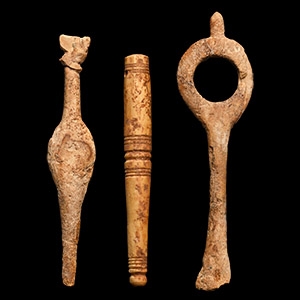
Roman Bone Pin and Implement Group
3rd-4th century A.D.Estimate: £100 - 140 (+bp*)
Opening Bid: £50
Each with round-section shank, one with hoop finial. 29.3 grams total, 9.2-11.3 cm
Private collection of Mr K.A., acquired in the 1990s-early 2000s. This lot is accompanied by an illustrated lot declaration signed by the Head of the Antiquities Department, Dr Raffaele D'Amato. -
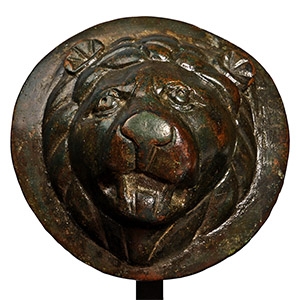
Roman Bronze Lion Head Mount
2nd-3rd century A.D.Estimate: £400 - 600 (+bp*)
Opening Bid: £200
Discoid mount with a lion-head modelled in the round to the centre, the beast with fierce expression and gaping jaws; mounted on a custom-made display stand. 218 grams total, 10 cm high including stand
Private collection of Mr K.A., acquired in the 1990s-early 2000s. This lot is accompanied by an illustrated lot declaration signed by the Head of the Antiquities Department, Dr Raffaele D'Amato.
Bronze lions were chosen guardian figures for millennia in both the Greek and Roman worlds. Representations of lions have been discovered in various contexts, appearing on gates and tombs in ancient Greece and on Roman coffins (sarcophagi), where they symbolise victory of the soul over death and evil.
