
Loading, please wait...
LOT 0709
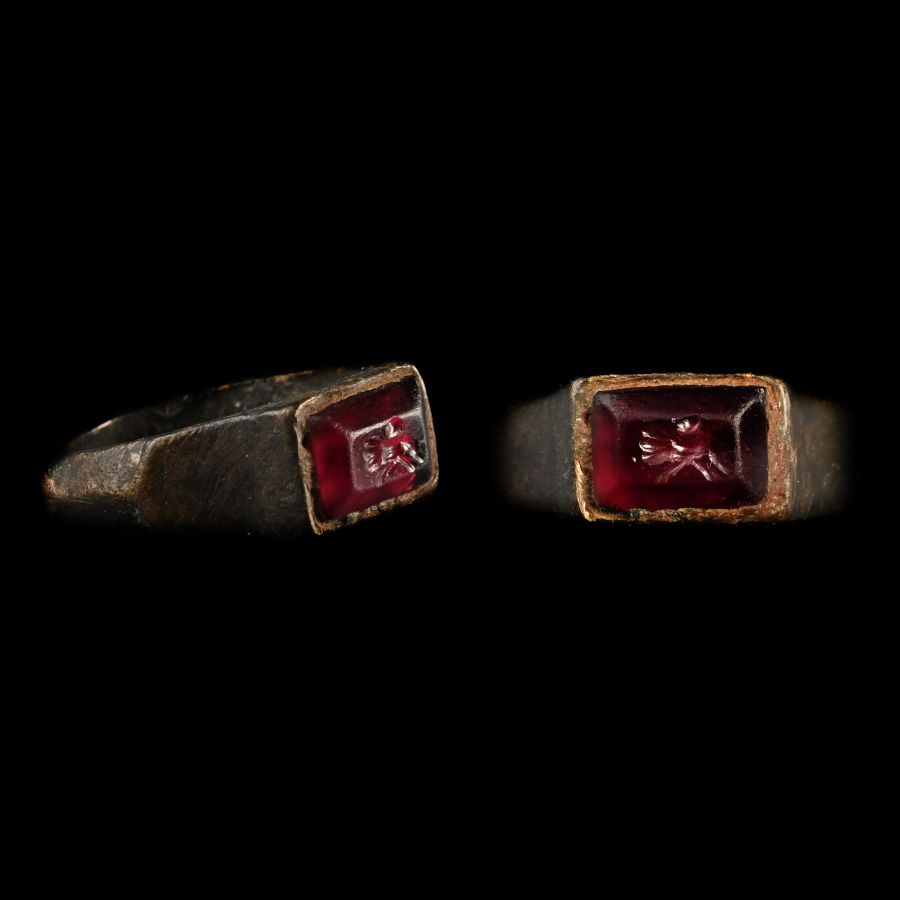
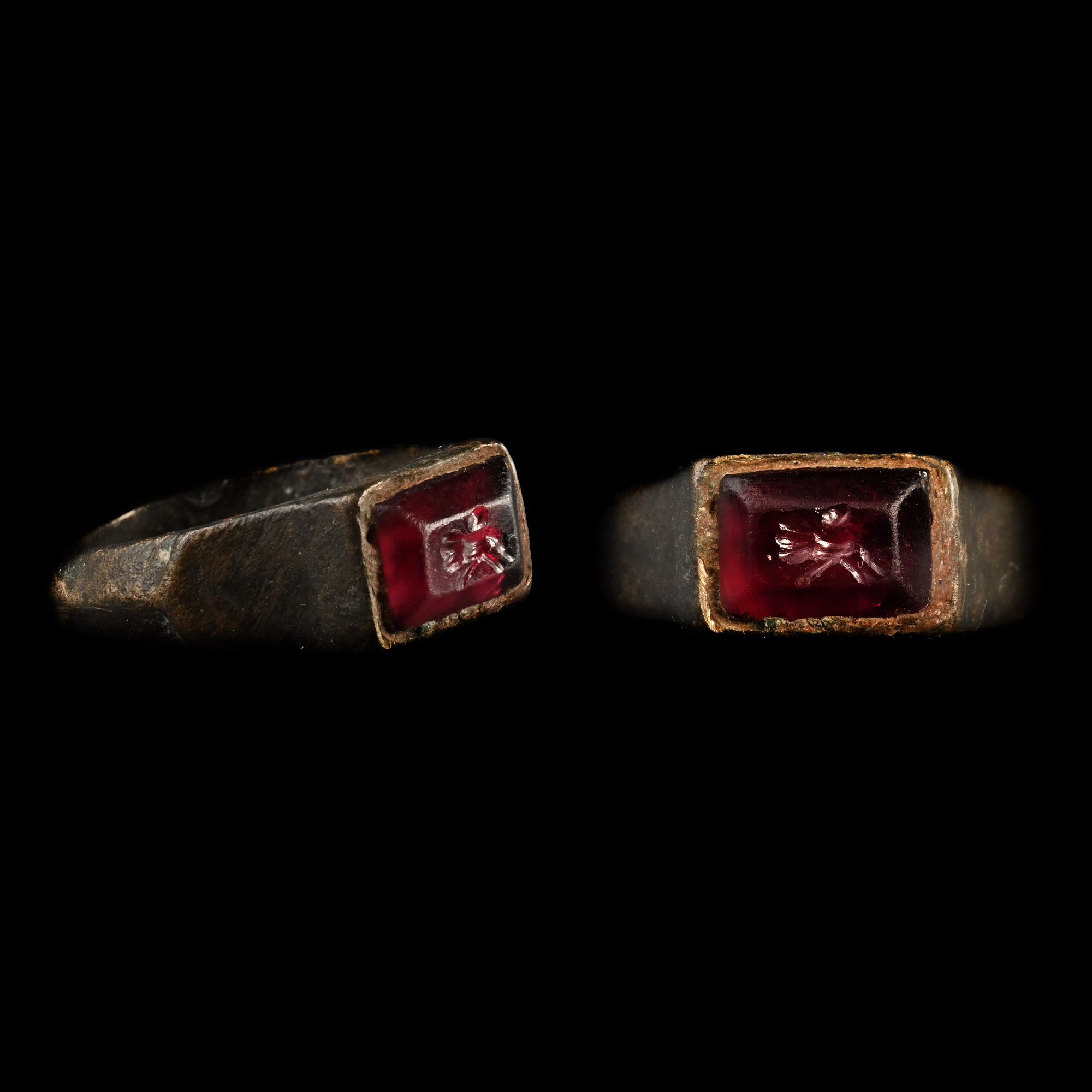
Roman Bronze Ring with Amethyst Gemstone
2ND-3RD CENTURY A.D.
3/4 in. (3.33 grams, 20.86 mm overall, 14.24 mm internal diameter (approximate size British G, USA 3 1/4, Europe 4.92, Japan 4)).
Comprising a D-section hoop with raised shoulders, rectangular bezel set with an amethyst intaglio engraved with an advancing bird. [No Reserve]
ProvenanceAcquired on the UK art market before 2000.
Property of an Essex, UK, gentleman.
This lot is accompanied by an illustrated lot declaration signed by the Head of the Antiquities Department, Dr Raffaele D'Amato.
Cf. for bird on ring Henig, M., ‘The gemstones and other jewellery’, in B.Cunliffe, Excavations at Fishbourne, 1961-1969, II. The Finds, Society of Antiquaries of London. Research Report XXXVII, Leeds. 1971, pp. 83-92, pl.XVIII, no.3.
FootnotesBirds were often involved in the religious life of Greeks and Romans. For example, the foundation ceremony of a city had fixed rules, involving the augurs’ interpretation of allegedly divine omens, such as the flight patterns of birds. Birds were often used for children’s rings: from the villa or palace of Fishbourne, Sussex, came a gold child’s ring containing a diminutive chrome chalcedony engraved with a bird.
CONDITIONTimeLine Auctions follows a vetting process to ensure the authenticity and legality of all items, reinforcing our commitment to integrity and responsible trading. Each antiquity, antique, and coin lot undergoes thorough examination by a vetting committee of at least ten external specialists, professional trade association members, scientists, and archaeologists: Our Vetting Process
AUCTIONS:
TimeLine is a leading auction house specialising in antiquities, ancient art, collectables, natural history, coins, medals, and books. Our auctions offer museums, collectors, historians, and enthusiasts the opportunity to acquire unique and historically significant pieces.
-
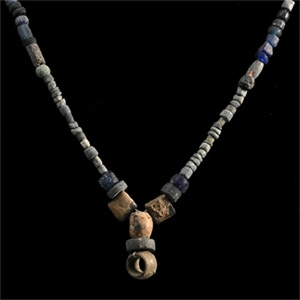
Roman Blue Glass and Stone Bead Necklace String
1st-4th century A.D. and laterSold for (Inc. bp): £39
Composed of variously shaped beads, central feature composed of tabular, annular, and ellipsoid beads; restrung. 21 grams, 41 cm
From the London, UK, art market in the 1990s. This lot is accompanied by an illustrated lot declaration signed by the Head of the Antiquities Department, Dr Raffaele D'Amato.
Such necklaces testify to the popularity of glass ornaments across the Roman Empire. Roman jewellery at first followed trends set by the Etruscans, using gold and glass beads, but with the extension of the Empire and the adoption of different styles from Greece, Egypt and North Africa, jewellery designs became increasingly various and elaborate. Each bead of this beautiful necklace is unique in shape, lustre and speckling, creating a mosaic-like impression. Blue glass beads can be grouped into opaque mid-blue and deep translucent cobalt blue types. -
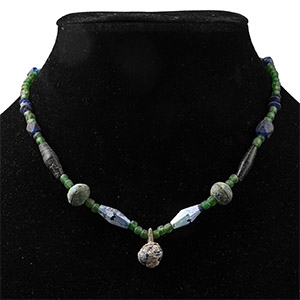
Roman Green and Blue Glass Bead Necklace String
1st-4th century A.D. and laterSold for (Inc. bp): £78
Restrung group including facetted fusiform, biconical, polyhedral and other beads. 15.9 grams, 40 cm
Acquired on the London art market in the late 1980s-1990s. From the family collection of an East London, UK, gentleman. This lot is accompanied by an illustrated lot declaration signed by the Head of the Antiquities Department, Dr Raffaele D'Amato. -
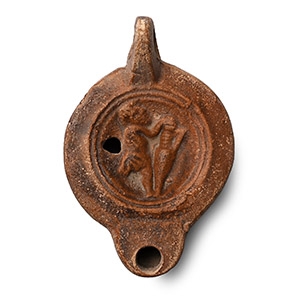
Roman Terracotta Oil Lamp with Slave Holding an Amphora
2nd century A.D.Sold for (Inc. bp): £390
Discoid in plan with broad D-shaped nozzle, loop handle, discus with low-relief image of a servus wearing a kilt supporting an amphora; maker's mark to underside '[....]VST'. 84 grams, 10.8 cm
From the private collection of a Canadian gentleman living in Essex, UK, formed since the 1920s-circa 1990. Property of an Essex lady until the late 1990s; thence by descent. From the private collection of an Essex gentleman since the late 1990s. This lot is accompanied by an illustrated lot declaration signed by the Head of the Antiquities Department, Dr Raffaele D'Amato.
The lamp belongs to the Bussière type, form D I 3, from a period between the Late Flavian era to the second half of the second century A.D.
