
Loading, please wait...


LOT 1119
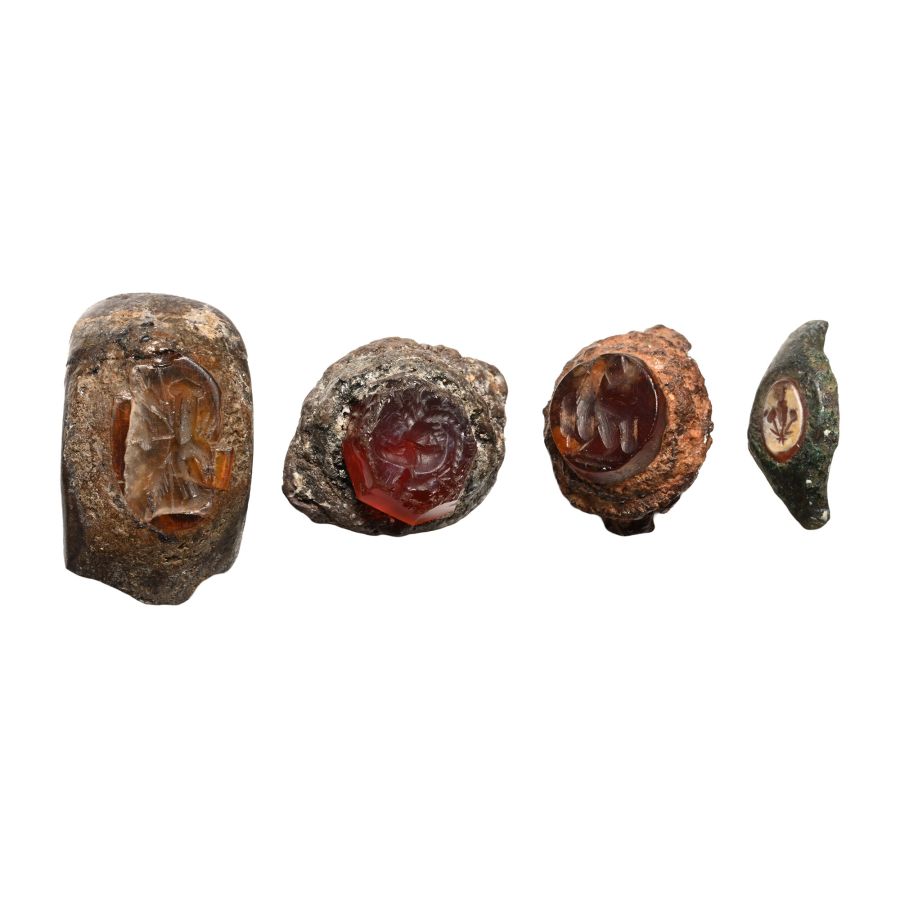
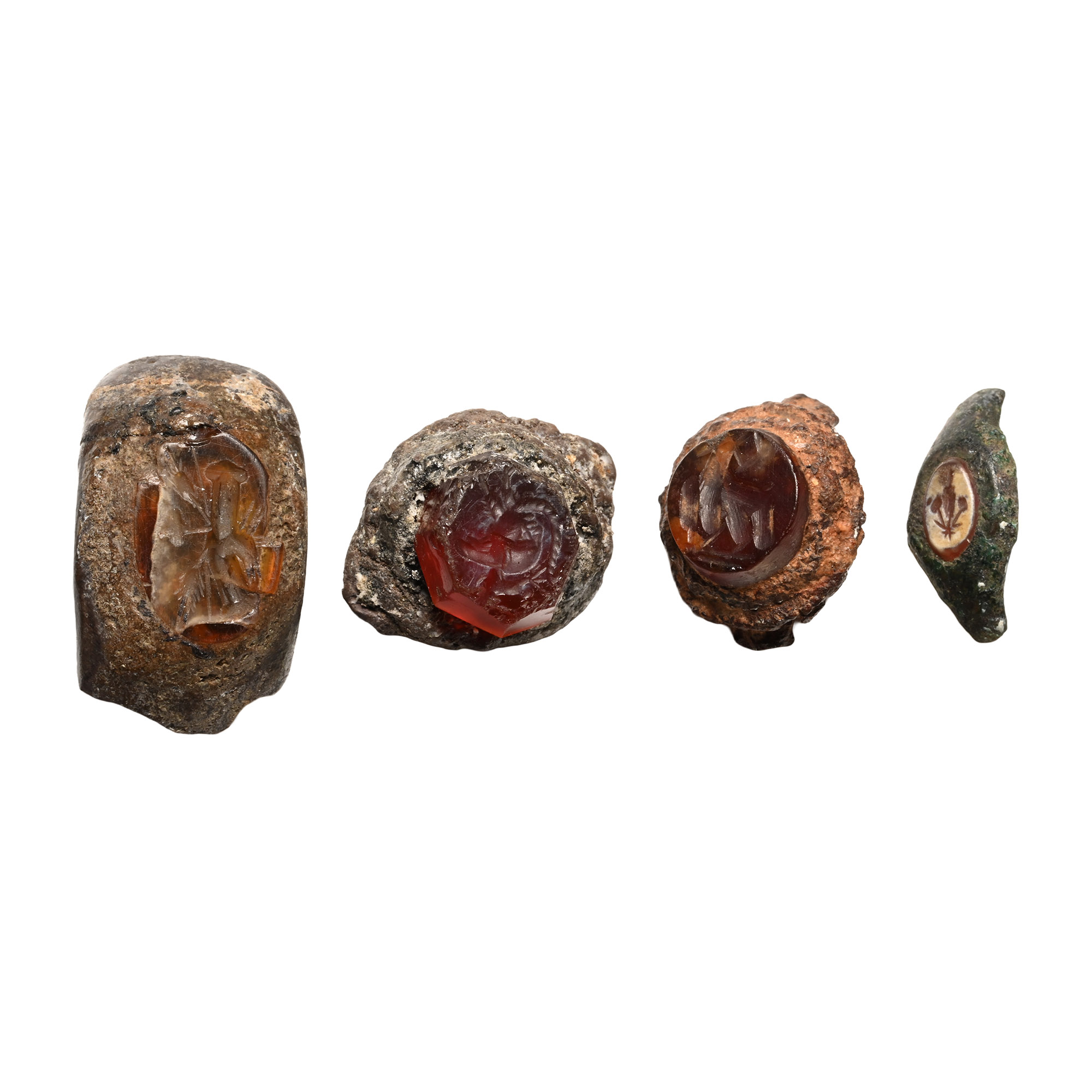
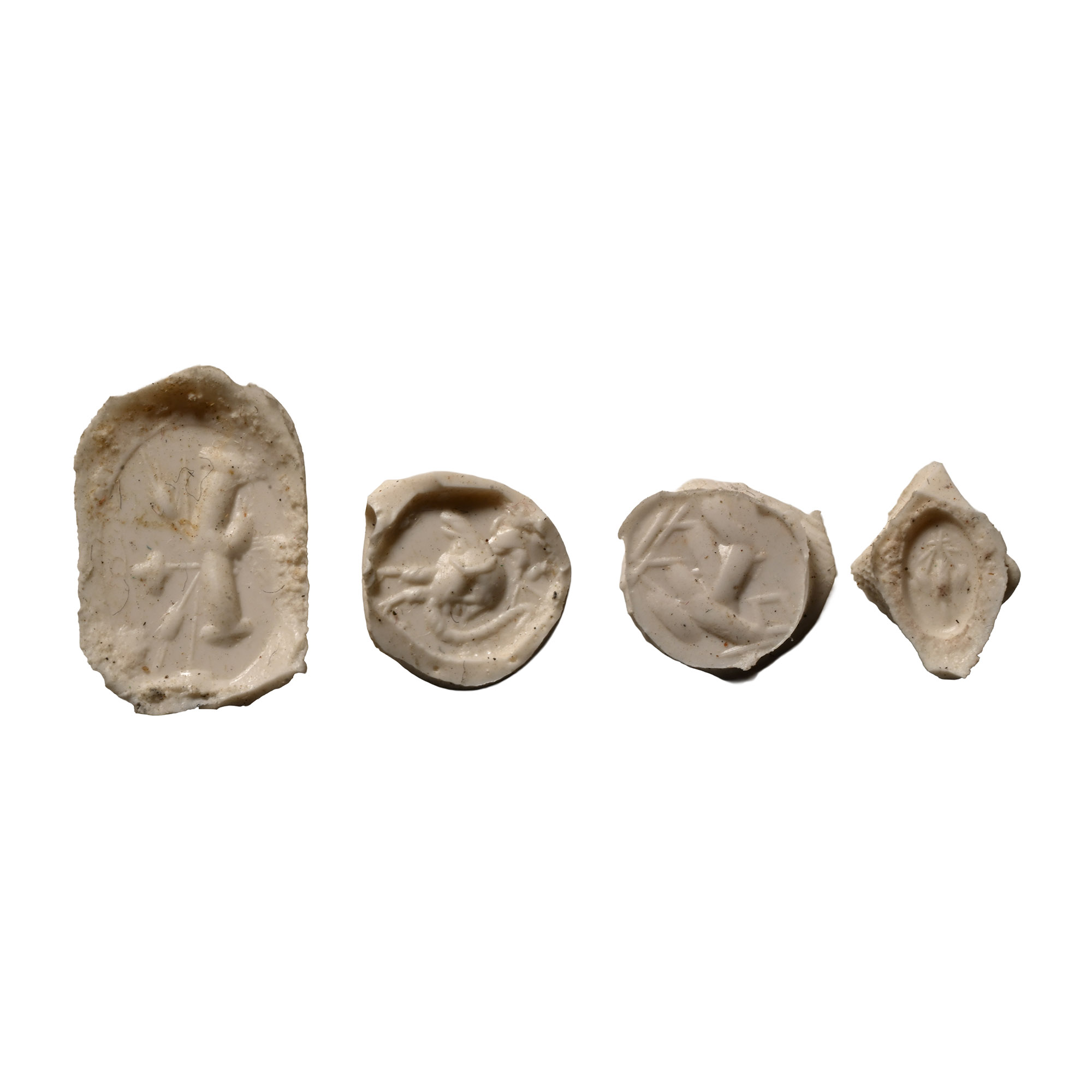
Roman Bronze Ring Bezel Group
2ND-3RD CENTURY A.D.
1/2 - 3/4 in. (7.9 grams total, 14-20 mm).
Including octagonal-section stone with ostrich motif, cloison with insect-gryllus motif and other types, each supplied with a museum-quality impression. [4, No Reserve]
ProvenanceFrom the private collection of a European gentleman (1942-2024), formed since the 1970s.
LiteratureCf. Lapatin, K., 'Grylloi' in Entwistle, C., Adams, N., Gems of Heaven, recent research on engraved Gemstones in Late Antiquity, c. AD 200-600, London, 2011, pp.50-61, pls.88-98, for various examples of similar gemstones.
CONDITIONTimeLine Auctions follows a vetting process to ensure the authenticity and legality of all items, reinforcing our commitment to integrity and responsible trading. Each antiquity, antique, and coin lot undergoes thorough examination by a vetting committee of at least ten external specialists, professional trade association members, scientists, and archaeologists: Our Vetting Process
AUCTIONS:
TimeLine is a leading auction house specialising in antiquities, ancient art, collectables, natural history, coins, medals, and books. Our auctions offer museums, collectors, historians, and enthusiasts the opportunity to acquire unique and historically significant pieces.
LOT 1119
Roman Bronze Ring Bezel Group
Estimate £100 - 140€120 - 160 (for guidance only)$140 - 190 (for guidance only)
-
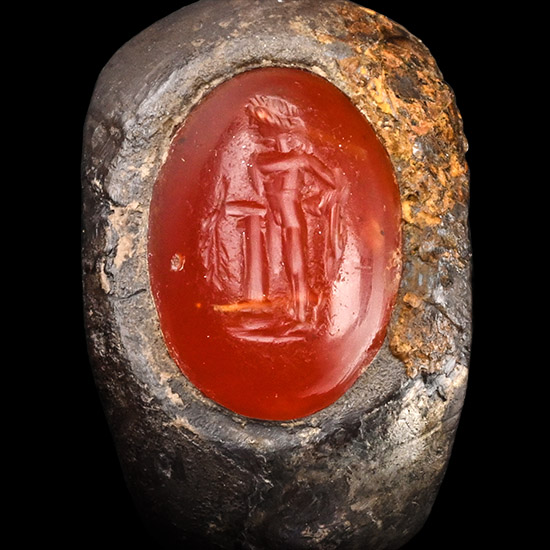
Roman Silver Ring with Apollo Gemstone
Circa 2nd-3rd century A.D.Estimate: £200 - 300 (+bp*)
Opening Bid: £100
D-section hoop with expanding shoulders, red stone intaglio with an altar and a nude male figure holding a branch. 10.88 grams, 24.12 mm overall, 18.25 x 15.48 mm internal diameter (approximate size British J 1/2, USA 5, Europe 9.32, Japan 9)
Ex German art market, 2000s. Acquired from an EU collector living in London. From the collection of a Surrey, UK, gentleman. -
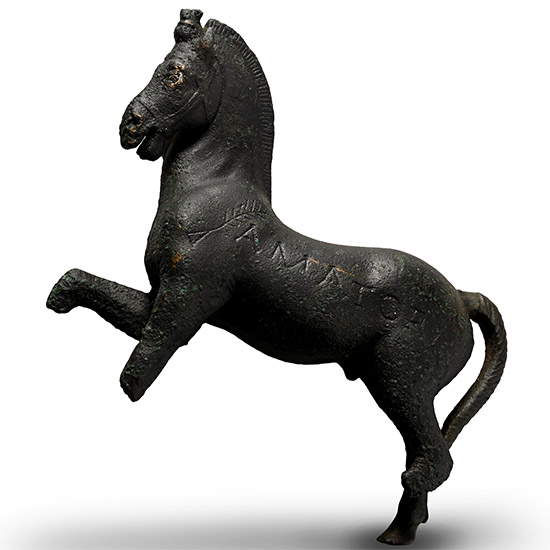
Large Roman 'AMATOR' Bronze Prancing Horse Statue
3rd century A.D.Estimate: £4,000 - 6,000 (+bp*)
Bids: 1 | Current Bid: £2,000
Modelled in the round with an elongated neck, right foreleg raised, head turned slightly to the right with open mouth wearing a bridle, short mane and tail with ribbed engraved decoration, inscription 'AMATOR' next to a branch; lower parts of three legs absent. 376 grams, 11.1 cm
Found Norfolk, UK. Acquired on the UK art market in the 1980s. From an East Anglian private collection. Accompanied by an academic report by Dr Raffaele D'Amato. This lot has been checked against the Interpol Database of stolen works of art and is accompanied by search certificate no.13549-262542.
Romans frequently used 'amator' combined with a noun to show a deep dedication to a particular craft or lifestyle. On a freestanding bronze horse statue, it could be a self-dedication by the person who commissioned it. Alternatively, 'amator' could be the name of the person who owned the statue or a demonstration of dedication to a specific horse or craft of horse-breeding. -
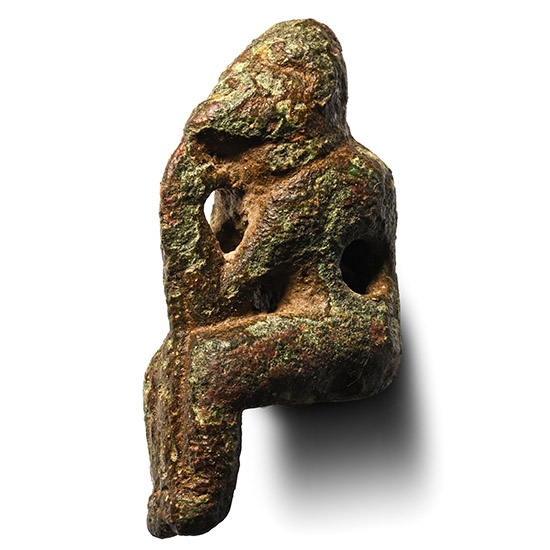
Roman Bronze Germanic Bound Captive Mount
Circa 1st century A.D.Estimate: £80 - 100 (+bp*)
Opening Bid: £5
Modelled in round with bent legs, arms supporting a raised chin and a rope detail around the neck; four openings to the body for attachment. 21.7 grams, 42 mm
Acquired on the UK art market in the 1980s. From an East Anglian private collection.
