
Loading, please wait...
_900x900.jpg "Roman Bronze Pyre on Base Dedicated by Aurelius Rufus")
_200x200.jpg "Roman Bronze Pyre on Base Dedicated by Aurelius Rufus")
.jpg "Roman Bronze Pyre on Base Dedicated by Aurelius Rufus")
LOT 0117
Roman Bronze Pyre on Base Dedicated by Aurelius Rufus
CIRCA 3RD CENTURY A.D.
4 1/2 in. (731 grams, 11.5 cm).
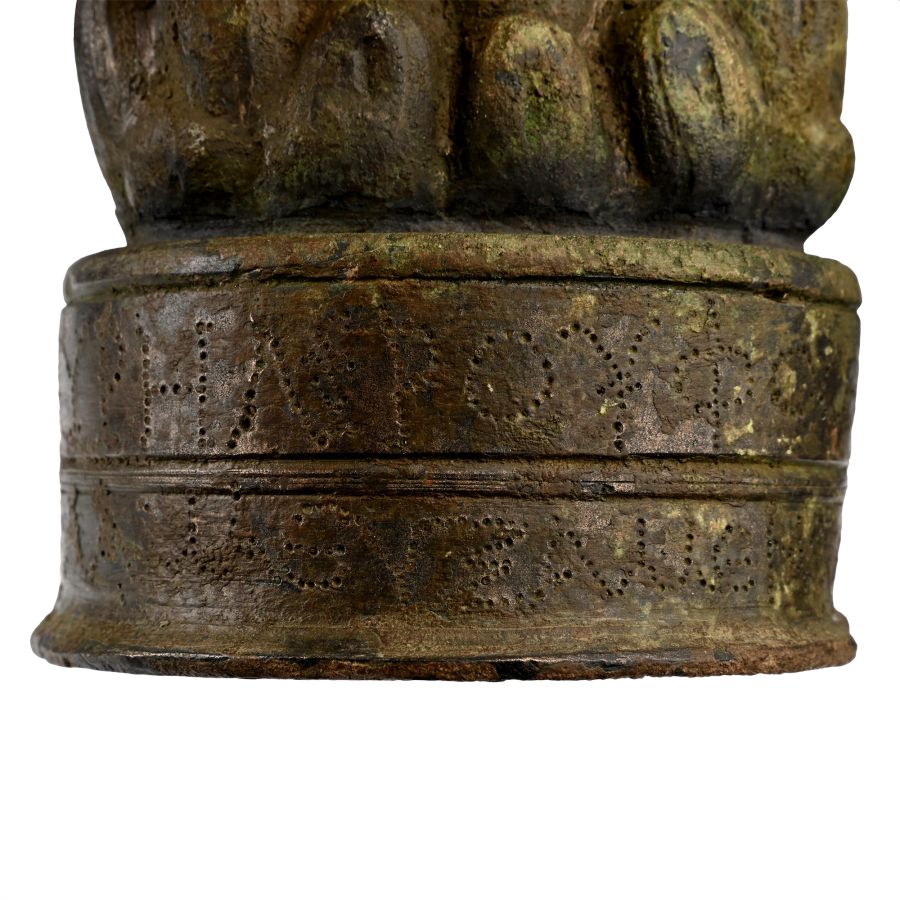
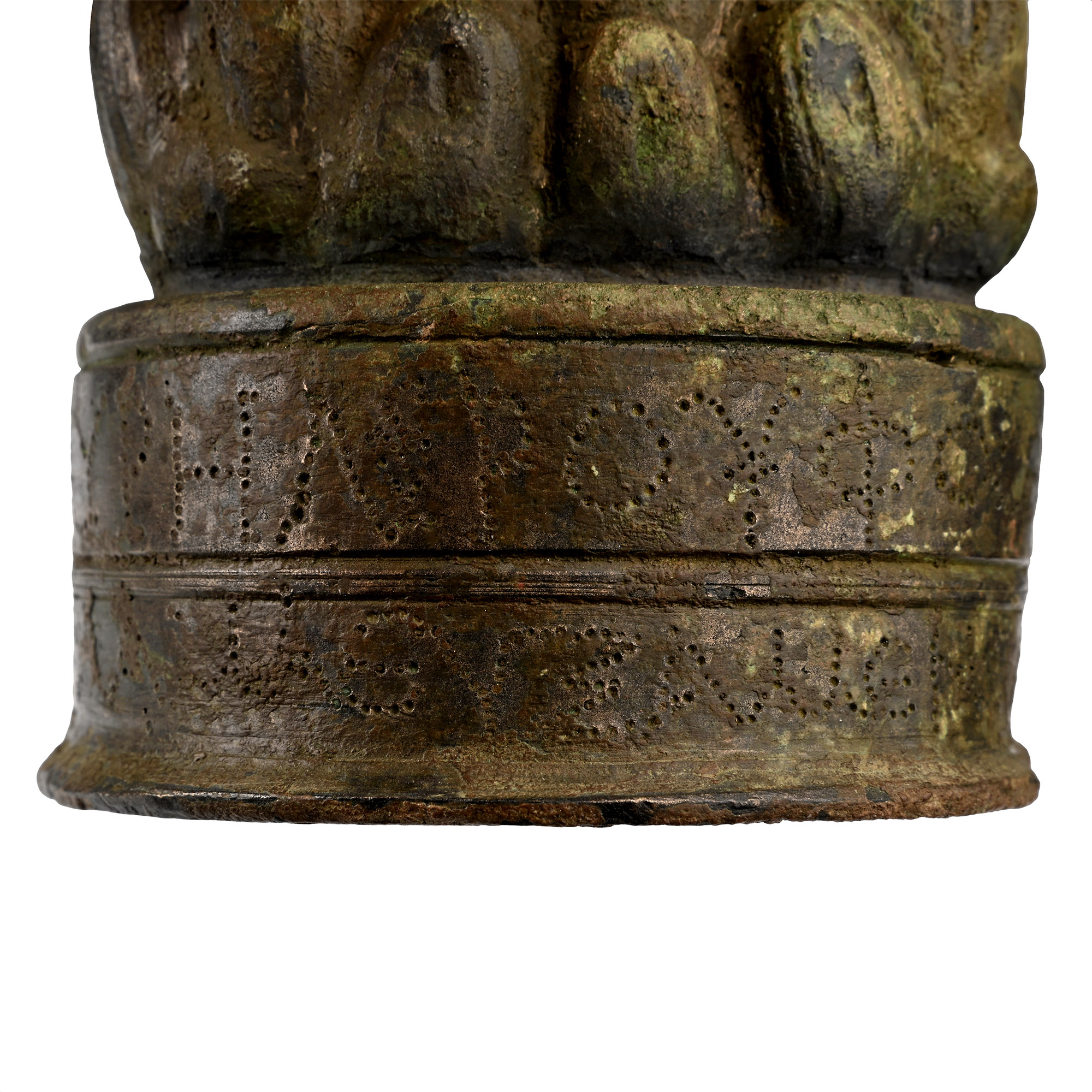
Model of an altar with tiered flames, socle base with flared base and pointillé Greek inscription in two lines: 'AYPHΛ [vine leaf] POYΦΟC THEω ΦΑΛ / [/]AMAE ZAMΕΝΟC ]ANETHEKEN': for 'Aurelius Rufus dedicated this for the god FAL ... The Roman name of the dedicant as well as the letter forms point most probably to the 3rd century A.D. [No Reserve]
ProvenanceEx collection, before 1980.
Private collection, Netherlands.
TimeLine Auctions follows a vetting process to ensure the authenticity and legality of all items, reinforcing our commitment to integrity and responsible trading. Each antiquity, antique, and coin lot undergoes thorough examination by a vetting committee of at least ten external specialists, professional trade association members, scientists, and archaeologists: Our Vetting Process
AUCTIONS:
TimeLine is a leading auction house specialising in antiquities, ancient art, collectables, natural history, coins, medals, and books. Our auctions offer museums, collectors, historians, and enthusiasts the opportunity to acquire unique and historically significant pieces.
LOT 0117
Roman Bronze Pyre on Base Dedicated by Aurelius Rufus
Sold for (Inc. bp): £2,210
-
Late Roman Bronze Open Oil Lamp
Circa 6th century A.D.Sold for (Inc. bp): £208
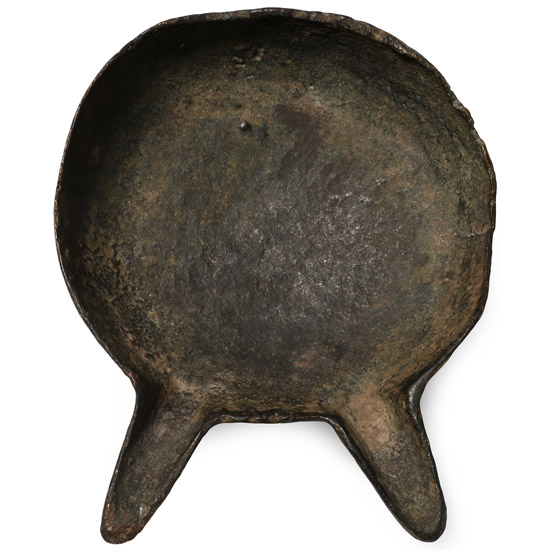
Circular oil lamp with low walls and two projecting nozzles, a low basal ring, and an inked collector's note 'AR2' on the base. 106 grams, 85 mm
From an important collection of lamps, Germany, 1970s. -
.jpg)
Roman Bronze Head of an Emperor
2nd century A.D.Sold for (Inc. bp): £1,170
Hollow-formed with long neck, abundant thick hair and beard, broad mouth; probably intended to represent an emperor. 440 grams, 10 cm
Acquired by a Swiss family in the mid-1980s to late 1990s, thence by descent. Private collection, Switzerland, since the late 1990s.
The portrait seems to be a provincial bronze representing Hadrian, apparently aged around 30, recognisable from his incipient beard, moustache and distinctive physiognomy. However, the portrait is in an extremely provincial style, exemplified by the wide spacing of the eyes. The beard is lightly incised, and the highly stylised curls around the front of the head give way to simple incised locks on the back. -
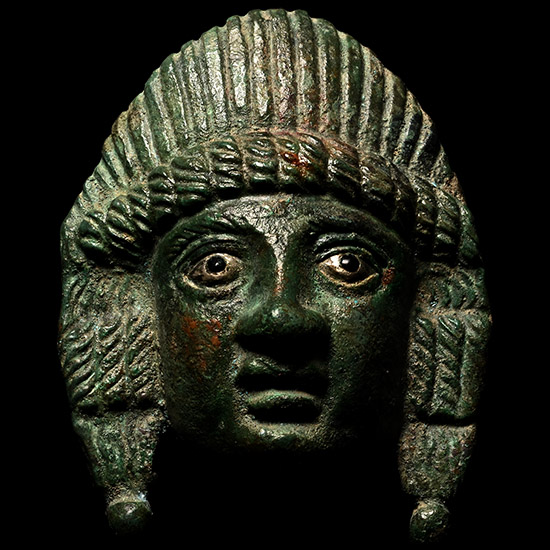
Roman Bronze Theatrical Mask Mount
2nd-4th century A.D.Sold for (Inc. bp): £624
Modelled in the half-round with large eyes and hair arranged in orderly curls, applied silver panels to the eyes and enamel pupils. 57.3 grams, 64 mm
Ex German art market, 2000s. Acquired from an EU collector living in London. From the collection of a Surrey, UK, gentleman.
