
Loading, please wait...
LOT 0764
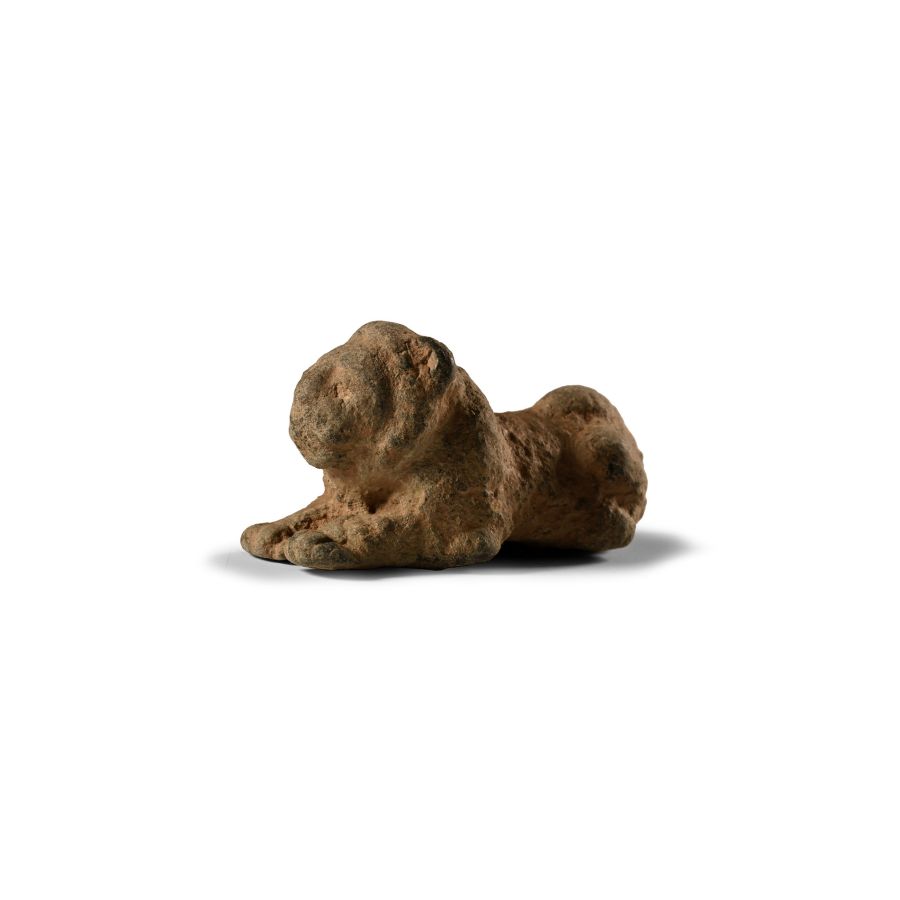
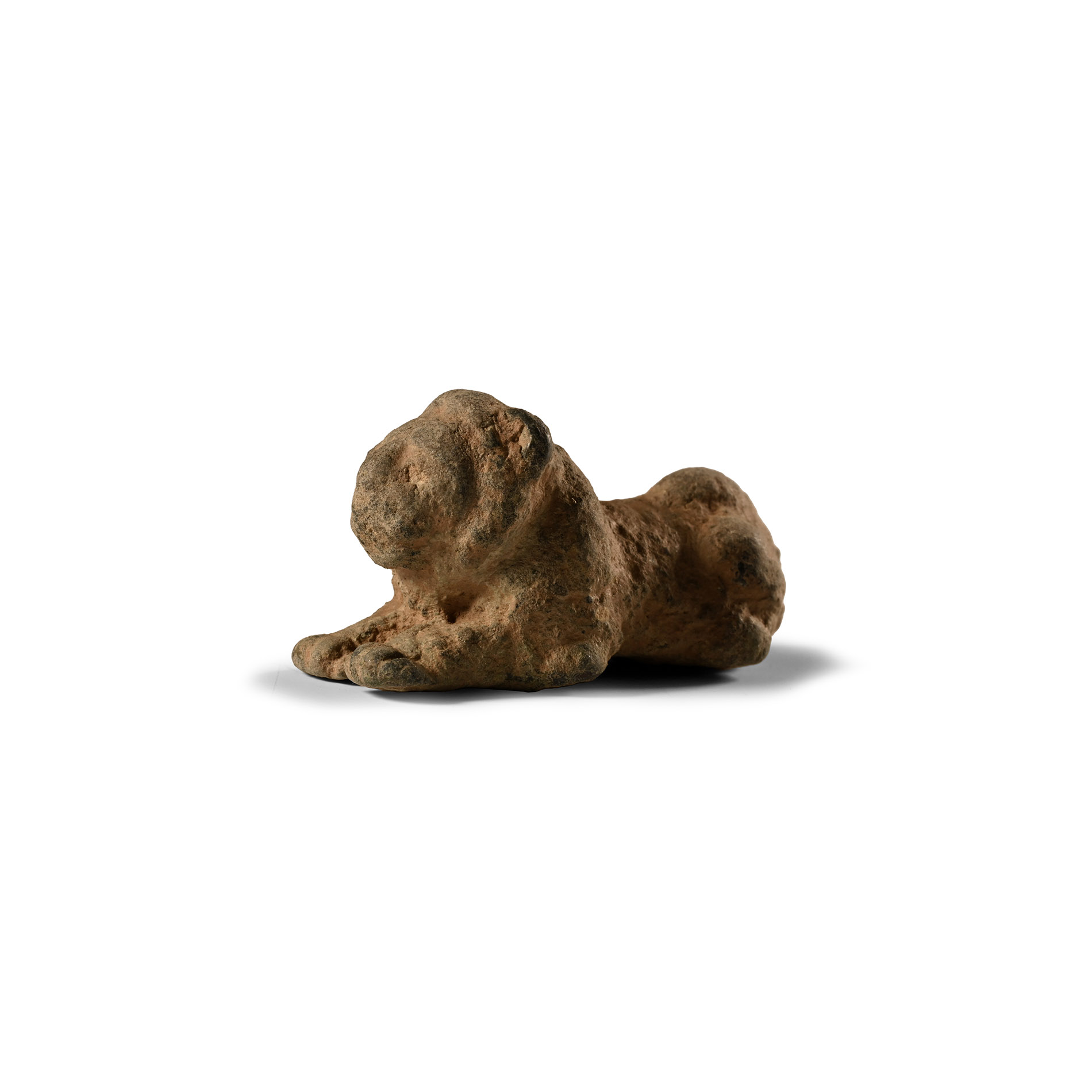
Roman Bronze Prone Lion Statuette
1ST-4TH CENTURY A.D.
1 5/8 in. (44.5 grams, 42 mm long).
Modelled in the round with naturalistic detailing, lying prone with paws forward.
Provenance‘The Ancient Menagerie Collection’ formerly the property of a Cambridgeshire lady, collected since the 1990s and acquired from auctions and dealers throughout Europe and the USA, now ex London collection.
CONDITIONTimeLine Auctions follows a vetting process to ensure the authenticity and legality of all items, reinforcing our commitment to integrity and responsible trading. Each antiquity, antique, and coin lot undergoes thorough examination by a vetting committee of at least ten external specialists, professional trade association members, scientists, and archaeologists: Our Vetting Process
AUCTIONS:
TimeLine is a leading auction house specialising in antiquities, ancient art, collectables, natural history, coins, medals, and books. Our auctions offer museums, collectors, historians, and enthusiasts the opportunity to acquire unique and historically significant pieces.
-
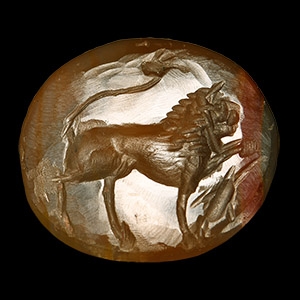
Gemstone with Lion
Roman, 2nd-3rd century A.D. or laterSold for (Inc. bp): £195
Of truncated conical form, the agate stone engraved with a prancing male lion facing right, one front leg and tail raised; accompanied by a museum-quality impression. 1.79 grams, 14 mm
Acquired on the European art market in the late 1960s-early 1970s. -
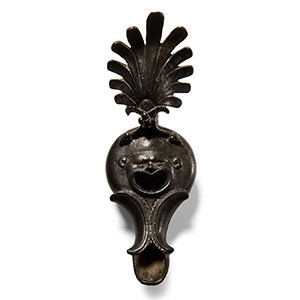
Roman Bronze Lamp with Theatrical Mask
1st-2nd century A.D.Estimate: £3,000 - 4,000 (‡+bp*)
Opening Bid: £1,500
Nozzle with quasi-volutes, theatrical mask surrounding the central opening; ring-handle with palmette attachment; base moulded. 220 grams, 13.3 cm
Acquired from Weber, Kohl. Ex private collection, Rhemish, Germany. with Gorny & Mosch, 14 December 2010, lot 499. Private collection, Europe. This lot has been checked against the Interpol Database of stolen works of art and is accompanied by search certificate number no.11800-206492.
The principal parts of a lamp were the body or reservoir which contained the oil (infundibulum); the flat circular top (discus) on which the design, if any, was placed, sometimes with an ornamented rim (margo), the nozzle, with a hole for the insertion of the wick (rostrum, nasus, myxus), the wick, known as ellydinium, the handle (ansa, manubrium). -

Romano-British Bronze Mount of Dionysus
2nd-3rd century A.D.Sold for (Inc. bp): £124
Formed as a bust of within foliate crescent, wearing a floral diadem and pleated tunic; rectangular mounting lug to reverse. 42.8 grams, 45 mm high
Found near Colchester, Essex, 2005.
