
Loading, please wait...
LOT 0180
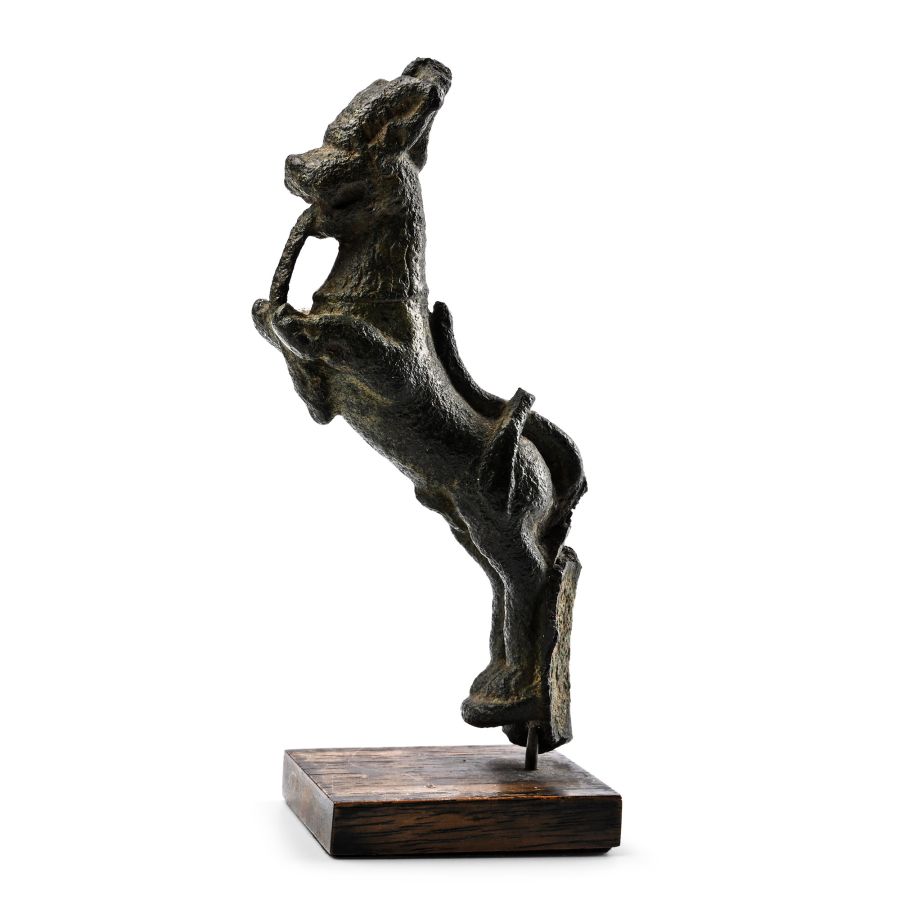
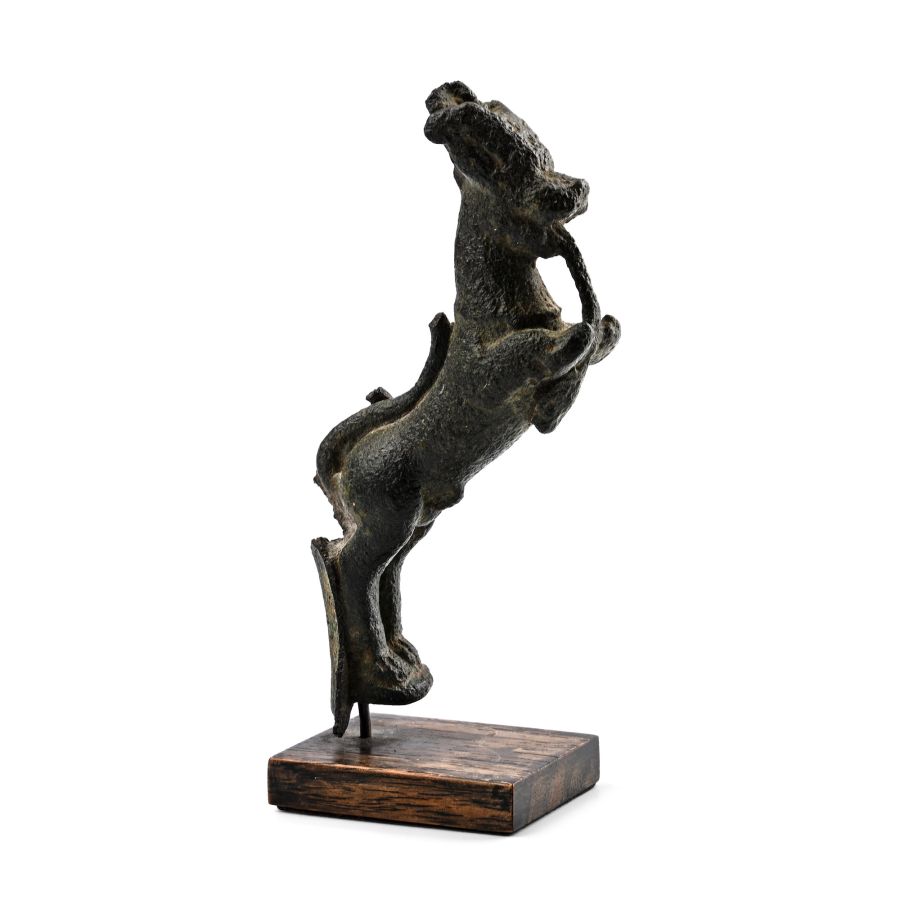
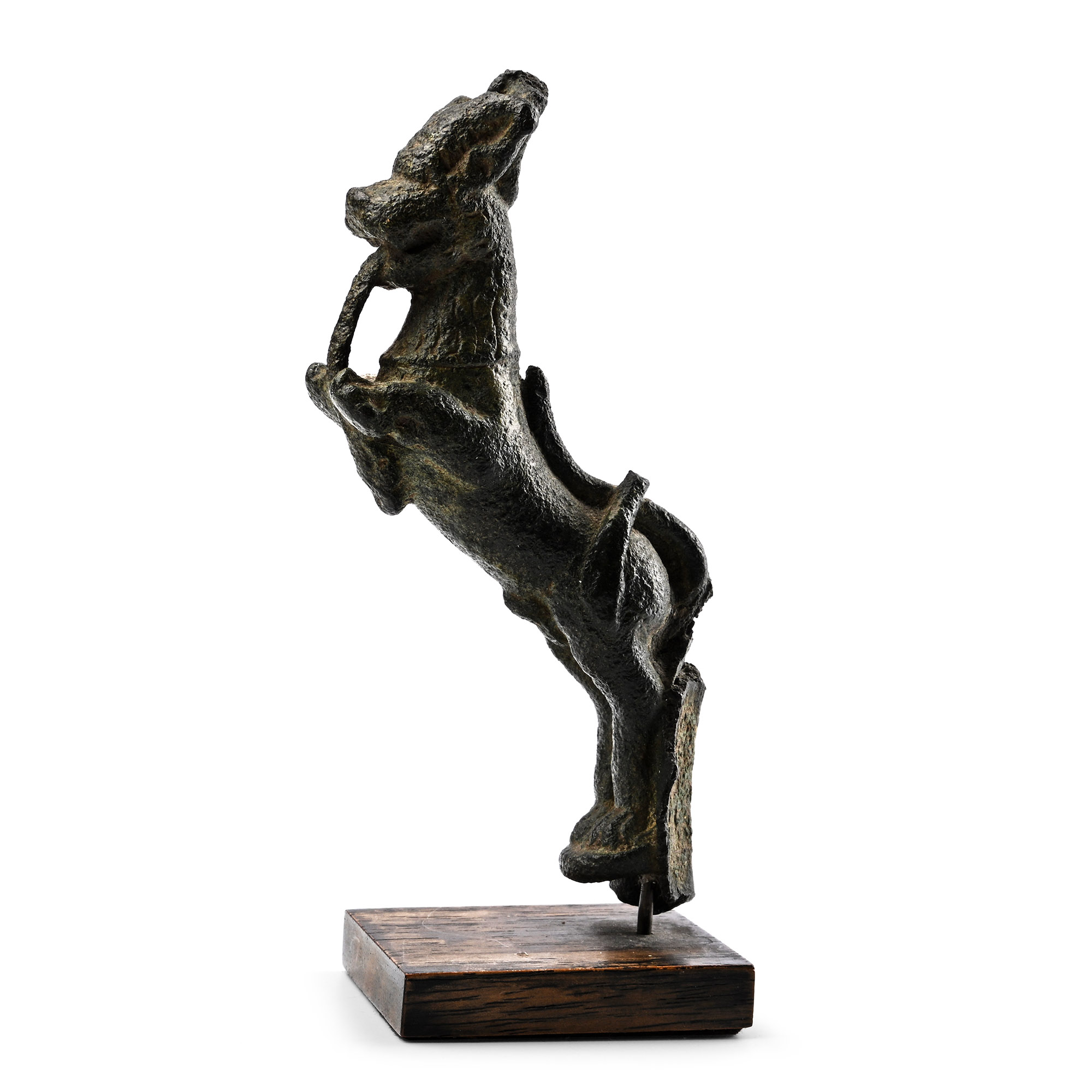
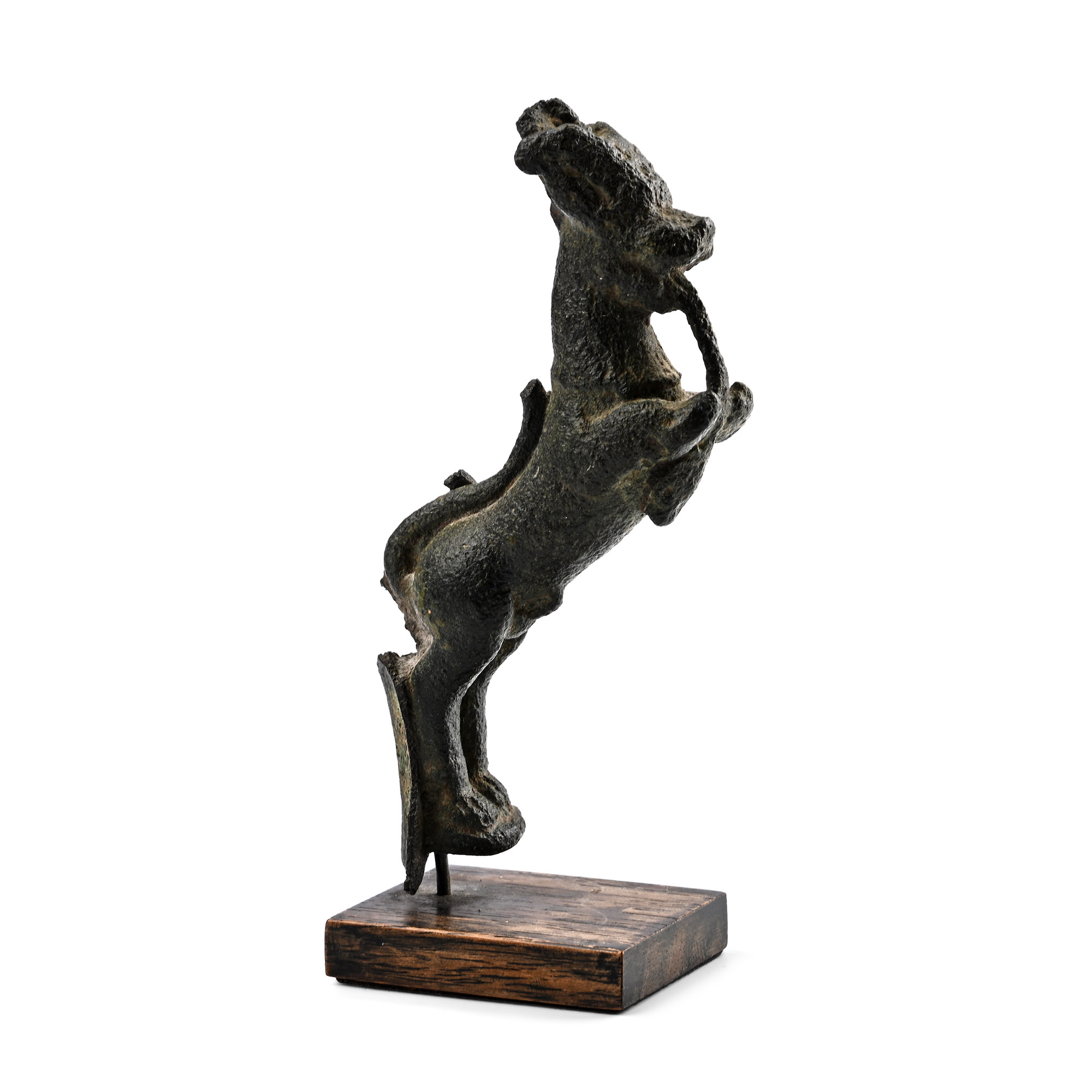
Roman Bronze Prancing Lion Statuette
1ST-3RD CENTURY A.D.
5 1/8 in. (226 grams total, 13 cm including stand).
Modelled in the round with the tail laid along the spine, collar to the neck and crest between the pricked ears; tongue protruding to form a loop against the chest, possibly from a handle; mounted on a display stand.
ProvenanceAcquired from Bath Antiques Centre, 1990s; and inspected and verified by Robert Knox of the British Museum.
From the private collection of a Somerset gentleman.
TimeLine Auctions follows a vetting process to ensure the authenticity and legality of all items, reinforcing our commitment to integrity and responsible trading. Each antiquity, antique, and coin lot undergoes thorough examination by a vetting committee of at least ten external specialists, professional trade association members, scientists, and archaeologists: Our Vetting Process
AUCTIONS:
TimeLine is a leading auction house specialising in antiquities, ancient art, collectables, natural history, coins, medals, and books. Our auctions offer museums, collectors, historians, and enthusiasts the opportunity to acquire unique and historically significant pieces.
-
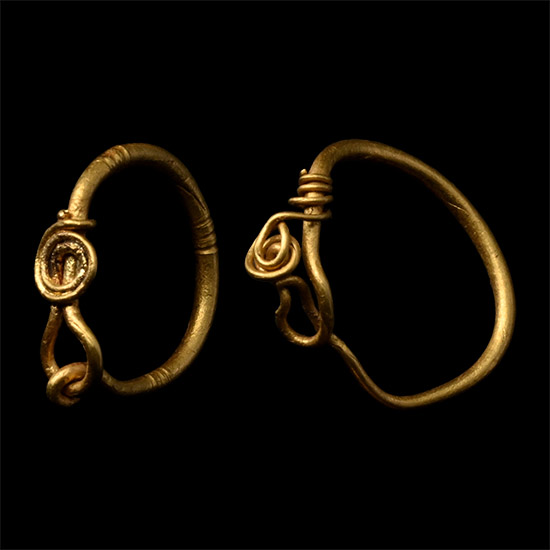
Roman Gold Earring Pair
1st-4th century A.D.Sold for (Inc. bp): £234
Each a slender wire hoop with a spiral knot and the ends wound round the shank. 1.70 grams total, 15-17mm
Ex German art market, 2000s. Acquired from an EU collector living in London. From the collection of a Surrey, UK, gentleman. -
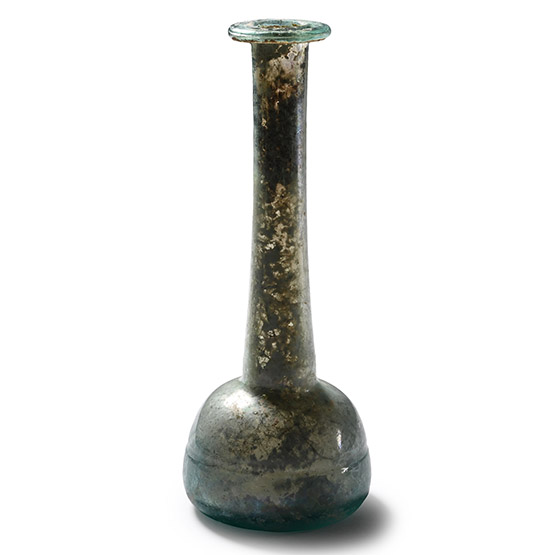
Roman Glass Unguentarium
1st-3rd century A.D.Sold for (Inc. bp): £130
With plano-convex body and dimple base, tall slender neck, folded rim; iridescent green surface. 78 grams, 15 cm
From an important London collection of glass, 1990s.
This kind of toilet bottle was called ‘candlestick unguentarium’ by the academics due to the shape of its neck. This specific type, with its transparent grayish green glass, is especially found in Roman Cyprus (Hayes's fabric 2 of Cypriot blown glass). -

Roman Gold Hercules Club Pendant
4th century A.D.Sold for (Inc. bp): £143
Hollow-form pendant with applied granules and wire decoration. 1.25 grams, 24 mm
Ex London, UK, gentleman's collection, 1980-1990s.
The object finds a good parallel with a pendant of the same shape forming part of a remarkable hoard of late-Roman gold jewellery and silver tableware found near Thetford, Norfolk, in 1979. The jewellery included necklaces and clasps, five pendants, and four bracelets. One pendant takes the shape of a Hercules club, a design often used for earrings.
