
Loading, please wait...
LOT 0844
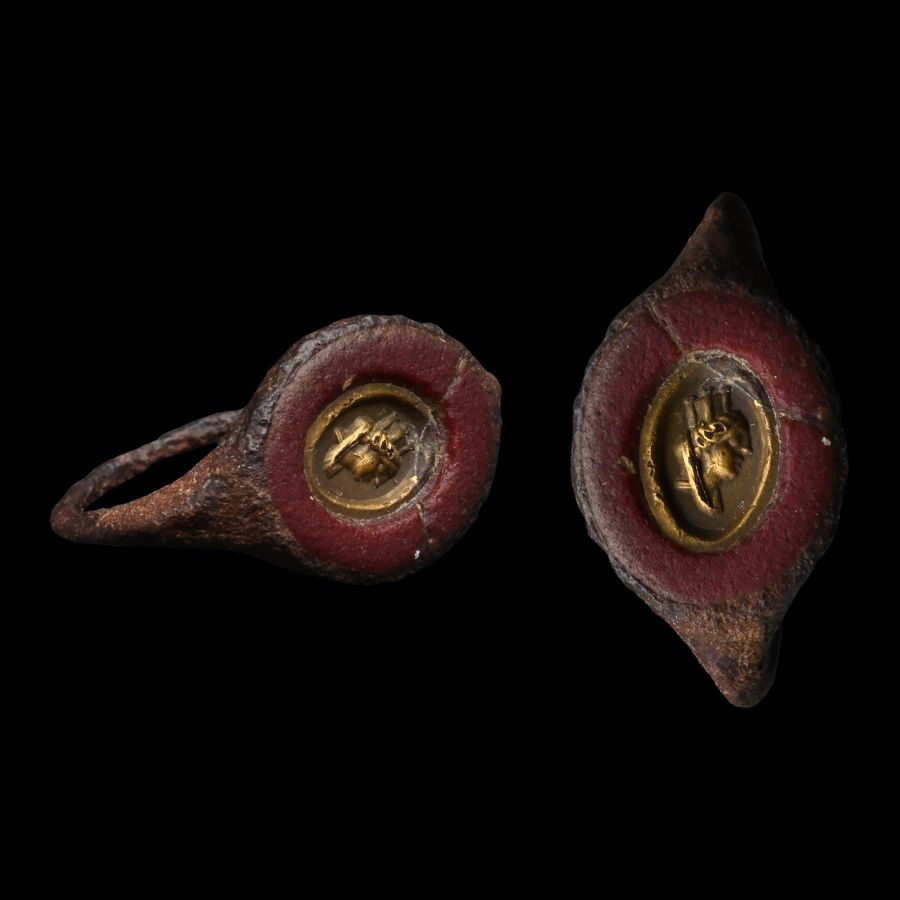
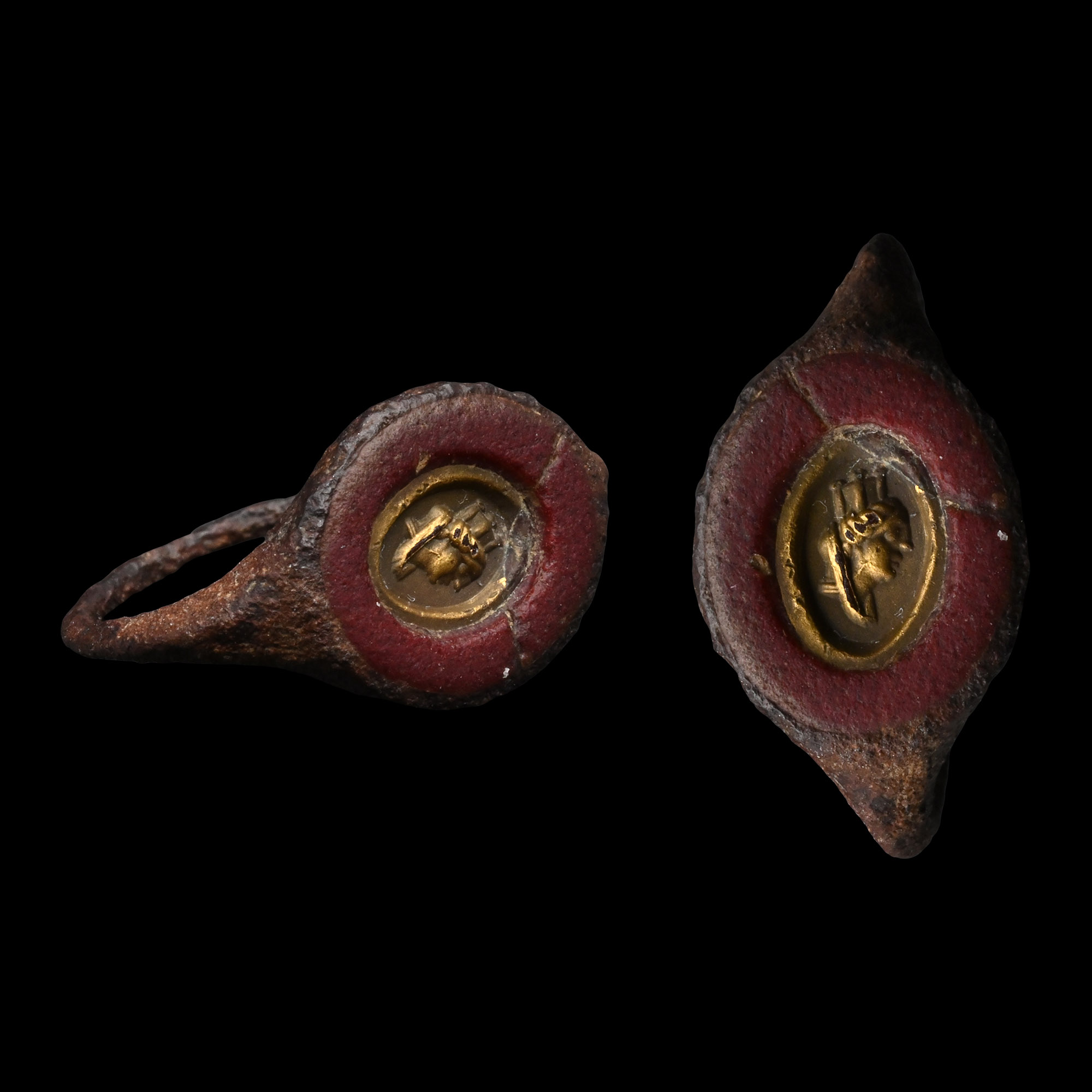
Roman Bronze Portrait Intaglio in Iron Ring
1ST-2ND CENTURY A.D.
3/4 in. (2.70 grams, 20.86 mm overall, 16.97 mm internal diameter (approximate size British G 1/2, USA 3 1/2, Europe 5.55, Japan 5)).
Ellipsoid bezel with inset bronze plaque in a red glass surround; low-relief profile bust with solar crown. [No Reserve]
ProvenanceFrom the collection of a gentleman, acquired on the London art market in the 1990s.
LiteratureCf. Ruseva-Slokoska, L., Roman Jewellery, Sofia, 1991, item 270, for type.
CONDITIONTimeLine Auctions follows a vetting process to ensure the authenticity and legality of all items, reinforcing our commitment to integrity and responsible trading. Each antiquity, antique, and coin lot undergoes thorough examination by a vetting committee of at least ten external specialists, professional trade association members, scientists, and archaeologists: Our Vetting Process
AUCTIONS:
TimeLine is a leading auction house specialising in antiquities, ancient art, collectables, natural history, coins, medals, and books. Our auctions offer museums, collectors, historians, and enthusiasts the opportunity to acquire unique and historically significant pieces.
-
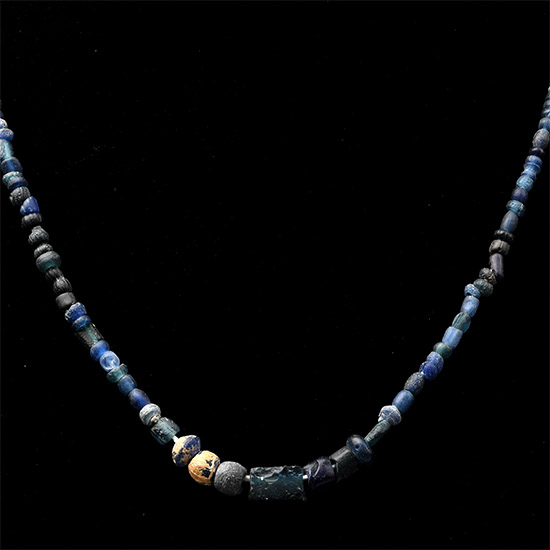
Roman Blue Glass Bead Necklace String
1st-4th century A.D. and laterSold for (Inc. bp): £111
Composed of gently graduating mixed beads, the central feature a large rectangular bangle section, restrung. 12.6 grams, 46 cm
Ex London, UK, collection, 1990s. -
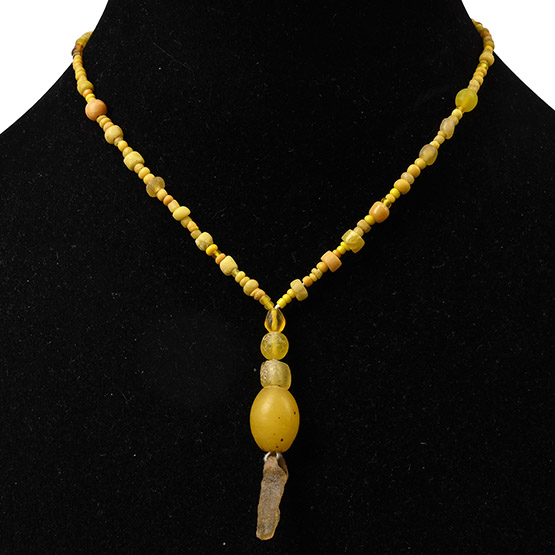
Roman Yellow Glass and Other Bead Necklace String
1st-4th century A.D. and laterSold for (Inc. bp): £91
Composed mainly of oblate and annular beads, the central feature with larger beads, restrung. 12.7 grams, 30 cm
Ex London, UK, collection, 1990s. -
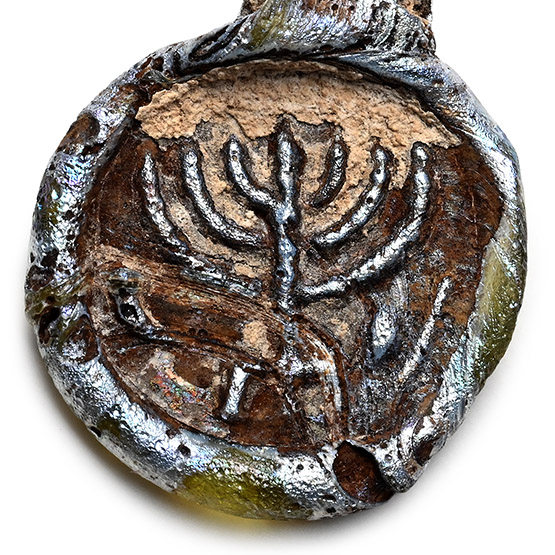
Eastern Roman Glass Pendant with Menorah
6th-7th century A.D.Sold for (Inc. bp): £1,040
Discoid with impressed menorah motif, integral loop. 1.07 grams, 22 mm
Private collection, acquired in the late 1980s-early 1990s; thence by descent.
Glass medallions were produced especially in Syria and decorated with imagery including Christian saints and monograms. The iconography of the Menorah was used by both Christian and Jewish communities, being for the Orthodox church a symbol of divine light, the seven gifts of the Holy Ghost and the church itself.
