
Loading, please wait...
LOT 0749
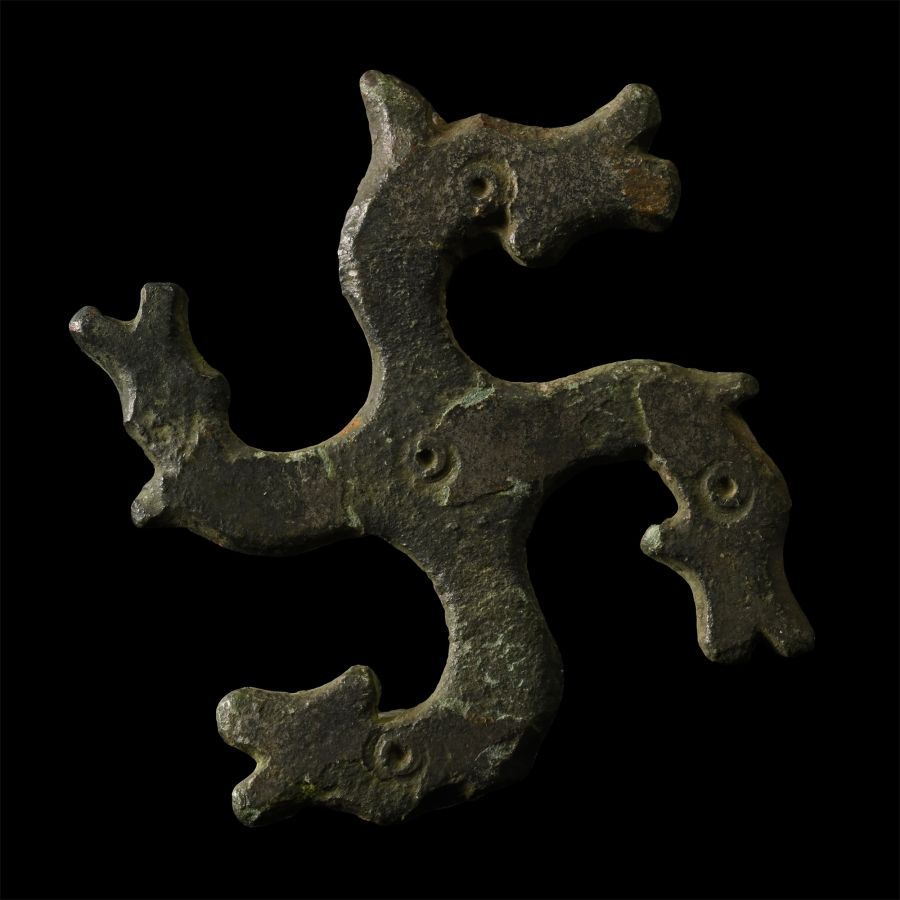
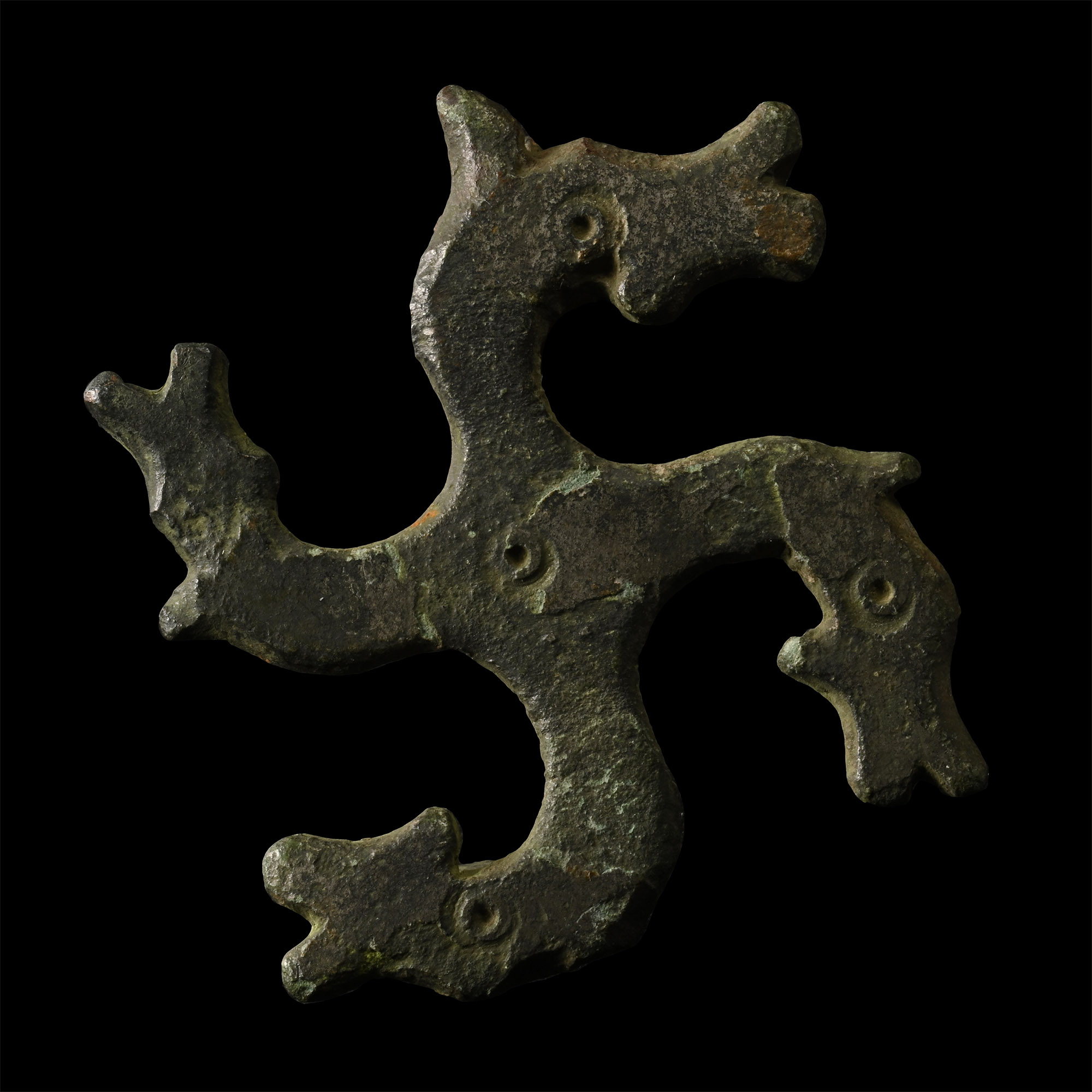
Roman Bronze Plate Brooch
2ND CENTURY A.D.
1 5/8 in. (10.8 grams, 40 mm).
With horse-head decoration to each arm, each head with punched ring-and-dot eye, and a similar motif to the centre; sheet-silver surface partly absent; catchplate and hinged pin to reverse.
ProvenanceEx important German collection, 1990s.
This lot is accompanied by an illustrated lot declaration signed by the Head of the Antiquities Department, Dr Raffaele D’Amato.
Cf. Petcu, R., ‘Swastika-shaped fibulae with horse-head decorations (Almgren 232) from the Roman period in Dobrudja (Moesia Inferior)’ in Studia Antiqua et Archaeologica, 25(1), pp.113-122, fig.4.
CONDITIONTimeLine Auctions follows a vetting process to ensure the authenticity and legality of all items, reinforcing our commitment to integrity and responsible trading. Each antiquity, antique, and coin lot undergoes thorough examination by a vetting committee of at least ten external specialists, professional trade association members, scientists, and archaeologists: Our Vetting Process
AUCTIONS:
TimeLine is a leading auction house specialising in antiquities, ancient art, collectables, natural history, coins, medals, and books. Our auctions offer museums, collectors, historians, and enthusiasts the opportunity to acquire unique and historically significant pieces.
-
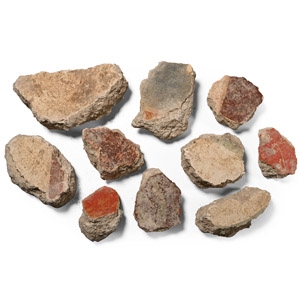
Roman Fresco Wall Plaster Collection
1st century A.D.Sold for (Inc. bp): £59
Fragments of wall plaster with rendered surface painted with mainly red, blue and white detailing; some with impression of timber laths to the reverse. 770 grams total, 5.2-11.6 cm
Acquired in the 19th century. Ex Jeger collection, Switzerland. UK gallery, early 2000s. This lot is accompanied by an illustrated lot declaration signed by the Head of the Antiquities Department, Dr Raffaele D’Amato.
These small fragments, for analogies with the fragments of Pompeii, seems to belong to the second style of Roman painting, red panels representing highlight and shadow, decorated with vegetal interlaces. Some panels were probably framed by a red grenade fillet. A fragment shows alternate blue and red colour over a cream background, maybe pertinent to a socle. -
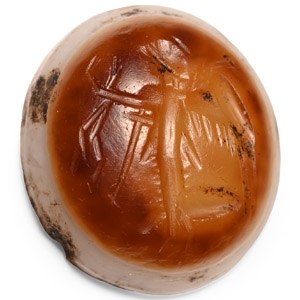
Roman Banded Agate Gemstone with Victory
1st-2nd century A.D.Sold for (Inc. bp): £364
Cabochon with engraved intaglio of Victory standing with wings spread to the rear, one arm extended holding a laurel wreath with ties, frond over one shoulder; supplied with a museum-quality impression. 0.99 grams, 12 mm
From the Fadel family collection, London, UK, 1970s. This lot is accompanied by an illustrated lot declaration signed by the Head of the Antiquities Department, Dr Raffaele D’Amato. -
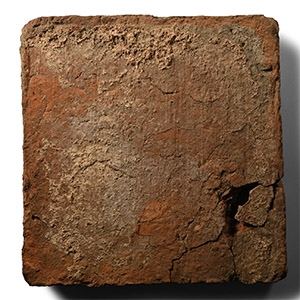
Large Roman 'Wingham Villa' Terracotta Hypocaust Brick
1st-4th century A.D.Sold for (Inc. bp): £169
A massive parallelepiped block, square in section, grey-brown in colour. 2.79 kg, 19.5 x 20.2 cm
Found near Wingham, Kent, UK. From the collection of a late East Anglian teacher and antiquarian who retired to the Isle of Wight in Hampshire, UK. He amassed a large collection of objects between the 1960s-1980s. This lot is accompanied by an illustrated lot declaration signed by the Head of the Antiquities Department, Dr Raffaele D’Amato.
In Kent, nearby Dover, there is the site of a Roman villa located in a field named The Vineyards. The site was excavated in 1881-82 during which time a hypocaust, tessellated pavement, bath house and a quern were found. The hypocaust was dated to two periods and a quern was found on a tessellated pavement.
