
Loading, please wait...
LOT 0978
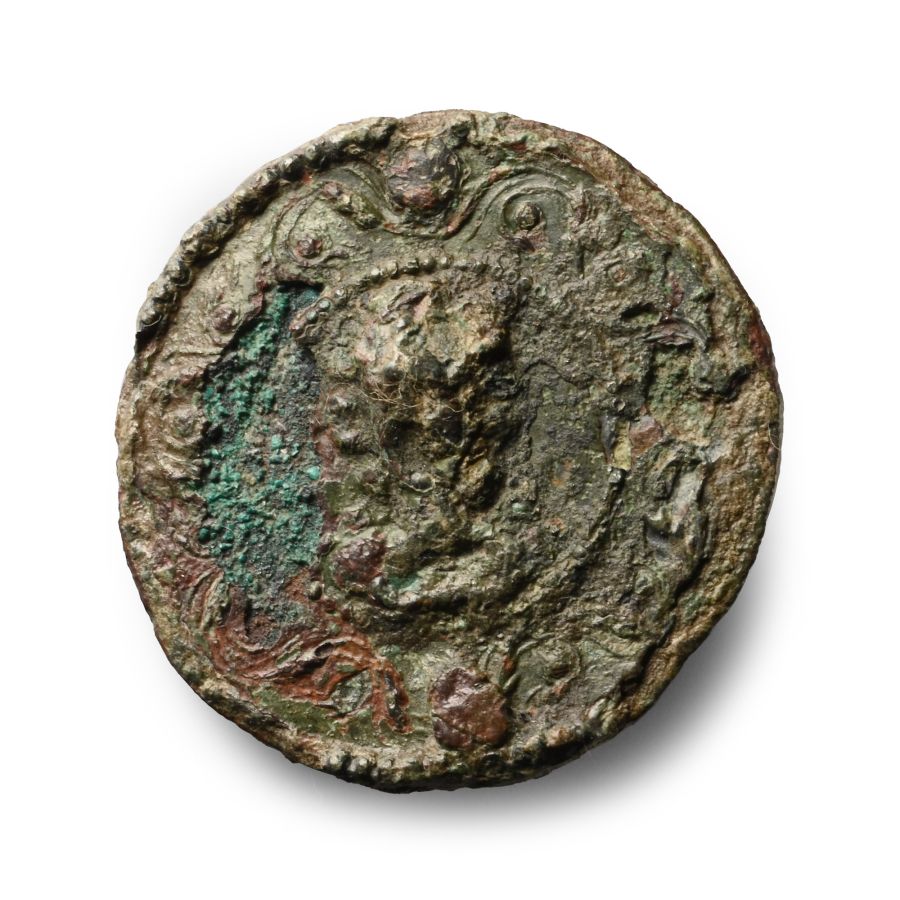
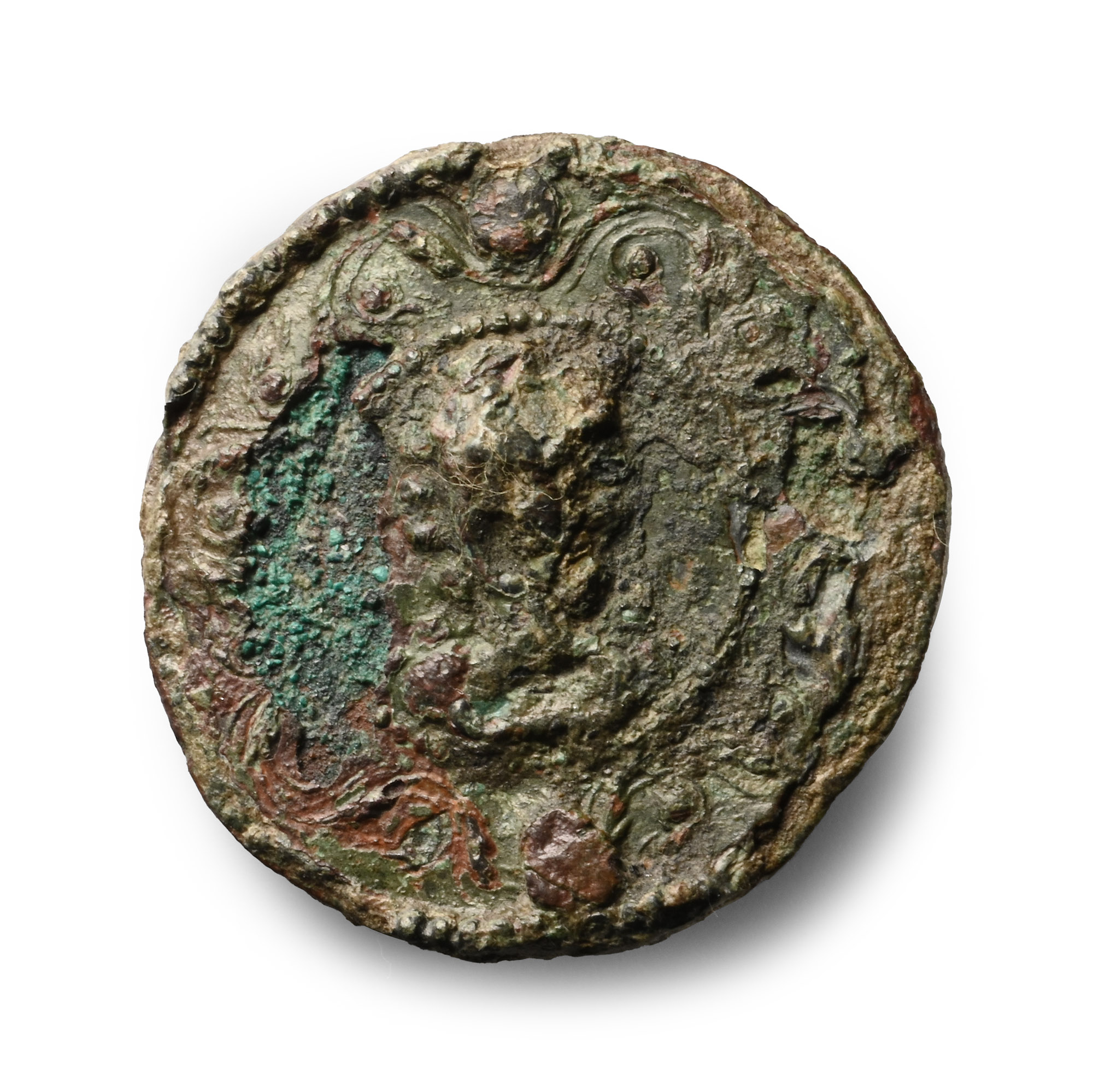
Roman Bronze Plate Brooch with Portrait of an Emperor
2ND CENTURY A.D.
1 1/4 in. (9.47 grams, 32 mm).
Discoid with volute scroll border to the outer edge, central raised image of a profile bust of possibly Tiberius within a beaded border; remains of pin-lugs and catchplate to the reverse. [No Reserve]
ProvenanceAcquired on the UK art market before 2000.
Property of an Essex, UK, gentleman.
This lot is accompanied by an illustrated lot declaration signed by the Head of the Antiquities Department, Dr Raffaele D’Amato.
TimeLine Auctions follows a vetting process to ensure the authenticity and legality of all items, reinforcing our commitment to integrity and responsible trading. Each antiquity, antique, and coin lot undergoes thorough examination by a vetting committee of at least ten external specialists, professional trade association members, scientists, and archaeologists: Our Vetting Process
AUCTIONS:
TimeLine is a leading auction house specialising in antiquities, ancient art, collectables, natural history, coins, medals, and books. Our auctions offer museums, collectors, historians, and enthusiasts the opportunity to acquire unique and historically significant pieces.
-
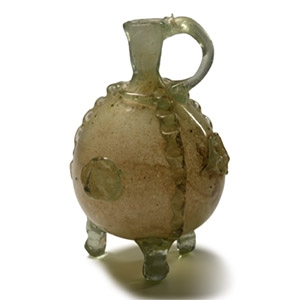
Late Roman Glass Vessel with Trail
4th-5th century A.D.Sold for (Inc. bp): £715
Globular body with narrow funicular neck and squared rim, applied trail strap handle; three applied discs to the equator, two with an impressed cross; applied trail collar to the shoulder and three vertical corrugated trails extending to stub feet, rim restored. 78.1 grams, 10.7 cm
with a London, UK gallery 1971-early 2000s. This lot is accompanied by an illustrated lot declaration signed by the Head of the Antiquities Department, Dr Raffaele D’Amato. -
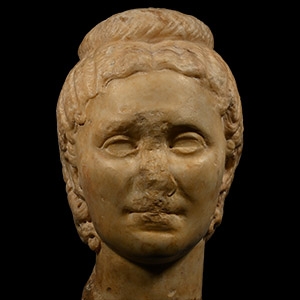
Life-Size Roman Portrait Head of a Roman Lady, Possibly The Empress Salonina
Late 3rd century A.D.Sold for (Inc. bp): £7,800
Portrait head of a woman with an elaborate coiffure, with the hair at the back parted in the middle and the two strands folded over each other and then pulled to the front to form a looped horizontal layer, then parted in the middle of the forehead and drawn to the back of the head, thereby forming ripples; individual curls represented along the hairline up to the completely exposed ears; some modern infills to the forehead area above the left eye, both upper eyelids, both cheeks in the middle area, left nostril and the chin up to the lower lip; heavily cleaned. 16 kg, 34.5 cm
Acquired on the Parisian art market. with Bernard Tinivella, Saint-Ouen. Accompanied by an academic report by Dr Raffaele D’Amato. This lot has been checked against the Interpol Database of stolen works of art and is accompanied by a search certificate number no.12464-228803. This lot has been cleared against the Art Loss Register database, and is accompanied by an illustrated lot declaration signed by the Head of the Antiquities Department, Dr Raffaele D’Amato.
The coiffure is known as 'Scheitelzopf hairstyle' or 'reverse plait'. The closest parallel for this hairstyle is a portrait bust in the Palazzo dei Conservatori (inv. no. 2767), which corresponds in every detail, including the various decorative curls. The same type of hairstyle, albeit with variations in the details (decorative curls and position of the hair loop), is found on a few other portraits of women that were dated to the Period of Gallienus by Marianne Bergmann. Some of the portraits in this typologically related group are likely to be private portraits. Nonetheless, the question must be raised as to whether the portrait shows a member of the imperial family. Hereby physiognomic features and especially imperial coin portraits need to be taken into account. In this context, it is important to note that both eyeballs were reworked, whereby the iris was completely erased. Furthermore, there are pick marks on the eyebrows, eyelids, nose, cheeks, mouth and chin (partly filled in modern times). If these were intentional changes made in the context of the practice of Damnatio memoriae, they would indicate that a lady from the imperial family was represented. The neck has been prepared for insertion into a sculpture. -
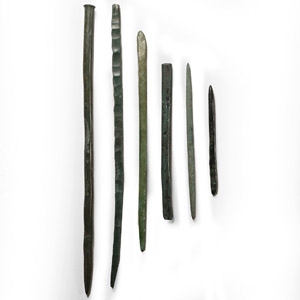
Roman Group of Bronze Stylus and Other Tools
1st-4th century A.D.Sold for (Inc. bp): £117
Including square- and round-section awl, spike and other tools. 88 grams total, 6.2-16.6 cm
Ex German collection, 1990s. This lot is accompanied by an illustrated lot declaration signed by the Head of the Antiquities Department, Dr Raffaele D’Amato.
