
Loading, please wait...


LOT 0799
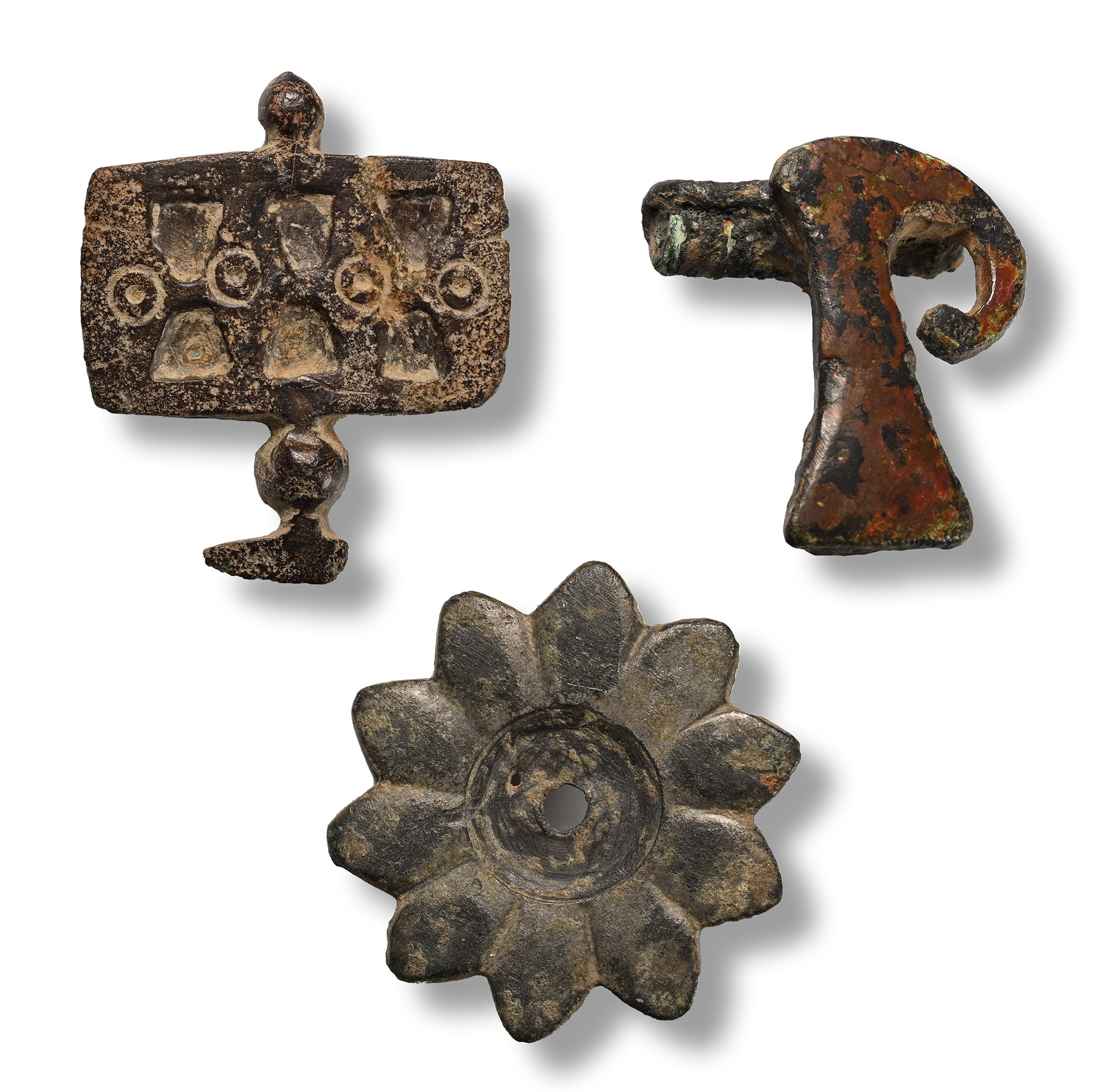
Roman Bronze Plate Brooch Group
1ST-2ND CENTURY A.D.
1 - 1 1/8 in. (15.5 grams total, 24-29 mm).
Comprising: rosette with central cell, pin to reverse; P-shaped plate with spring and pin; rectangular plate with triangular cells. [3, No Reserve]
ProvenanceAcquired on the London art market in the late 1980s-1990s.
From the family collection of an East London, UK, gentleman.
This lot is accompanied by an illustrated lot declaration signed by the Head of the Antiquities Department, Dr Raffaele D’Amato.
Cf. Hattatt, R., Iron Age and Roman Brooches, Oxford, 1985. item 555; Ancient Brooches and Other Artefacts, Oxford, 1989, item 1570; Brooches of Antiquity, Oxford, 1987, item 780, for type.
CONDITIONTimeLine Auctions follows a vetting process to ensure the authenticity and legality of all items, reinforcing our commitment to integrity and responsible trading. Each antiquity, antique, and coin lot undergoes thorough examination by a vetting committee of at least ten external specialists, professional trade association members, scientists, and archaeologists: Our Vetting Process
AUCTIONS:
TimeLine is a leading auction house specialising in antiquities, ancient art, collectables, natural history, coins, medals, and books. Our auctions offer museums, collectors, historians, and enthusiasts the opportunity to acquire unique and historically significant pieces.
-
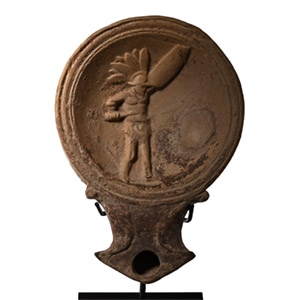
Roman 'Axel Guttmann' Terracotta Gladiator Lamp
1st-2nd century A.D.Sold for (Inc. bp): £2,210
Discoid body with sunken discus with bas-relief scene of a gladiator in combat with gladius poised and scutum raised above his head, D-shaped nozzle with volutes; supplied with a custom-made stand. 167 grams total, 19 cm including stand (lamp 11.6 cm)
Ex Axel Guttmann collection of ancient arms and armour, Germany (1944-2001). Axel Guttmann collection of ancient arms and armour, part 2, Christie's London, 28 April 2004, no.178 (part). Acquired by the present owner at the above sale. Accompanied by a copy of the Christie's lot listing. This lot has been checked against the Interpol Database of stolen works of art and is accompanied by search certificate number no.12235-222198. This lot has been cleared against the Art Loss Register database, and is accompanied by an illustrated lot declaration signed by the Head of the Antiquities Department, Dr Raffaele D’Amato. -
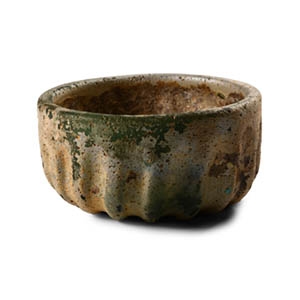
Late Roman Glass Ribbed Dish
Eastern Empire, 5th-6th century A.D.Estimate: £250 - 350 (+bp*)
Opening Bid: £125
Iridescent glass bowl with thick sidewall, vertical ribbing extending to the base, rolled rim. 174 grams, 89 mm
Formerly in North American collection, 1990s. From the collection of a London, UK, gentleman. This lot is accompanied by an illustrated lot declaration signed by the Head of the Antiquities Department, Dr Raffaele D’Amato. -
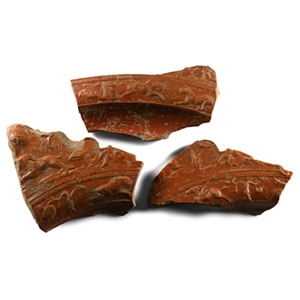
Roman Redware Vessel Fragment Group
4th century A.D.Sold for (Inc. bp): £78
Comprising three fragments from a large dish, each with a running frieze of animals; one with a leaping ibex and tree behind; one with two attacking lions; one with a bull charging at a large dog, an altar behind the bull. 153 grams total, 9.8-10.5 cm
Ex German art market, 2000s. Acquired from an EU collector living in London. From the collection of Surrey, UK, gentleman. This lot is accompanied by an illustrated lot declaration signed by the Head of the Antiquities Department, Dr Raffaele D’Amato.
