
Loading, please wait...
LOT 0122
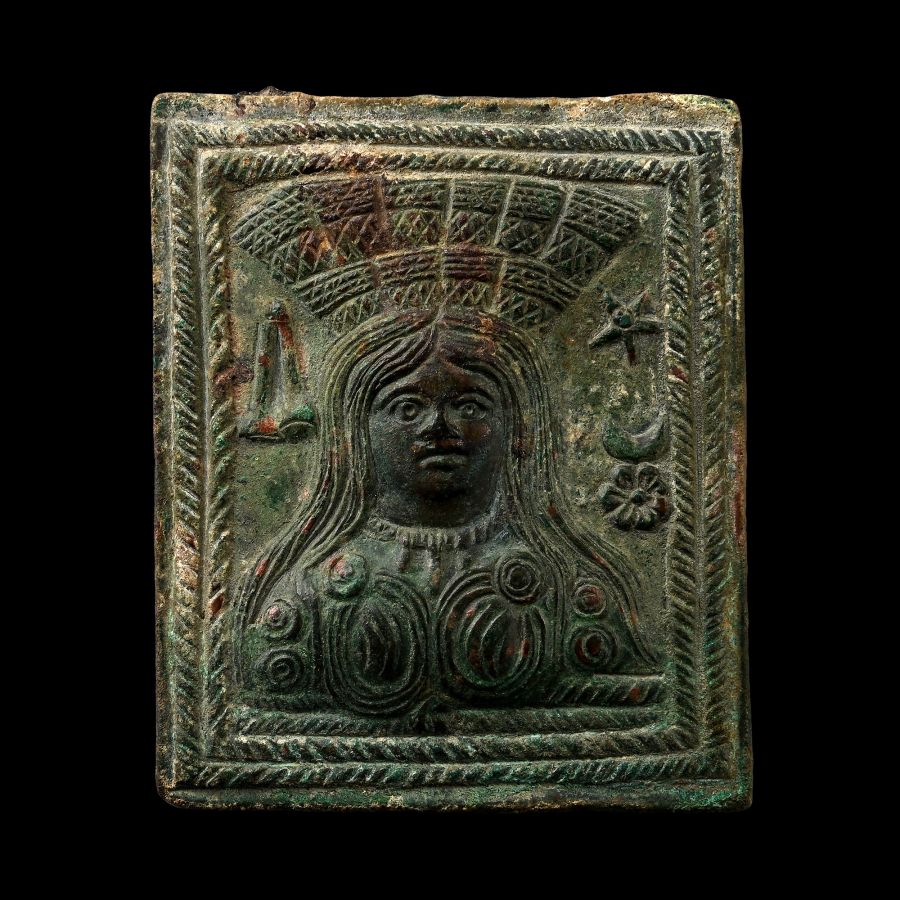
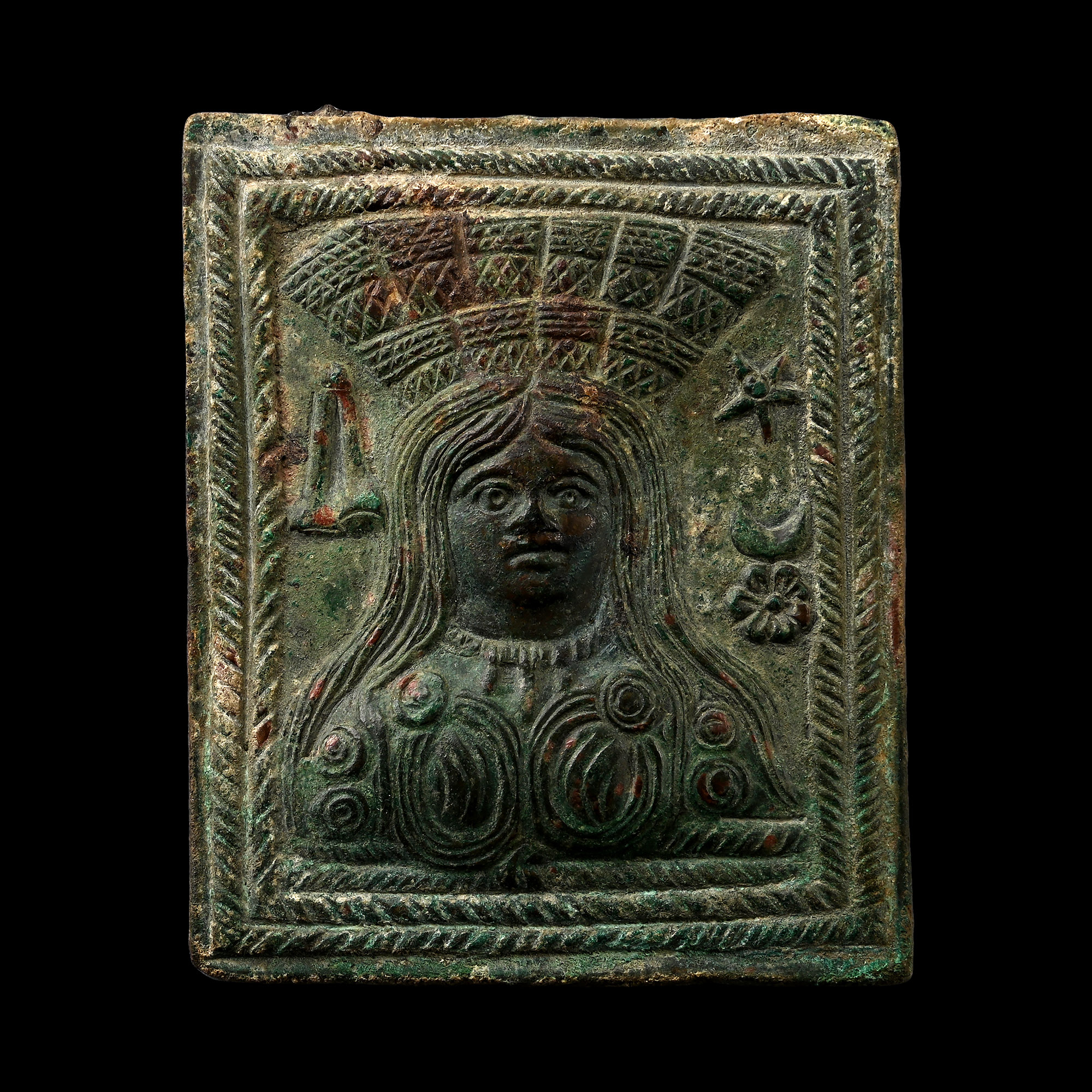
Roman Bronze Plaque with Goddess Cybele
3RD CENTURY A.D.
3 3/4 in. (430 grams, 94 mm).
Rectangular plaque with stepped herringbone border, facing bust of Cybele with flaring turret-crown and cascading hair, symbols in the field.
ProvenanceFrom the collection of a European gentleman living in South London; acquired 1970-1980.
This lot has been checked against the Interpol Database of stolen works of art and is accompanied by search certificate number no.13307-258227.
Cf. a similar plaque in bronze of the goddess in Sackler Museum, Harvard University, inv.no.1993.233.
FootnotesCybele was the great Phrygian mother of the gods, and goddess of motherhood, fertility and the mountain wilds.
CONDITIONTimeLine Auctions follows a vetting process to ensure the authenticity and legality of all items, reinforcing our commitment to integrity and responsible trading. Each antiquity, antique, and coin lot undergoes thorough examination by a vetting committee of at least ten external specialists, professional trade association members, scientists, and archaeologists: Our Vetting Process
AUCTIONS:
TimeLine is a leading auction house specialising in antiquities, ancient art, collectables, natural history, coins, medals, and books. Our auctions offer museums, collectors, historians, and enthusiasts the opportunity to acquire unique and historically significant pieces.
-
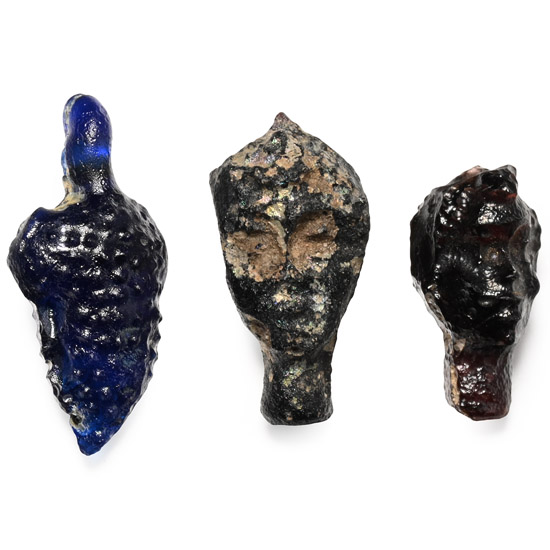
Roman Glass Amulet Group
1st century B.C.-1st century A.D.Sold for (Inc. bp): £85
Comprising: a dark blue grapebunch pendant with an integral loop; two amuletic heads with a short tang below. 2.94 grams total, 14-19 mm
From the private collection of a European gentleman (1942-2024), formed since the 1970s. -
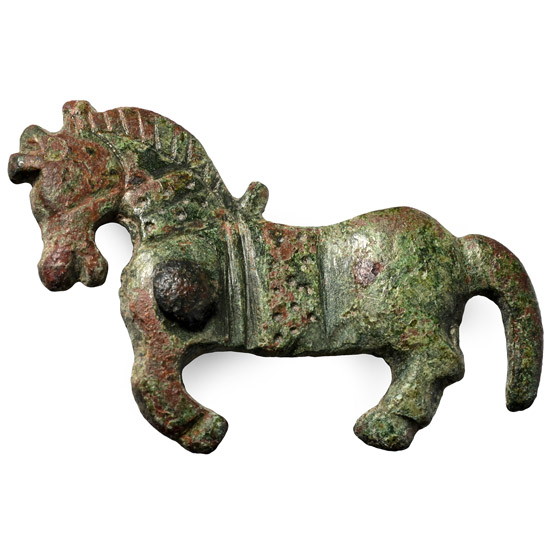
Roman Bronze Horse Plate Brooch
2nd-3rd century A.D.Sold for (Inc. bp): £143
Formed as a caparisoned horse with curved neck and legs, punched detailing on the saddle and neck halter, and three pierced lugs on the reverse. 12.7 grams, 42 mm
From the private coin collection of a West London, UK, gentleman, formed since the mid 1980s. -
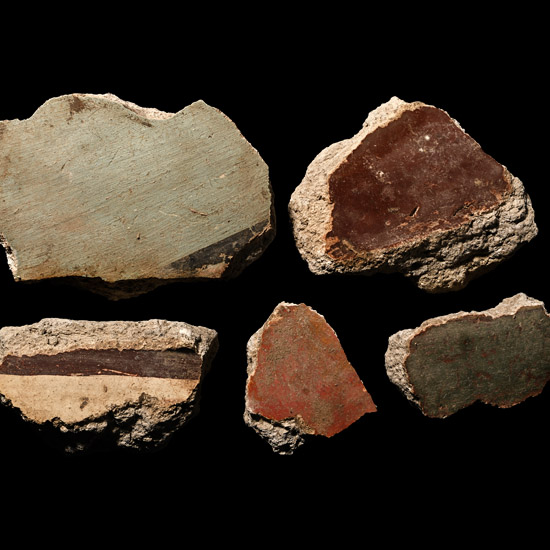
Roman Fresco Wall Plaster Collection
1st century A.D.Sold for (Inc. bp): £390
Fragments of wall plaster with rendered surface painted with mainly Pompeii red, pale blue, brown and white detailing; some with an impression of timber laths to the reverse. 1.46 kg total, 7.9-16 cm
Acquired in the 19th century. Ex Jeger collection, Switzerland. UK gallery, early 2000s.
These small fragments, for analogies with the fragments of Pompeii, seem to belong to the second style of Roman painting, red panels representing highlight and shadow, decorated with vegetal interlaces. A red grenade fillet probably framed some panels. A fragment shows alternate blue and red colours over a cream background, maybe pertinent to a socle.
