
Loading, please wait...
LOT 0674
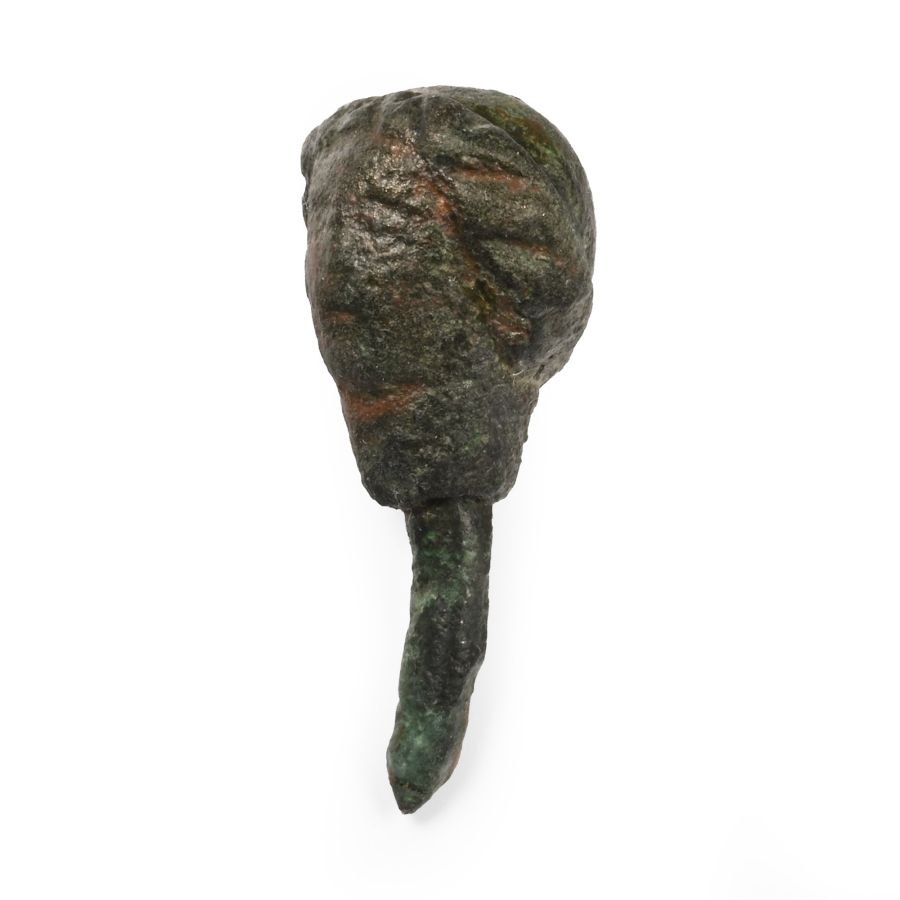
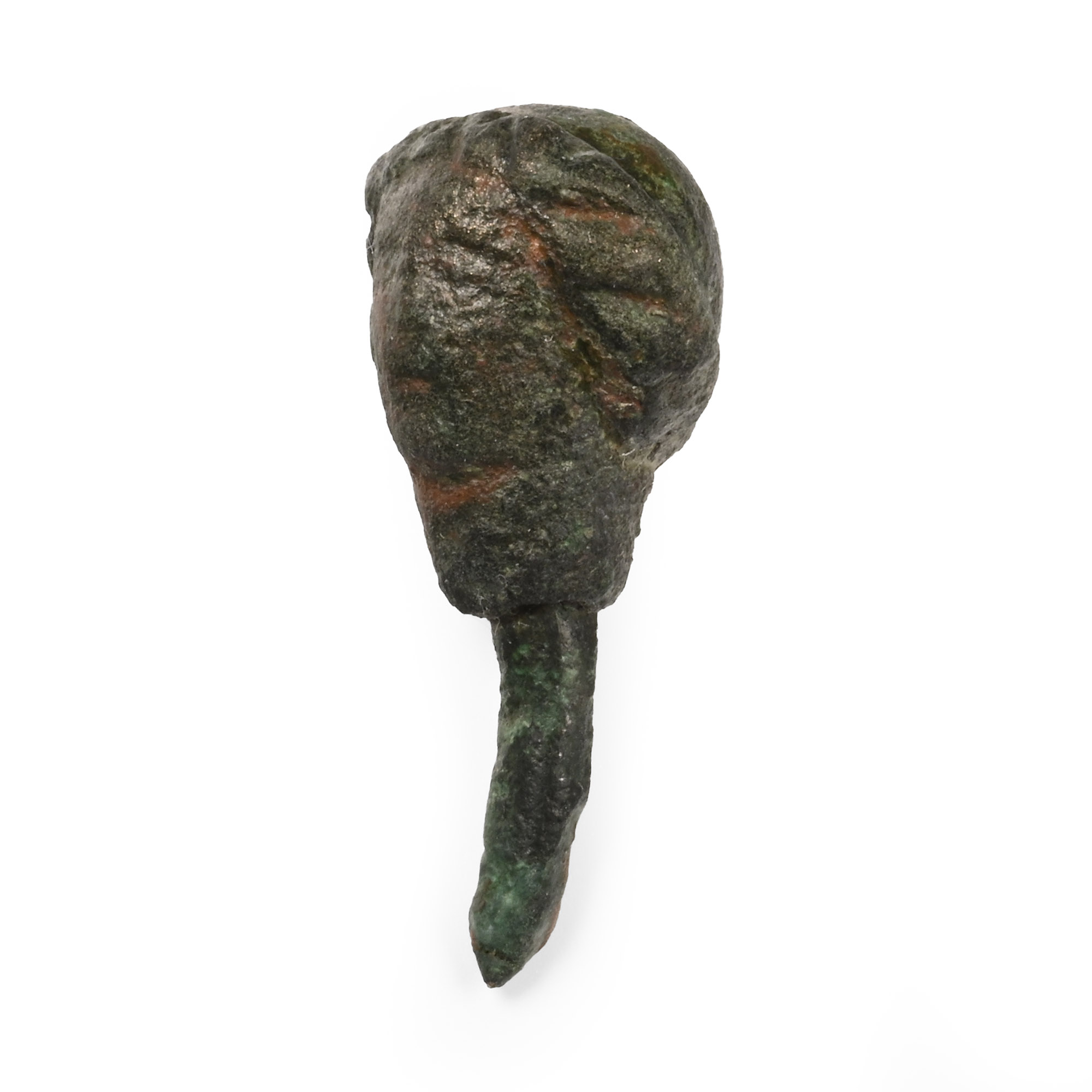
Roman Bronze Pin Head with Bust
3RD-4TH CENTURY A.D.
1 3/8 in. (15.7 grams, 34 mm).
Modelled in the round as a female head with the hair braided around the brow. [No Reserve]
ProvenancePreviously in an old Yorkshire UK, collection.
Property of a private collector, West London, UK.
This lot is accompanied by an illustrated lot declaration signed by the Head of the Antiquities Department, Dr Raffaele D’Amato.
TimeLine Auctions follows a vetting process to ensure the authenticity and legality of all items, reinforcing our commitment to integrity and responsible trading. Each antiquity, antique, and coin lot undergoes thorough examination by a vetting committee of at least ten external specialists, professional trade association members, scientists, and archaeologists: Our Vetting Process
AUCTIONS:
TimeLine is a leading auction house specialising in antiquities, ancient art, collectables, natural history, coins, medals, and books. Our auctions offer museums, collectors, historians, and enthusiasts the opportunity to acquire unique and historically significant pieces.
-
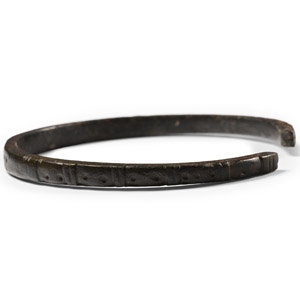
Roman Bronze Decorated Bracelet
1st-4th century A.D.Sold for (Inc. bp): £85
With a rectangular-section body divided into segments with transverse lines, punched pellets in between. 17 grams, 57.7 mm
Ex German art market, 2000s. Acquired from an EU collector living in London. From the collection of Surrey, UK, gentleman. This lot is accompanied by an illustrated lot declaration signed by the Head of the Antiquities Department, Dr Raffaele D’Amato. -

Roman Bronze Fist Pendant and Ear Scoop
1st-3rd century A.D.Sold for (Inc. bp): £65
Comprising: amuletic pendant formed as a hand in the fica gesture; cosmetic ear-scoop. 9.87 grams total, 30-37 mm
Acquired on the European art market. Ex California, USA, private collection, 1980-2000. This lot is accompanied by an illustrated lot declaration signed by the Head of the Antiquities Department, Dr Raffaele D’Amato. -
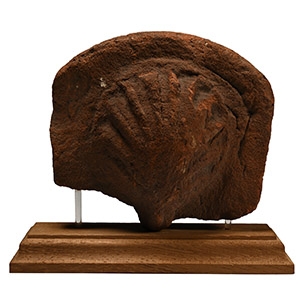
Roman 'Burgh Castle' Terracotta Antefix Shell Decoration
1st-4th century A.D.Sold for (Inc. bp): £169
The upper part of an antefix, rounded in shape and decorated with a 16-armed shell shape; mounted on a custom-made display stand. 342 grams total, 13 cm wide including stand
Found Burgh Castle, Great Yarmouth, Suffolk, UK. From the collection of a late East Anglian teacher and antiquarian who retired to the Isle of Wight in Hampshire, UK. He amassed a large collection of objects between the 1960s-1980s. This lot is accompanied by an illustrated lot declaration signed by the Head of the Antiquities Department, Dr Raffaele D’Amato.
Antefix tiles in Britain are rare and typically comprise a decorated vertical panel of triangular or pentagonal shape, though some are known to have a rounded top, and they have a lug or a semi-circular flange on the reverse designed to fit into the open end of either the lowest course of embraces on a roof, or into the gable end of the ridge tiles. Antefix tiles have sanded decorated surfaces showing that they were made in sanded moulds rather than being stamped. The majority of antefix tiles in Britain are decorated with human masks, though several other designs are known: pentagonal panels, vine leaves with grapes, gorgon heads, a female head with a stylised headdress, a second design of female head and a man fishing.
