
Loading, please wait...
LOT 0850
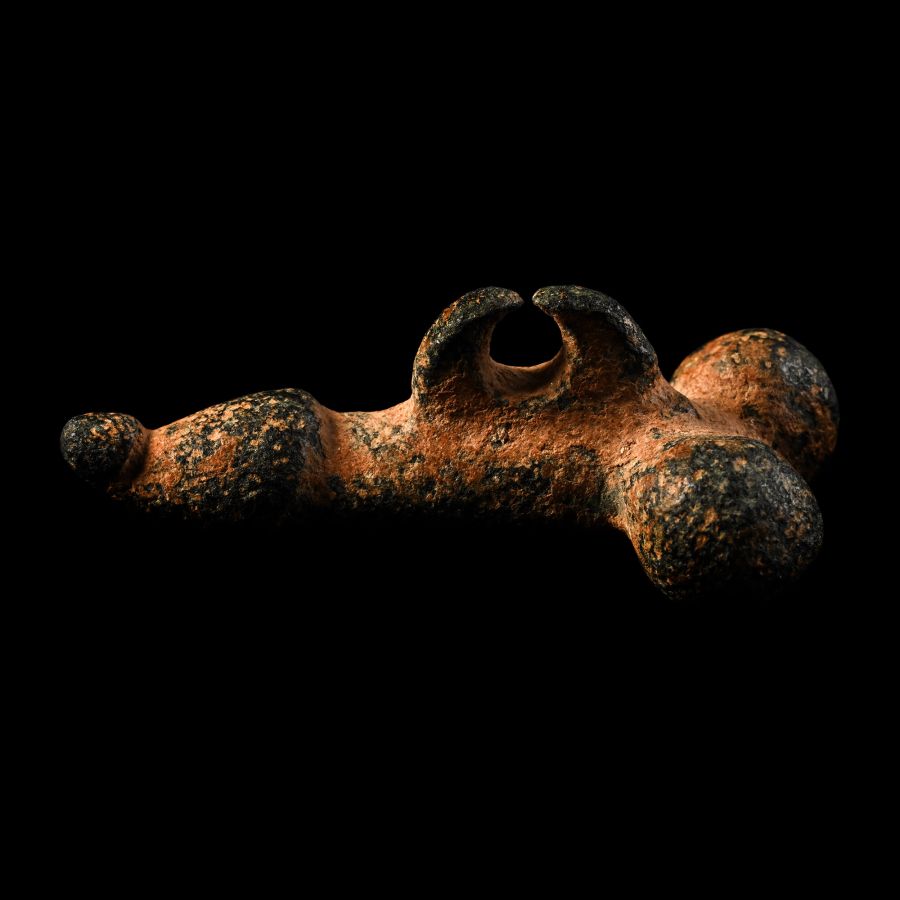
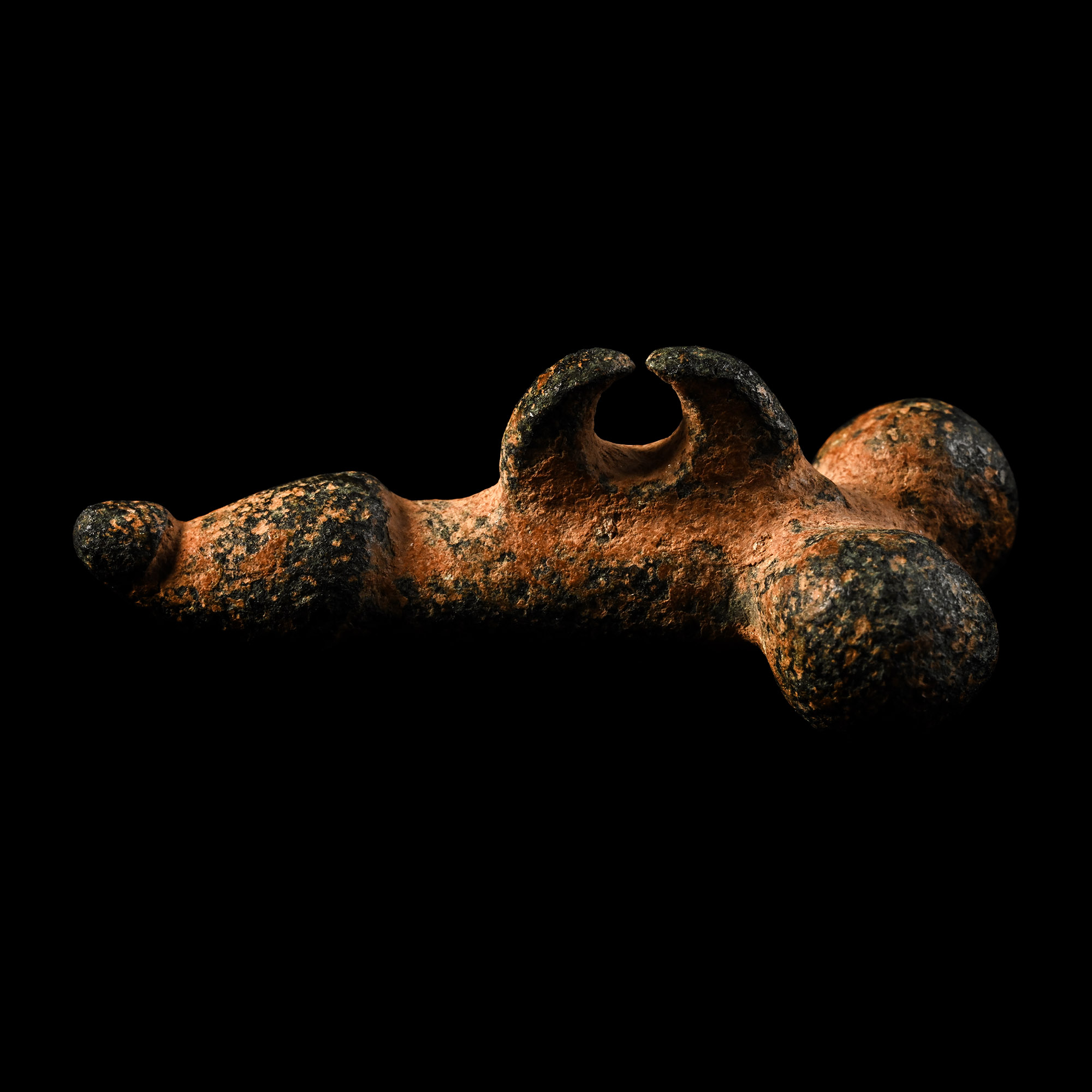
Roman Bronze Phallic Pendant
1ST-3RD CENTURY A.D.
1 3/4 in. (26.5 grams, 44 mm).
Amuletic pendant of a phallus with testes, suspension loop to the upper rear.
ProvenanceUK private collection before 2000.
Acquired on the UK art market.
Private collection, London, UK.
See Rolland, H., Bronzes Antiques de Haute Provence, Paris, 1965, items 424-425, for type.
CONDITIONTimeLine Auctions follows a vetting process to ensure the authenticity and legality of all items, reinforcing our commitment to integrity and responsible trading. Each antiquity, antique, and coin lot undergoes thorough examination by a vetting committee of at least ten external specialists, professional trade association members, scientists, and archaeologists: Our Vetting Process
AUCTIONS:
TimeLine is a leading auction house specialising in antiquities, ancient art, collectables, natural history, coins, medals, and books. Our auctions offer museums, collectors, historians, and enthusiasts the opportunity to acquire unique and historically significant pieces.
LOT 0850
Roman Bronze Phallic Pendant
Estimate £300 - 400€350 - 460 (for guidance only)$410 - 540 (for guidance only)
-
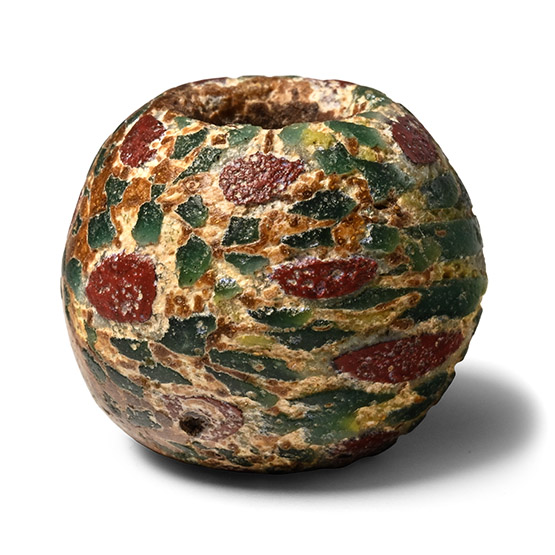
Roman Mosaic Glass Bead
1st-3rd century A.D.Sold for (Inc. bp): £65
Biconvex in profile with mosaic pattern on a cream-white field. 9.77 grams, 21 mm
London collection, 1979-1983. -
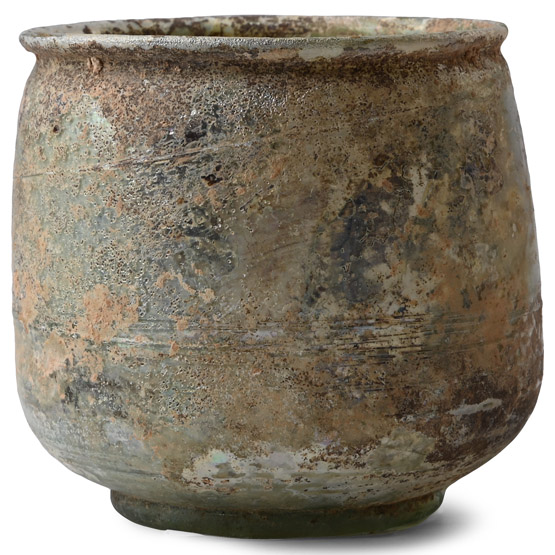
Roman Iridescent Glass Cup with Trail
Circa 1st-4th century A.D.Estimate: £350 - 450 (+bp*)
Opening Bid: £175
Drum-shaped body on a low basal ring and everted rim, bands to the outer face; iridescent surface. 33.8 grams, 71 mm
From a London, UK, collection of glass, 1970-2000s. -
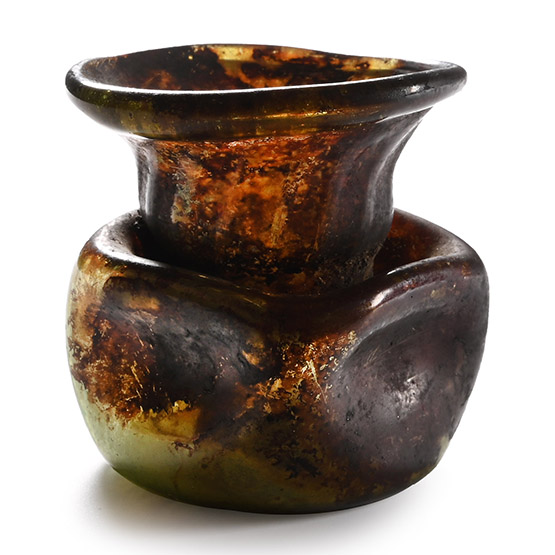
Roman Square Green Glass Flask
6th-7th century A.D.Estimate: £150 - 200 (+bp*)
Opening Bid: £81
With dimple to the underside, squat square body and wide everted rim. 34.7 grams, 49 mm
From an important London collection of glass, 1990s.
The object is certainly Late Roman in shape, although similar typologies did also exist in early Islamic glasswork. The bottle was probably blown into a flat mould to produce the ribs, then expanded and tooled to form the body.
