
Loading, please wait...

LOT 0731
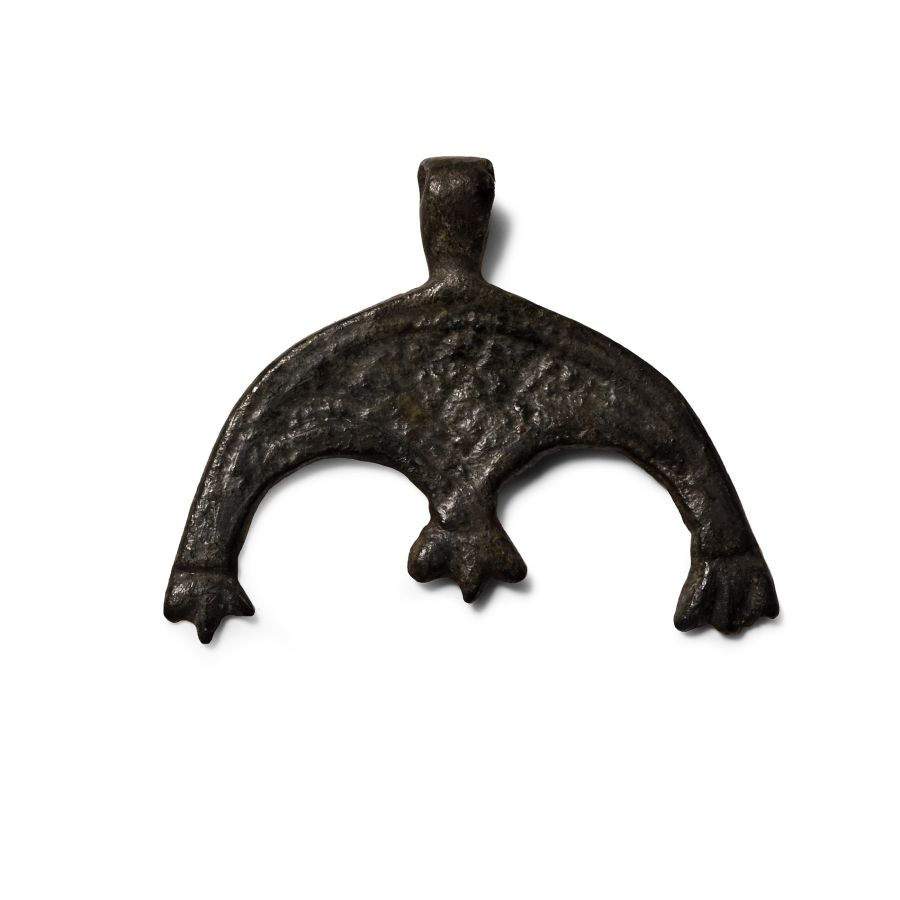
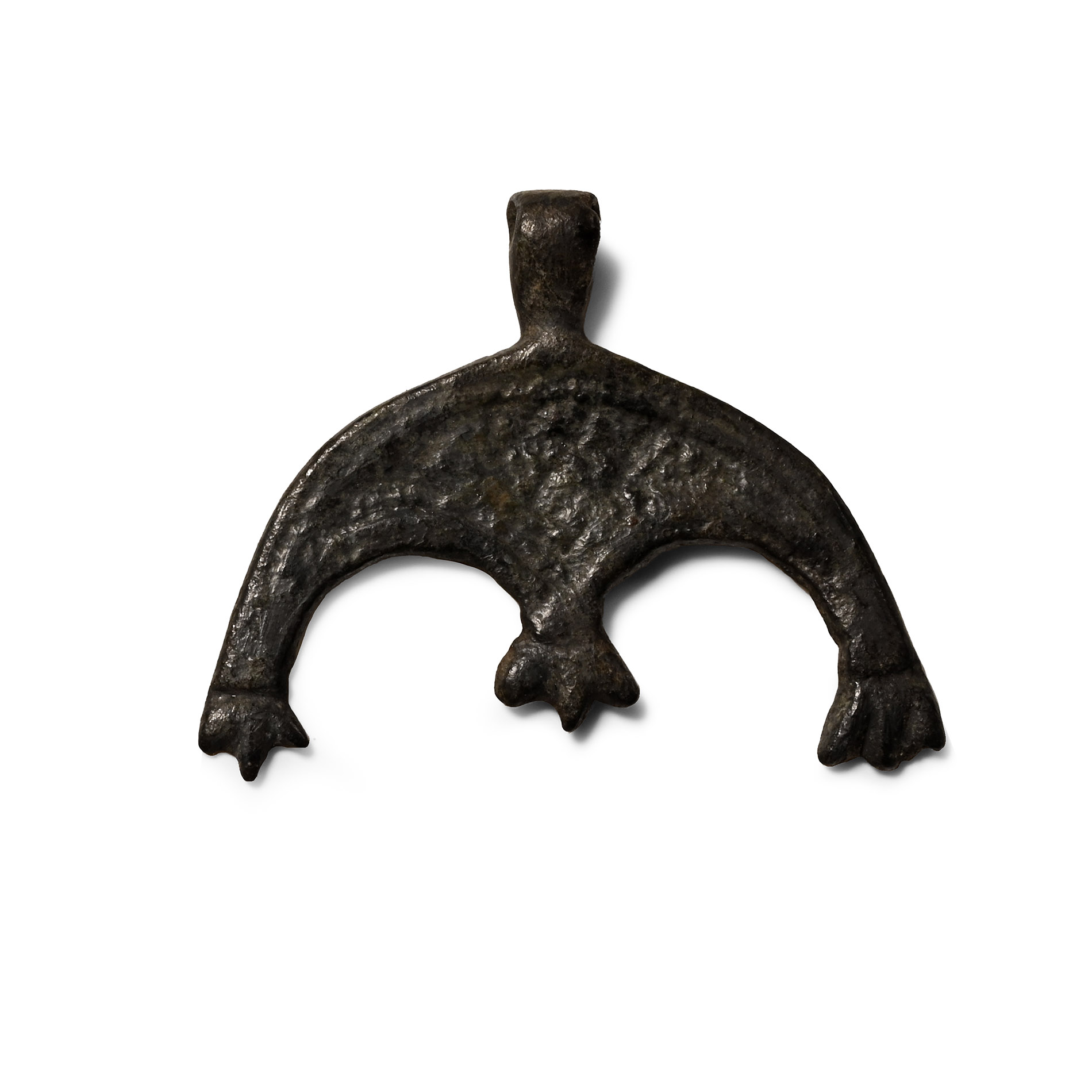
Roman Bronze Phallic Pendant
1ST-2ND CENTURY A.D.
1 3/8 in. (3.35 grams, 36 mm).
Crescentic pendant with phallic terminals, male genitals to the centre, hatched decoration to the body. [No Reserve]
ProvenanceEx German art market, 2000s.
Acquired from an EU collector living in London.
From the collection of Surrey, UK, gentleman.
TimeLine Auctions follows a vetting process to ensure the authenticity and legality of all items, reinforcing our commitment to integrity and responsible trading. Each antiquity, antique, and coin lot undergoes thorough examination by a vetting committee of at least ten external specialists, professional trade association members, scientists, and archaeologists: Our Vetting Process
AUCTIONS:
TimeLine is a leading auction house specialising in antiquities, ancient art, collectables, natural history, coins, medals, and books. Our auctions offer museums, collectors, historians, and enthusiasts the opportunity to acquire unique and historically significant pieces.
-
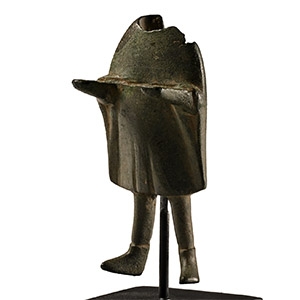
Roman Bronze Traveller Statuette
2nd-3rd century A.D.Sold for (Inc. bp): £91
Hollow-formed figure wearing a paenula and with hands extended to support a patera or salver; mounted on a custom-made stand. 35.8 grams total, 64 mm including stand
From a collection acquired on the UK art market from various auction houses and collections mostly before 2000. From an important Cambridgeshire estate; thence by descent. -
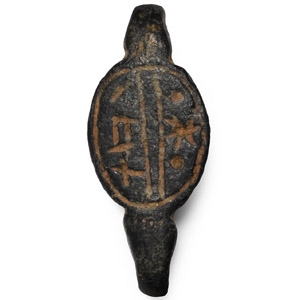
Roman Bronze Ring Bezel with Inscription
1st-2nd century A.D.Sold for (Inc. bp): £33
Ellipsoid bezel with enigmatic text in two registers; hoop absent. 2.6 grams, 27 mm
From the collection of a gentleman, acquired on the London art market in the 1990s. -
.jpg)
Roman Bronze Horse Bow Brooch
Circa 3rd century A.D.Sold for (Inc. bp): £78
With pricked ears, arched neck, D-shaped saddle and bobbed tail; the lower hindlegs developing into a headplate similar to a Roman crossbow brooch; the hinge-notch present on the headplate, the pin and catchplate absent. 29.8 grams, 47 mm
Acquired late 1980s-early 1990s. Ex private collection, Nottinghamshire, UK. Property of a Kent lady collector.
