
Loading, please wait...
LOT 0583
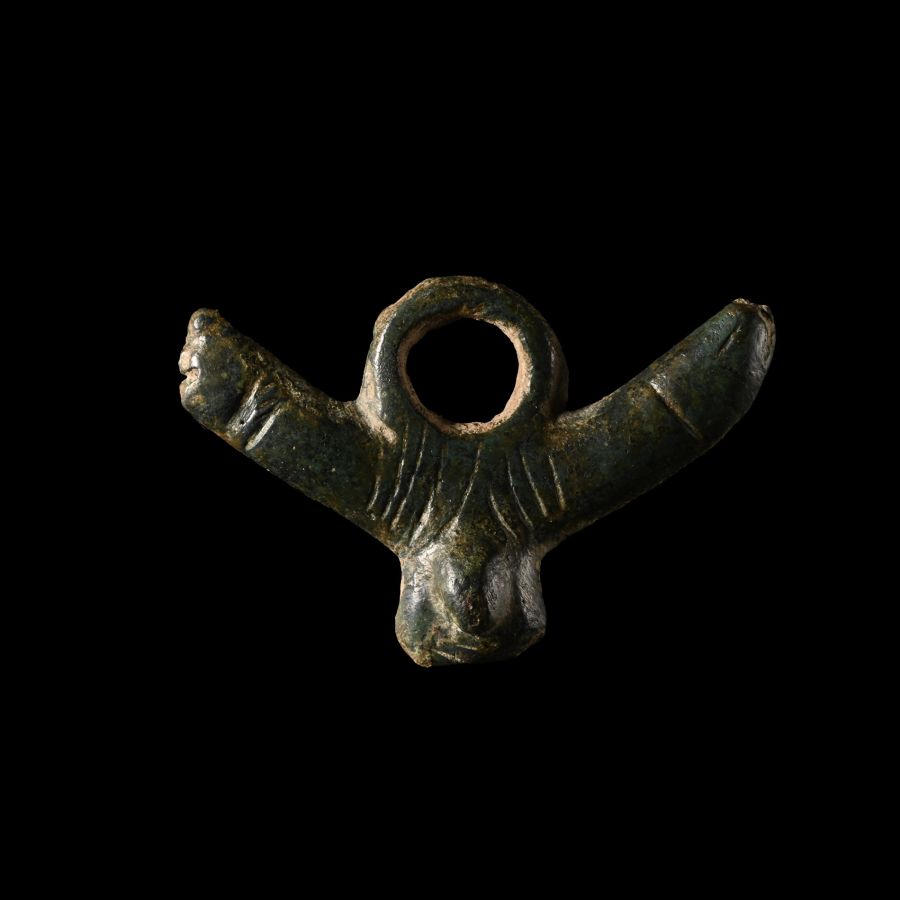
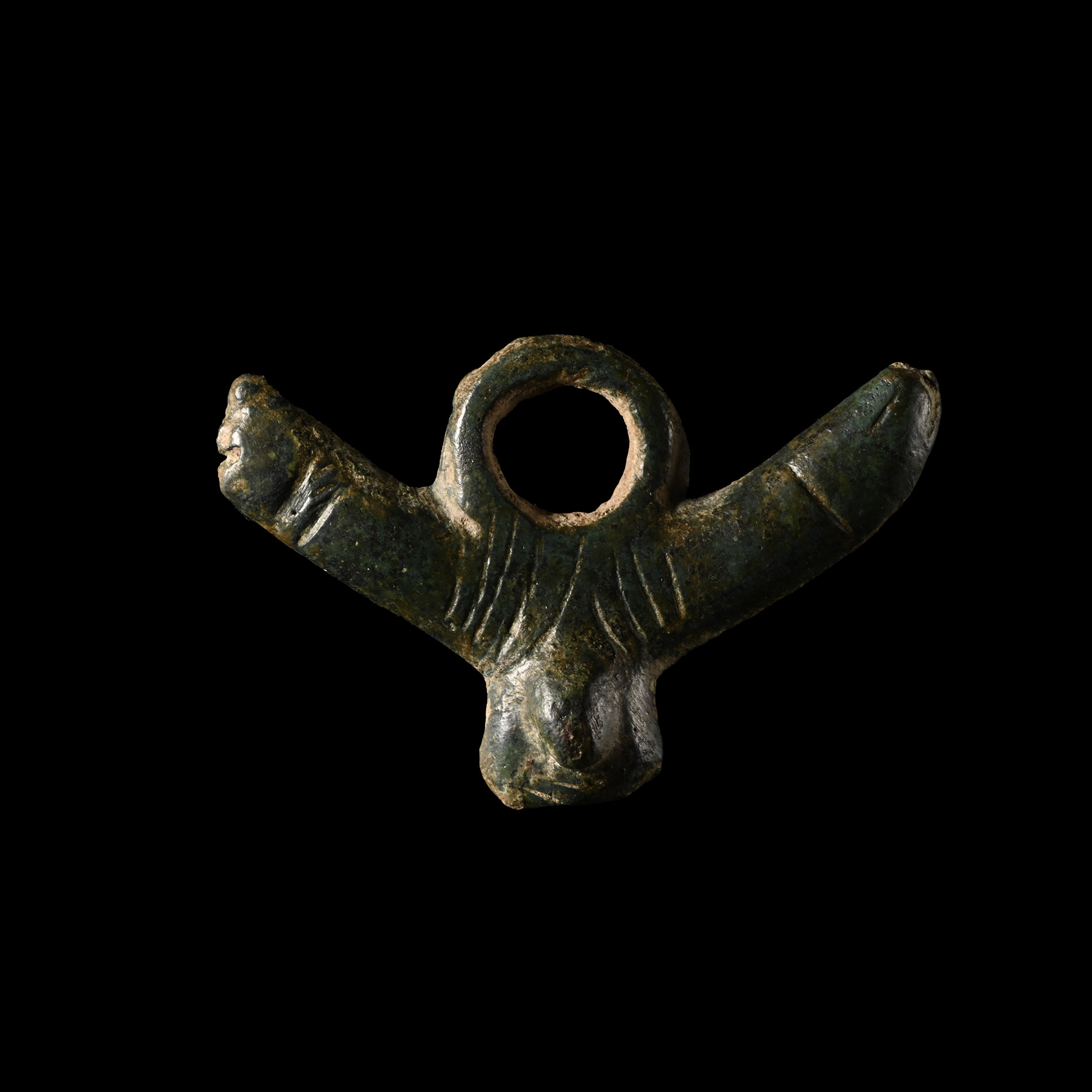
Roman Bronze Phallic Pendant
2ND-3RD CENTURY A.D.
2 5/8 in. (35.4 grams, 67 mm).
Comprising a crescent formed from a phallus and an arm with the hand in the fica gesture, loop above and male genitals below.
ProvenanceProperty of a London gentleman, 1990s.
LiteratureCf. Beutler, F. et al., Der Adler Roms. Carnuntum und der Armee der Cäsaren, Bad-Deutsch Altenberg, 2017, item 760, for type.
CONDITIONTimeLine Auctions follows a vetting process to ensure the authenticity and legality of all items, reinforcing our commitment to integrity and responsible trading. Each antiquity, antique, and coin lot undergoes thorough examination by a vetting committee of at least ten external specialists, professional trade association members, scientists, and archaeologists: Our Vetting Process
AUCTIONS:
TimeLine is a leading auction house specialising in antiquities, ancient art, collectables, natural history, coins, medals, and books. Our auctions offer museums, collectors, historians, and enthusiasts the opportunity to acquire unique and historically significant pieces.
-
Roman Fresco Painted Wall Plaster Collection
1st century A.D.Sold for (Inc. bp): £65
Comprising five pieces in cream and red with sweeping and architectural motifs painted in contrasting colours. 539 grams total, 61-87 mm
Acquired in the 19th century. Ex Jeger collection, Switzerland. -
.jpg)
Roman Carnelian Victory Gemstone
Circa 2nd-3rd century A.D.Sold for (Inc. bp): £234
With intaglio image of winged Victory and a perching eagle; supplied with a museum-quality impression. 0.38 grams, 11 mm
From the collection of a Swiss gentleman formed in Europe from 1970-1980s; thence by descent from the family in London. -
.jpg)
Eastern Roman Bust of the Daughter of Aqima
2nd-3rd century A.D.Sold for (Inc. bp): £37,700
Modelled in the round with a fragment of stand to the rear; the figure carefully carved to exhibit the delicate facial features and elaborate hairstyle; the palla drawn up over the head and falling over the shoulders to the upper arms; a diadem to the brow with foliage and tendril detailing; elaborate earrings with dangles; necklace of fusiform and tubular beads and a longer one below with piriform plaques; large disc brooch to the left breast with dangles; peplos-style dress draped across the body beneath the palla; left arm bent and hand passing across the body to grasp the hem of the palla with a herringbone bracelet at the wrist; the palla displayed pinned with rosettes to the rear panel; with inscription of thirteen Palmyrene characters above the left shoulder 'NRW' // BRT // 'QM' // ḤBL' meaning 'daughter of Aqima'; traces of red and green pigment; mounted on a custom-made stand by Colin Bowles Ltd. 78.2 kg total, 57 cm high including stand
From a private American collection, acquired in the 1970s. Ex Leon Simard, a Trustee to the National Museum of Canada, prior to 1986. Acquired from Summer Gallery, 29 May 1986. with Archaelogia Gallery, Canada, 1986 to present. Accompanied by an Art Loss Register certificate number S00237794, dated 3 November 2023. Accompanied by an academic report by Dr Raffaele D’Amato. This lot has been checked against the Interpol Database of stolen works of art and is accompanied by search certificate no.11825-207620.
The sculpture is a good example of 2nd-3rd century A.D. Palmyrene female funerary portrait types. The amount of jewellery displayed in these portraits could be a direct reflection of the wealth of the family, and certainly they reflected the jewellery possessed by the owner of the grave. Particularly important is the gesture of the raised hand: the evidence from several sanctuaries in the city corroborates the connection between this gesture and the female gender. There is no indication that the raised arm was associated with worship in the funerary sphere.
