
Loading, please wait...
LOT 0757
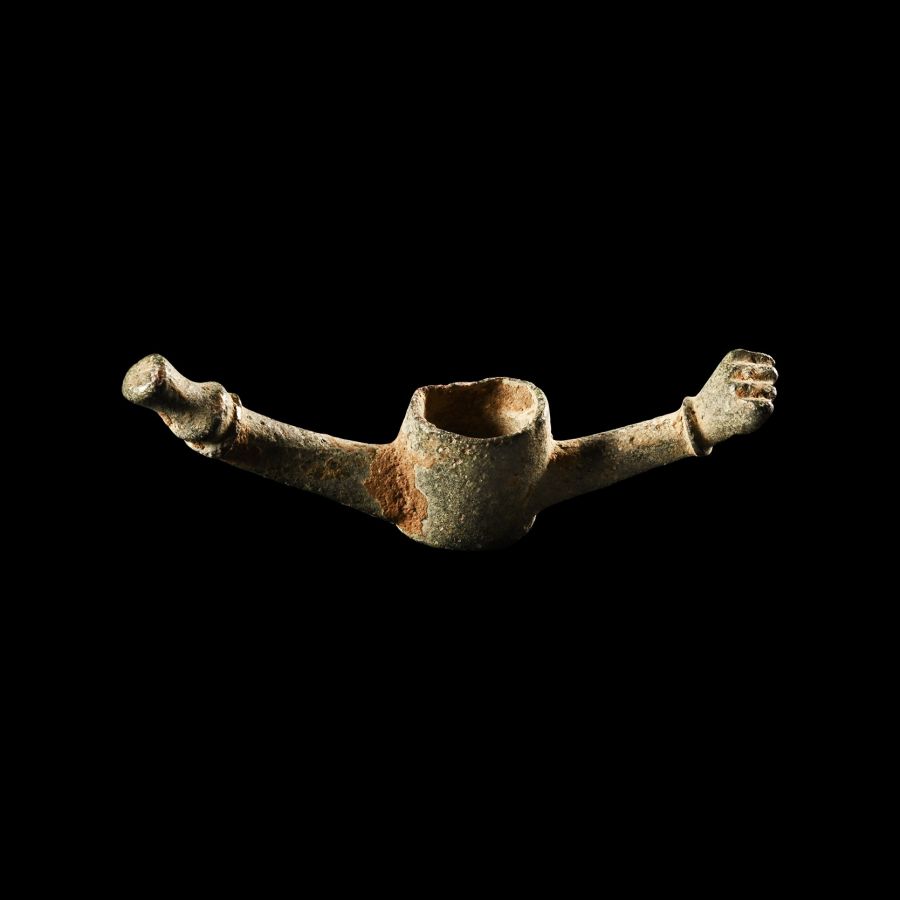
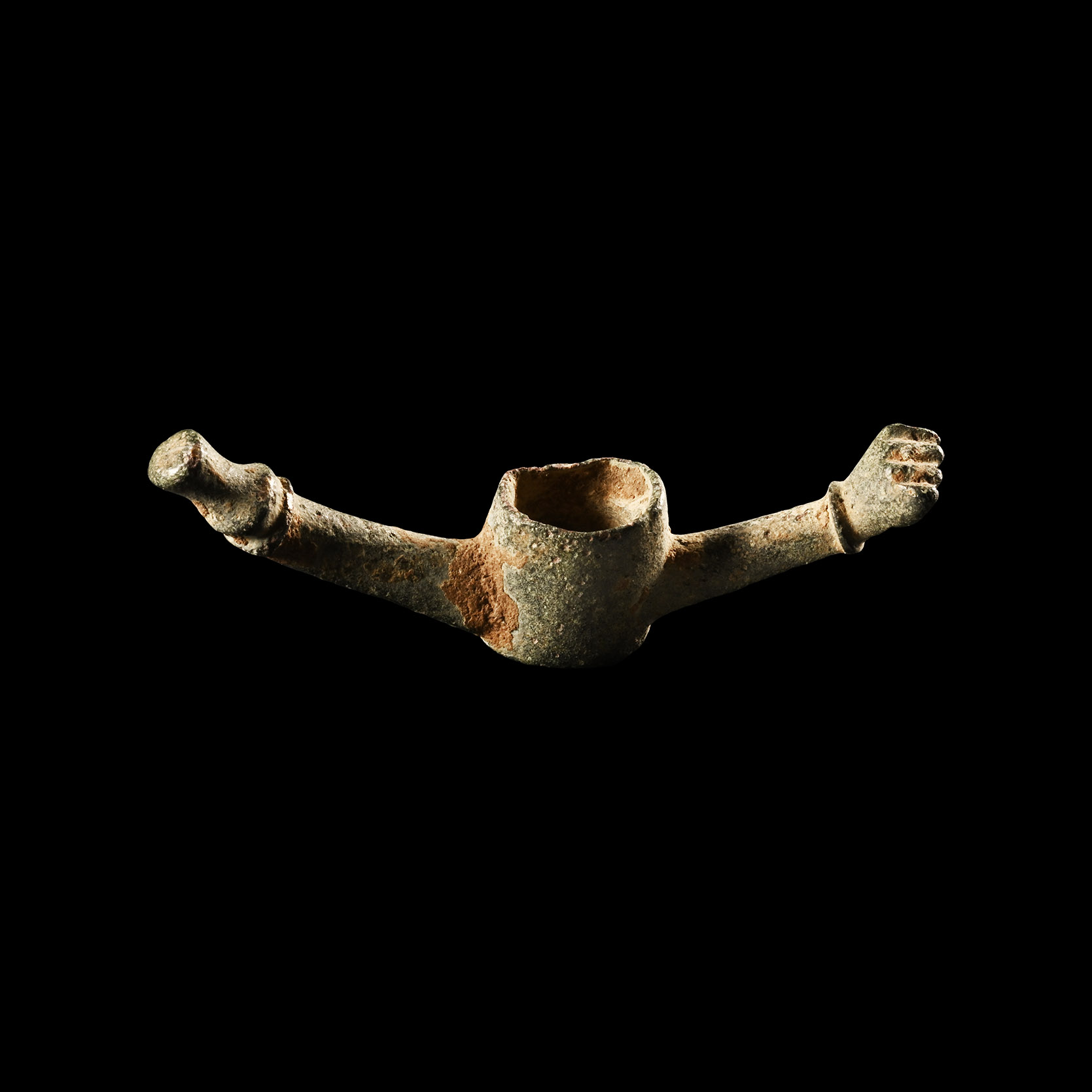
Roman Bronze Phallic and Fist Fitting
1ST-4TH CENTURY A.D.
21/4 in. (12.8 grams, 57 mm).
The central circular socket flanked by a stylised phallus on one side and an extended arm with clenched fist on the other.
ProvenanceFrom the collection of a Cambridge lady, 1990s.
CONDITIONTimeLine Auctions follows a vetting process to ensure the authenticity and legality of all items, reinforcing our commitment to integrity and responsible trading. Each antiquity, antique, and coin lot undergoes thorough examination by a vetting committee of at least ten external specialists, professional trade association members, scientists, and archaeologists: Our Vetting Process
AUCTIONS:
TimeLine is a leading auction house specialising in antiquities, ancient art, collectables, natural history, coins, medals, and books. Our auctions offer museums, collectors, historians, and enthusiasts the opportunity to acquire unique and historically significant pieces.
LOT 0757
Roman Bronze Phallic and Fist Fitting
Estimate £150 - 200€170 - 230 (for guidance only)$200 - 270 (for guidance only)
-
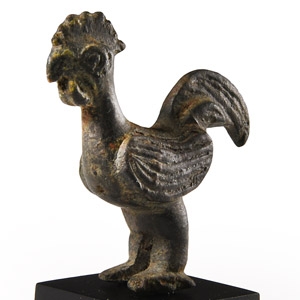
Roman Bronze Cockerel Statuette
1st-4th century A.D.Estimate: £250 - 350 (+bp*)
Opening Bid: £139
Free standing being modelled in the round with feather detailing. 56 grams, 51 mm
‘The Ancient Menagerie Collection’ formerly the property of a Cambridgeshire lady, collected since the 1990s and acquired from auctions and dealers throughout Europe and the USA, now ex London collection. -
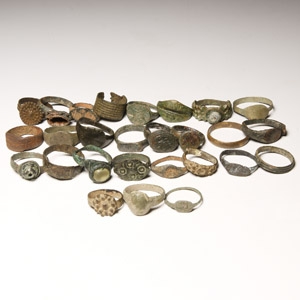
Roman and Later Bronze Ring Collection
1st-19th century A.D.Sold for (Inc. bp): £124
Featuring a range of ring sizes and types; the majority with decorative bezels displaying floral, geometric, buckle and other designs, including one inscribed 'TIT /TIT' over two lines. 75 grams total, 16-30 mm
Acquired on the UK art market. Property of a Ruislip, UK, gentleman, by inheritance. -
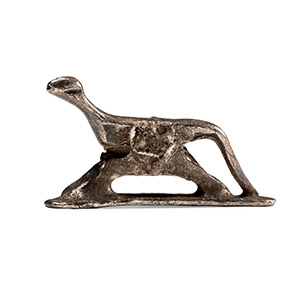
Roman Silver Sinuous Feline Statuette
1st-4th century A.D.Estimate: £60 - 80 (+bp*)
Opening Bid: £33
Modelled in the round with semi-naturalistic detailing, sinuous standing on a slender rectangular base. 1.05 grams, 20 mm wide
‘The Ancient Menagerie Collection’ formerly the property of a Cambridgeshire lady, collected since the 1990s and acquired from auctions and dealers throughout Europe and the USA, now ex London collection.
