
Loading, please wait...
LOT 0559
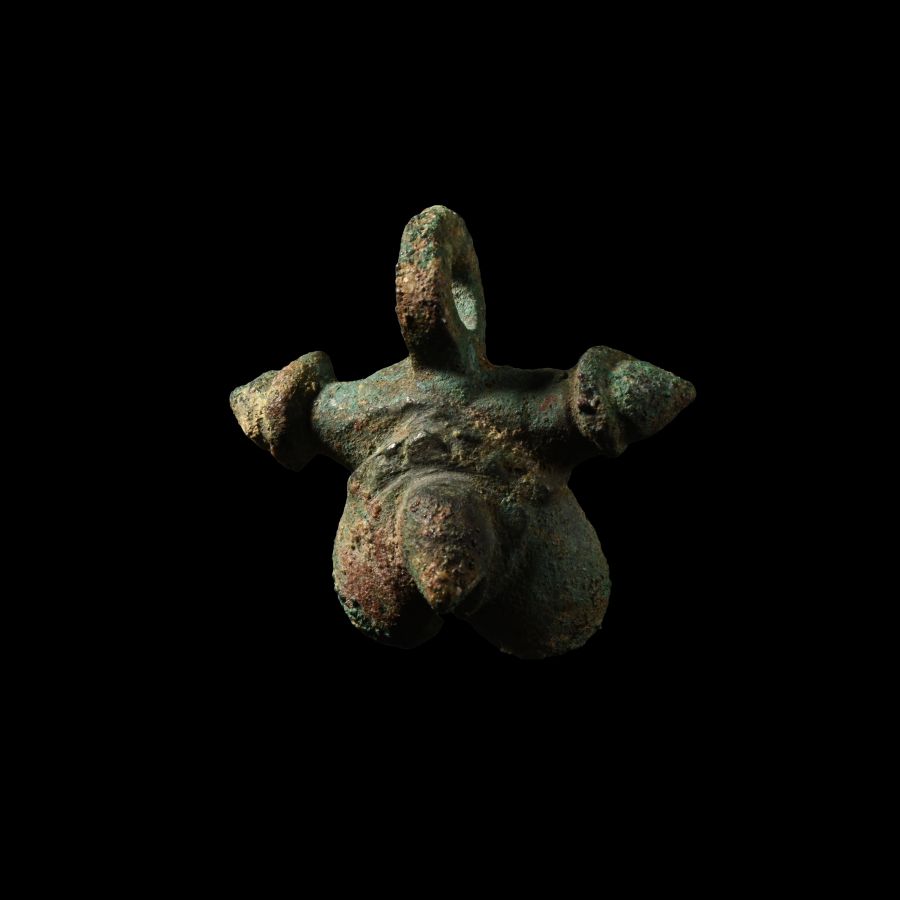
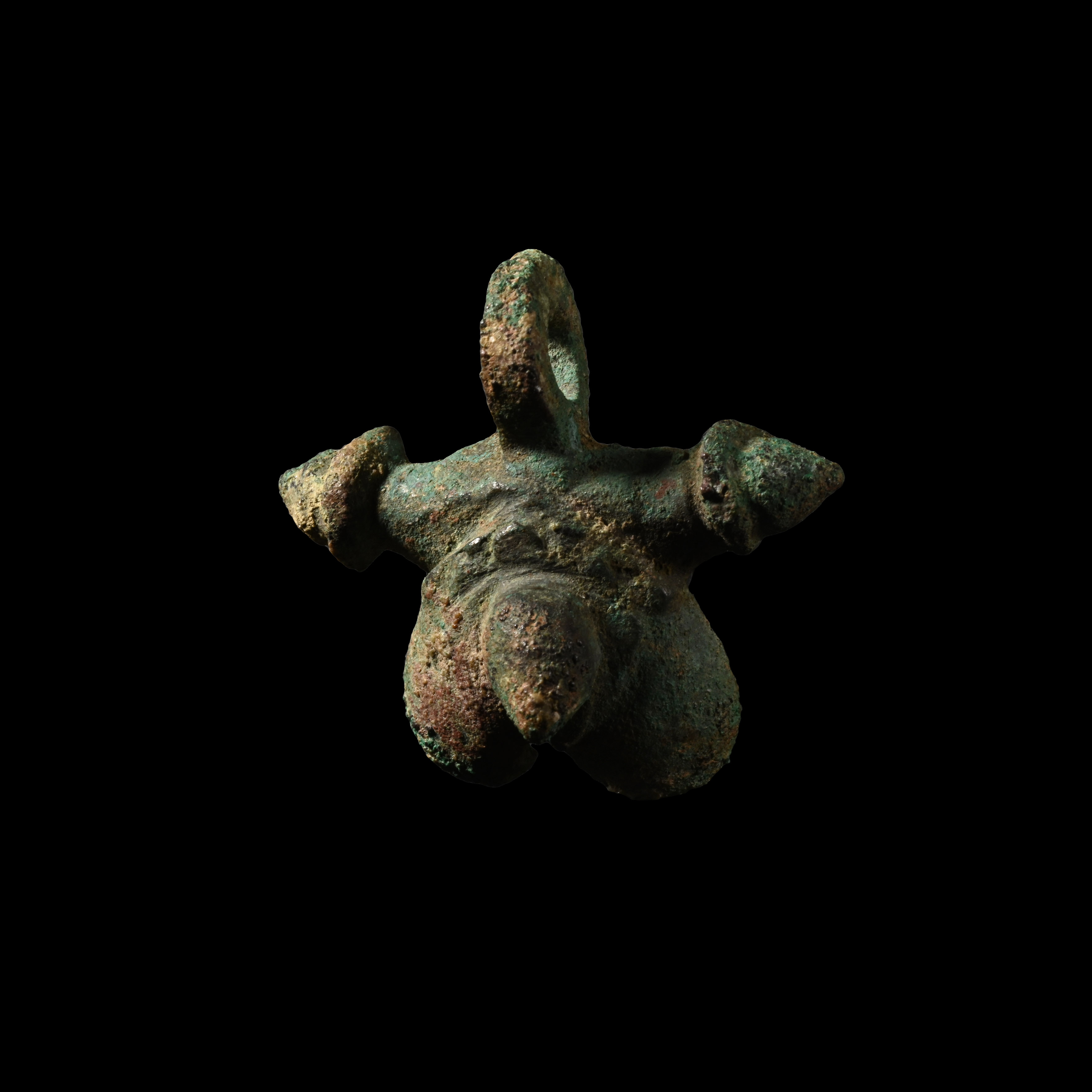
Roman Bronze Phallic Amulet
1ST-3RD CENTURY A.D.
1 3/8 in. (19.1 grams, 34 mm).
Comprising male genitals flanked by stubby phalloi above, pierced suspension lug.
ProvenanceAcquired early 1990s.
Ex private American collection; thence by descent.
Private Swiss collection since 1998.
Cf. Beutler, F. et al., Der Adler Roms. Carnuntum und die Armee der Cäsaren, Bad-Deutsch-Altenburg, 2017, item 761, for type.
CONDITIONTimeLine Auctions follows a vetting process to ensure the authenticity and legality of all items, reinforcing our commitment to integrity and responsible trading. Each antiquity, antique, and coin lot undergoes thorough examination by a vetting committee of at least ten external specialists, professional trade association members, scientists, and archaeologists: Our Vetting Process
AUCTIONS:
TimeLine is a leading auction house specialising in antiquities, ancient art, collectables, natural history, coins, medals, and books. Our auctions offer museums, collectors, historians, and enthusiasts the opportunity to acquire unique and historically significant pieces.
LOT 0559
Roman Bronze Phallic Amulet
Estimate £200 - 300€230 - 350 (for guidance only)$270 - 410 (for guidance only)
-
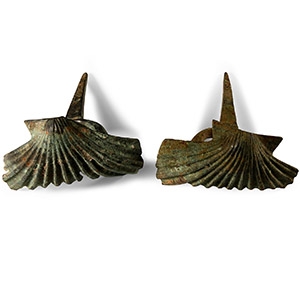
Roman Bronze Scallop Shell Attachment Pair
Circa 2nd-3rd century A.D.Estimate: £1,200 - 1,700 (+bp*)
Opening Bid: £667
Each composed of shell-shaped body with a D-shaped lug to reverse, the lug with tapering spike to the centre. 343 grams total, 12.5 cm each
Private collection, Rosenheim, Germany, 1960s.
This pair could have been used as a double key or door lock, based on comparison with some keys from the territory of Gaul (Boucher, 1971, pp.200-201). They comprised a strong ring with polygonal-section stem and a rectangular point. -
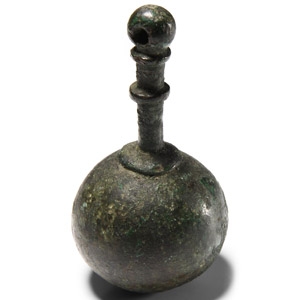
Roman Bronze Trade Weight
Circa 4th-6th century A.D.Sold for (Inc. bp): £91
Comprising a spherical body with shank and pierced knop finial; old collector's label with inked 'ancient Roman / 1st cent. / Exe. minster'. 351 grams, 10.4 cm
From a North London, UK, collection. Ex Simmons Gallery, London E11, UK.
The weight was inserted inside the shaft of a steelyard arm, calibrated on three or more sides with lines and Roman numerals, each providing different scales of pondera (weights). -
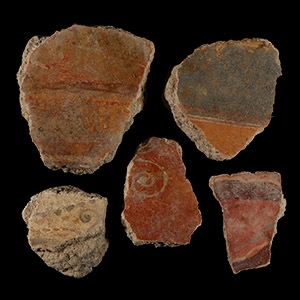
Roman Fresco Painted Wall Plaster Collection
1st century A.D.Sold for (Inc. bp): £208
Comprising five pieces in red, blue and orange with tendrils and linear decoration painted in contrasting colours. 672 grams total, 6.5-10.3 cm
Acquired in the 19th century. Ex Jeger collection, Switzerland.
