Loading, please wait...
LOT 0646
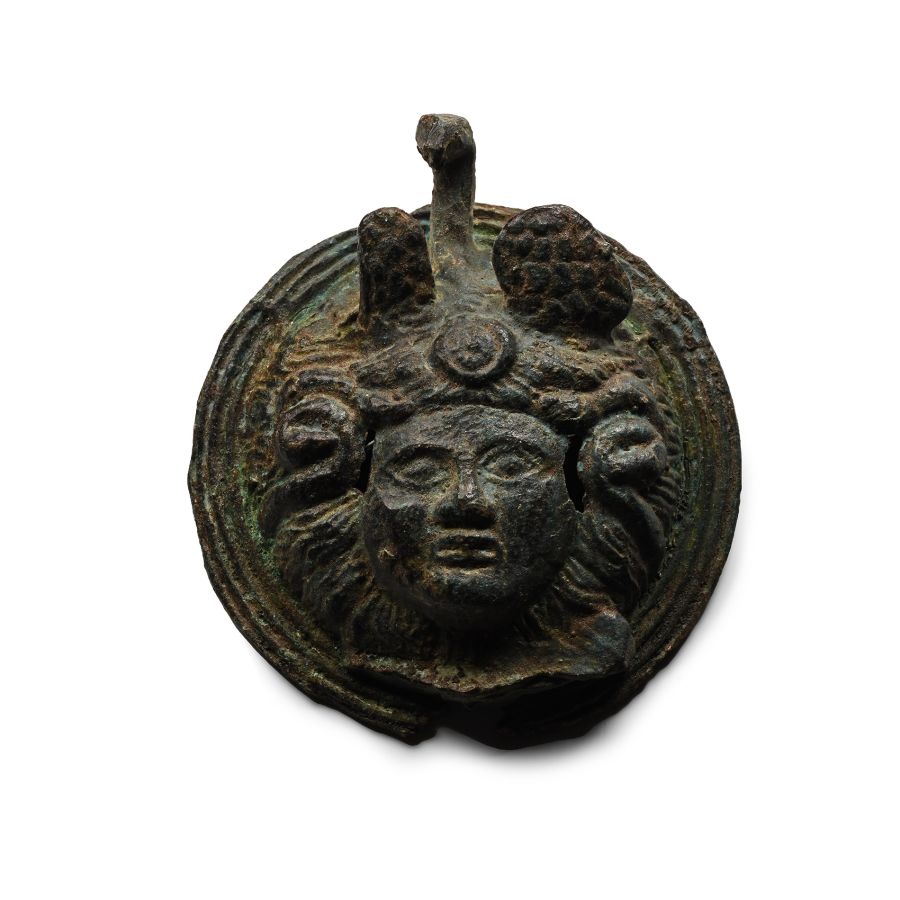
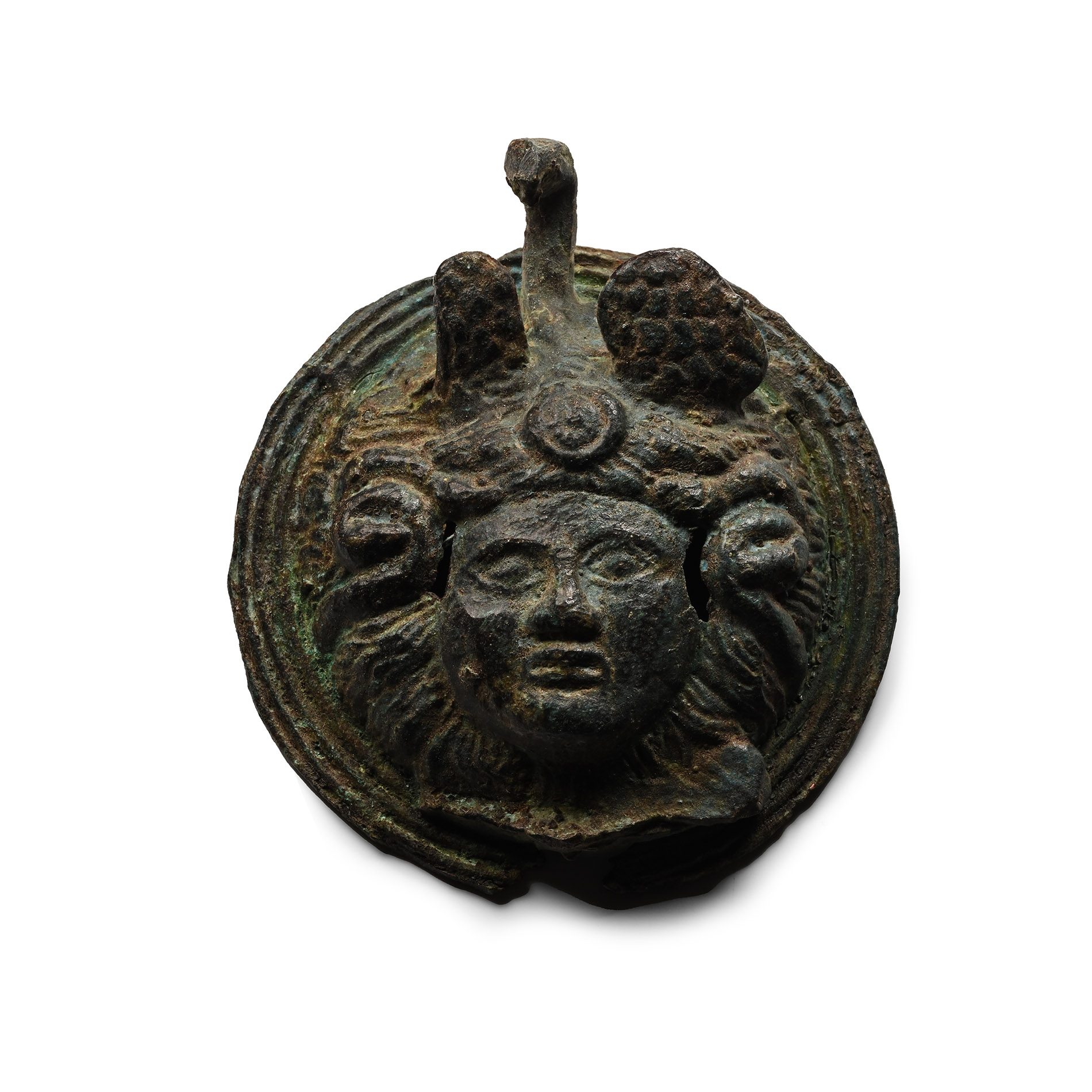
Roman Bronze Phalera with Medusa
2ND-3RD CENTURY A.D.
2 3/8 in. (49 grams, 61 mm).
Domed with mask of Medusa, wings to the brow and serpent above; ribbed border. [No Reserve]
ProvenanceEx USA private collection, early 1990s.
CONDITIONTimeLine Auctions follows a vetting process to ensure the authenticity and legality of all items, reinforcing our commitment to integrity and responsible trading. Each antiquity, antique, and coin lot undergoes thorough examination by a vetting committee of at least ten external specialists, professional trade association members, scientists, and archaeologists: Our Vetting Process
AUCTIONS:
TimeLine is a leading auction house specialising in antiquities, ancient art, collectables, natural history, coins, medals, and books. Our auctions offer museums, collectors, historians, and enthusiasts the opportunity to acquire unique and historically significant pieces.
-
Roman Bronze Standing Figure of Priapus
1st-2nd century A.D.Estimate: £1,200 - 1,700 (+bp*)
Opening Bid: £480
Modelled in the round, standing wearing a paenula, his two hands holding up the hem to support a pile of fruits on his erect penis; mounted on a custom-made stand. 31.7 grams total, 63 mm including stand
From the private collection of Mr K.A., acquired in the 1990s-early 2000s. -
Roman Bronze Cavalryman Statuette with Paenula
1st-3rd century A.D.Sold for (Inc. bp): £221
Modelled in the round in seated pose with both hands extended forwards to hold reins; the body covered by an open-fronted paenula riding cape; boots to the feet; mounted on a custom-made stand. 271 grams, 10.1 cm including stand
Found in Britain. From a collection acquired on the UK art market from various auction houses and collections mostly before 2000. From an important Cambridgeshire estate; thence by descent.
The statuette, like the one from Rouen published by Mackintosh, represents a link between the Romano-British and Gallo-British figurines of the cavalrymen and Imperial statuary. They are of relatively good workmanship and represents a rider seated on a walking horse. The rider is dressed in a short-sleeved tunic and the military paenula, echoing the representation of Marcus Aurelius on his horse. The raised arm could mean that he was wearing a spear. -
Large Roman Harness Mount Bronze Trumpet Whorl Mount Pair
2nd-3rd century A.D.Sold for (Inc. bp): £104
Each a D-section disc with central triskele and coiled arms, segmented detailing to the outer face. 340 grams total, 10-10.2 cm
From a collection acquired on the UK art market from various auction houses and collections mostly before 2000. From an important Cambridgeshire estate; thence by descent.
The two mounts are elements of horse harness decorating the antilena and postilena of the horse, as intersection fittings of the main straps. According to Alfoldi, these horse harnesses were the product of a metallurgy that was the fruit of a Gallo-Roman revival, and not exclusively of military nature. The military adopted similar elements fruit of the revival of this Celtic-Roman decorative art, since such harnesses have also been discovered in border fortresses. But the large industrial centers, which worked for export, manufactured objects primarily for the Danubian regions where both the soldiers and the civilian population, without distinction of class, used them as habitual objects.