
Loading, please wait...
LOT 0845
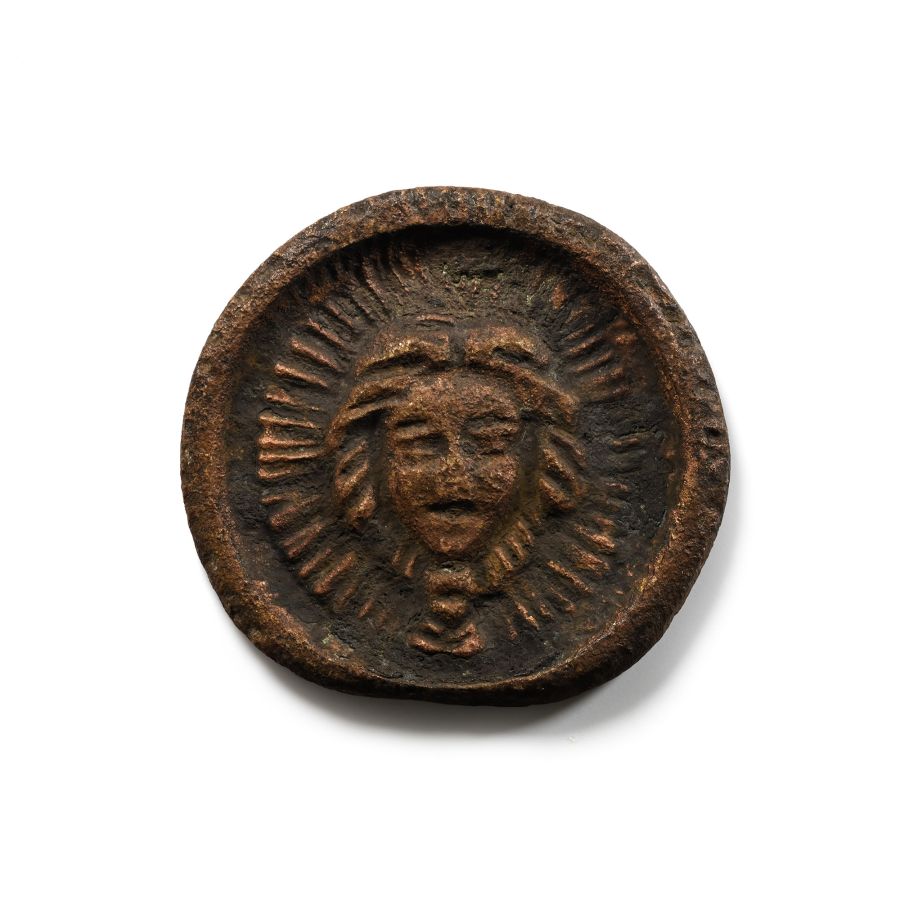
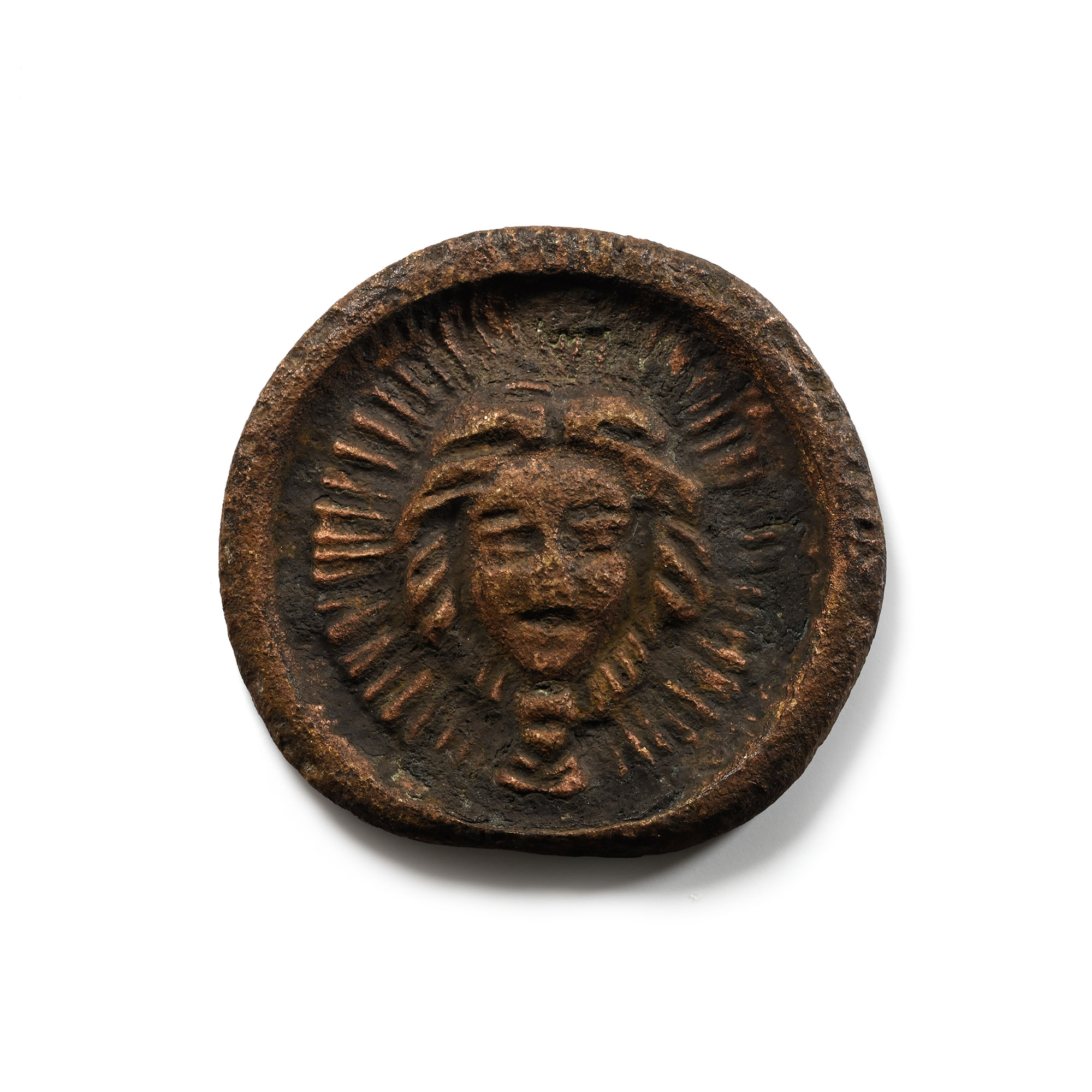
Roman Bronze Phalera of Medusa
3RD-4TH CENTURY A.D.
1 7/8 in. (33 grams, 47 mm).
Discoid in plan with raised lip to the rim, central gorgoneion motif.
ProvenanceFrom the collection of a gentleman, acquired on the London art market in the 1990s.
This lot is accompanied by an illustrated lot declaration signed by the Head of the Antiquities Department, Dr Raffaele D'Amato.
Cf. similar in the British Museum under accession no.1854,0717.23.
CONDITIONTimeLine Auctions follows a vetting process to ensure the authenticity and legality of all items, reinforcing our commitment to integrity and responsible trading. Each antiquity, antique, and coin lot undergoes thorough examination by a vetting committee of at least ten external specialists, professional trade association members, scientists, and archaeologists: Our Vetting Process
AUCTIONS:
TimeLine is a leading auction house specialising in antiquities, ancient art, collectables, natural history, coins, medals, and books. Our auctions offer museums, collectors, historians, and enthusiasts the opportunity to acquire unique and historically significant pieces.
-
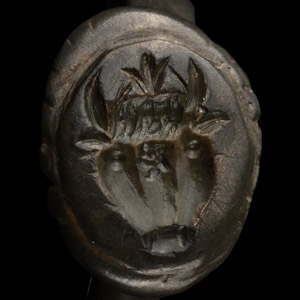
Roman Bronze Signet Ring with Bull's Head
4th-5th century A.D.Sold for (Inc. bp): £221
Ellipsoid bezel with incuse bucranium motif, star between the horns. 5.93 grams, 23.28 mm overall, 19.28 mm internal diameter (approximate size British R, USA 8 1/2, Europe 18 3/4, Japan 18)
Ex German art market, 2000s. Acquired from an EU collector living in London. From the collection of a Surrey, UK, gentleman. This lot is accompanied by an illustrated lot declaration signed by the Head of the Antiquities Department, Dr Raffaele D'Amato.
The bull-head motif is used in Mithraism, where it represents masculine power. -
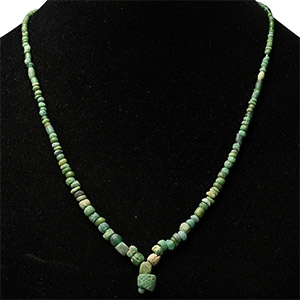
Roman Green Glass Bead Necklace String
1st-4th century A.D. and laterSold for (Inc. bp): £72
Composed of graduated bead with two larger beads as a central feature; restrung. 16.4 grams, 46 cm
From the London, UK, art market in the 1990s. This lot is accompanied by an illustrated lot declaration signed by the Head of the Antiquities Department, Dr Raffaele D'Amato.
In the Roman period there was a strong formal and chromatic diversity of glass beads used for necklaces and bracelets. The most common beads in forms were small biconical (lenticular), barrel-shaped, spherical and annular; the most common colours were dark blue, followed by green and yellow. The succession of glass beads often imitates jewellery made of costly materials (gold, silver, semi-precious and precious stones). -
.jpg)
Roman Silver-Gilt Brooch with Diana
1st-2nd century A.D.Estimate: £1,000 - 1,400 (+bp*)
Opening Bid: £500
Modelled in the half-round figure of Diana reaching behind her shoulder to draw an arrow, her left hand reaching towards a hound; catch and spring-plate to the reverse. 14.09 grams, 40 mm
Acquired in the late 1980s-early 1990s. Private collection, London, UK. This lot is accompanied by an illustrated lot declaration signed by the Head of the Antiquities Department, Dr Raffaele D'Amato.
