
Loading, please wait...
LOT 0974
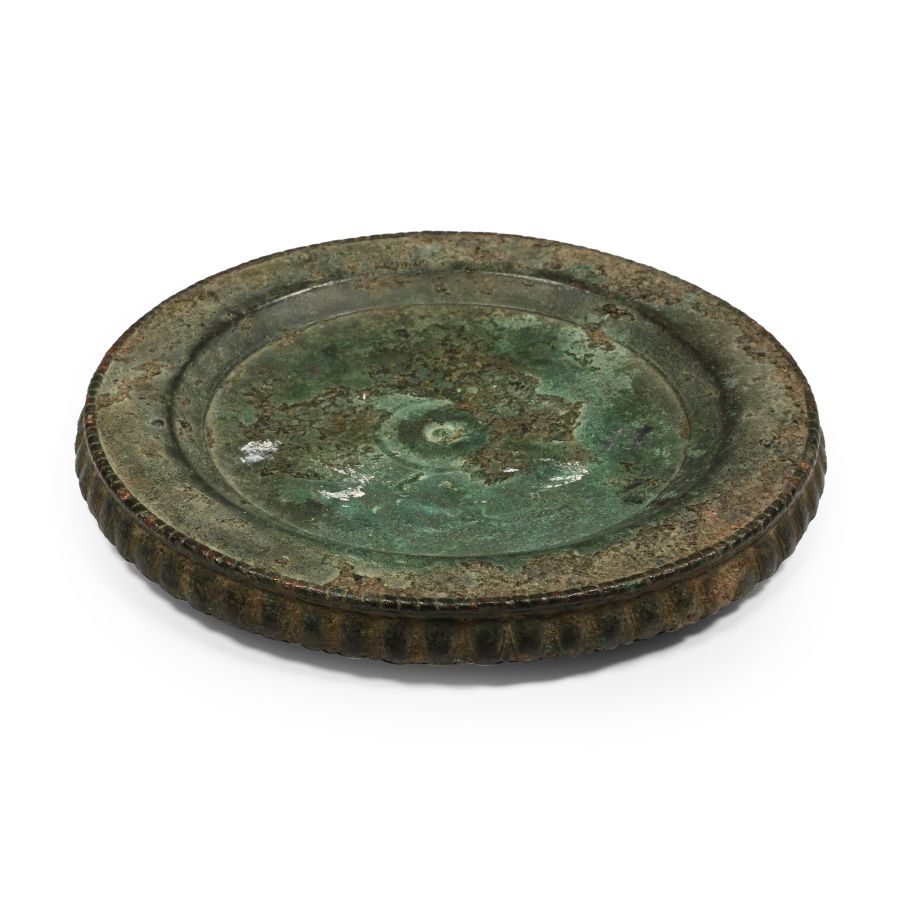
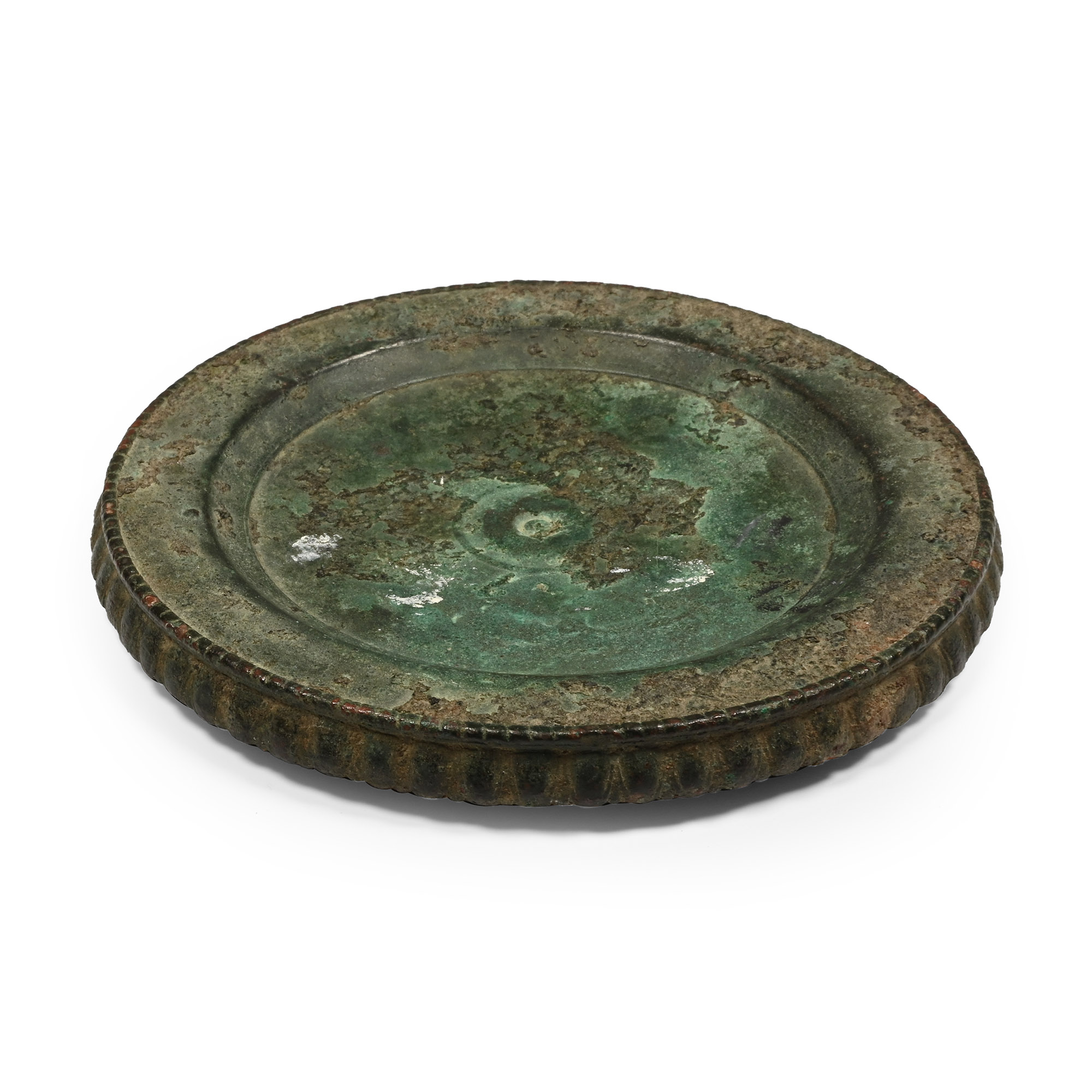
Roman Bronze Patera with Decorations
1ST-3RD CENTURY A.D.
4 1/2 in. (242 grams, 11.5 cm).
With raised lip to the egg-and-dart rim, band of radiating low-relief leaf ornament and silvered tondo. [No Reserve]
Provenancewith a London, UK gallery 1971-early 2000s.
Private collection, London.
This lot is accompanied by an illustrated lot declaration signed by the Head of the Antiquities Department, Dr Raffaele D’Amato.
TimeLine Auctions follows a vetting process to ensure the authenticity and legality of all items, reinforcing our commitment to integrity and responsible trading. Each antiquity, antique, and coin lot undergoes thorough examination by a vetting committee of at least ten external specialists, professional trade association members, scientists, and archaeologists: Our Vetting Process
AUCTIONS:
TimeLine is a leading auction house specialising in antiquities, ancient art, collectables, natural history, coins, medals, and books. Our auctions offer museums, collectors, historians, and enthusiasts the opportunity to acquire unique and historically significant pieces.
-
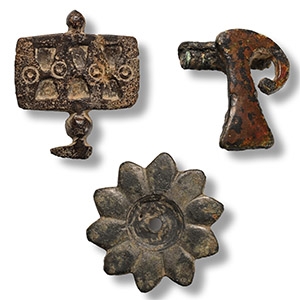
Roman Bronze Plate Brooch Group
1st-2nd century A.D.Sold for (Inc. bp): £130
Comprising: rosette with central cell, pin to reverse; P-shaped plate with spring and pin; rectangular plate with triangular cells. 15.5 grams total, 24-29 mm
Acquired on the London art market in the late 1980s-1990s. From the family collection of an East London, UK, gentleman. This lot is accompanied by an illustrated lot declaration signed by the Head of the Antiquities Department, Dr Raffaele D’Amato. -
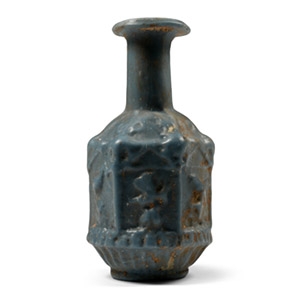
Roman Sidonian Opaque Light Blue Glass Flask
1st century A.D.Estimate: £5,000 - 7,000 (‡+bp*)
Opening Bid: £1,750
Hexagonal in plan with tall tubular neck and flared and folded rim, disc base with moulding seams; broad sloping shoulder above a sidewall of panels each with a low-relief avian image (bird in flight, bird perching on a branch, etc.). 31 grams, 80 mm
Ex private collection, Israel. Acquired from Archaeological Center, Auction 60, no.204. Private collection. Accompanied by a copy of the relevant Archaeological Center online catalogue page. This lot has been checked against the Interpol Database of stolen works of art and is accompanied by a search certificate number no.12530-232177. This lot has been cleared against the Art Loss Register database, and is accompanied by an illustrated lot declaration signed by the Head of the Antiquities Department, Dr Raffaele D’Amato. -
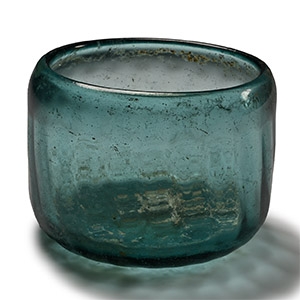
Roman Blue Glass Beaker
3rd-4th century A.D. or laterSold for (Inc. bp): £715
Thick-walled, cylindrical beaker with inwardly curved mouth, rolled rim; shallow dimples to exterior; mold-blown type with slight iridescence; old label to base 'N14075'. 152 grams, 79 mm
Dr K. and W.Z., Rheinland-Pfalz, Germany; acquired 1977 on the German art market. This lot is accompanied by an illustrated lot declaration signed by the Head of the Antiquities Department, Dr Raffaele D’Amato.
