
Loading, please wait...
LOT 0718
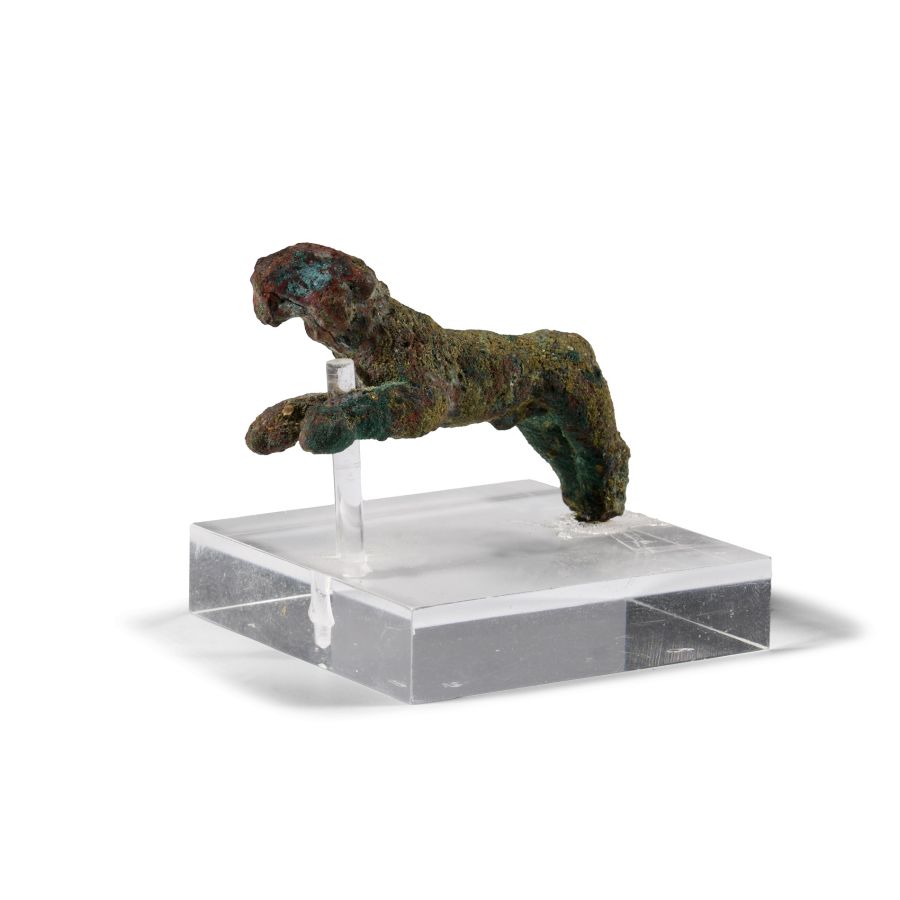
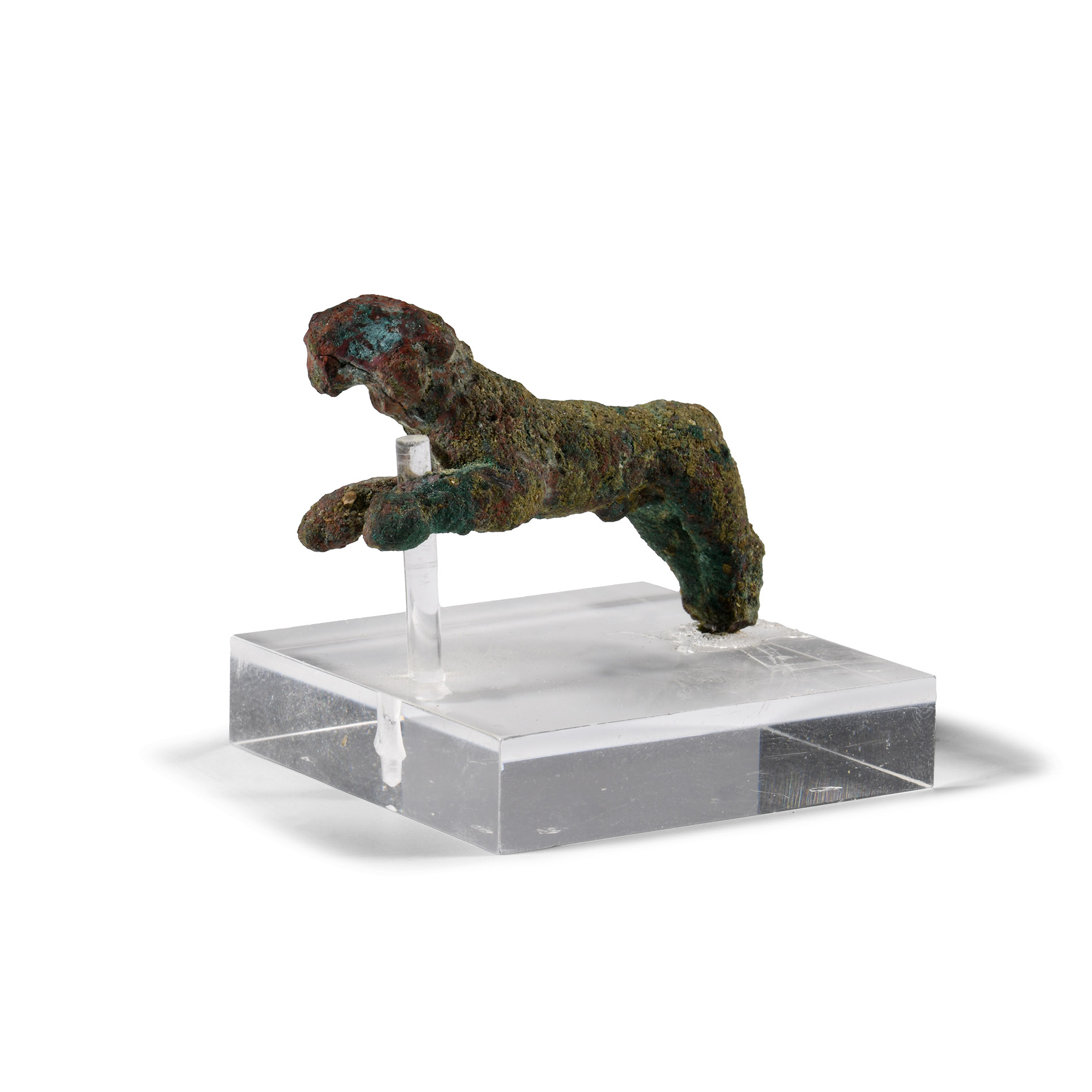
Roman Bronze Panther Statuette
CIRCA 3RD-4TH CENTURY A.D.
1 7/8 in. (53.6 grams total, 47 mm including stand).
Depicted in a leaping pose with the beast's foreleg extended and the head turned slightly right with open jaws; mounted on a custom-made display stand. [No Reserve]
ProvenanceFound near Newark/Lincoln, Nottinghamshire, UK.
Acquired from Ancient & Oriental, Nottingham, UK, 2002.
Property of a Nottinghamshire gentleman.
TimeLine Auctions follows a vetting process to ensure the authenticity and legality of all items, reinforcing our commitment to integrity and responsible trading. Each antiquity, antique, and coin lot undergoes thorough examination by a vetting committee of at least ten external specialists, professional trade association members, scientists, and archaeologists: Our Vetting Process
AUCTIONS:
TimeLine is a leading auction house specialising in antiquities, ancient art, collectables, natural history, coins, medals, and books. Our auctions offer museums, collectors, historians, and enthusiasts the opportunity to acquire unique and historically significant pieces.
-
.jpg)
Roman Carnelian Victory Gemstone
Circa 1st century A.D.Sold for (Inc. bp): £624
With intaglio winged Victory advancing holding a wreath; supplied with a museum-quality impression. 1.26 grams, 16 mm
From the collection of a Swiss gentleman formed in Europe from 1970-1980s; thence by descent from the family in London. -
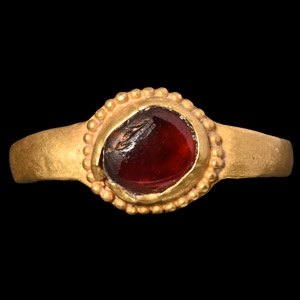
Roman Gold Ring with Garnet
3rd-4th century A.D.Sold for (Inc. bp): £416
Comprising a slender hoop with discoid bezel and central cell surrounded by a beaded wire collar, inset garnet cabochon 1.56 grams, 17.01 mm overall, 13.30 x 15.50 mm internal diameter (approximate size British G, USA 3 1/4, Europe 4.92, Japan 4)
From a late Japanese specialist collector, 1970-2000s. -
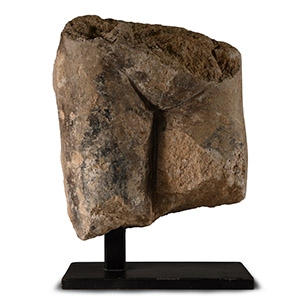
Roman Marble Lower Torso
1st-2nd century A.D.Estimate: £2,500 - 3,500 (+bp*)
Opening Bid: £1,250
Statue fragment of the hips, buttocks and thighs of a nude female; mounted on a custom-made stand. 9.35 kg total, 26.5 cm including stand
Ex Paris collection. French gallery, Paris, 1990-2000s. This lot has been checked against the Interpol Database of stolen works of art and is accompanied by search certificate no.11955-209637.
