
Loading, please wait...
LOT 0125
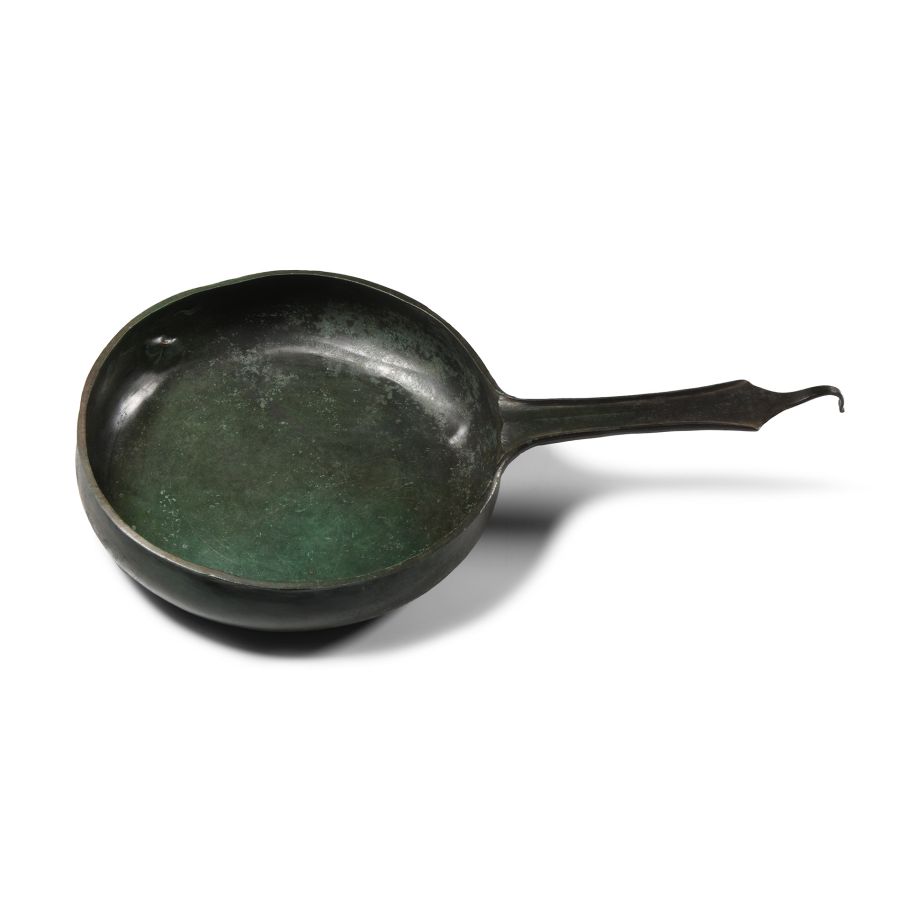
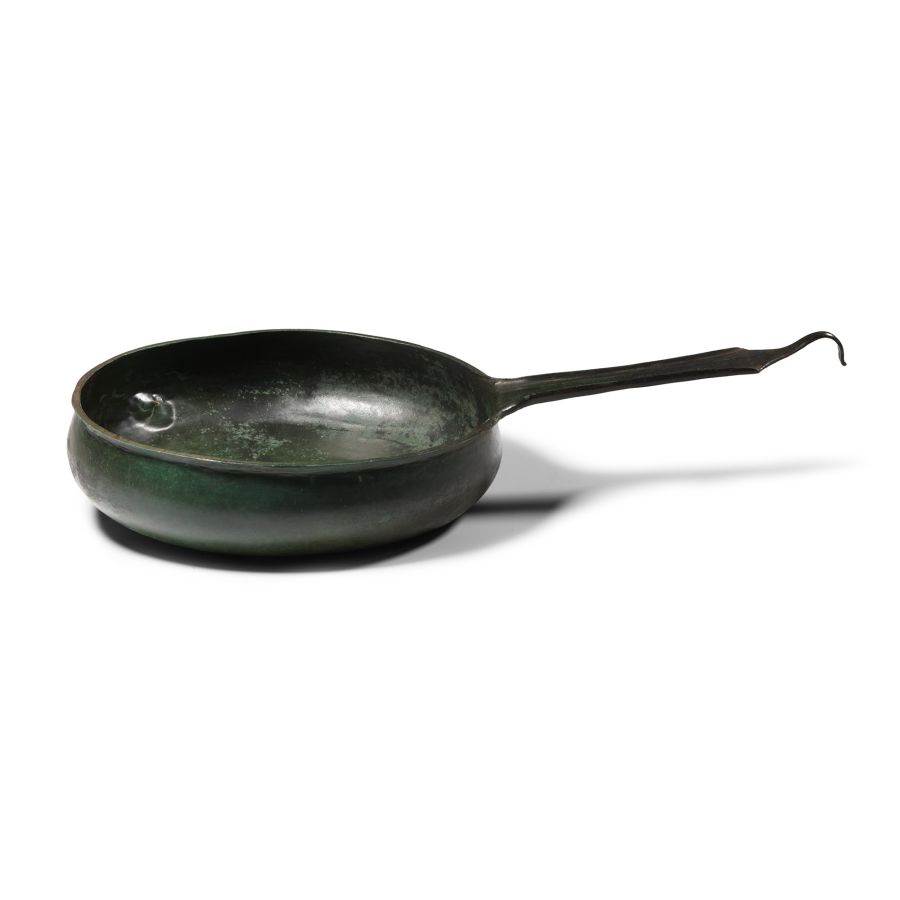
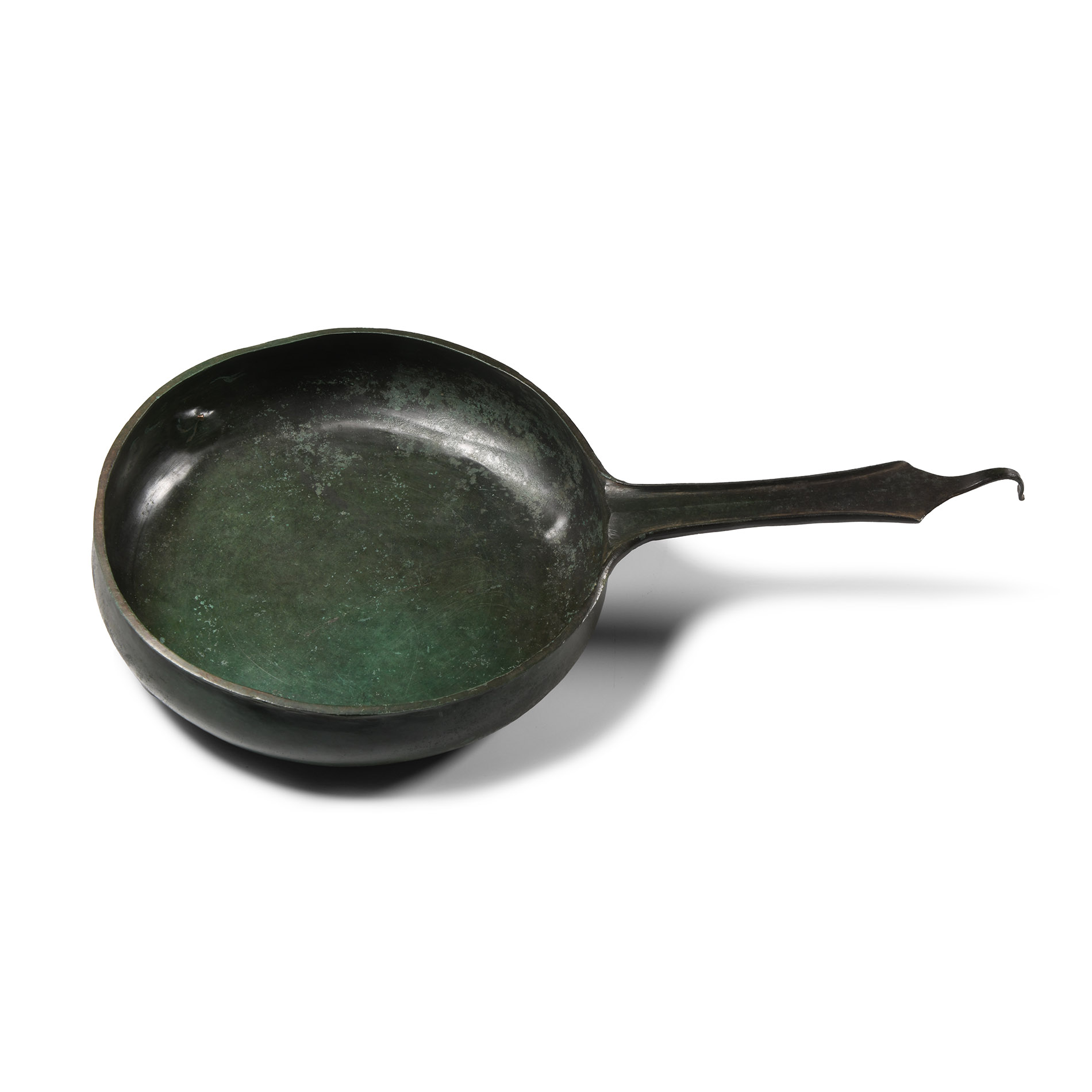
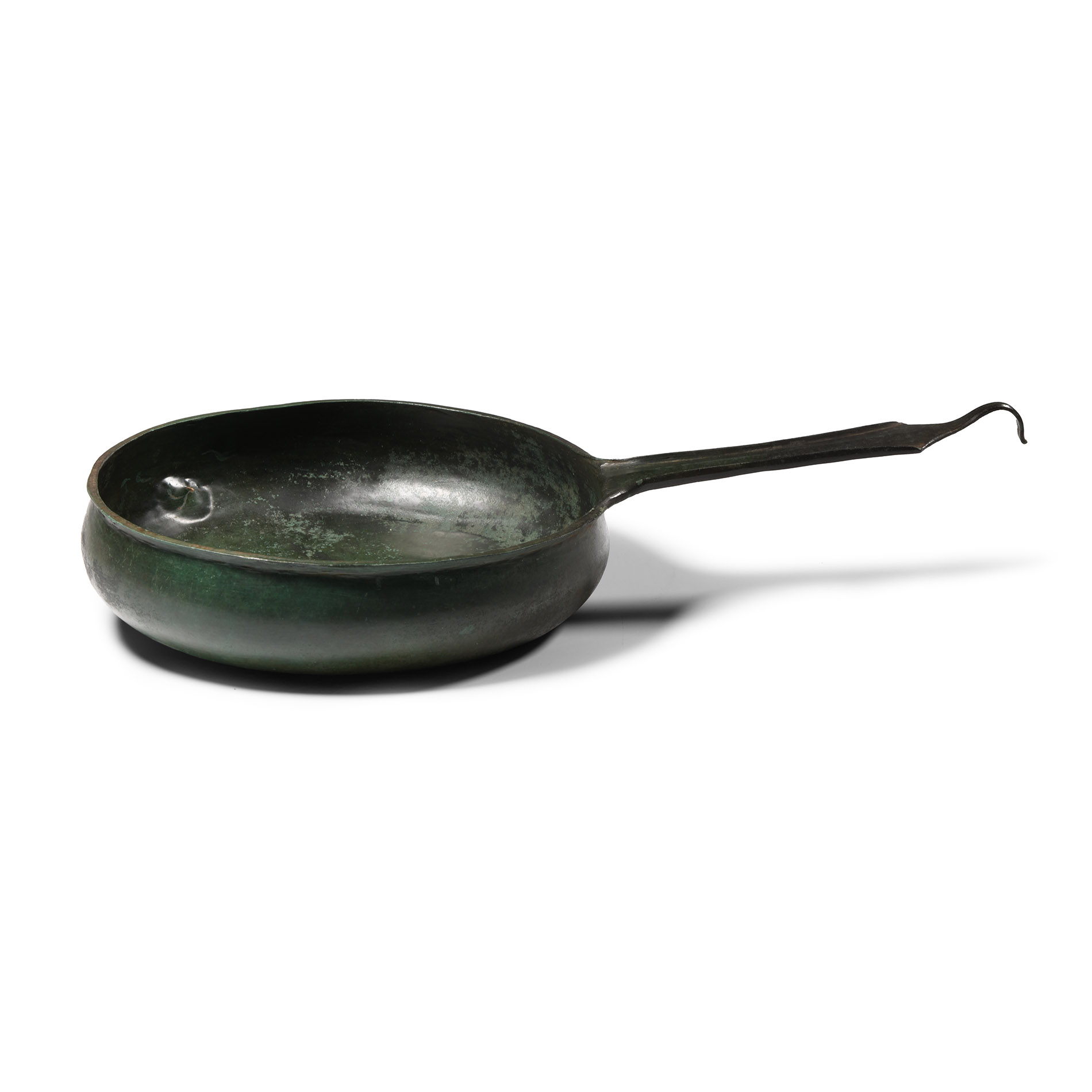
Roman Bronze Pan with Handle
1ST CENTURY B.C.-1ST CENTURY A.D.
15 1/2 in. (483 grams, 39.5 cm).
The bowl with a wide flat bottom and convex sides; the inside with incised concentric circles; flat handle with raised edges and hooked finial for suspension.
ProvenanceGerman private collection, Mr O., collecting in the 1950s-1960s; thence by descent.
with Bonhams, London, 7 July 2016, lot 191.
Accompanied by an academic report by Dr Raffaele D’Amato.
This lot has been checked against the Interpol Database of stolen works of art and is accompanied by search certificate number no.11735-201189.
Cf. Tassinari, S., La vaiselle de bronze, Romaine et Provinciale, au musée des antiquités nationales, Paris, 1975, fig.1, for a similar pan; for 1st century B.C.-1st century A.D. types see Willers, H., Neue Untersuchungen über die römische Bronze Industrie von Capua und von Niedergermanien, Hannover und Leipzig, 1907; Eggers, H.J., Der römische Import in freien Germanien, Hamburg, 1951, type 130; and the famous Aylesford specimen in Evans, A.J., ‘On a Late-Celtic Urn-Field at Aylesford, Kent, and on the Gaulish, Illyro-Italic, and Classical Connexions of the Forms of Pottery and Bronze-work there discovered’, in Archeologia, 2nd Series, Vol.52, London, 1890, pp.315-388; Cunliffe, B., Iron Age Communities in Britain, London, 2005, pp.152-9.
FootnotesThis vessel was part of Roman and provincial bronze instrumentum domesticum, i.e. culinary or domestic utility ware. Such cooking vessels are rare: some are found in central and northern Italy, in Pannonia, Germany and in Britain. The Aylesford Pan, today in the British Museum (inventory no.1886.1112.1), is one of the most important finds. This specimen (Eggers type 130), probably pre-Caesarian or Caesarian, was found in a grave together with a Celtic bucket and a jug.
CONDITIONTimeLine Auctions follows a vetting process to ensure the authenticity and legality of all items, reinforcing our commitment to integrity and responsible trading. Each antiquity, antique, and coin lot undergoes thorough examination by a vetting committee of at least ten external specialists, professional trade association members, scientists, and archaeologists: Our Vetting Process
AUCTIONS:
TimeLine is a leading auction house specialising in antiquities, ancient art, collectables, natural history, coins, medals, and books. Our auctions offer museums, collectors, historians, and enthusiasts the opportunity to acquire unique and historically significant pieces.
LOT 0125
Roman Bronze Pan with Handle
Estimate £1,200 - 1,700€1,390 - 1,970 (for guidance only)$1,620 - 2,300 (for guidance only)
-
Roman Marble Bust of a Kouros
Circa 1st century A.D.Estimate: £3,500 - 4,500 (+bp*)
Opening Bid: £1,750
Carved in the half-round as a bust of a kouros youth with soft features and tiered hair hanging in hanks to the sides of the clean-shaven face; flat to the reverse. 4.1 kg, 22 cm high
Ex Paris collection. French gallery, Paris, 1990-2000s. This lot has been checked against the Interpol Database of stolen works of art and is accompanied by search certificate no.11959-209638. -
Roman Bronze Casket Key
Circa 1st-4th century A.D.Sold for (Inc. bp): £111
With large loop handle and short shank, knop above the loop. 33.2 grams, 58 mm
Acquired on the UK art market before 2000. Property of a Surrey, UK, collector. -
.jpg)
Roman Intaglio Gemstone with Wheat
Circa 2nd-3rd century A.D.Estimate: £150 - 200 (+bp*)
Opening Bid: £75
Carnelian with intaglio of three radiating stalks of wheat; supplied with a museum-quality impression. 0.2 grams, 9 mm
From the collection of a Swiss gentleman formed in Europe from 1970-1980s; thence by descent from the family in London.
