
Loading, please wait...
LOT 0630
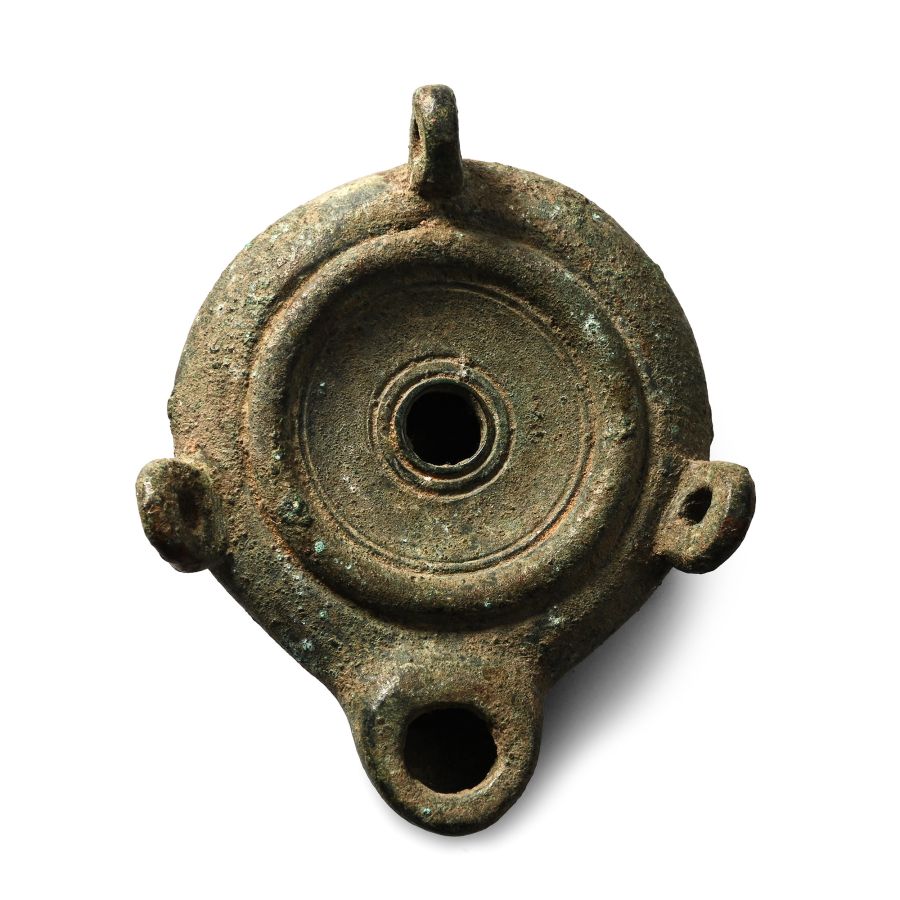
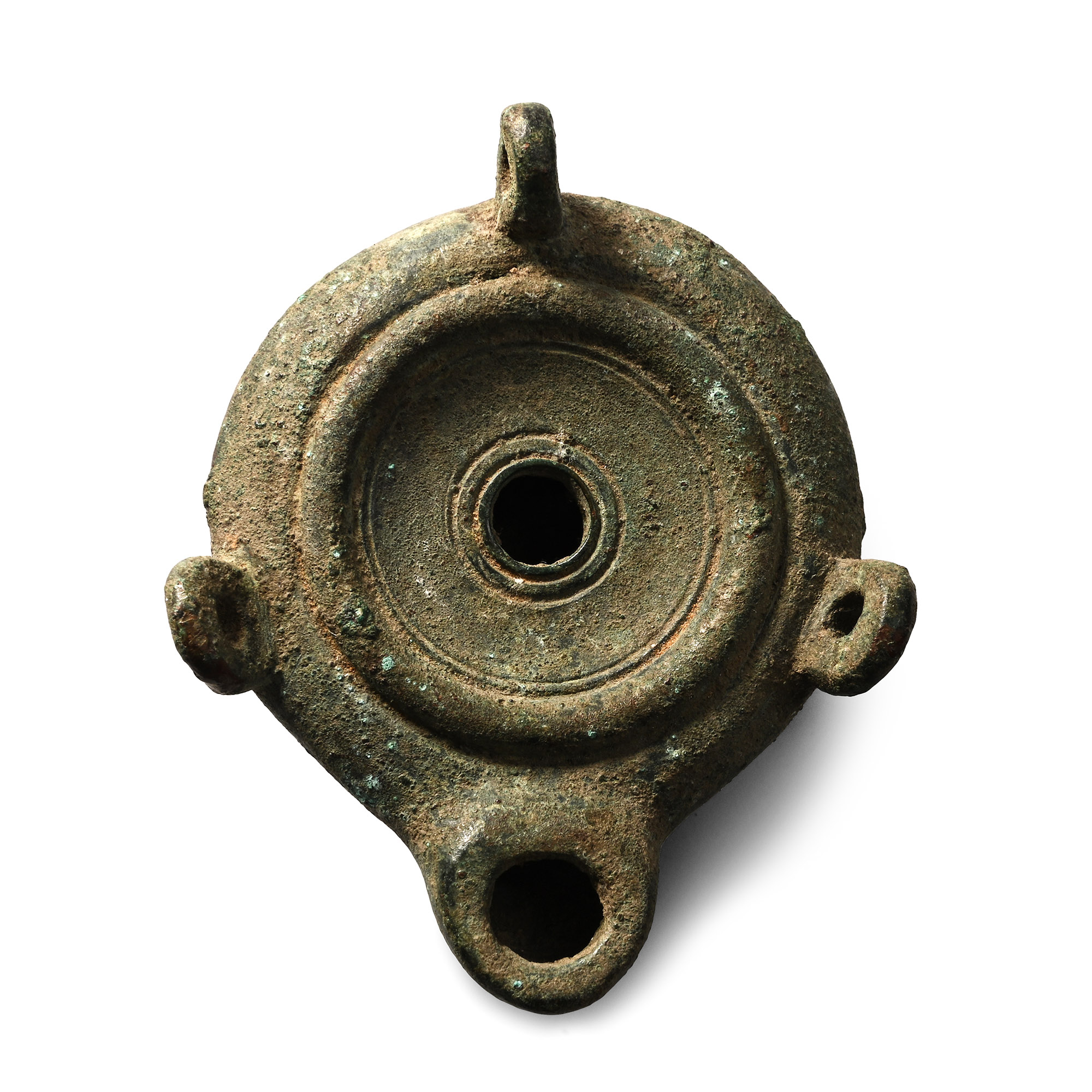
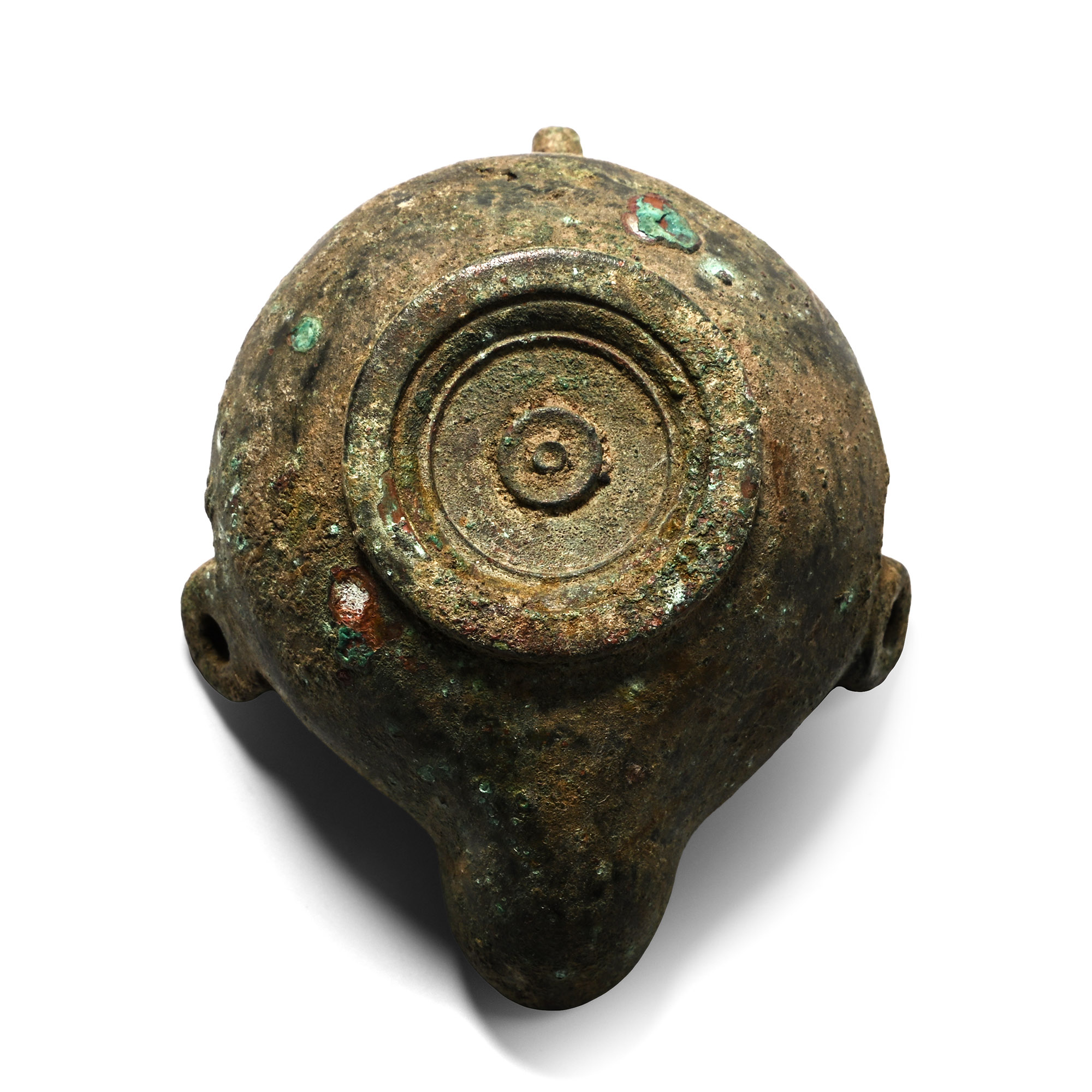
Roman Bronze Oil Lamp
3RD-5TH CENTURY A.D.
2 5/8 in. (106 grams, 67 mm).
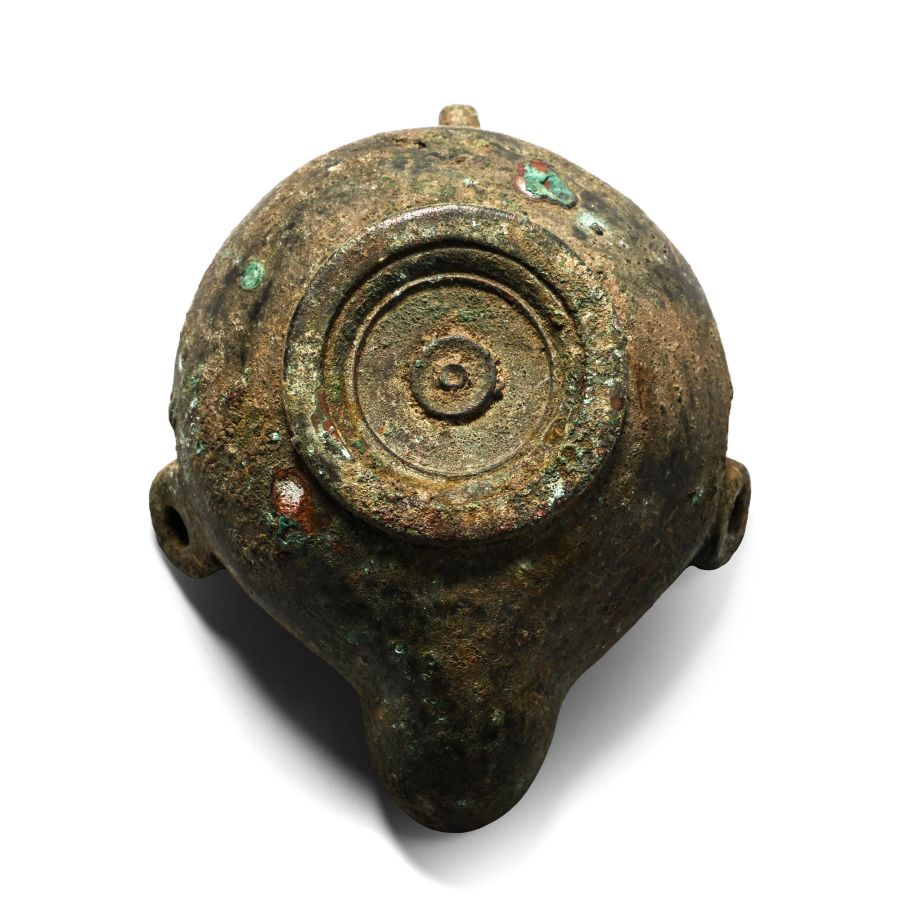
With broad sloping shoulder and concave discus with raised circular ridge, central hole; three radiating suspension loops and stub nozzle with flat rim; base with incuse circular grooves.
ProvenanceEx collection Mr.
K.H., Germany, Private collection, acquired in 2012.
Cf. The Metropolitan Museum, accession number 62.10.2, for a similar lamp hook dated to the 5th century AD.
CONDITIONTimeLine Auctions follows a vetting process to ensure the authenticity and legality of all items, reinforcing our commitment to integrity and responsible trading. Each antiquity, antique, and coin lot undergoes thorough examination by a vetting committee of at least ten external specialists, professional trade association members, scientists, and archaeologists: Our Vetting Process
AUCTIONS:
TimeLine is a leading auction house specialising in antiquities, ancient art, collectables, natural history, coins, medals, and books. Our auctions offer museums, collectors, historians, and enthusiasts the opportunity to acquire unique and historically significant pieces.
-
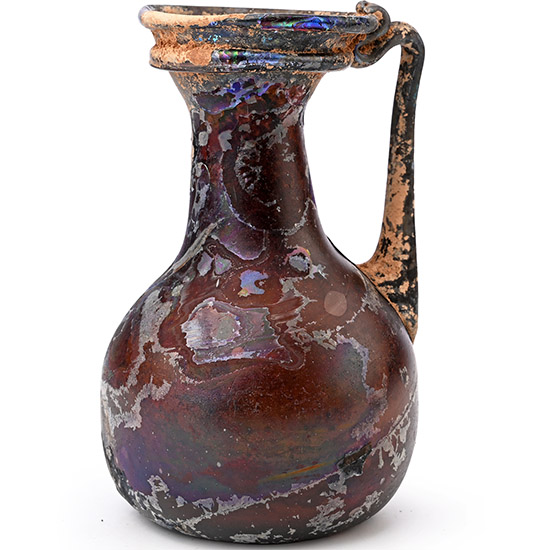
Roman Aubergine Glass Pitcher
3rd-4th century A.D.Sold for (Inc. bp): £468
Comprising a bulbous body with a dimple base and a funicular neck with an applied band below the rim and a handle to the rear. 93.2 grams, 10.8 cm
From an important London, UK, collection 1980-2020.
The pitcher shows the style of production of the Roman Rhine workshops. Several hundred vessels with applied decoration are known from the Roman Rhineland. The numerous finds from graves and the evidence of glass furnaces in Cologne suggest that a large proportion of these vessels were produced in local workshops, then spread throughout the empire. -
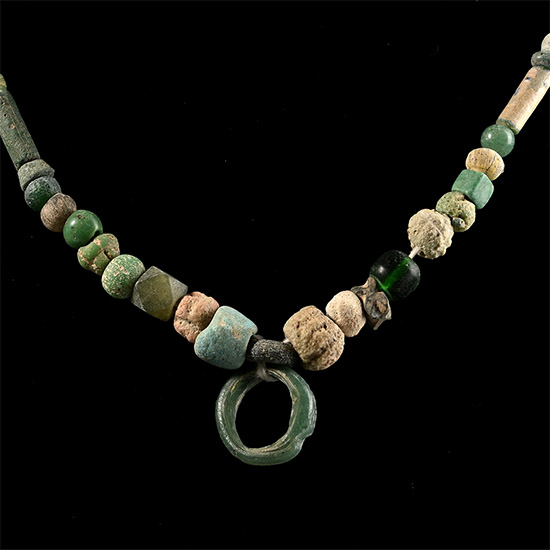
Roman Green Glass Bead Necklace String
1st-4th century A.D. and laterSold for (Inc. bp): £39
Composed of graduated beads including oblate, tubular, polygonal, and others, the central feature a large annular pendant, restrung. 24.7 grams, 41 cm
Acquired in the 1990s. Ex London, UK, collection. -
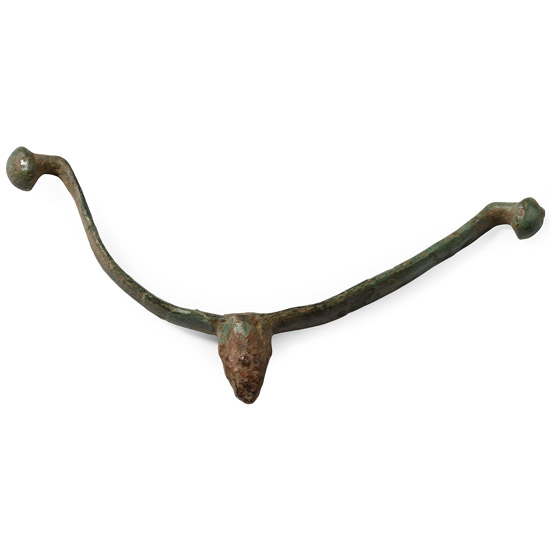
Roman Bronze Prick Spur
1st-2nd century A.D.Sold for (Inc. bp): £26
With a curving plate and lateral attachment lugs, a conical pricket. 9.85 grams, 82 mm
From a UK collection formed in the 1980s. Property of an Essex, UK, gentleman.
