
Loading, please wait...
LOT 0676
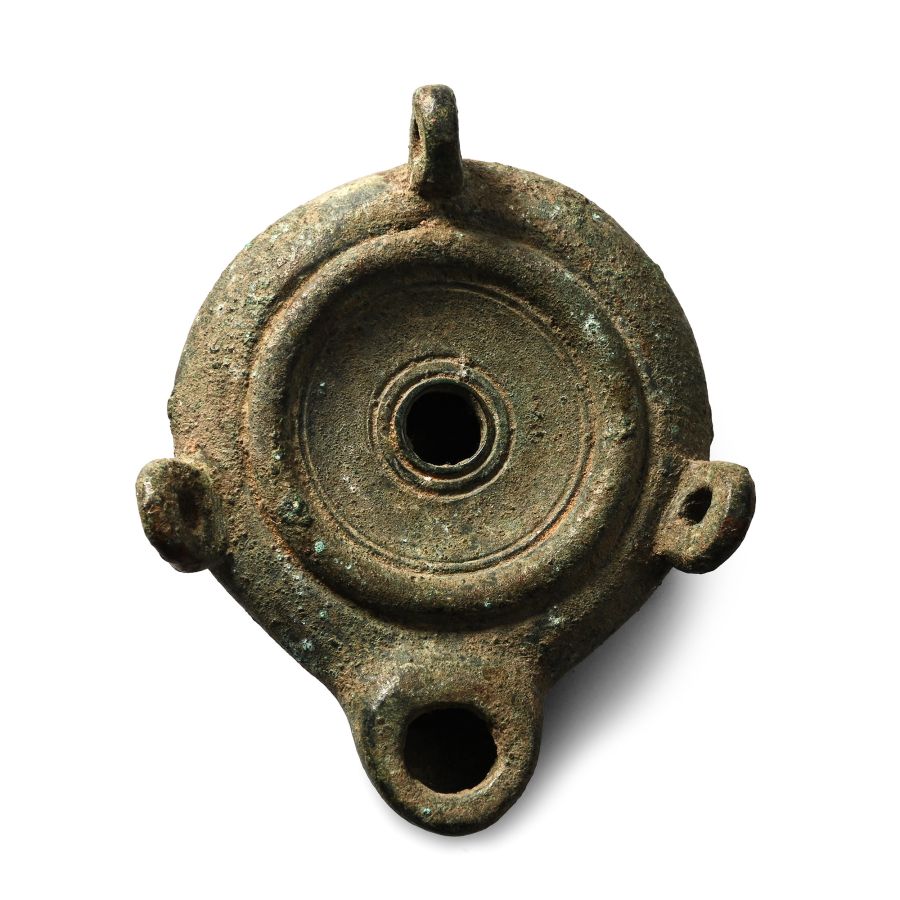
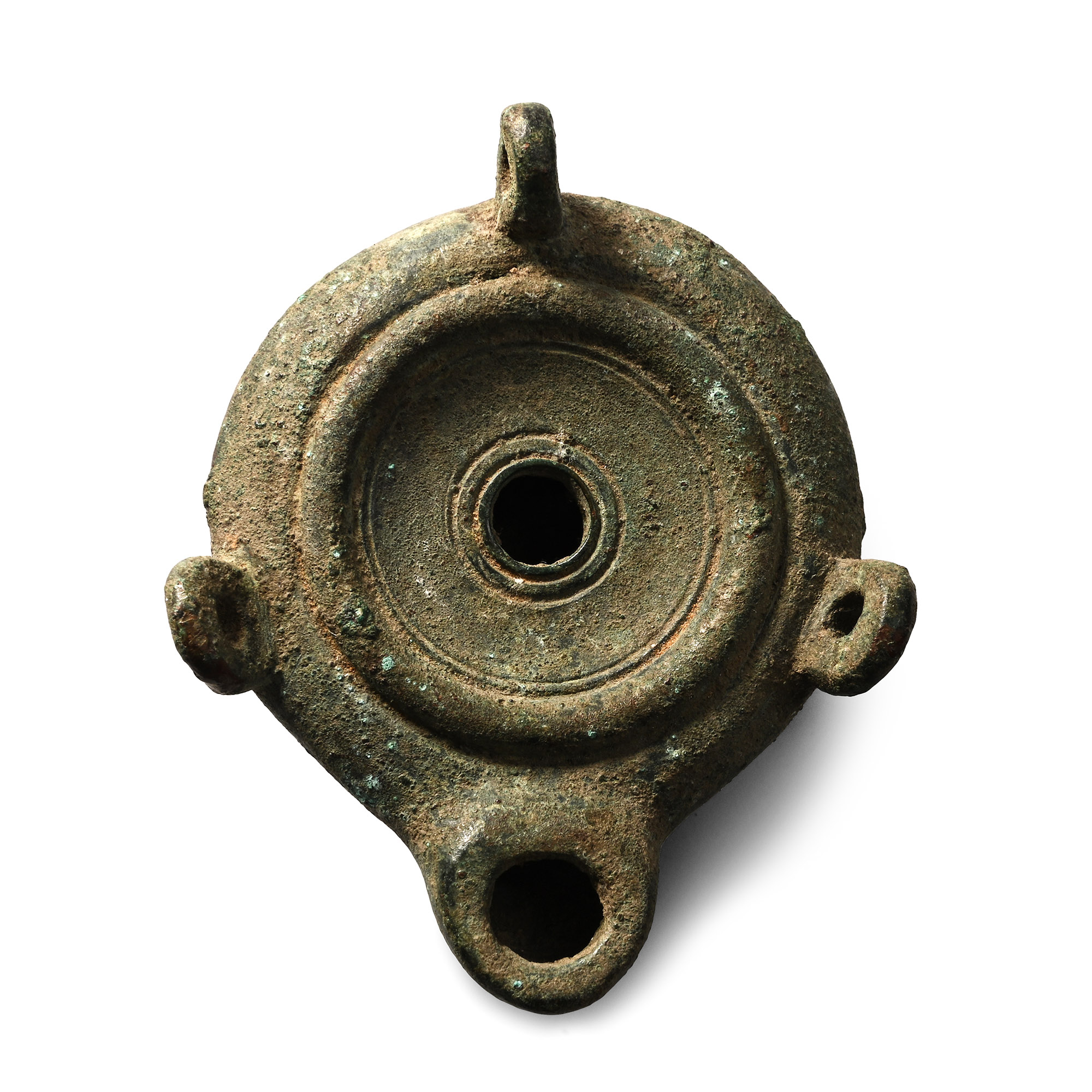
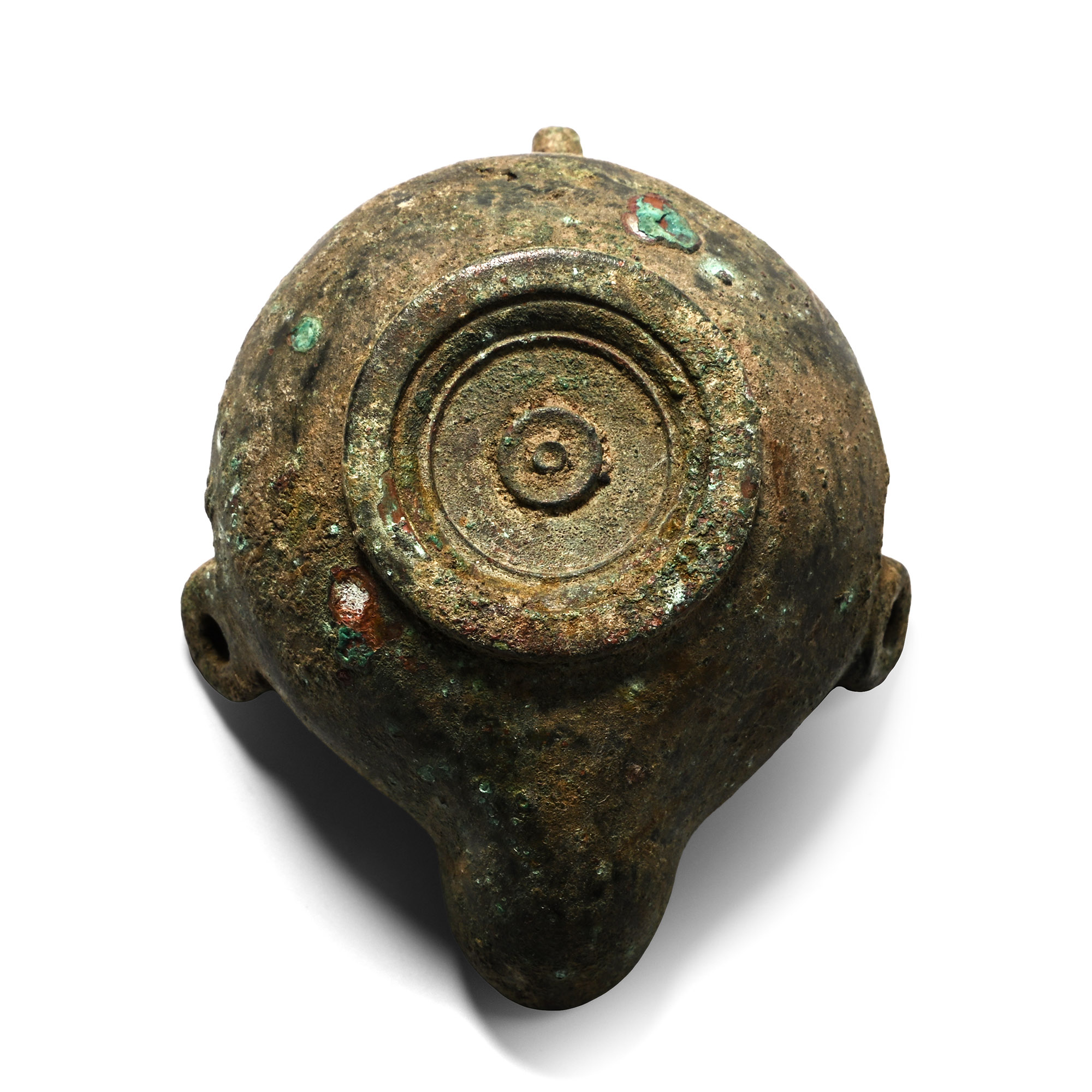
Roman Bronze Oil Lamp
3RD-5TH CENTURY A.D.
2 5/8 in. (106 grams, 67 mm).
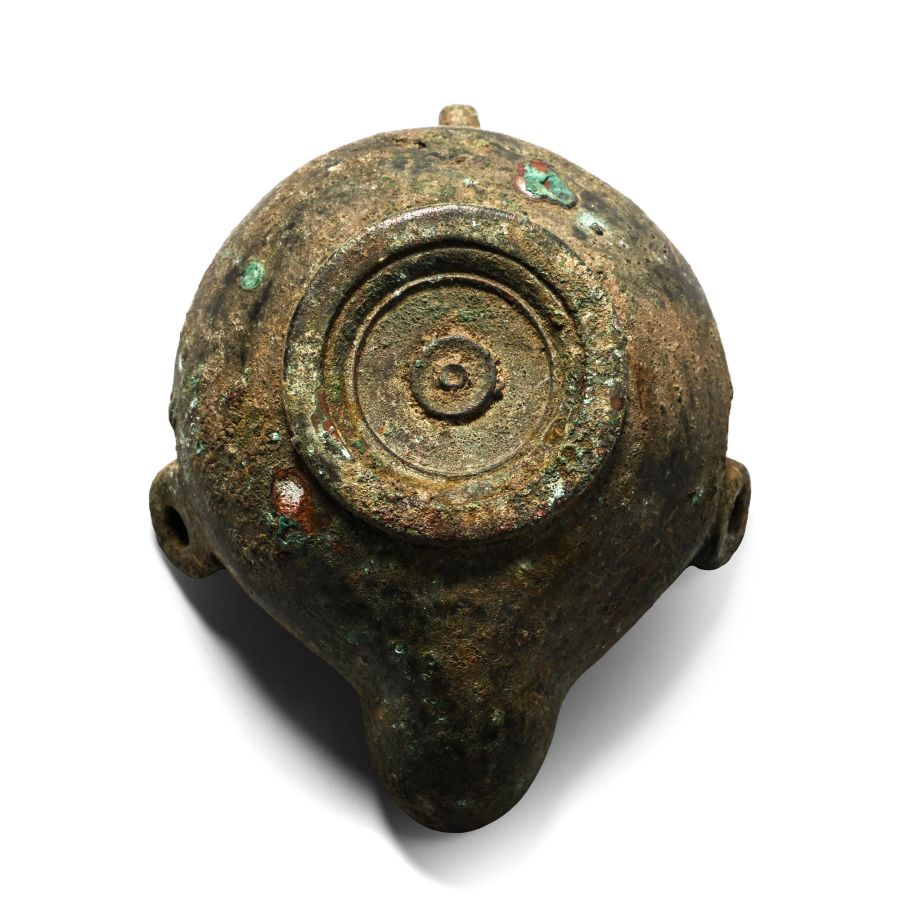
With broad sloping shoulder and concave discus with raised circular ridge, central hole; three radiating suspension loops and stub nozzle with flat rim; base with incuse circular grooves.
ProvenanceEx collection Mr.
K.H., Germany, Private collection, acquired in 2012.
Cf. The Metropolitan Museum, accession number 62.10.2, for a similar lamp hook dated to the 5th century AD.
CONDITIONTimeLine Auctions follows a vetting process to ensure the authenticity and legality of all items, reinforcing our commitment to integrity and responsible trading. Each antiquity, antique, and coin lot undergoes thorough examination by a vetting committee of at least ten external specialists, professional trade association members, scientists, and archaeologists: Our Vetting Process
AUCTIONS:
TimeLine is a leading auction house specialising in antiquities, ancient art, collectables, natural history, coins, medals, and books. Our auctions offer museums, collectors, historians, and enthusiasts the opportunity to acquire unique and historically significant pieces.
LOT 0676
Roman Bronze Oil Lamp
Estimate £400 - 600€460 - 700 (for guidance only)$540 - 810 (for guidance only)
-
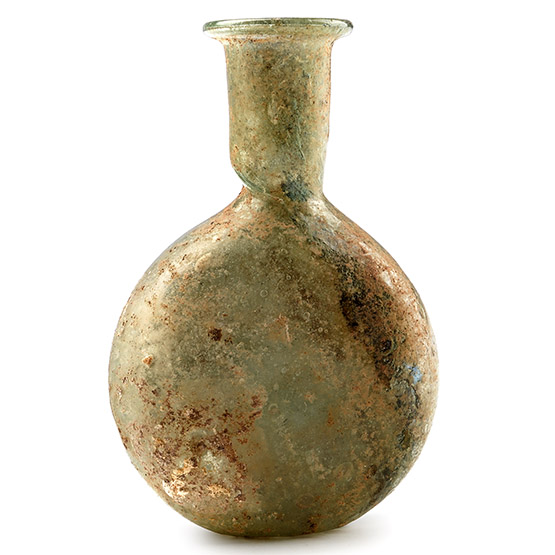
Roman Glass Flat Flask
Circa 1st-4th century A.D.Sold for (Inc. bp): £143
With discoid body, pinched tubular neck with everted rolled rim, iridescent surface. 22.25 grams, 96 mm
From a London, UK, collection of glass, 1970-2000s. -
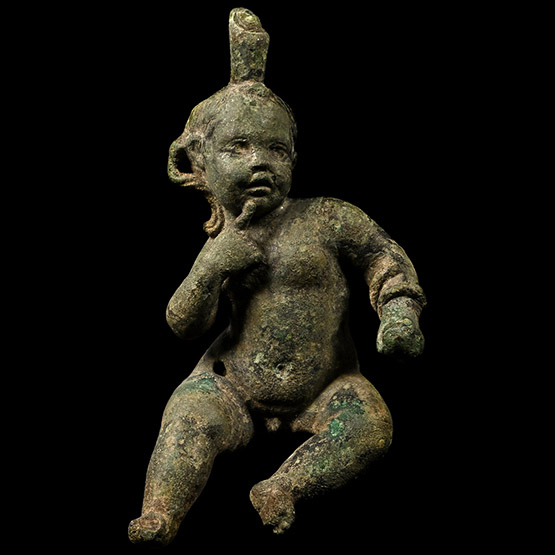
Roman Bronze Figure of the God Harpocrates
1st century A.D.Estimate: £2,500 - 3,500 (‡+bp*)
Opening Bid: £1,250
Modelled in the round, sitting with miniature double-crown, serpent arm-ring on left wrist, sidelock; fixing socket to right thigh. 145 grams, 72 mm
Private collection, Me. A., Florida, USA, early 1990s. European private collection, acquired in Germany, September 2000. This lot has been checked against the Interpol Database of stolen works of art and is accompanied by a search certificate number no.12683-234609. -
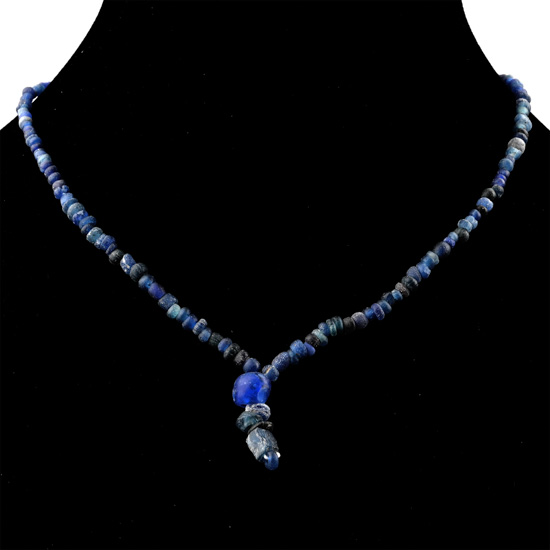
Roman and Other Blue Glass Bead Necklace String
1st-4th century A.D. and laterSold for (Inc. bp): £169
Composed of oblate and other beads with larger beads as a central feature; restrung. 8.52 grams, 36.3 cm
From London, UK, gallery collection, 1990s.
