
Loading, please wait...
LOT 0119
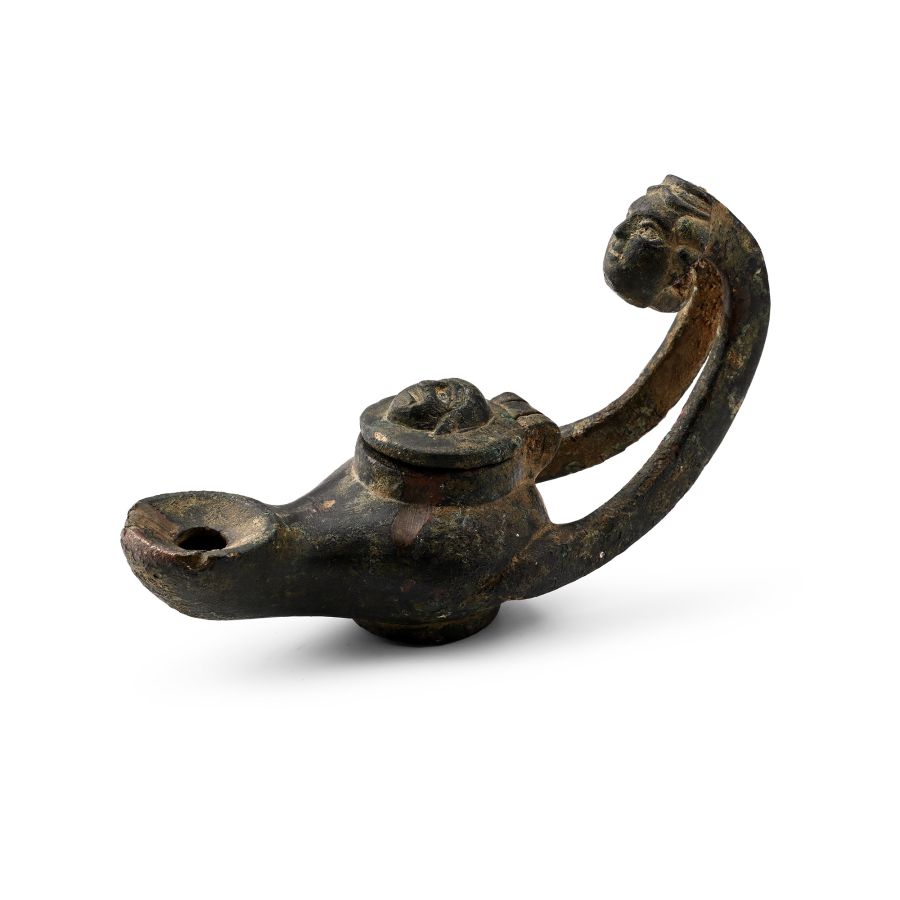
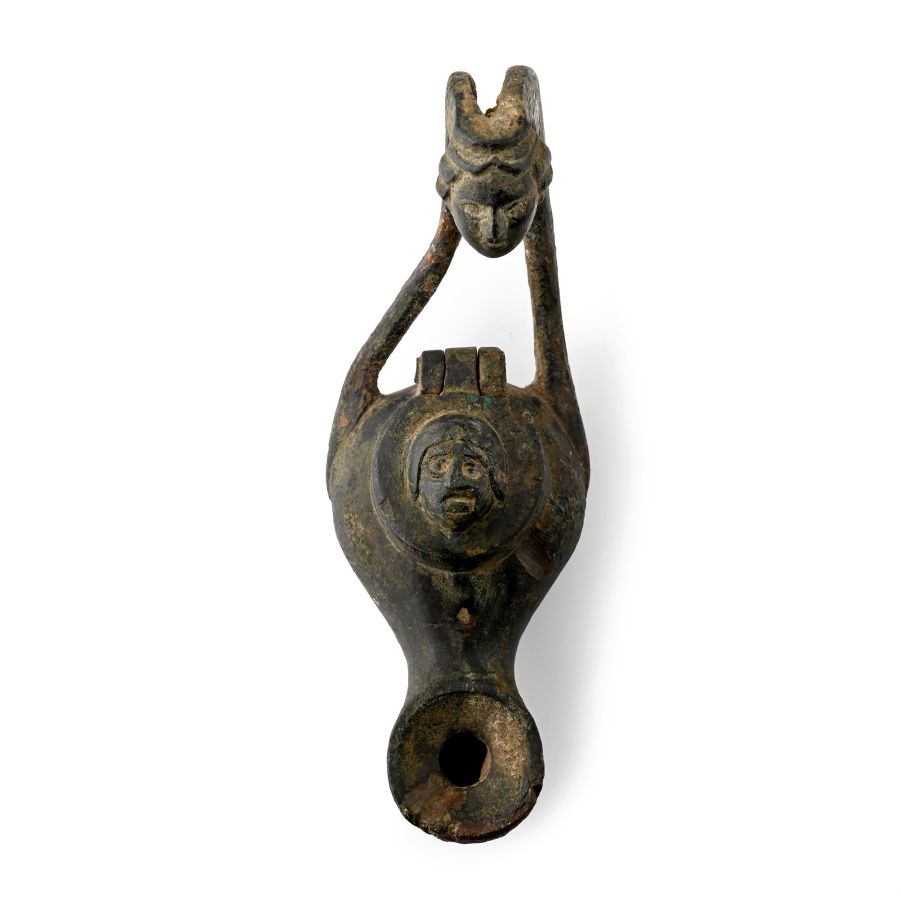
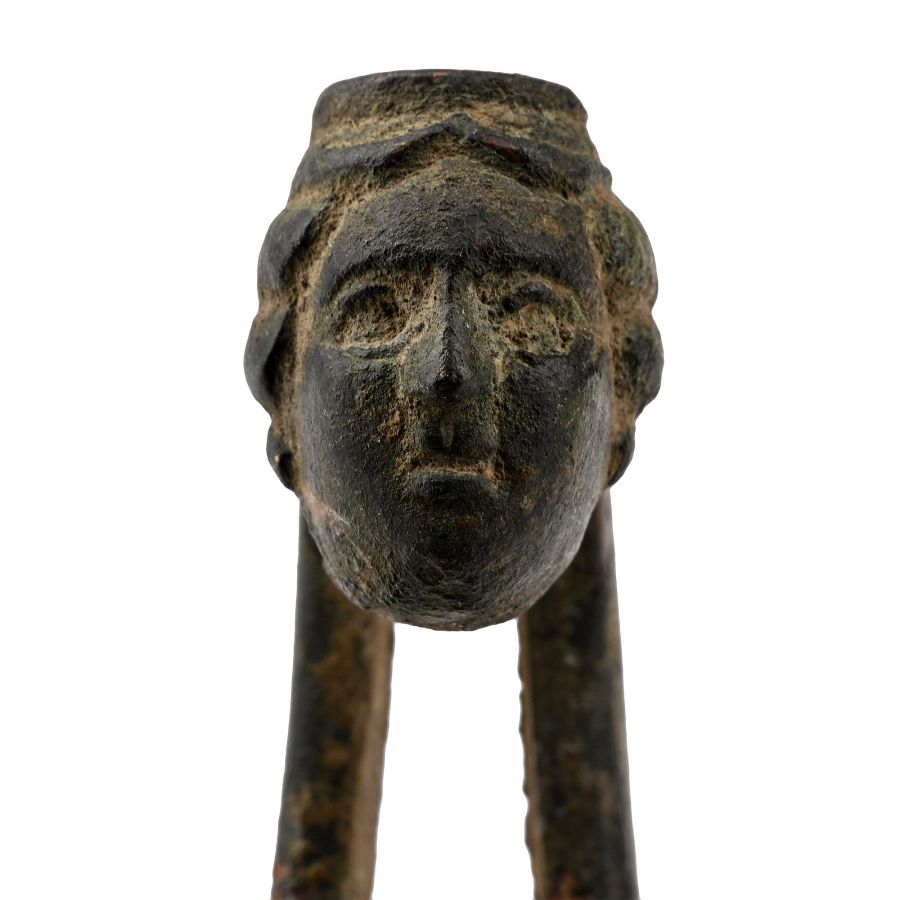
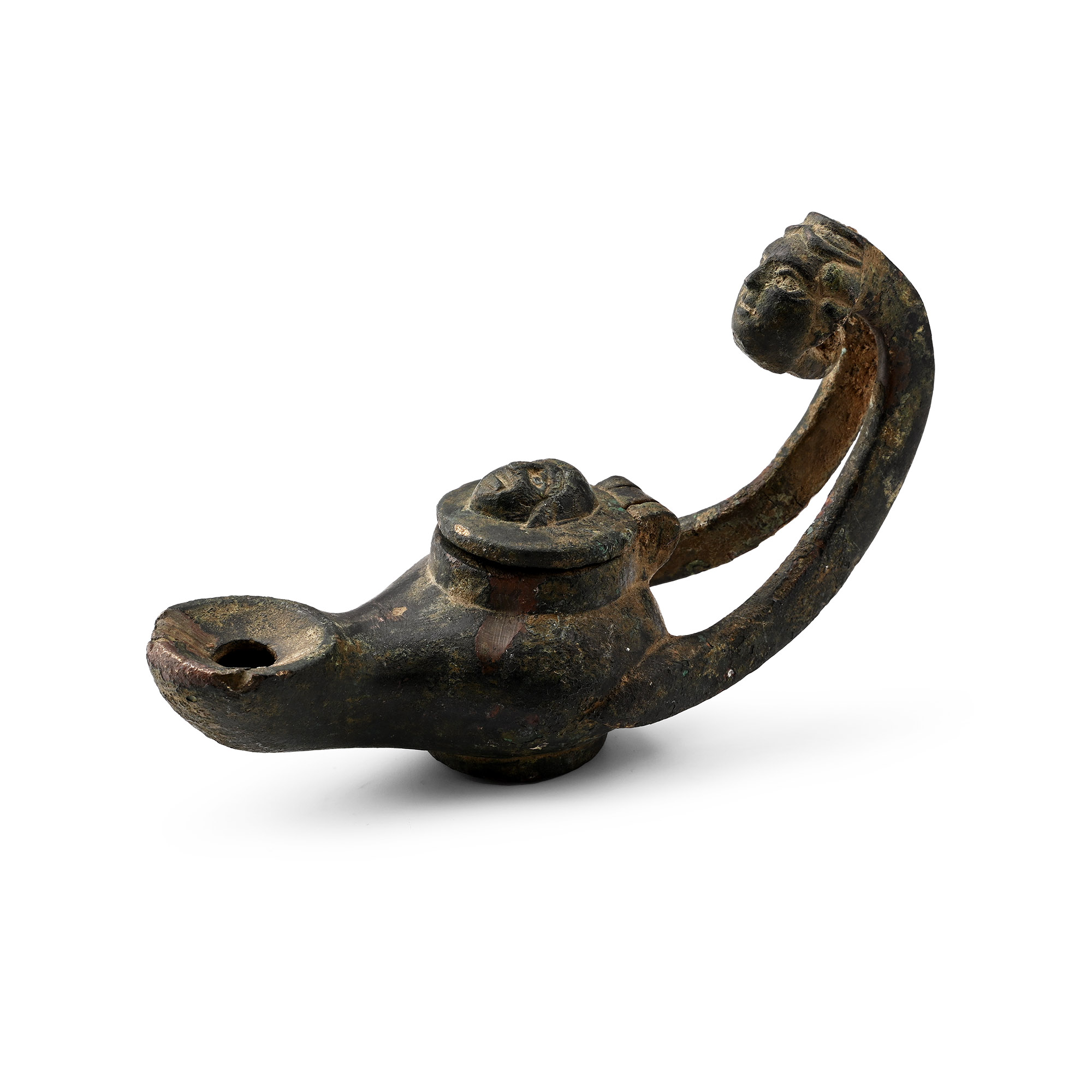
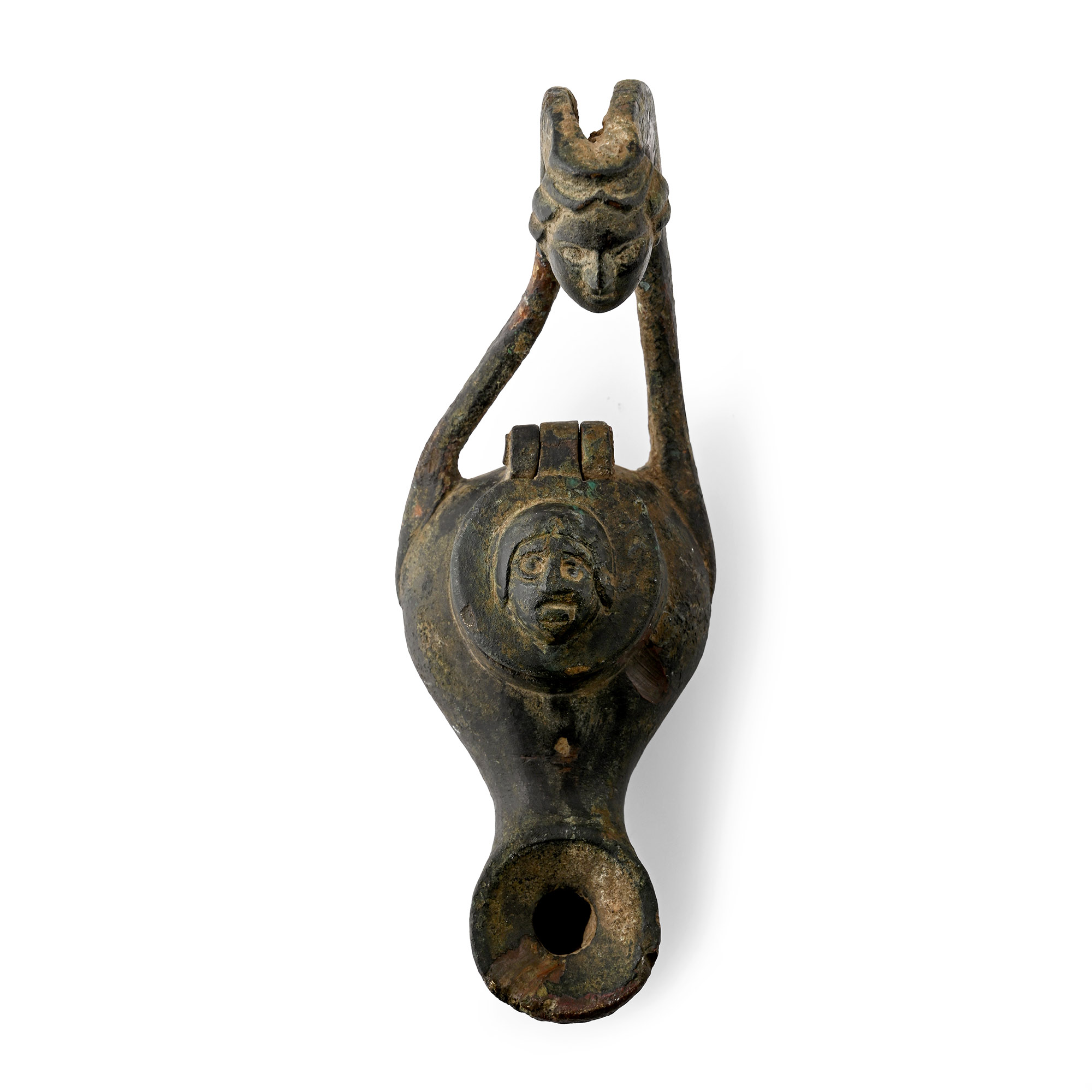
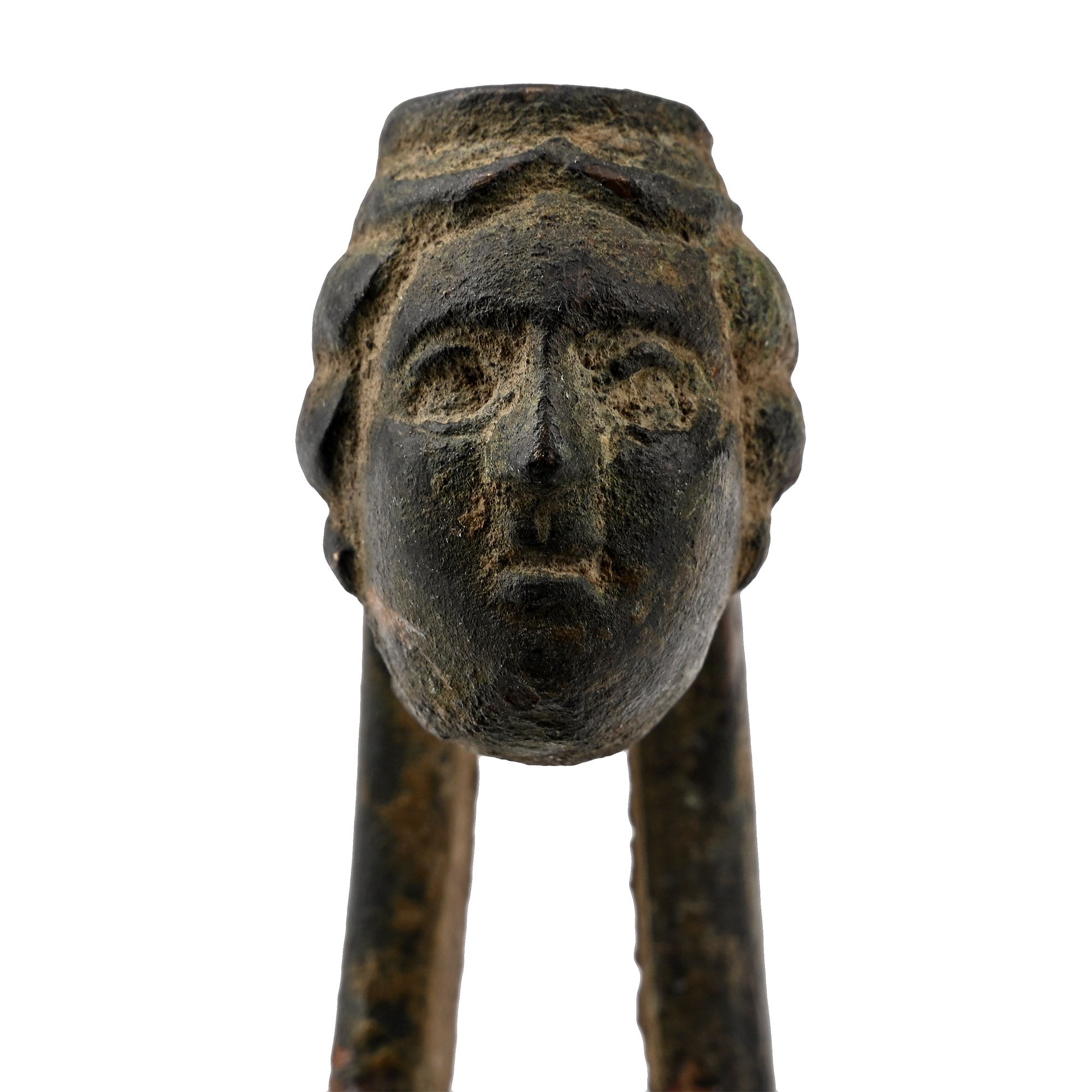
Roman Bronze Oil Lamp with Masks
1ST-2ND CENTURY A.D.
6 1/8 in. (560 grams, 15.5 cm).
With an elongated body, long nozzle with a rounded tip; raised rim to filling hole with hinged lid bearing a mask with sockets to the eyes for silver inserts; handle curved and terminating in a female mask with hair dressed in tiers, eyes recessed to be inlaid with silver; broad nozzle with cup and raised rim; socket to underside for mounting on a stand.
ProvenanceFrom the collection of a gentleman, acquired on the London art market in the 1990s.
PublishedExhibited at the Harwich Museum, Harwich, Essex, UK, 8th June 2026-14th September 2026; accompanied by a copy of a photograph of the artefacts on display.
LiteratureCf. Rolland, H., Bronzes Antiques de Haute Provence, Paris, 1965, no.357.
FootnotesThe lamp is crafted in a very fine style, probably in a classical form from the 1st or 2nd century. It belongs to a type known and widespread in the Mediterranean, with parallels in Paris, Madrid, the museums of Cadiz, Tarragona, and Aquileia.
CONDITIONTimeLine Auctions follows a vetting process to ensure the authenticity and legality of all items, reinforcing our commitment to integrity and responsible trading. Each antiquity, antique, and coin lot undergoes thorough examination by a vetting committee of at least ten external specialists, professional trade association members, scientists, and archaeologists: Our Vetting Process
AUCTIONS:
TimeLine is a leading auction house specialising in antiquities, ancient art, collectables, natural history, coins, medals, and books. Our auctions offer museums, collectors, historians, and enthusiasts the opportunity to acquire unique and historically significant pieces.
-
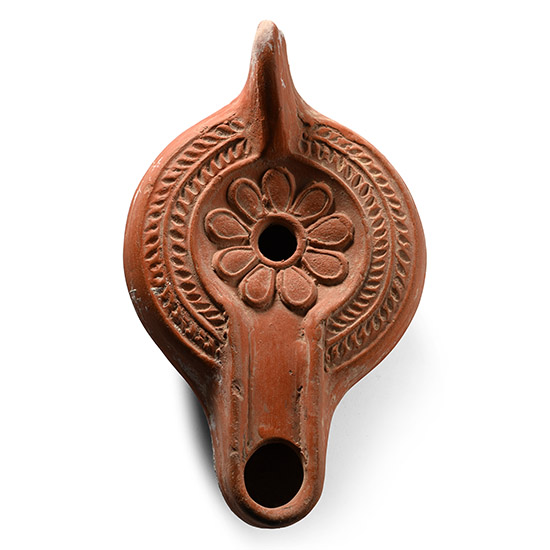
Late Roman Terracotta Oil Lamp with Nine-Petalled Flower
5th-6th century A.D.Sold for (Inc. bp): £247
Comprising a shallow discus with a wreath on the shoulder, a central nine-petalled flower surrounding the filler hole, a long nozzle with raised sides, a lug handle to the rear, and a raised basal ring. 158 grams, 13.4 cm
By descent to the son of a late Hertfordshire gentleman collector, whose collection was formed from the 1960s. -
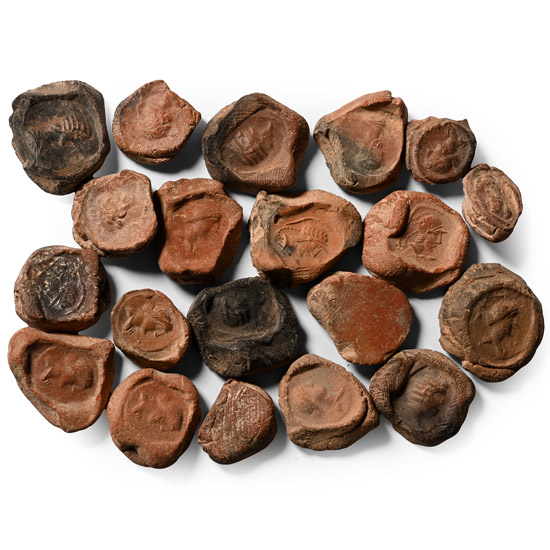
Roman Terracotta Bullae, Tesserae or Token Group
3rd century B.C.-1st century A.D.Sold for (Inc. bp): £234
A mixed group of ceramic bullae, tesserae or theatre tokens bearing low-relief motifs, mainly consisting of profile busts of deities. 34.4 grams total, 14-21 mm
From the private collection of a European gentleman (1942-2024), formed since the 1970s.
The term 'tessera' was used in Roman times to convey the Greek term σύμβολον (token). Small tiles are known as tokens, often shaped like coins, made of metal (copper, lead, iron), clay, bone, wood, or glass, stamped as well as engraved. The tokens, however, are not exclusively coin-shaped, as the Latin term 'tessera' refers to a four-sided shape. Tokens and tesserae seem to have been used both in Athens and Rome for the distribution of goods. According to written sources, the term ‘token’ is identified with credentials of the official authorities. They have also been interpreted as tokens of identity, as entrance tickets to theatre performances, tribunals or assemblies of citizens, archival material of seal engraving, as pawns in games, Charon’s obols and even as amulets. -
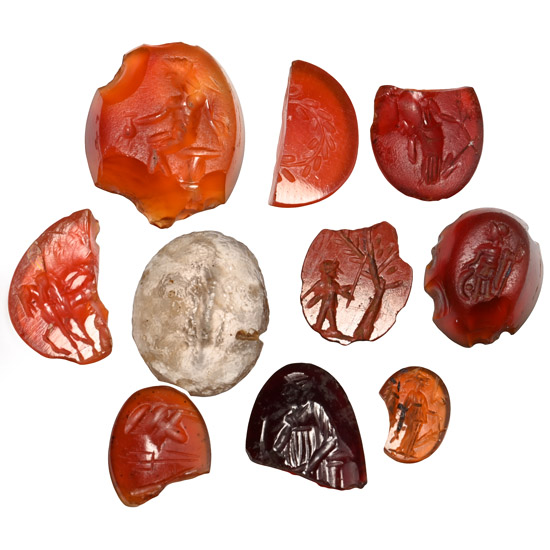
Roman Gemstone Group
2nd-3rd century A.D.Sold for (Inc. bp): £85
Including Mercury seated with marsupium, a robed female figure, a boy beating a tree to dislodge fruit, Neptune with trident and other types; each supplied with a museum-quality impression. 5.46 grams total, 8-17 mm
From the private collection of a European gentleman (1942-2024), formed since the 1970s.
