
Loading, please wait...
LOT 0149
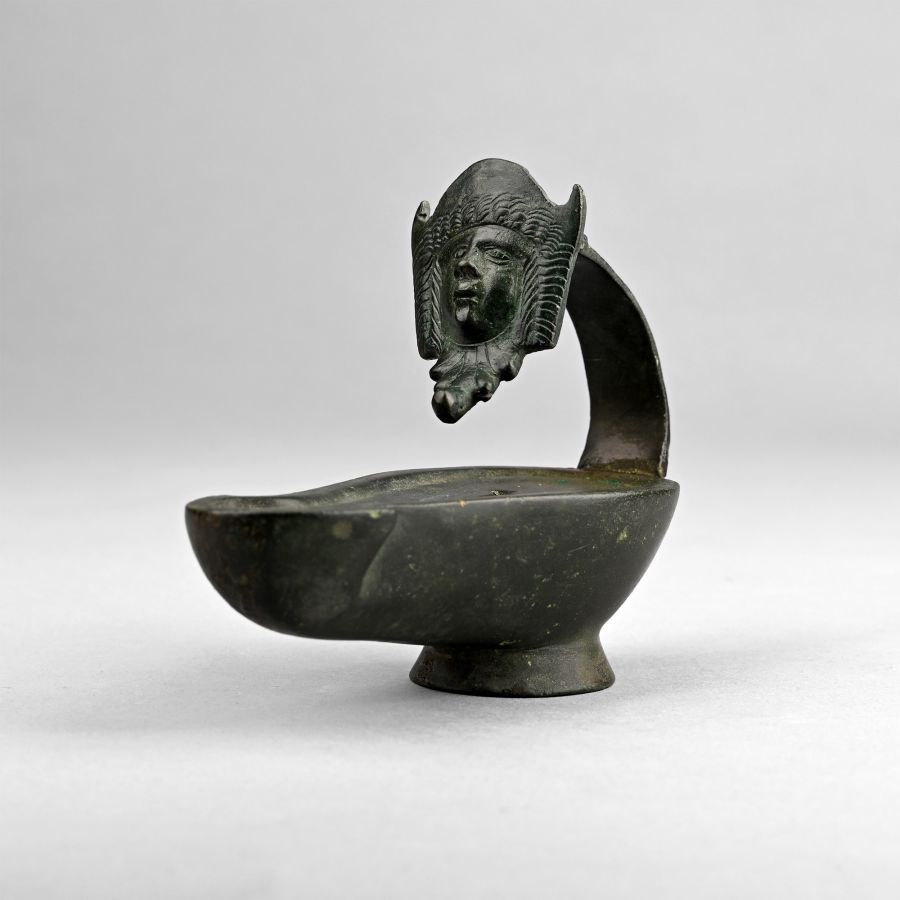
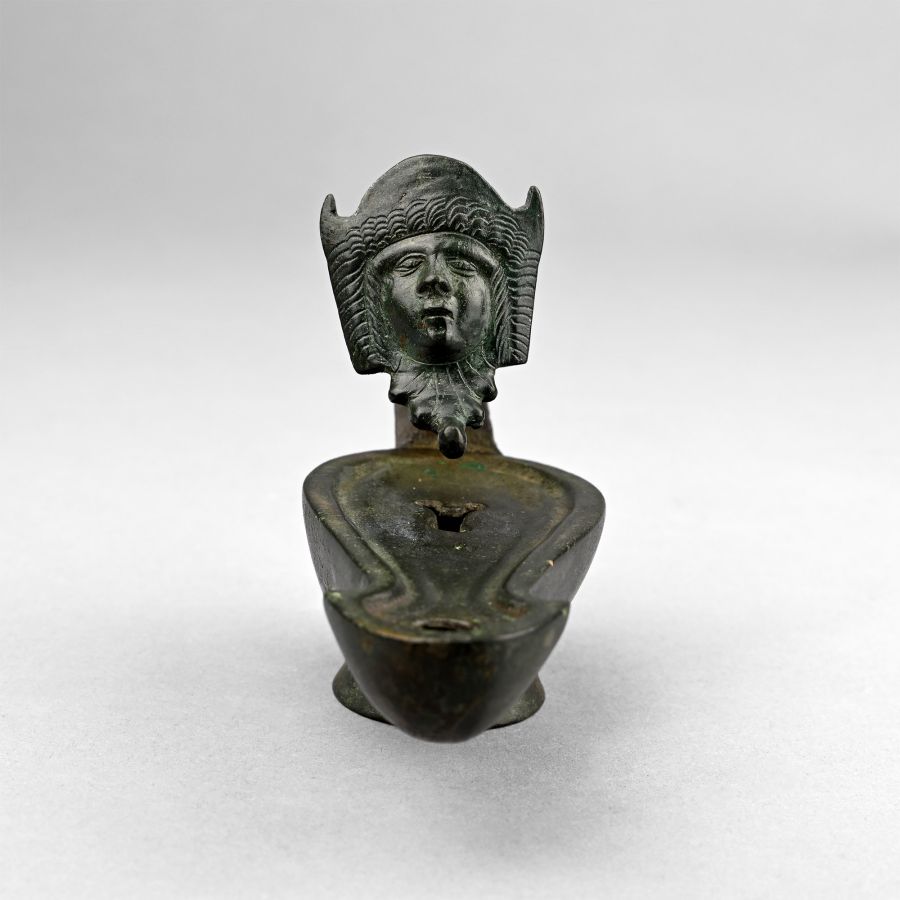
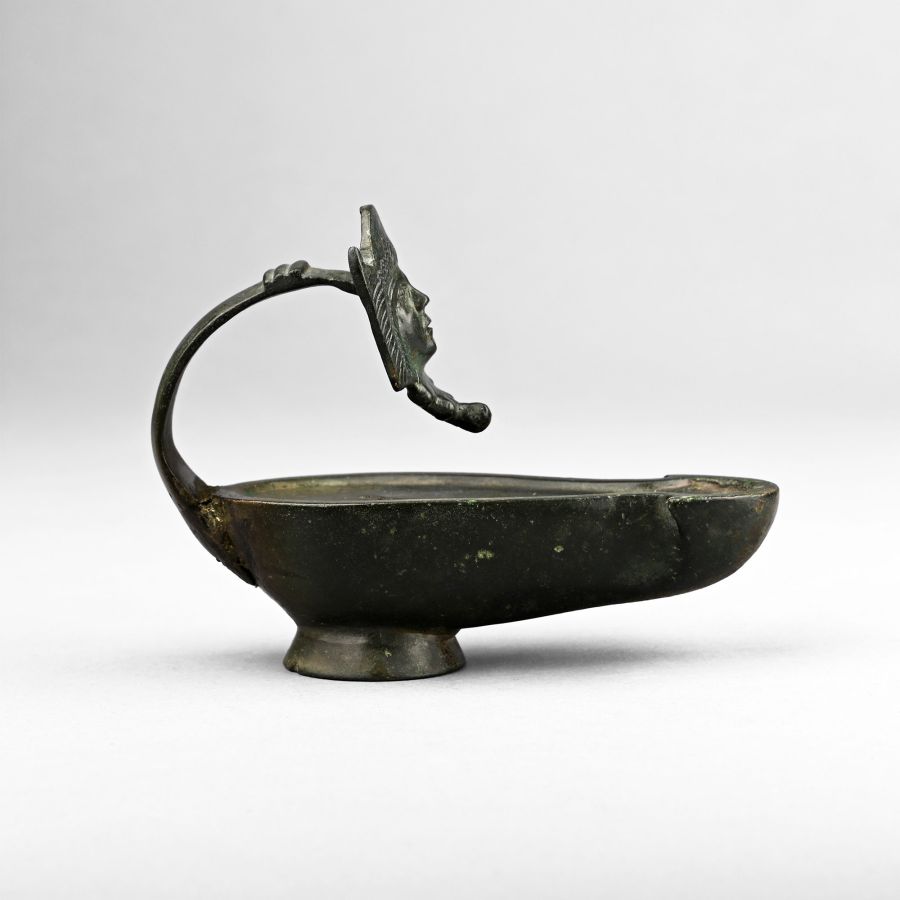
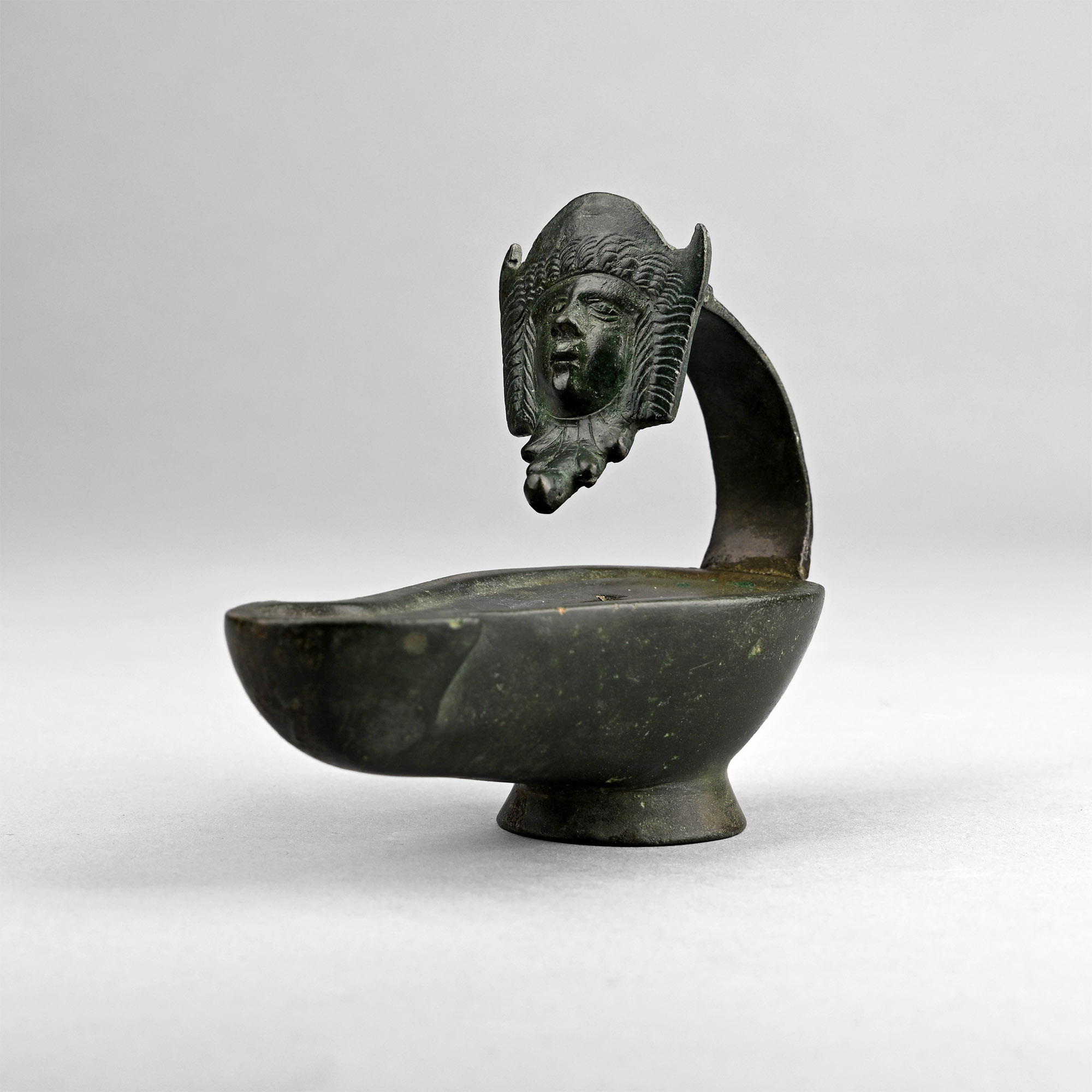
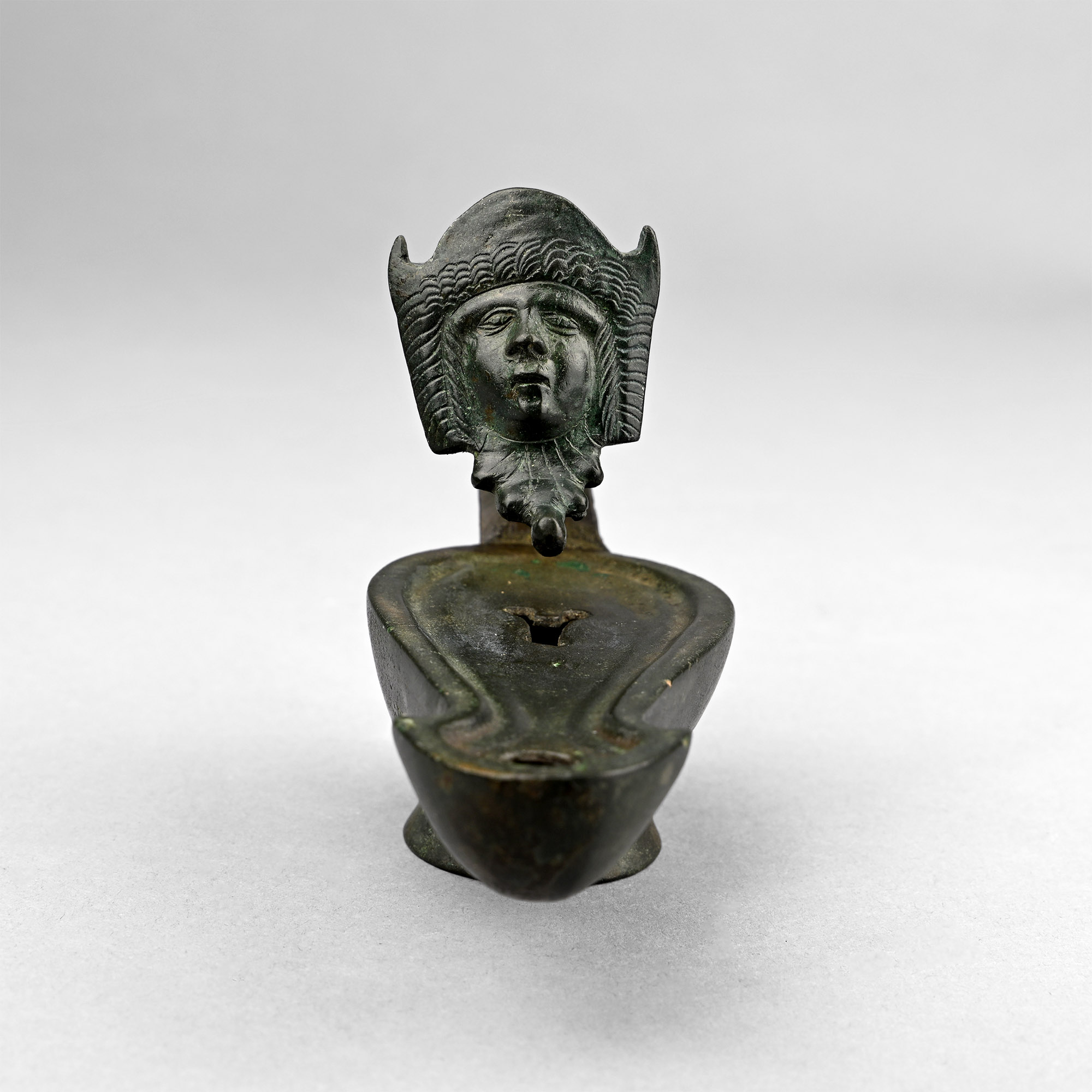
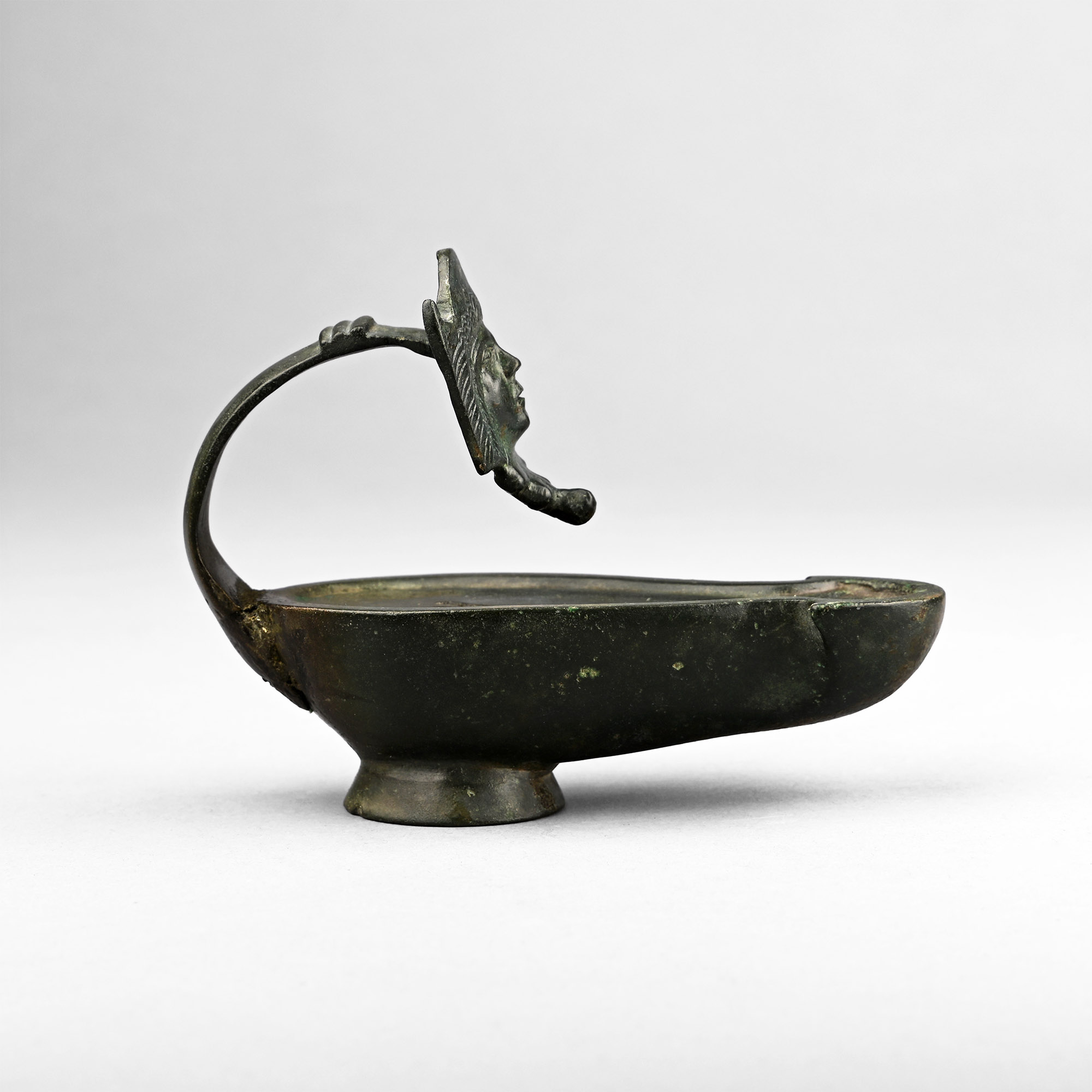
Roman Bronze Oil Lamp with Mask Handle
1ST-3RD CENTURY A.D.
5 5/8 in. (442 grams, 14.2 cm).
Hollow-formed pear-shaped body with waisted nozzle, recessed discus with phallus-shaped void, arched strap handle to rear with reflector plate formed as an actor's mask with palmette below; integral socketted base.
ProvenanceAcquired on the German art market before 2000.
Ex European private collection.
Cf. Walters, H.B., Catalogue of the Greek and Roman Lamps in the British Museum, London, 1914, plate VII, no.59, for type.
CONDITIONTimeLine Auctions follows a vetting process to ensure the authenticity and legality of all items, reinforcing our commitment to integrity and responsible trading. Each antiquity, antique, and coin lot undergoes thorough examination by a vetting committee of at least ten external specialists, professional trade association members, scientists, and archaeologists: Our Vetting Process
AUCTIONS:
TimeLine is a leading auction house specialising in antiquities, ancient art, collectables, natural history, coins, medals, and books. Our auctions offer museums, collectors, historians, and enthusiasts the opportunity to acquire unique and historically significant pieces.
-
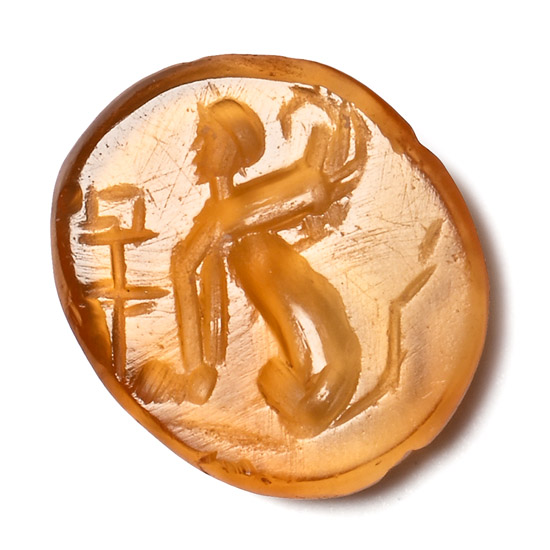
Roman Carnelian Gemstone with Sphinx
2nd-3rd century A.D.Sold for (Inc. bp): £72
With intaglio sphinx sitting beside a military standard; supplied with a museum-quality impression. 0.36 grams, 10.83 mm
From the private collection of a European gentleman (1942-2024), formed since the 1970s. -
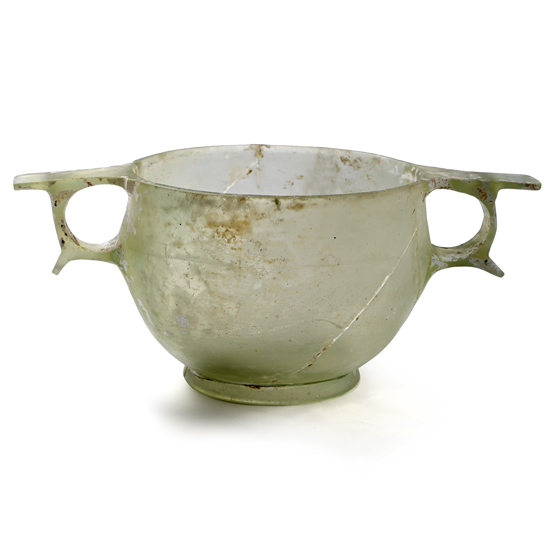
Roman Cut-Glass Skyphos
1st century B.C.-1st century A.D.Estimate: £4,000 - 6,000 (+bp*)
Opening Bid: £2,000
Drum-shaped frosted glass vessel on a low basal ring, lateral loop handles each with an angled spur below and fish-tail plaque above. 260 grams, 18.3 cm wide
Acquired in the 1980s. with Christopher Sheppard, London, UK. Acquired from the above in 2007. Accompanied by an academic report by Dr Raffaele D’Amato. This lot has been checked against the Interpol Database of stolen works of art and is accompanied by search certificate number no.13248-252970.
The classic shape of this skyphos, a two-handled drinking cup from the 1st century, reflects the metal prototypes of the period. The most famous are the silver cups from Boscoreale and the House of the Menander at Pompeii (Hilgers, 1969, pl.2, nos.5-6 and pl.4, nos.1-4; Pappalardo, 1986, pp.206-207, nos.1-4). -
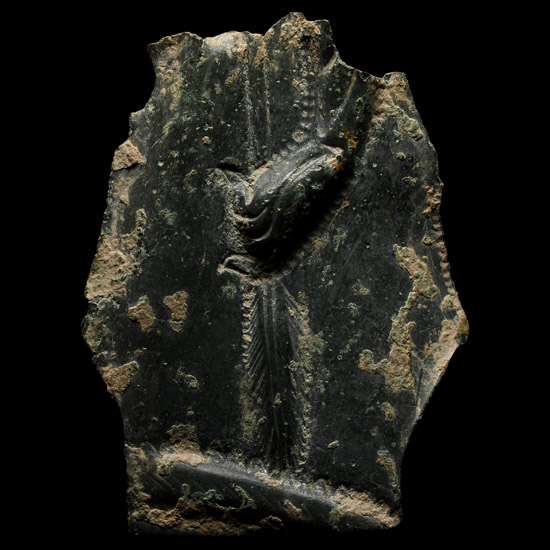
Roman Bronze Helmet Fragment with Hand Holding a Plumed Staff
Circa 2nd century A.D.Sold for (Inc. bp): £130
Rim fragment with moulded detailing. 5.93 grams, 49.95 mm
From the private collection of a European gentleman (1942-2024), formed since the 1970s.
