
Loading, please wait...
LOT 0676
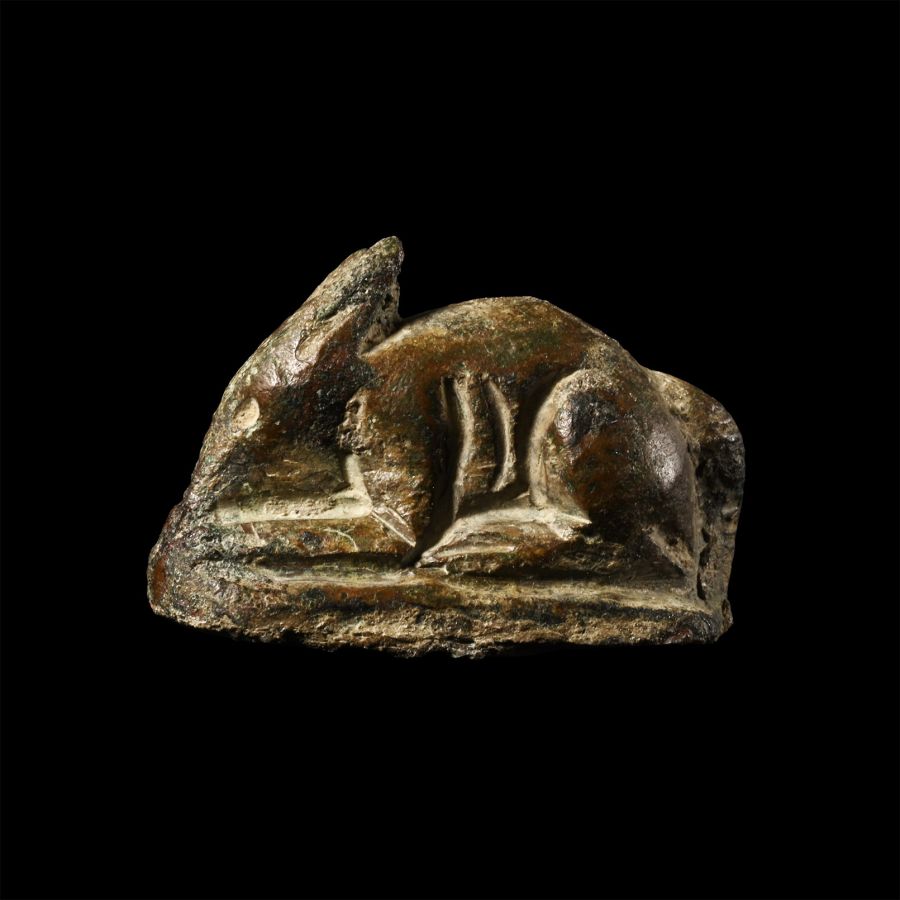
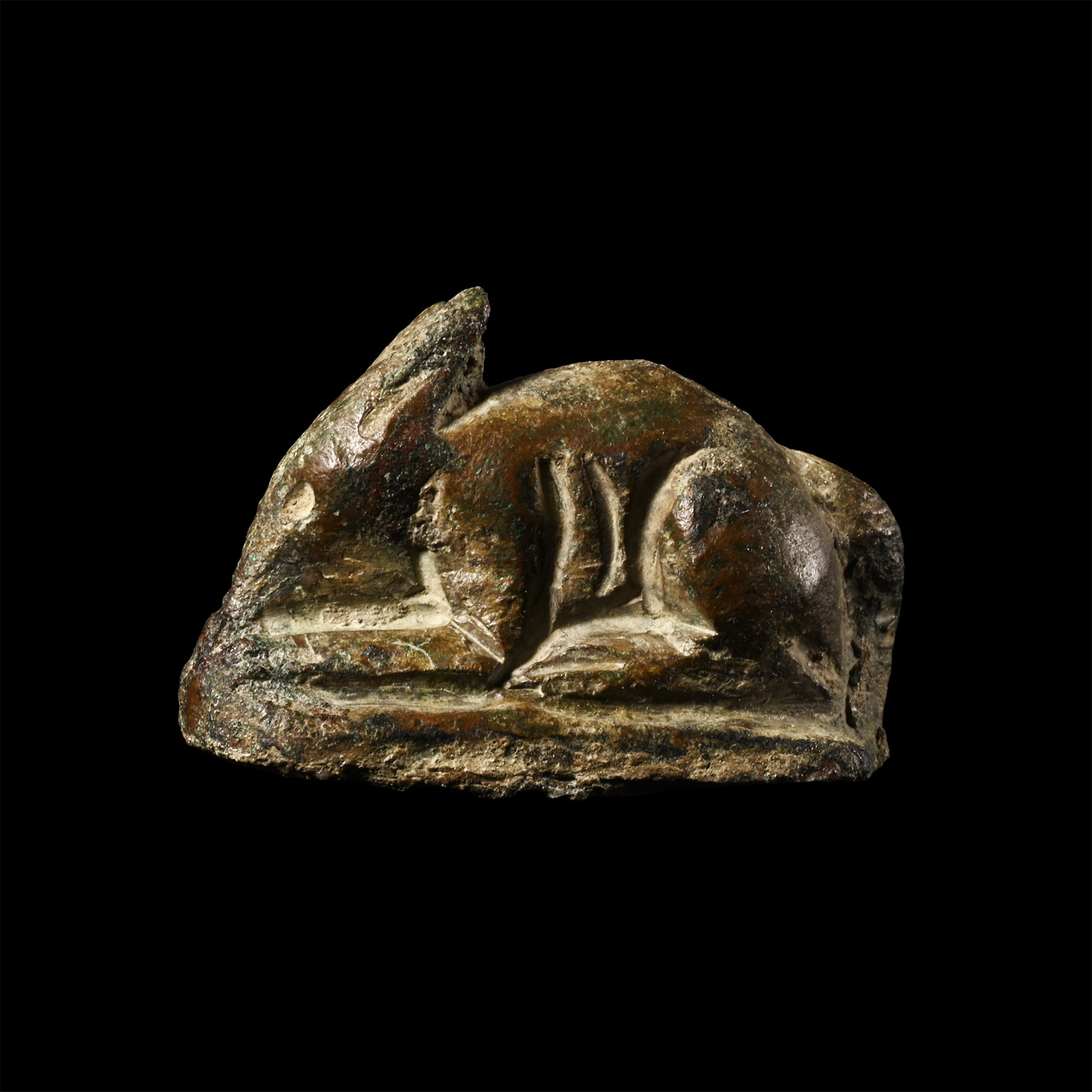
Roman Bronze Nibbling Rat Figurine
1ST-2ND CENTURY A.D.
1 1/8 in. (29 grams, 30 mm).
Modelled in the half-round on an elliptical base, forelegs bent clutching a piece of food, saly tail to the rear. [No Reserve]
ProvenanceUK art market, acquired prior to 1980.
Property of an East Sussex, UK, private collector.
Rats can be distinguished from mice by their thick, scaly tails.
CONDITIONTimeLine Auctions follows a vetting process to ensure the authenticity and legality of all items, reinforcing our commitment to integrity and responsible trading. Each antiquity, antique, and coin lot undergoes thorough examination by a vetting committee of at least ten external specialists, professional trade association members, scientists, and archaeologists: Our Vetting Process
AUCTIONS:
TimeLine is a leading auction house specialising in antiquities, ancient art, collectables, natural history, coins, medals, and books. Our auctions offer museums, collectors, historians, and enthusiasts the opportunity to acquire unique and historically significant pieces.
-
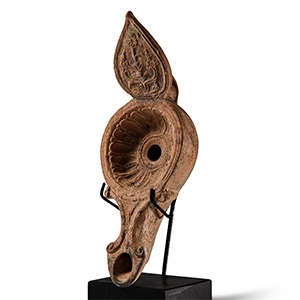
Large Roman Terracotta Oil Lamp with Reflector
1st century A.D.Sold for (Inc. bp): £780
Cup-shaped body with socketted lotiform discus and central filling hole, tapering nozzle with volute scrolls to the rim, D-shaped finial; loop handle and piriform reflector with low-relief ornament of an urn with vine scrolls and perching birds; mounted on a custom-made stand. 257 grams total, 18 cm wide including stand
From the private collection of the late Mr S.M., London, UK, 1969-1999; thence by descent. -
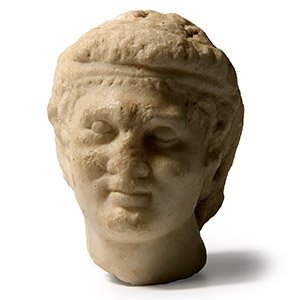
Roman Marble Head of a Satyr
1st-3rd century A.D.Sold for (Inc. bp): £3,380
Of Praxitelic type with fillet to the brow, tousled hair and rounded facial features with stern expression. 519 grams, 88 mm
Acquired early 1990s. Ex private American collection; thence by descent. Private Swiss collection since 1998. This lot has been checked against the Interpol Database of stolen works of art and is accompanied by search certificate no.11632-199025.
The head appears to be a copy of the Praxitelian type known as 'the Pouring Satyr'. The head, realised with sensitivity, but technically and stylistically academic, could be dated to the first half of the 2nd century A.D. -
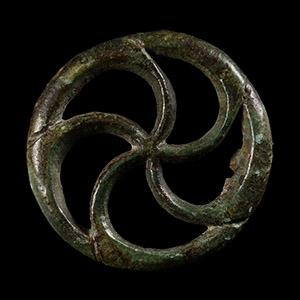
Roman Sun Wheel Brooch
2nd-3rd century A.D.Sold for (Inc. bp): £59
Formed with an openwork discoid body; pin lug and catchplate to reverse. 8.07 grams, 31 mm
From the collection of a North American gentleman, formed in the 1990s.
