
Loading, please wait...


LOT 0685
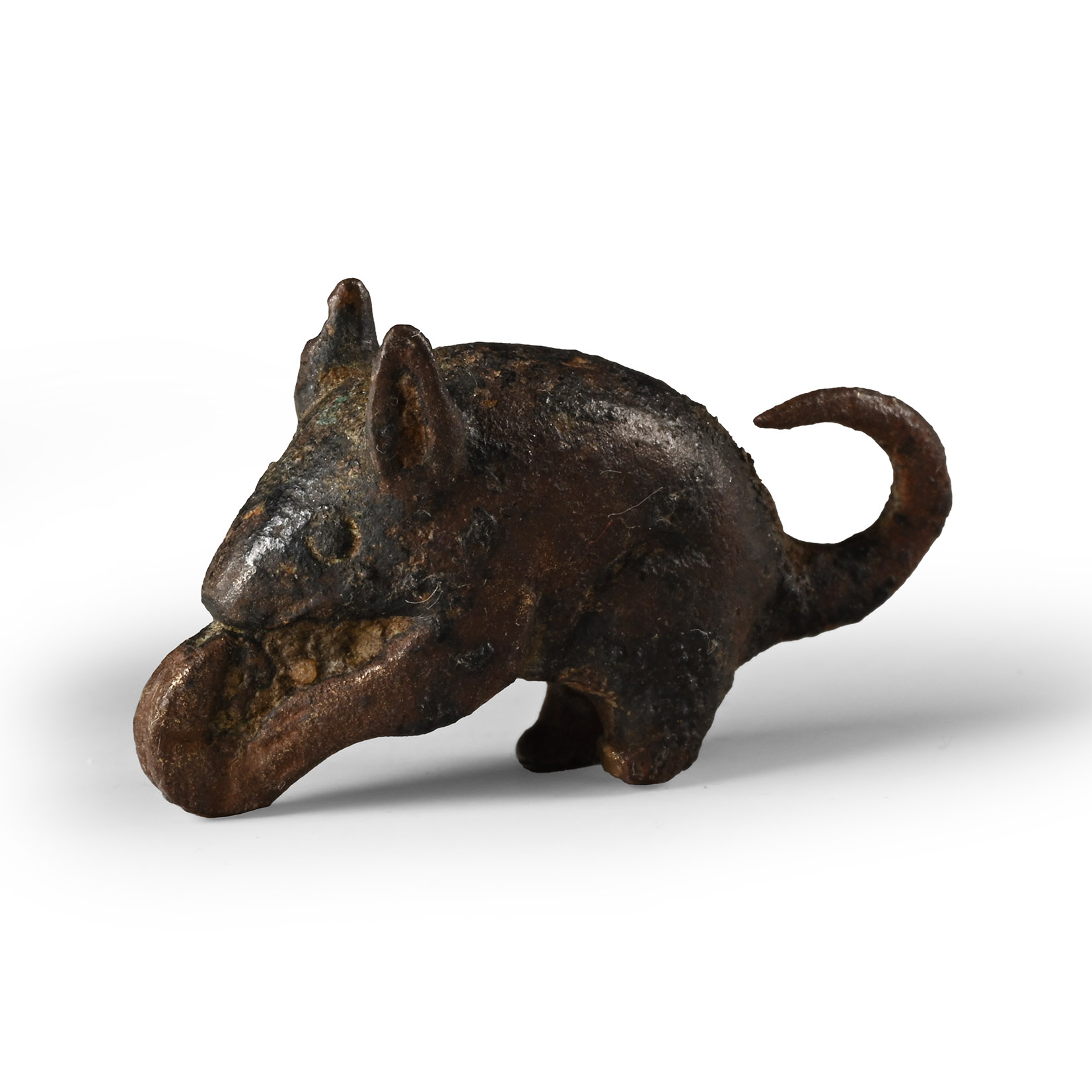
Roman Bronze Mouse with Nut
2ND-3RD CENTURY A.D.
1 1/4 in. (15.4 grams, 33 mm).
In a crouching posture, eating a nut held in its front paws, the tail curving upwards.
ProvenanceEx German art market, 2000s.
Acquired from an EU collector living in London.
From the collection of Surrey, UK, gentleman.
TimeLine Auctions follows a vetting process to ensure the authenticity and legality of all items, reinforcing our commitment to integrity and responsible trading. Each antiquity, antique, and coin lot undergoes thorough examination by a vetting committee of at least ten external specialists, professional trade association members, scientists, and archaeologists: Our Vetting Process
AUCTIONS:
TimeLine is a leading auction house specialising in antiquities, ancient art, collectables, natural history, coins, medals, and books. Our auctions offer museums, collectors, historians, and enthusiasts the opportunity to acquire unique and historically significant pieces.
-
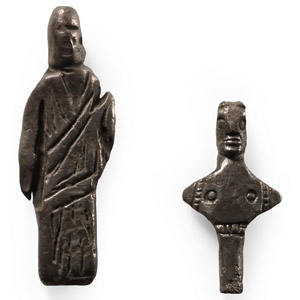
East Roman Silver Votive Figurine Group
2nd-3rd century A.D.Sold for (Inc. bp): £98
Comprising: figure wearing a floor-length stola, book under the left arm; bus with stub arms. 3.61 grams total, 17-25 mm
From the collection of a London antiquarian, formed since the 1980s. -
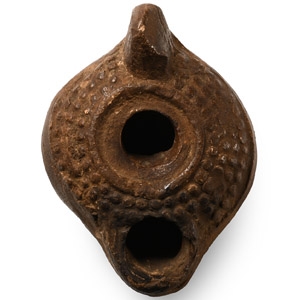
Roman Decorated Terracotta Oil Lamp
Circa 4th century A.D.Sold for (Inc. bp): £39
Squat and biconvex in section with thick lug handle and deep nozzle, the shoulder with horizontal bands of pellets; old collector's inked reference 'OL12' to underside. 70 grams, 75 mm
Acquired from a Kidlington, UK, collection. From the private collection of Kenneth Machin (1936-2020), Buckinghamshire, UK; with collection no.OL12; his collection of antiquities and natural history was formed since 1948; thence by descent. -
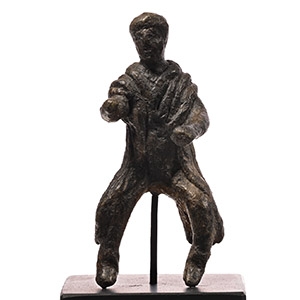
Roman Bronze Cavalryman Statuette with Paenula
1st-3rd century A.D.Sold for (Inc. bp): £221
Modelled in the round in seated pose with both hands extended forwards to hold reins; the body covered by an open-fronted paenula riding cape; boots to the feet; mounted on a custom-made stand. 271 grams, 10.1 cm including stand
Found in Britain. From a collection acquired on the UK art market from various auction houses and collections mostly before 2000. From an important Cambridgeshire estate; thence by descent.
The statuette, like the one from Rouen published by Mackintosh, represents a link between the Romano-British and Gallo-British figurines of the cavalrymen and Imperial statuary. They are of relatively good workmanship and represents a rider seated on a walking horse. The rider is dressed in a short-sleeved tunic and the military paenula, echoing the representation of Marcus Aurelius on his horse. The raised arm could mean that he was wearing a spear.
