
Loading, please wait...
LOT 0980
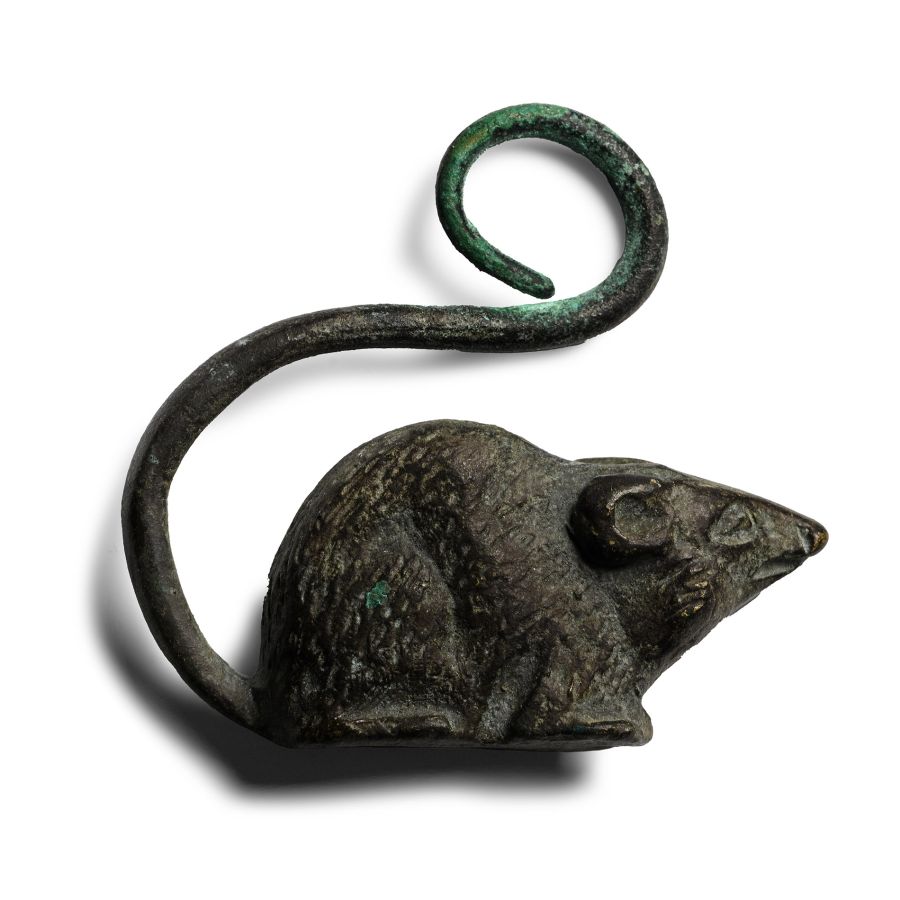
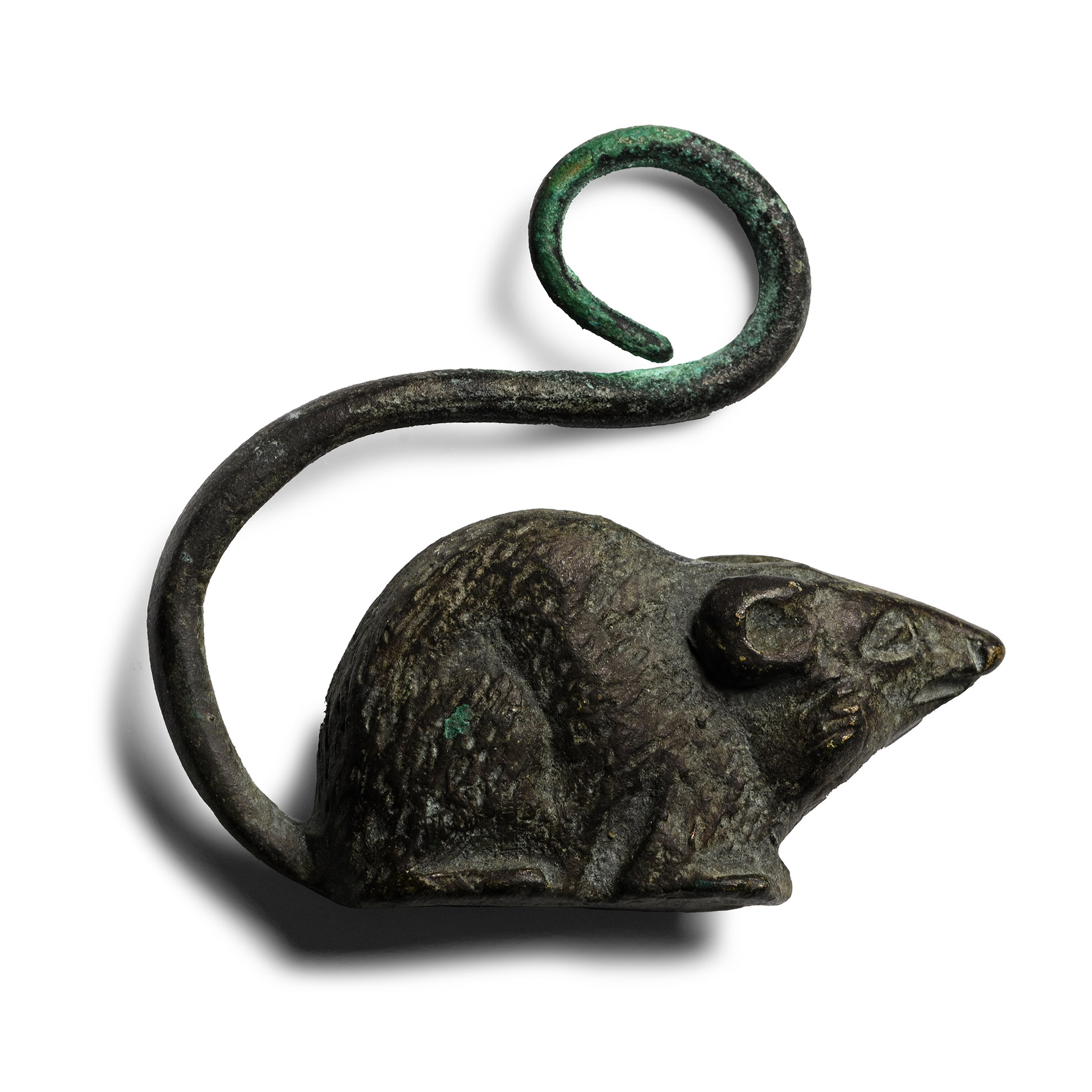
Roman Bronze Mouse Statuette
1ST-4TH CENTURY A.D.
2 in. (46.6 grams, 50 mm).
In a crouching posture, the tail curving upwards to a scroll finial.
ProvenanceAcquired on the London art market in the late 1980s-1990s.
From the family collection of an East London, UK, gentleman.
This lot is accompanied by an illustrated lot declaration signed by the Head of the Antiquities Department, Dr Raffaele D’Amato.
Cf. Christie's, London, A Peaceable Kingdom: The Leo Mildenberg Collection of Ancient Animals, 26th-27th October, 2004, p.184 and p.203, for similar.
CONDITIONTimeLine Auctions follows a vetting process to ensure the authenticity and legality of all items, reinforcing our commitment to integrity and responsible trading. Each antiquity, antique, and coin lot undergoes thorough examination by a vetting committee of at least ten external specialists, professional trade association members, scientists, and archaeologists: Our Vetting Process
AUCTIONS:
TimeLine is a leading auction house specialising in antiquities, ancient art, collectables, natural history, coins, medals, and books. Our auctions offer museums, collectors, historians, and enthusiasts the opportunity to acquire unique and historically significant pieces.
-
Roman Glass Vessel
1st-4th century A.D.Sold for (Inc. bp): £39
With a bulbous body, broad flared neck, recess to base; extensive iridescence, repaired. 47 grams, 10 cm
Ex London art market 1990s. From a London, UK, collection. This lot is accompanied by an illustrated lot declaration signed by the Head of the Antiquities Department, Dr Raffaele D’Amato. -
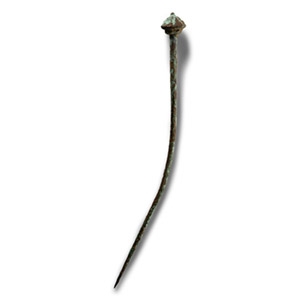
Roman Bronze Hair Pin
1st century B.C.-1st century A.D.Sold for (Inc. bp): £33
With biconvex knop finial, five radiating creases to upper face. 5.43 grams, 11.2 cm
Acquired on the London art market in the late 1980s-1990s. From the family collection of an East London, UK, gentleman. This lot is accompanied by an illustrated lot declaration signed by the Head of the Antiquities Department, Dr Raffaele D’Amato. -
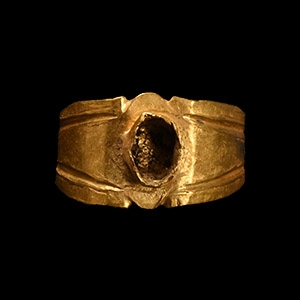
Roman Gold Child's Ring
3rd century A.D.Sold for (Inc. bp): £260
With broad hoop, incised lines to shoulders, plaque with cell. 1.06 grams, 13.02 mm overall, 11.30 mm internal diameter
Acquired from Brigantia Antiques, York, UK, in the early 1990s. Ian Wilkinson collection, Nottinghamshire, UK, formed since 1985. Accompanied by a previous illustrated catalogue slip. This lot is accompanied by an illustrated lot declaration signed by the Head of the Antiquities Department, Dr Raffaele D’Amato.
