
Loading, please wait...
LOT 0739
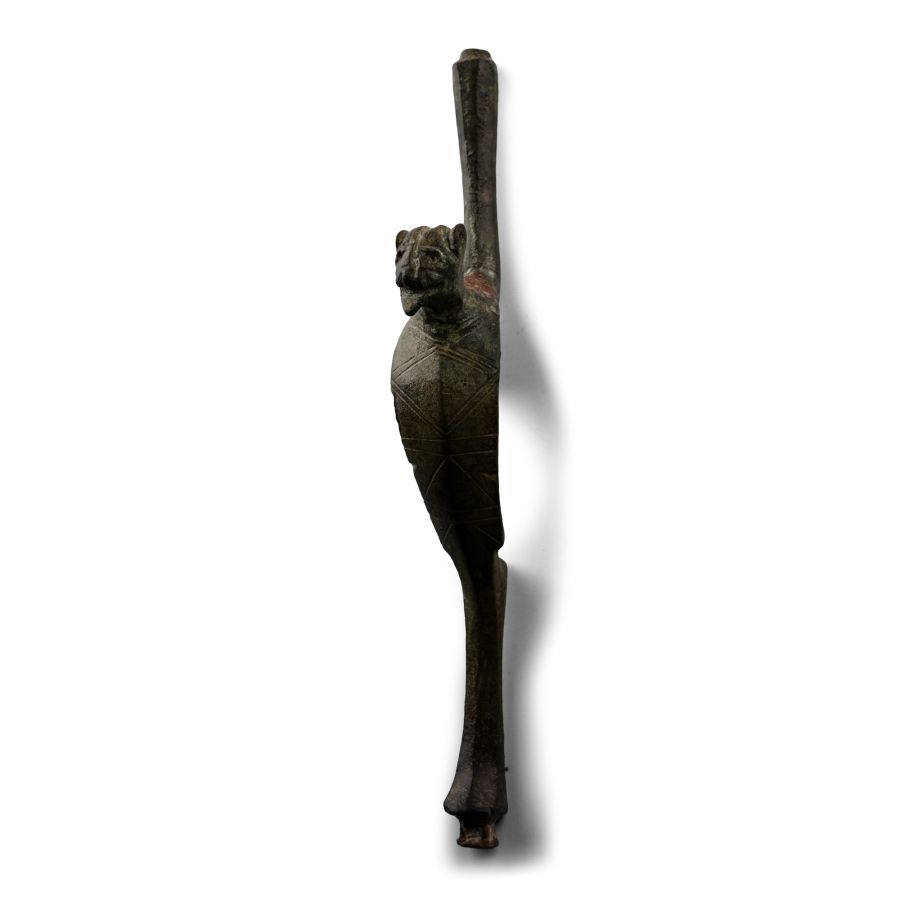
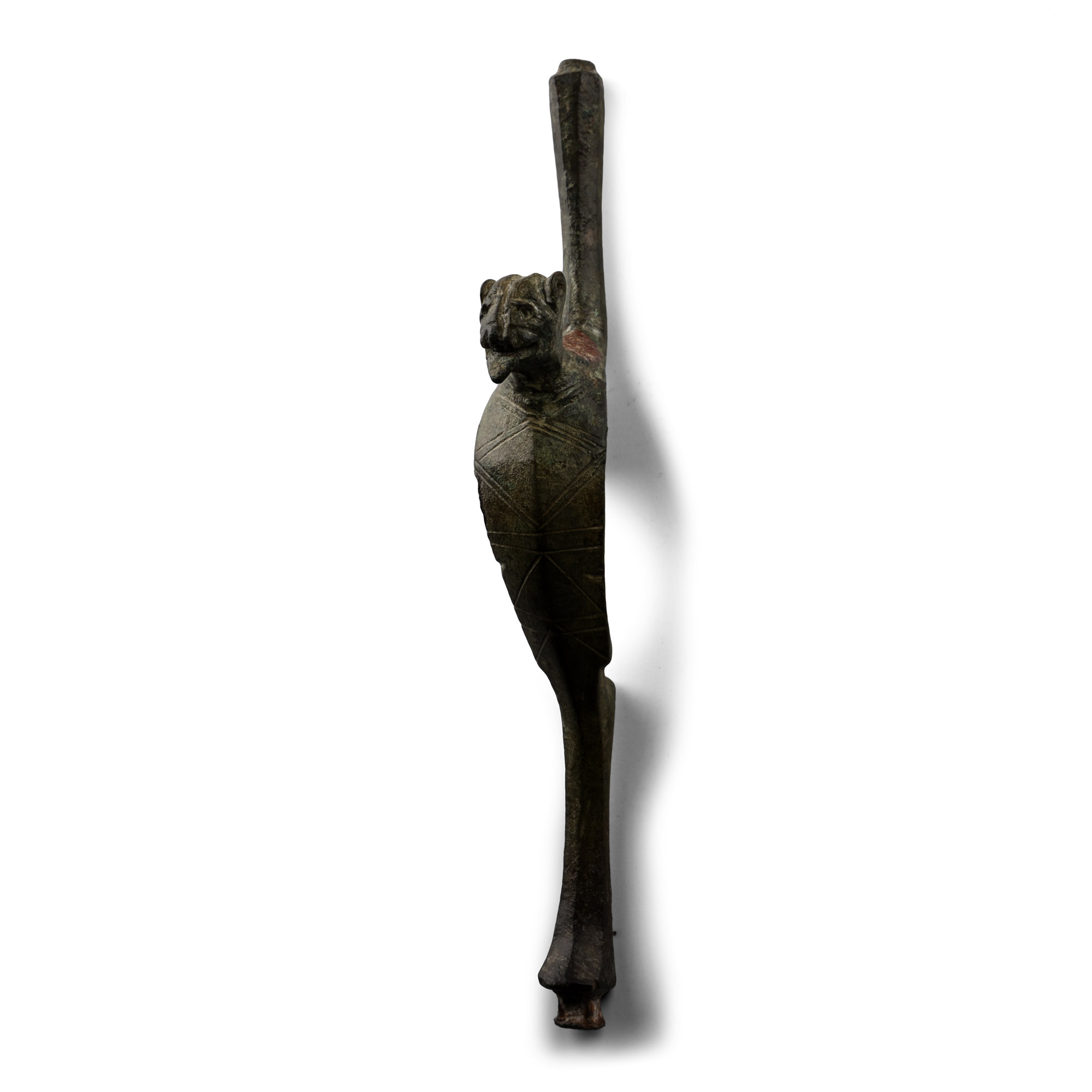
Roman Bronze Miniature Table Leg with Face of a Lion
1ST-4TH CENTURY A.D.
5 1/4 in. (60 grams, 13.2 cm).
The shank formed as two octagonal-section bulbs with median carinated bow; incuse geometric pattern, lion-mask modelled in the round with protruding tongue. [No Reserve]
ProvenanceAcquired on the UK art market.
Property of an East Anglia private collector.
This lot is accompanied by an illustrated lot declaration signed by the Head of the Antiquities Department, Dr Raffaele D'Amato.
TimeLine Auctions follows a vetting process to ensure the authenticity and legality of all items, reinforcing our commitment to integrity and responsible trading. Each antiquity, antique, and coin lot undergoes thorough examination by a vetting committee of at least ten external specialists, professional trade association members, scientists, and archaeologists: Our Vetting Process
AUCTIONS:
TimeLine is a leading auction house specialising in antiquities, ancient art, collectables, natural history, coins, medals, and books. Our auctions offer museums, collectors, historians, and enthusiasts the opportunity to acquire unique and historically significant pieces.
-
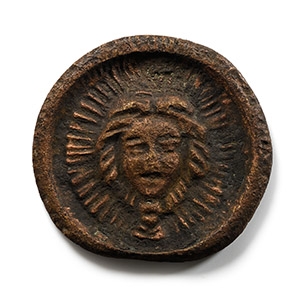
Roman Bronze Phalera of Medusa
3rd-4th century A.D.Sold for (Inc. bp): £234
Discoid in plan with raised lip to the rim, central gorgoneion motif. 33 grams, 47 mm
From the collection of a gentleman, acquired on the London art market in the 1990s. This lot is accompanied by an illustrated lot declaration signed by the Head of the Antiquities Department, Dr Raffaele D'Amato. -
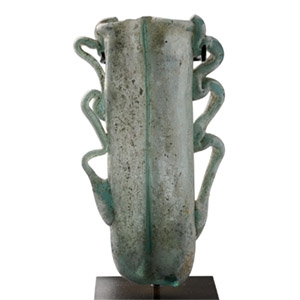
Roman Glass Twin Flask
3rd-5th century A.D.Estimate: £350 - 450 (+bp*)
Opening Bid: £175
Comprising two conjoined tapering tubular cells, with applied handles at the shoulder. 136 grams total, 14 cm including stand
Ex Mayfair, London, UK, gallery, 1990s-2000s. From an important collection of glass, the property of a London gentleman. This lot is accompanied by an illustrated lot declaration signed by the Head of the Antiquities Department, Dr Raffaele D'Amato. -
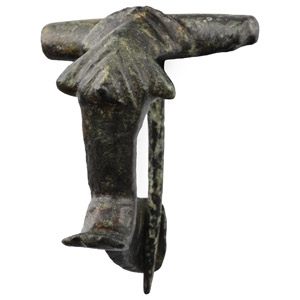
Roman Bronze Dolphin Bow Brooch
1st-2nd century A.D.Sold for (Inc. bp): £52
The bow formed as a dolphin holding a sphere in its mouth; detailing to the fins and head; pin lug, pin and catchplate to reverse. 11.9 grams, 32 mm
Ex German art market, 2000s. Acquired from an EU collector living in London. From the collection of a Surrey, UK, gentleman. This lot is accompanied by an illustrated lot declaration signed by the Head of the Antiquities Department, Dr Raffaele D'Amato.
