
Loading, please wait...

LOT 0847
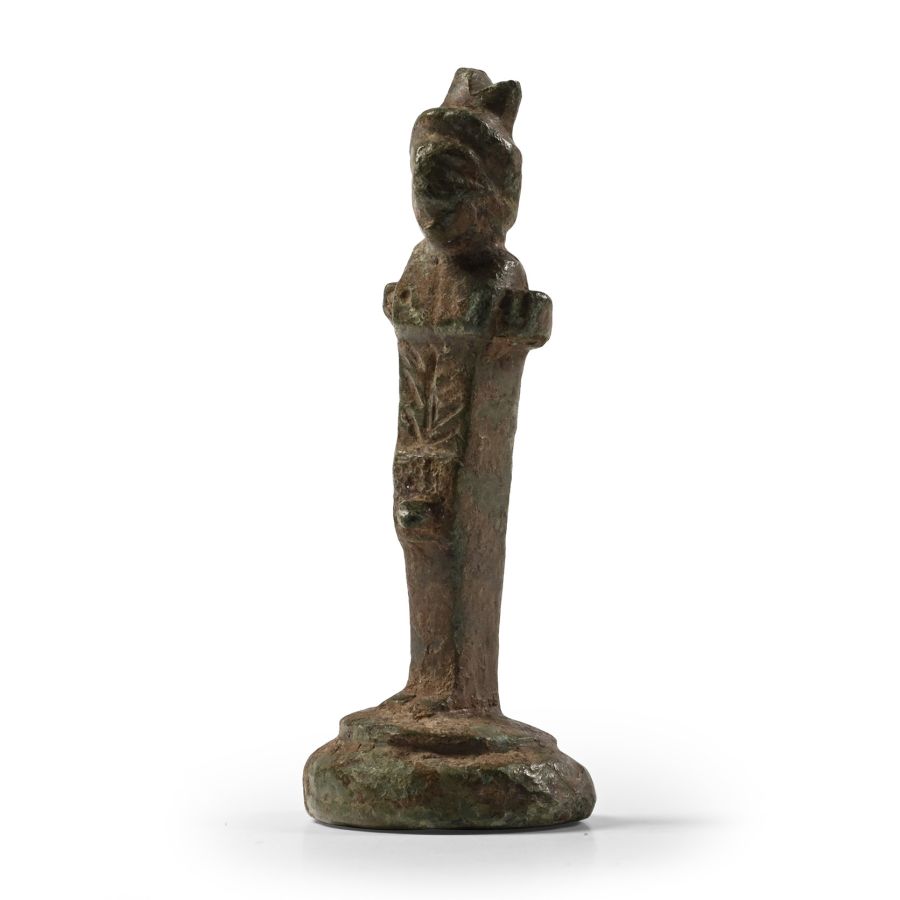
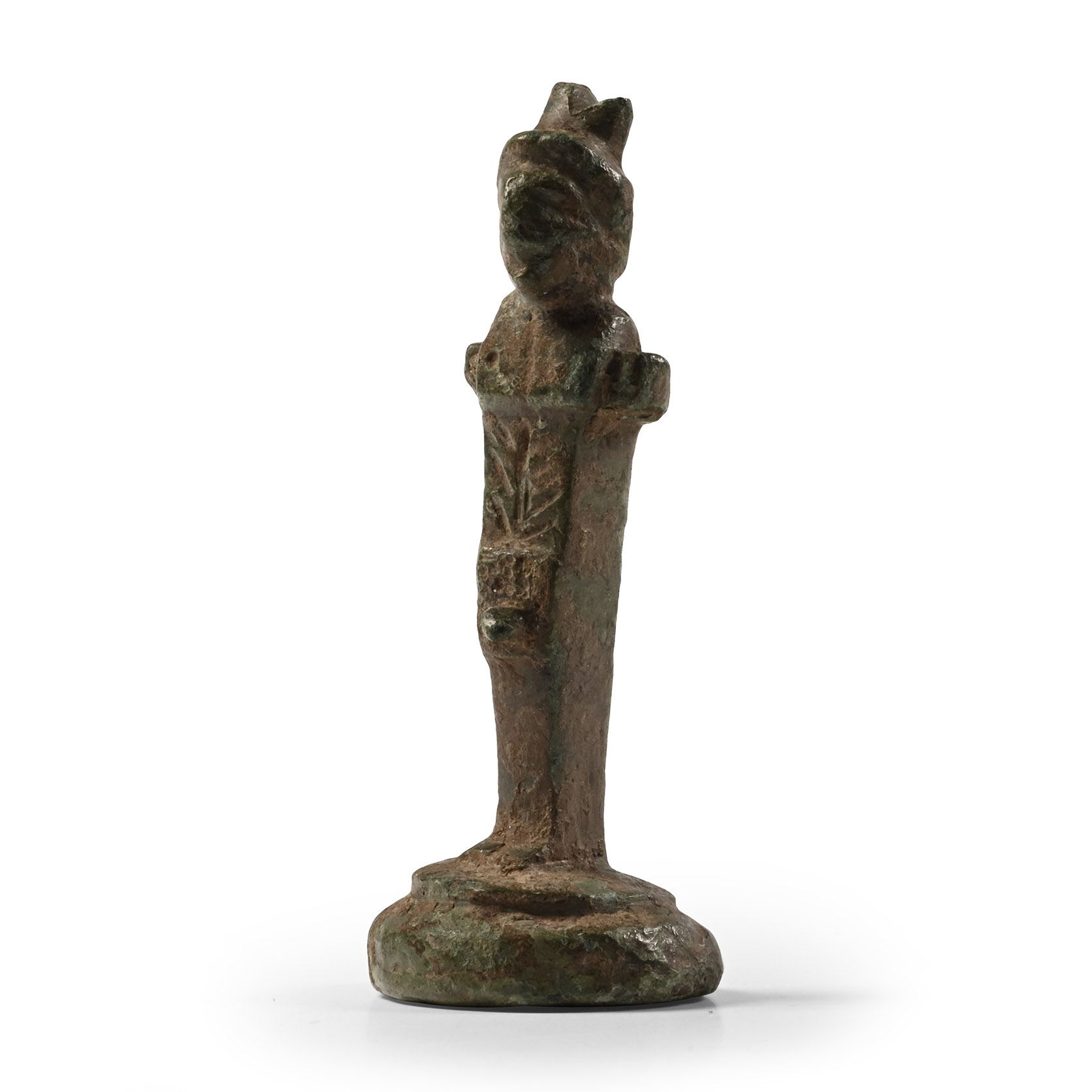
Roman Bronze Miniature Herm Statuette
1ST-3RD CENTURY A.D.
2 1/4 in. (33 grams, 56 mm).
With stepped domed base, the shank square in section and tapering with helmetted head, stub arms, chevron hatching to the chest and male genitals.
ProvenanceAcquired in the mid 1980s-1990s.
Private collection, Switzerland, thence by descent.
Private collection, since the late 1990s.
This lot is accompanied by an illustrated lot declaration signed by the Head of the Antiquities Department, Dr Raffaele D’Amato.
This lot is accompanied by an illustrated lot declaration signed by the Head of the Antiquities Department, Dr Raffaele D'Amato.
Cf. similar figure in the British Museum under accession no.1912,1125.13.
CONDITIONTimeLine Auctions follows a vetting process to ensure the authenticity and legality of all items, reinforcing our commitment to integrity and responsible trading. Each antiquity, antique, and coin lot undergoes thorough examination by a vetting committee of at least ten external specialists, professional trade association members, scientists, and archaeologists: Our Vetting Process
AUCTIONS:
TimeLine is a leading auction house specialising in antiquities, ancient art, collectables, natural history, coins, medals, and books. Our auctions offer museums, collectors, historians, and enthusiasts the opportunity to acquire unique and historically significant pieces.
LOT 0847
Roman Bronze Miniature Herm Statuette
Estimate £200 - 300€230 - 350 (for guidance only)$270 - 410 (for guidance only)
-
Roman Iridescent Glass Flask with Trailing
1st century A.D.Estimate: £400 - 600 (+bp*)
Opening Bid: £190
An iridescent glass unguentarium with spherical body, tubular neck with everted rolled rim; applied trails across the body. 19 grams, 10 cm
Ex Mayfair, London, UK, gallery, 1990s-2000s. From an important collection of glass, the property of a London gentleman. This lot is accompanied by an illustrated lot declaration signed by the Head of the Antiquities Department, Dr Raffaele D'Amato. -
Roman Bronze Statuette of Venus
1st-4th century A.D.Sold for (Inc. bp): £572
Modelled in the round standing and holding her hair in hanks at her shoulders. 312 grams, 12.3 cm
From the collection of a gentleman, acquired on the London art market in the 1990s. This lot is accompanied by an illustrated lot declaration signed by the Head of the Antiquities Department, Dr Raffaele D'Amato. -
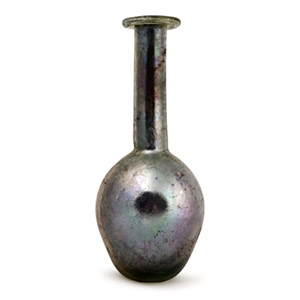
Roman Highly Iridescent Glass Flask
1st-3rd century A.D.Sold for (Inc. bp): £338
With piriform body, narrow dimpled base, tubular neck with pinched and everted rolled rim. 72 grams, 17.5 cm
Ex Mayfair, London, UK, gallery, 1990s-2000s. From an important collection of glass, the property of a London gentleman. This lot is accompanied by an illustrated lot declaration signed by the Head of the Antiquities Department, Dr Raffaele D'Amato.
