
Loading, please wait...
LOT 0663
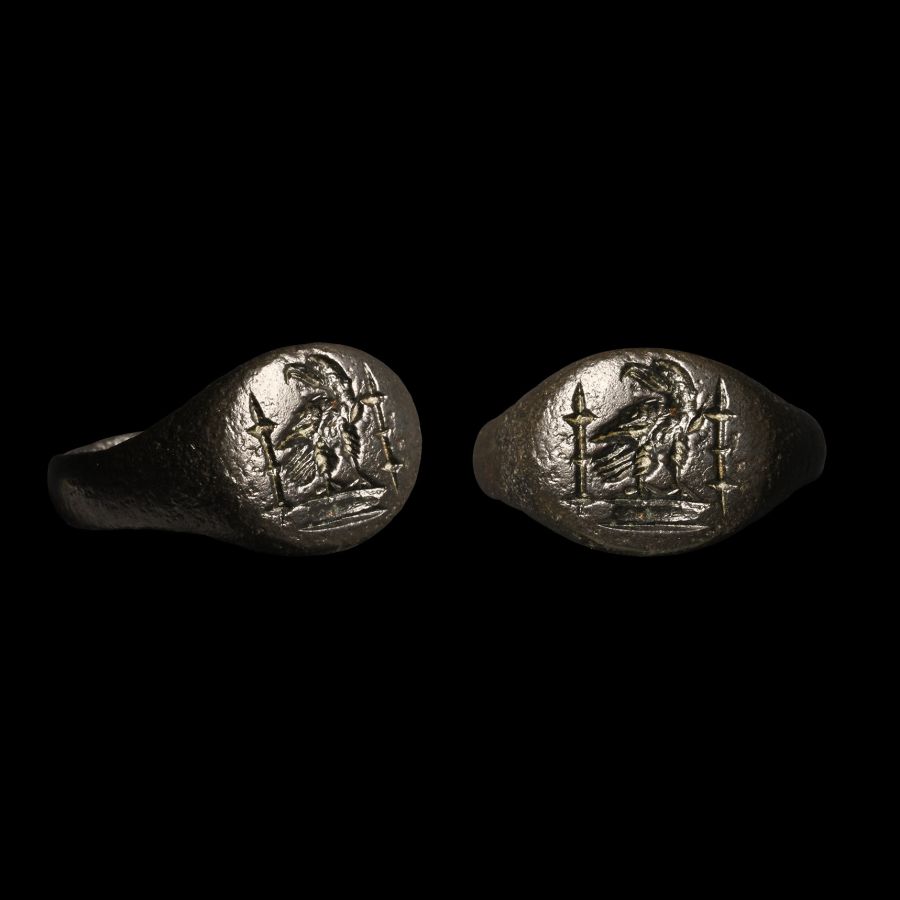
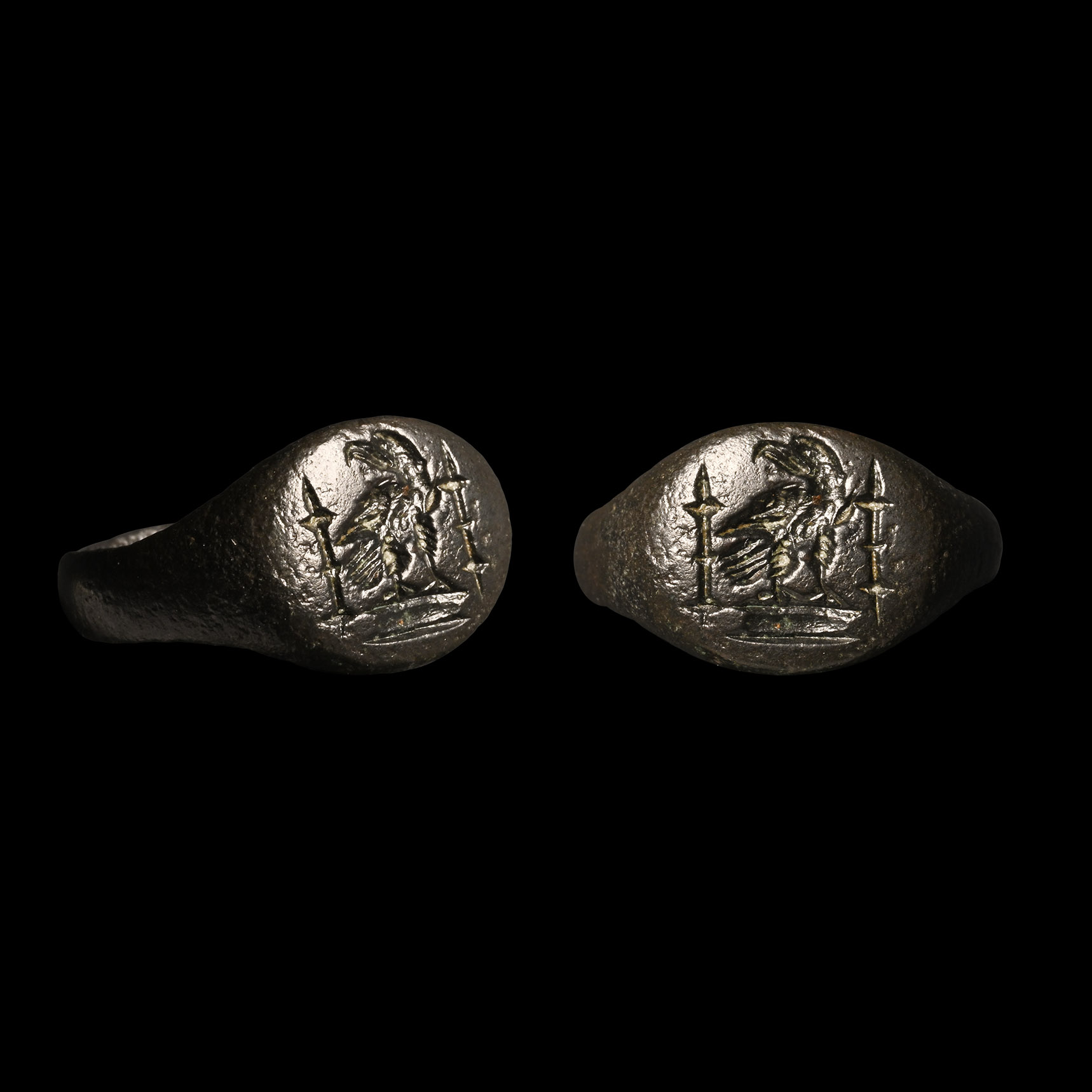
Roman Bronze Military Ring with Eagle Between Standards
CIRCA 2ND-4TH CENTURY A.D.
3/4 in. (4.00 grams, 20.33 mm overall, 17.94 mm internal diameter (approximate size British M 1/2, USA 6 1/4, Europe 13.09, Japan 12)).
With a narrow hoop expanding at the shoulders, oval bezel with a large eagle standing on a pedestal and facing back, a military stand to each side.
ProvenanceFrom the collection of a High Wycombe, Buckinghamshire, UK, gentleman, circa 2000.
CONDITIONTimeLine Auctions follows a vetting process to ensure the authenticity and legality of all items, reinforcing our commitment to integrity and responsible trading. Each antiquity, antique, and coin lot undergoes thorough examination by a vetting committee of at least ten external specialists, professional trade association members, scientists, and archaeologists: Our Vetting Process
AUCTIONS:
TimeLine is a leading auction house specialising in antiquities, ancient art, collectables, natural history, coins, medals, and books. Our auctions offer museums, collectors, historians, and enthusiasts the opportunity to acquire unique and historically significant pieces.
LOT 0663
Roman Bronze Military Ring with Eagle Between Standards
Sold for (Inc. bp): £416
-

Roman Bronze Dancing Sol Statuette
Circa 1st-2nd century A.D.Sold for (Inc. bp): £2,340
Standing nude on one leg on a cuboid socle base, the other leg raised and extended, right arm raised and bent, hand open to accept a sceptre, left arm extended with patera in the open hand, short mantle to the shoulders, hair and rays framing the face. 57 grams, 72 mm including stand
Acquired on the German art market before 2000. From an EU collection before 2020. -

Roman Serapis Gemstone
Circa 1st-2nd century A.D.Estimate: £500 - 700 (+bp*)
Opening Bid: £250
With intaglio image of Serapis seated holding his spear, birds in the field; supplied with a museum-quality impression. 0.81 grams, 12 mm
From the collection of a Swiss gentleman formed in Europe from 1970-1980s; thence by descent from the family in London. -
Roman Bronze Stamp for Octavian
Circa 1st century A.D.Sold for (Inc. bp): £650
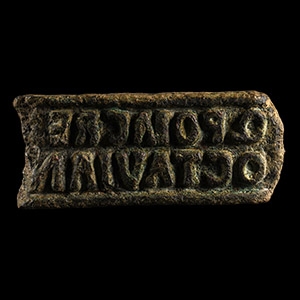
Formed as a tablet-shaped stamp (signaculum), with raised border above and below containing an inscription in Latin in reverse over two lines, reading: 'Q[UINTI] POM [PONII] CRE [SCONII} ? / OCTAVIAN[I]' possibly translating to: 'Of Quintus Pomponius Cresconius Octavianus', this latter being the owner; with a large loop to verso. 92 grams, 64 mm
From an old private collection formed before 1985. Accompanied by a copy of a previous dealer's certificate of authenticity including provenance.
Used to stamp documents and a broad range of different materials and food, signacula came into use in the Roman res publica during the 2nd century B.C., becoming both popular and widely used in many areas of everyday life during the Imperial period. These signacula were not exclusively used in the sphere of economy and property administration, but also in public and private sphere, determining the identity of their owners. The bronze stamp - also definable as a tessera, like the wooden one - was an instrumentum vicarium (auxiliary tool) of the annulus signatorius (seal ring), but compared to the annulus, it was much stronger and more practical, capable of leaving a better recognisable imprint. By analogy, the press note of a wooden or terracotta stamp also had an important certifying function, but the object that produced it only lasted a limited time, while the signaculum ex aere (bronze stamp) lasted a lifetime.
