
Loading, please wait...
LOT 0645
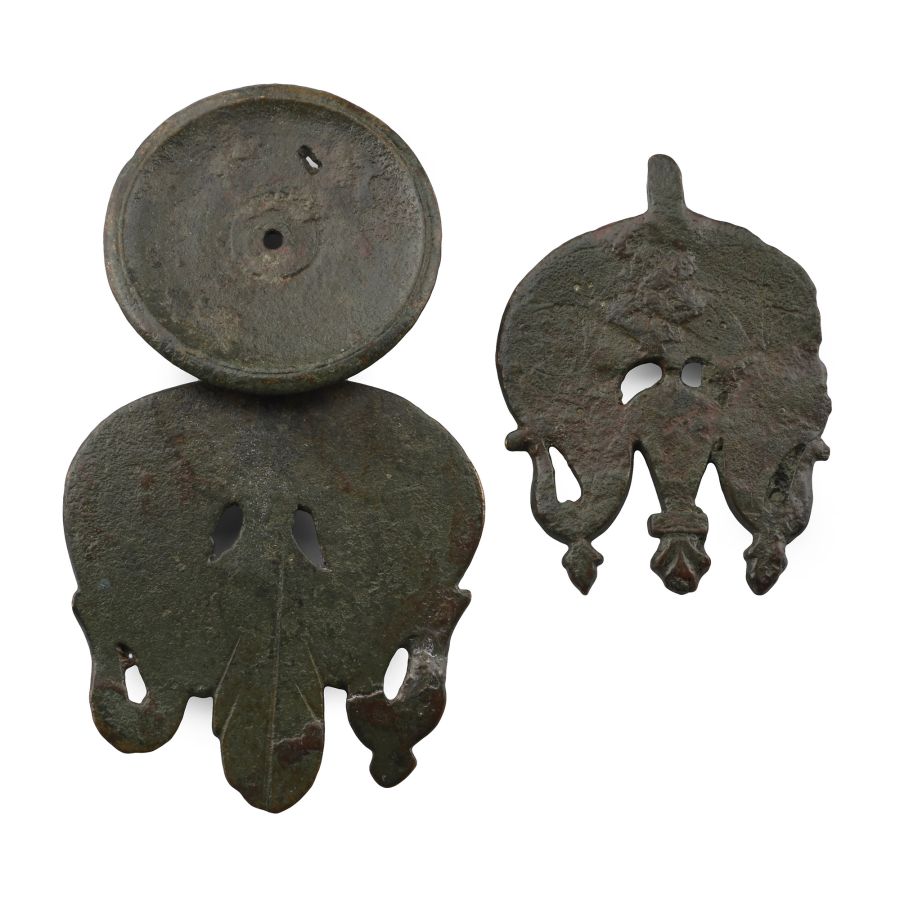
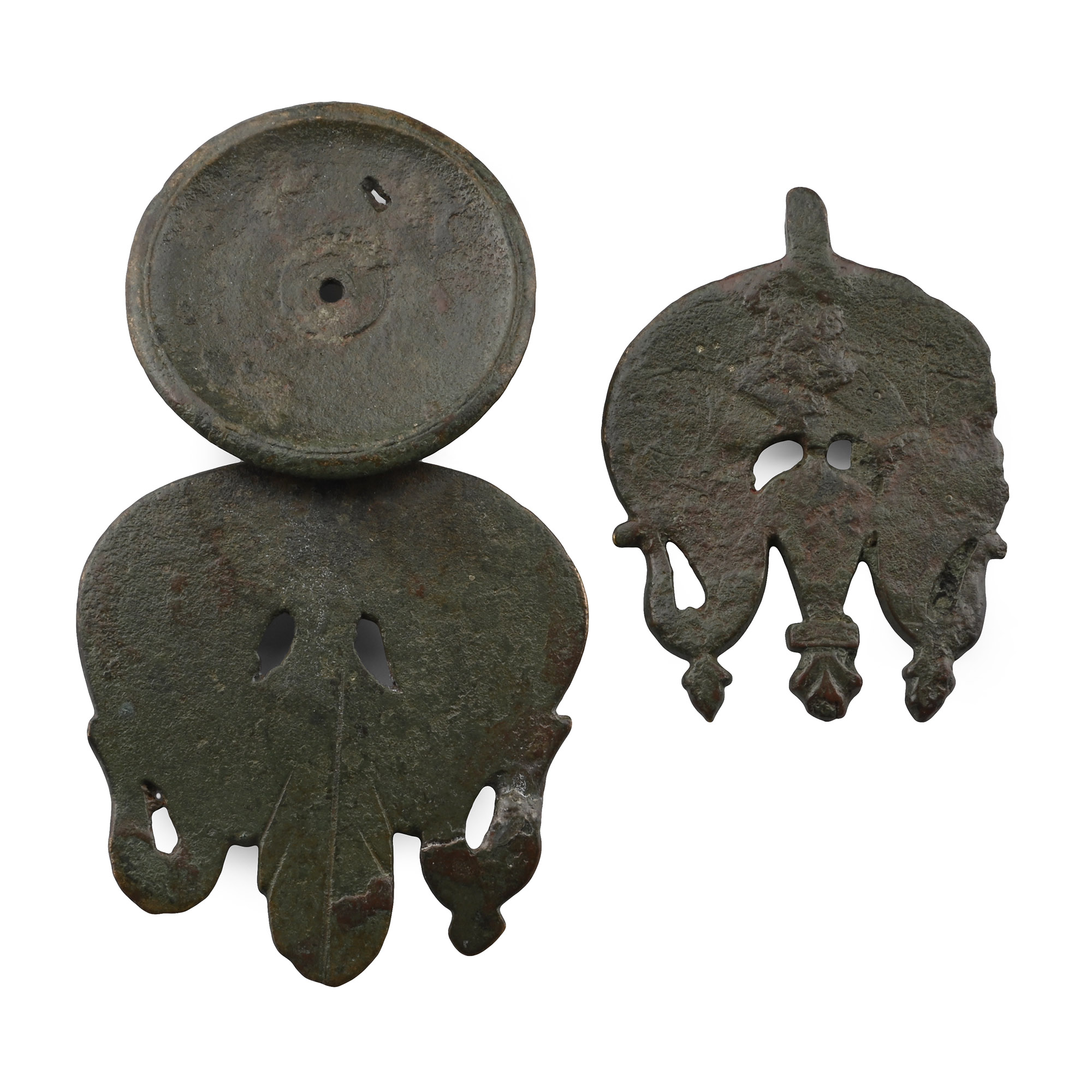
Roman Bronze Military Horse Harness Pendant Collection
1ST CENTURY A.D.
2 - 3 1/4 in. (50 grams total, 50-81 mm).
Comprising a dished roundel with strap-sliders to the reverse, hinged ivy-leaf pendant below; separate pendant with openwork detailing. [2, No Reserve]
ProvenanceEx German art market, 2000s.
Acquired from an EU collector living in London.
From the collection of a Surrey, UK, gentleman.
TimeLine Auctions follows a vetting process to ensure the authenticity and legality of all items, reinforcing our commitment to integrity and responsible trading. Each antiquity, antique, and coin lot undergoes thorough examination by a vetting committee of at least ten external specialists, professional trade association members, scientists, and archaeologists: Our Vetting Process
AUCTIONS:
TimeLine is a leading auction house specialising in antiquities, ancient art, collectables, natural history, coins, medals, and books. Our auctions offer museums, collectors, historians, and enthusiasts the opportunity to acquire unique and historically significant pieces.
-
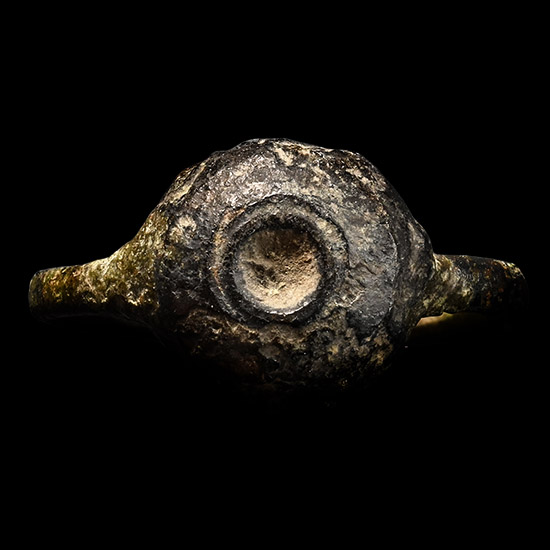
Romano-British Bronze Ring with Dome
1st-2nd century A.D.Sold for (Inc. bp): £52
Comprising a slender hoop supporting a large domed bezel with a recessed cell at the centre. 3.39 grams, 23.86 mm overall, 20.58 mm internal diameter (approximate size British Q, USA 8, Europe 17.49, Japan 16)
Found North Tamworth, Staffordshire, UK. Acquired on the UK and EU art market before 2000. From the private collection of a Surrey, UK, gentleman.
The shape recalls Graeco-Roman items of the Hellenistic period. Where such items may have displayed themes from Roman mythology, such as the Venus Tutulata, this bezel is simple and decorated with inset enamel. -
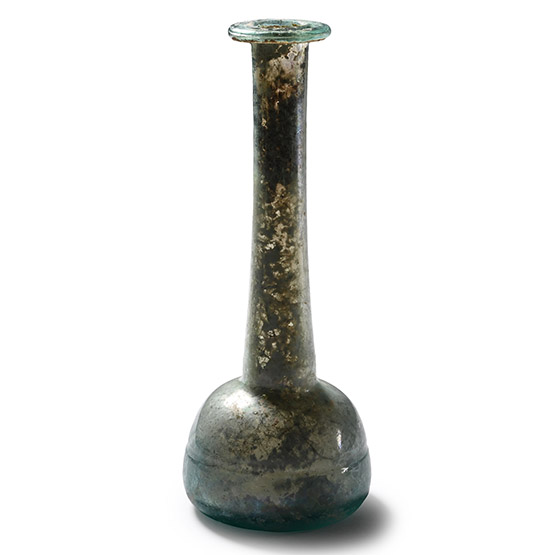
Roman Glass Unguentarium
1st-3rd century A.D.Sold for (Inc. bp): £130
With plano-convex body and dimple base, tall slender neck, folded rim; iridescent green surface. 78 grams, 15 cm
From an important London collection of glass, 1990s.
This kind of toilet bottle was called ‘candlestick unguentarium’ by the academics due to the shape of its neck. This specific type, with its transparent grayish green glass, is especially found in Roman Cyprus (Hayes's fabric 2 of Cypriot blown glass). -
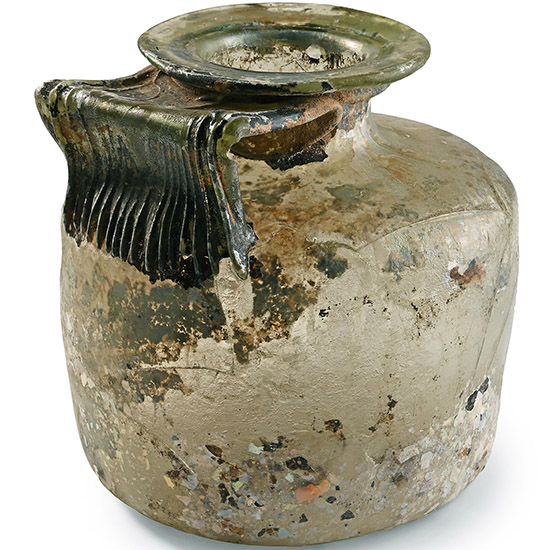
Large Roman Glass Jug with Iridescence
1st-2nd century A.D.Sold for (Inc. bp): £351
With a dimple base, cylindrical body, deep shoulder, everted flange rim with rolled edge, broad fluted strap handle. 435 grams, 15.8 cm
From a London, UK, collection, 1980-1990s.
