
Loading, please wait...
LOT 0683
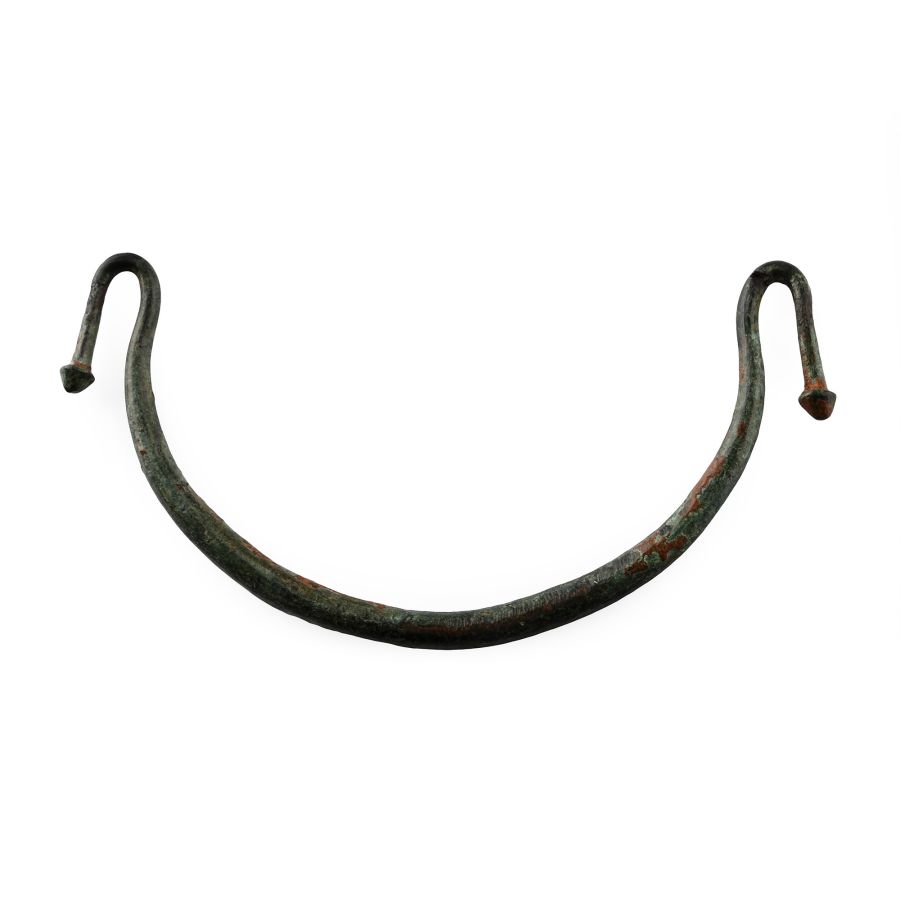
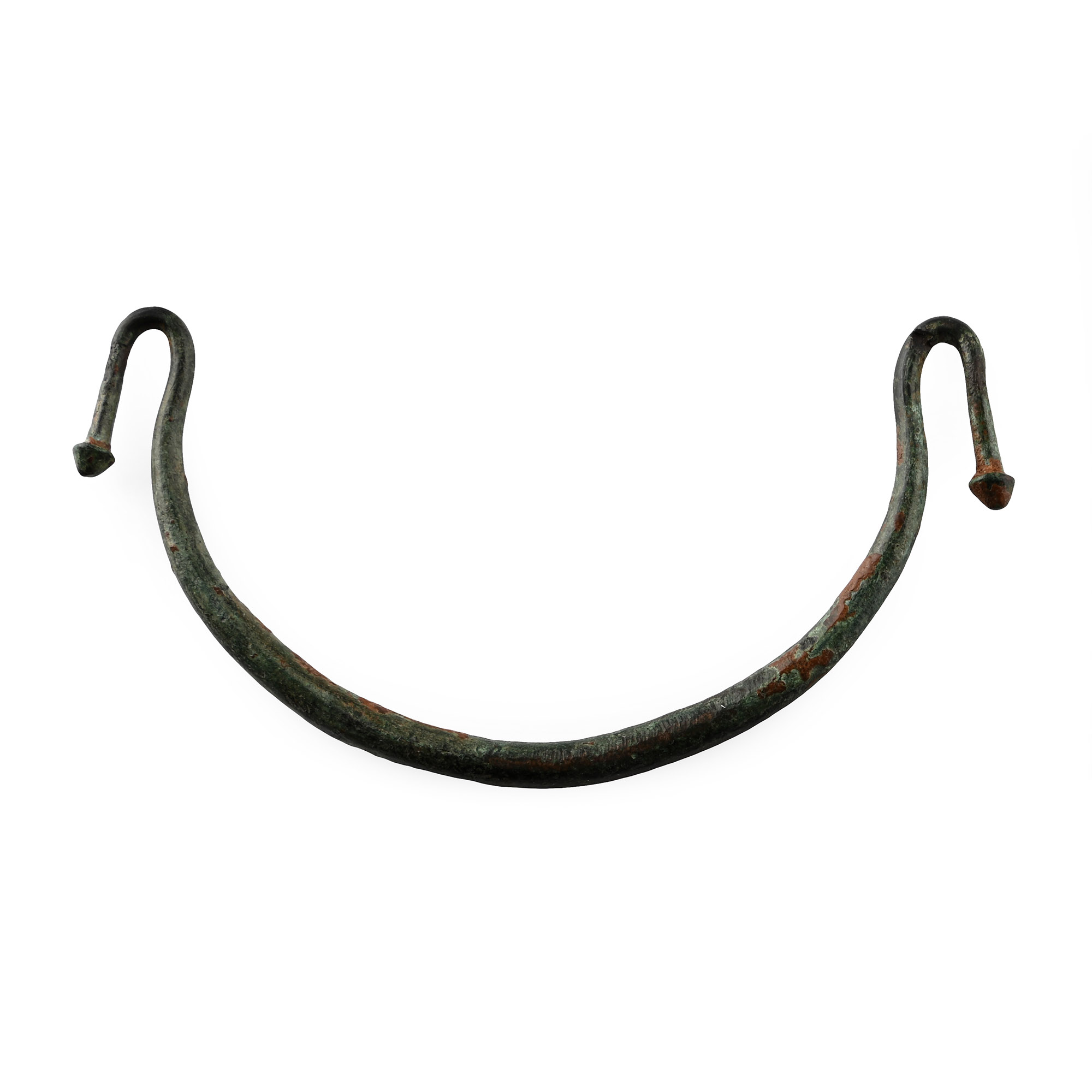
Roman Bronze Military Helmet Carrying Handle
1ST-2ND CENTURY A.D.
3 1/2 in. (14.4 grams, 89 mm).
With tapering round-section body and looped ends with knop terminals. [No Reserve]
ProvenanceAcquired on the UK art market during the late 20th century.
From the private collection of David King (1940-2024), Hoddesdon, Hertfordshire, UK.
This lot is accompanied by an illustrated lot declaration signed by the Head of the Antiquities Department, Dr Raffaele D'Amato.
TimeLine Auctions follows a vetting process to ensure the authenticity and legality of all items, reinforcing our commitment to integrity and responsible trading. Each antiquity, antique, and coin lot undergoes thorough examination by a vetting committee of at least ten external specialists, professional trade association members, scientists, and archaeologists: Our Vetting Process
AUCTIONS:
TimeLine is a leading auction house specialising in antiquities, ancient art, collectables, natural history, coins, medals, and books. Our auctions offer museums, collectors, historians, and enthusiasts the opportunity to acquire unique and historically significant pieces.
-
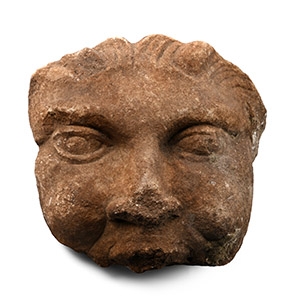
Roman Marble Face Fragment
1st century A.D.Estimate: £1,500 - 2,000 (‡+bp*)
Opening Bid: £750
Plano-convex in section with exaggerated puffy cheeks and small pursed mouth; possibly from a putto in a figural frieze. 1.21 kg, 15.5 cm
Acquired in the 1992. Private collection, Switzerland, thence by descent. Private collection, since the late 1990s. This lot has been cleared against the Art Loss Register database, and is accompanied by an illustrated lot declaration signed by the Head of the Antiquities Department, Dr Raffaele D'Amato. -
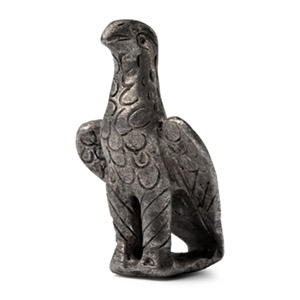
Roman Silver Eagle Statuette
1st-3rd century A.D.Sold for (Inc. bp): £650
Standing on an integral base with its wings slightly opened, head turned to the right, large incised eyes and hooked beak, incised feather detailing to the body and wings. 18.4 grams, 34 mm
Acquired in 1993. Private collection, thence by descent. Private collection, since the late 1990s. This lot is accompanied by an illustrated lot declaration signed by the Head of the Antiquities Department, Dr Raffaele D'Amato. -
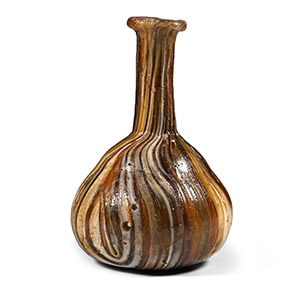
Roman Mould-Blown Marbled Glass Flask
1st century A.D.Estimate: £1,000 - 1,400 (+bp*)
Opening Bid: £250
Wide body and tall tubular neck with everted rim, formed of marbled glass in shades of brown and white; restored. 80 grams, 10 cm
From the F.D. collection, 1990s. Ex Mayfair, London, UK, dealership. Ex collection of a London, UK, gentleman. This lot is accompanied by an illustrated lot declaration signed by the Head of the Antiquities Department, Dr Raffaele D'Amato.
This specimen belongs to the types of colour band piriform bottles of glass strips, fused and blown. After cooling, slices were cut from the rod cross-wise, then arranged side-by-side and fused together to create a multi-coloured and multi-patterned sheet of glass. Alternatively, the craftsman, instead of cutting the glass chords, could place them side by side and fuse them together in strips.
