
Loading, please wait...
LOT 0788
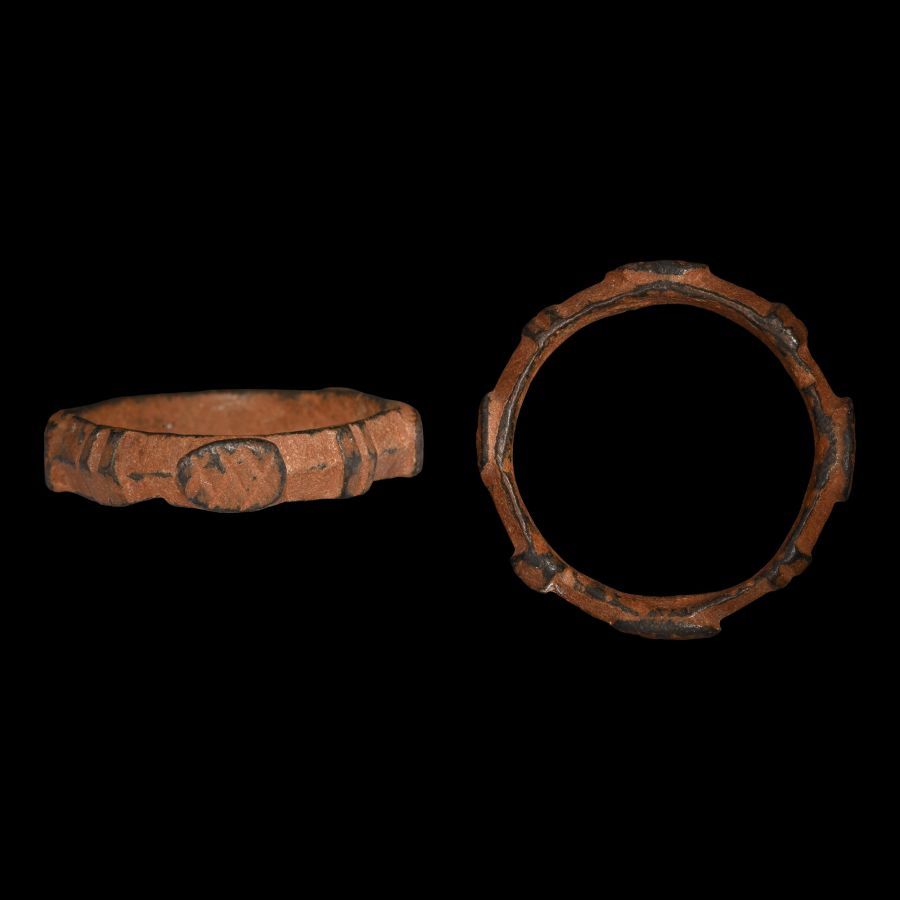
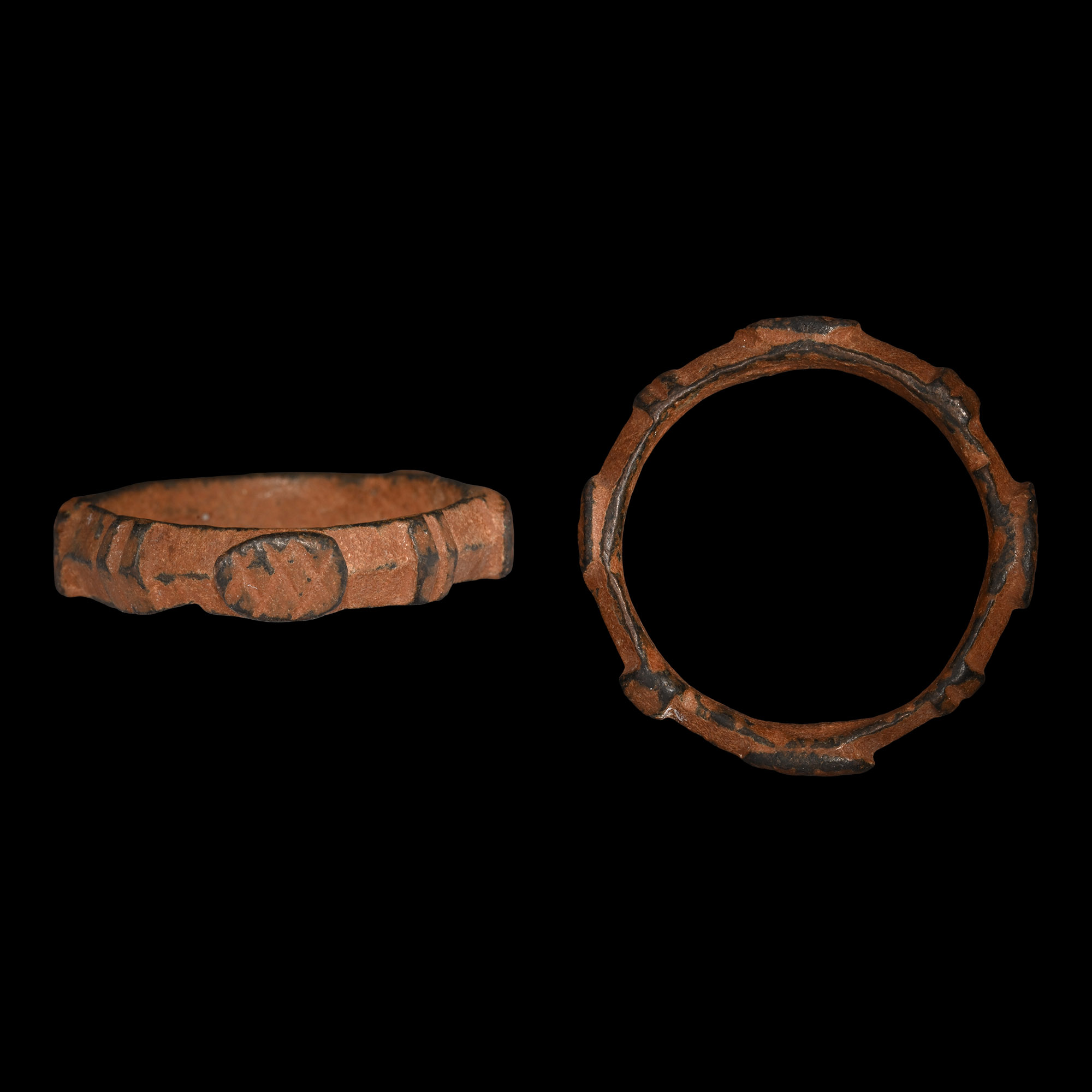
Roman Bronze Military Glove Ring with Four Bezels
3RD-4TH CENTURY A.D.
1 1/8 in. (7.91 grams, 29.88 mm overall, 23.37 mm internal diameter (approximate size British Z+2 1/2, USA 13 3/4, Europe 32.01, Japan 30)).
A substantial ring with a keeled hoop with four bezels decorated with hatching and separated by raised banding. [No Reserve]
ProvenanceFrom the private collection of a European gentleman (1942-2024), formed since the 1970s.
CONDITIONTimeLine Auctions follows a vetting process to ensure the authenticity and legality of all items, reinforcing our commitment to integrity and responsible trading. Each antiquity, antique, and coin lot undergoes thorough examination by a vetting committee of at least ten external specialists, professional trade association members, scientists, and archaeologists: Our Vetting Process
AUCTIONS:
TimeLine is a leading auction house specialising in antiquities, ancient art, collectables, natural history, coins, medals, and books. Our auctions offer museums, collectors, historians, and enthusiasts the opportunity to acquire unique and historically significant pieces.
-
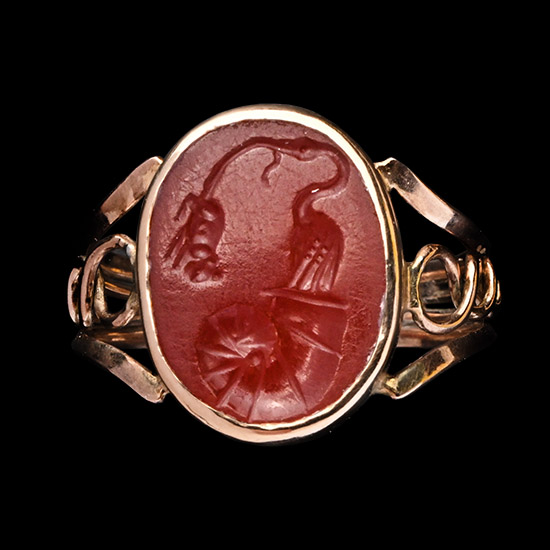
Roman Carnelian Gemstone with Stork Emerging from a Seashell in Gold Ring
1st century B.C.Sold for (Inc. bp): £3,510
The oval intaglio engraved with a whimsical image of a stork emerging from the mouth of a large seashell, its neck arched forward to seize a small mouse by the tail; set in a finely made 19th-century ring with openwork shoulders; supplied with a museum-quality impression. 4.25 grams, 24.31 mm overall, 19.30 mm internal diameter (approximate size British T, USA 9 1/2, Europe 21.26, Japan 20)
Acquired on the European art market. This lot has been checked against the Interpol Database of stolen works of art and is accompanied by search certificate number no.13365-257944.
The stork, a bird symbolic in antiquity of vigilance, filial piety, and longevity, here appears in an imaginative fusion with a marine shell—an element often associated with Venus and the sea. The capture of the mouse adds an element of humour and narrative intrigue, perhaps evoking themes of cunning, the triumph of wit, or the unexpected in nature. Such unusual compositions are occasionally found in Roman glyptics of the late Republican period, appealing both for their novelty and symbolic richness. -
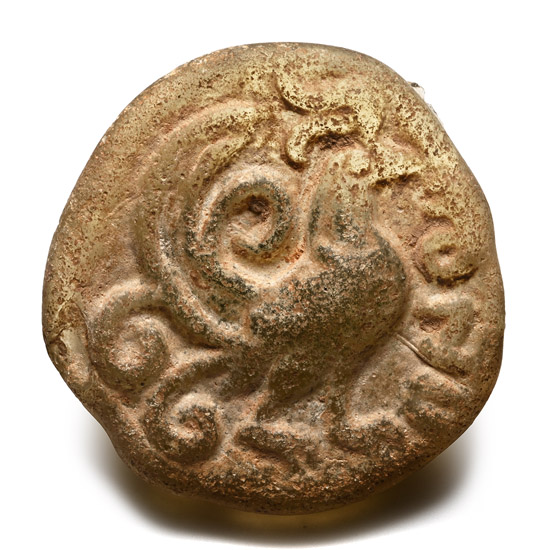
Eastern Roman Glass Roundel with Peacock
Circa 4th-6th century A.D.Sold for (Inc. bp): £85
Pale yellow roundel featuring a standing peacock with curling tail feathers, three symbols before. 13.7 grams, 36 mm
From the private collection of a European gentleman (1942-2024), formed since the 1970s. -
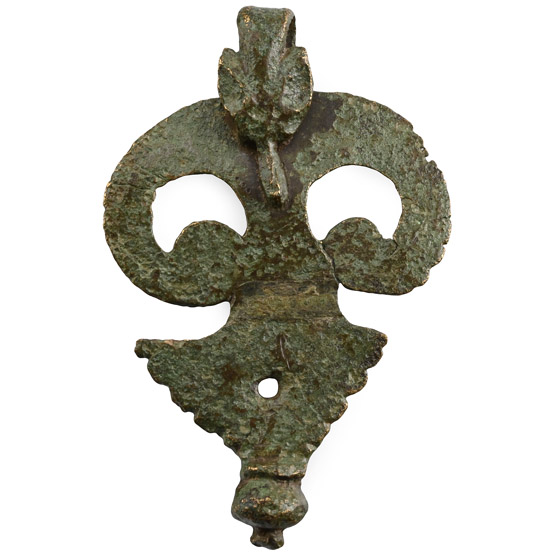
Roman Bronze Military Pendant
Circa 1st-2nd century A.D.Sold for (Inc. bp): £26
Formed as a leaf with lobed scrolls above, looped suspension point with wolf-head detailing; knop finial below. 4.66 grams, 46.6 mm
Ex German art market, 2000s. Acquired from an EU collector living in London. From the collection of a Surrey, UK, gentleman.
