
Loading, please wait...
LOT 0600
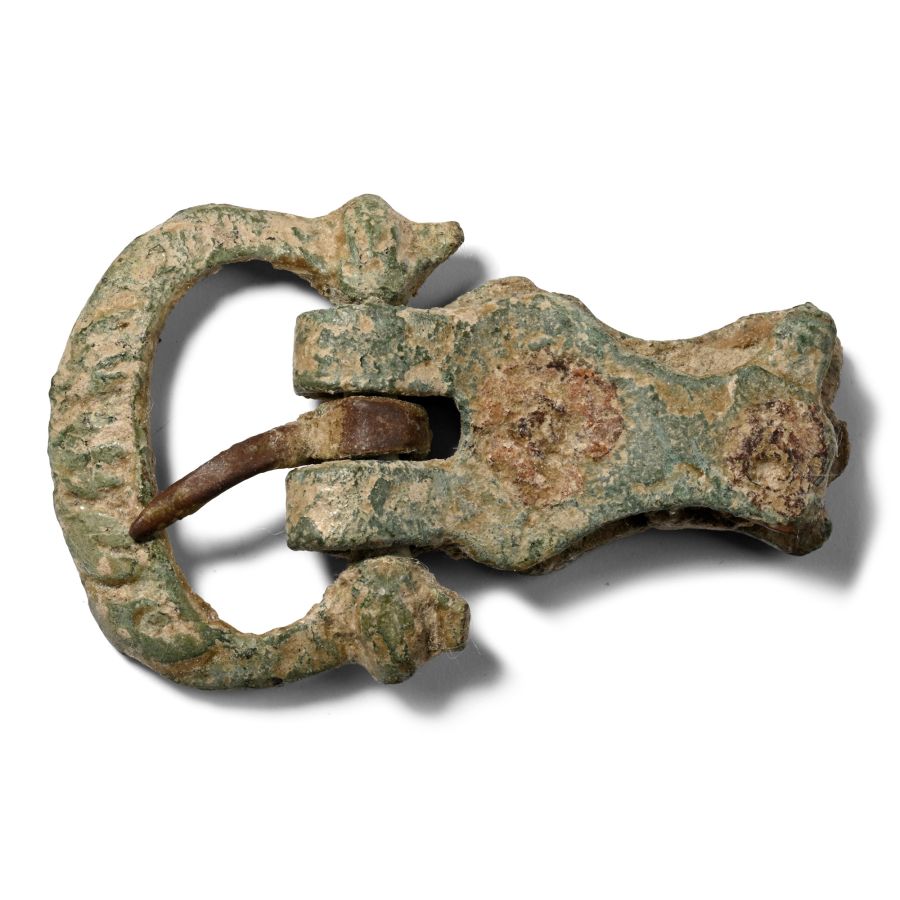
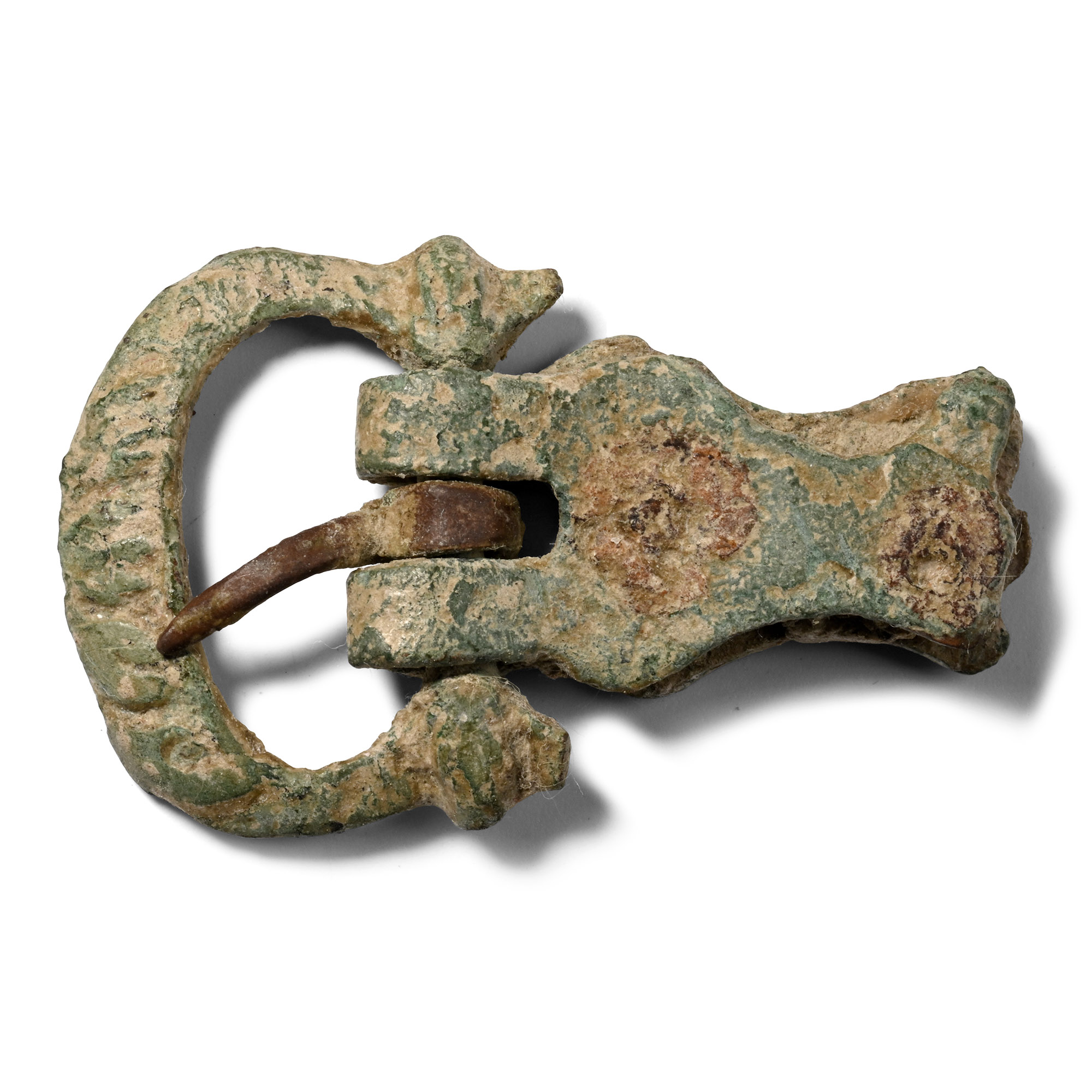
Roman Bronze Military Buckle with Plate
3RD-4TH CENTURY A.D.
1 3/4 in. (11.1 grams, 43 mm).
Comprising a flat, D-shaped loop with ribbed detailing to the forward edge, small curved tongue, folded buckle-plate with scooped edges and attachment rivets in situ. [No Reserve]
ProvenanceFrom the private collection of the late collection of Mr M., Waterlooville, Hampshire, UK, formed from the late 1980s to early 1990s.
LiteratureCf. Heynowski, R., Bestimmungsbuch Archaeologie: Gürtel, Munich, 2017, types 6.1.3.1.1, 6.2.1.1.
CONDITIONTimeLine Auctions follows a vetting process to ensure the authenticity and legality of all items, reinforcing our commitment to integrity and responsible trading. Each antiquity, antique, and coin lot undergoes thorough examination by a vetting committee of at least ten external specialists, professional trade association members, scientists, and archaeologists: Our Vetting Process
AUCTIONS:
TimeLine is a leading auction house specialising in antiquities, ancient art, collectables, natural history, coins, medals, and books. Our auctions offer museums, collectors, historians, and enthusiasts the opportunity to acquire unique and historically significant pieces.
-
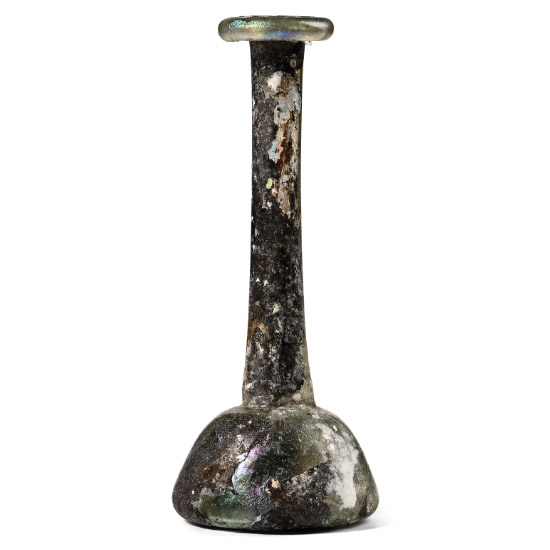
Roman Iridescent Glass Candlestick Unguentarium
1st-2nd century A.D.Sold for (Inc. bp): £117
With a low conical body and a slightly convex wall, a tall cylindrical neck flaring to the mouth with a rolled rim. 32.9 grams, 12.9 cm
Acquired in the 1990s from London dealerships and auction houses. From the Lonson collection. -
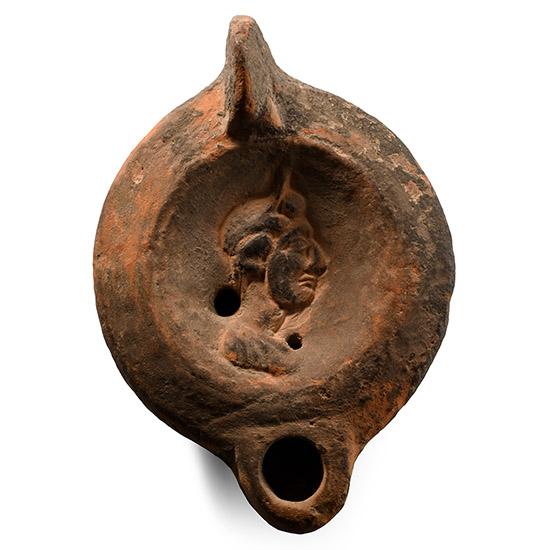
Large Roman Terracotta Oil Lamp with Bust
Circa 2nd century A.D. or laterSold for (Inc. bp): £130
Rounded body with a short nozzle and lug handle, the discus with a profile bust of a youth, inked collector's number 'L115' on the base. 150 grams, 12.2 cm
Ex important German collection, 1960-1990. -
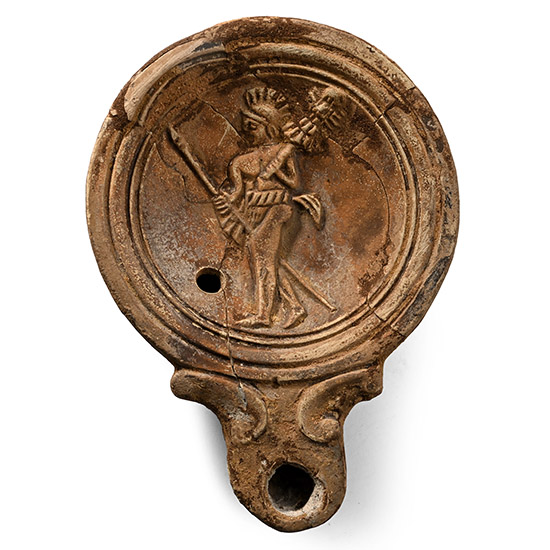
Roman Terracotta Oil Lamp with Mars
1st century A.D.Sold for (Inc. bp): £338
Squat in profile with large discus, concentric rings to the shoulder, scrolls to the base of the nozzle; low relief profile image of Mars helmeted with spear and thyrsus; repaired. 68.7 grams, 11.5 cm
From the private collection of Mr Brian Edwards, New Malden, Surrey, UK, formed from the late 1970s-early 1980s; thence by descent.
