
Loading, please wait...
LOT 0753
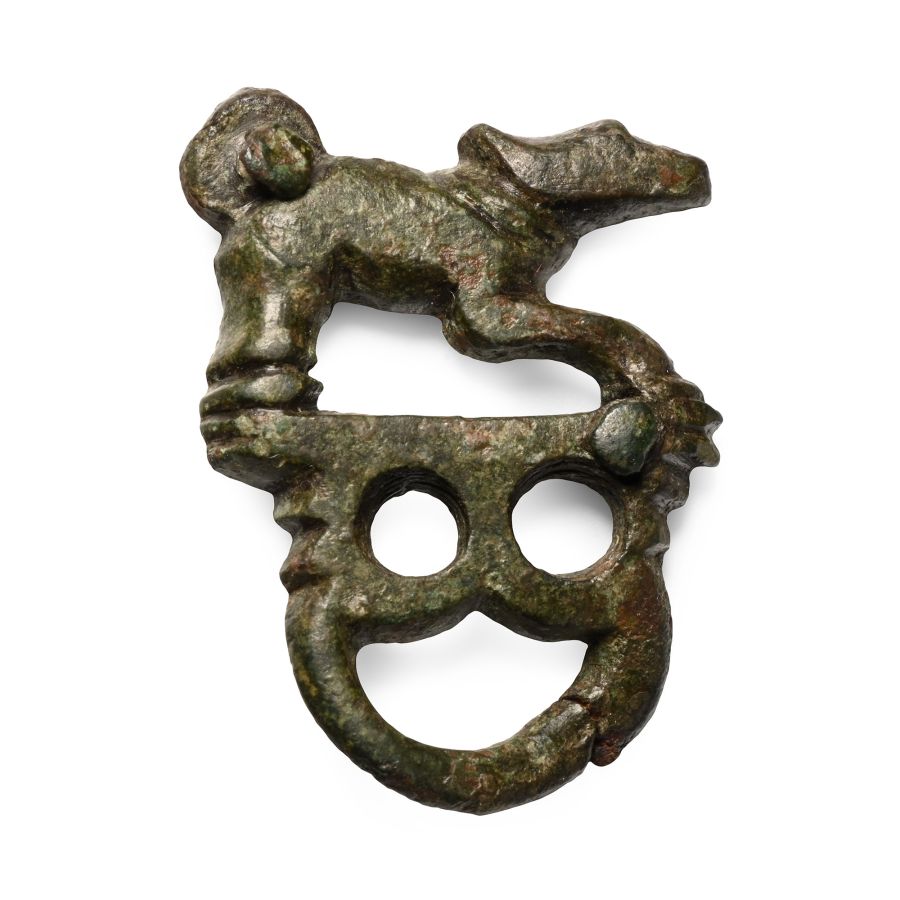
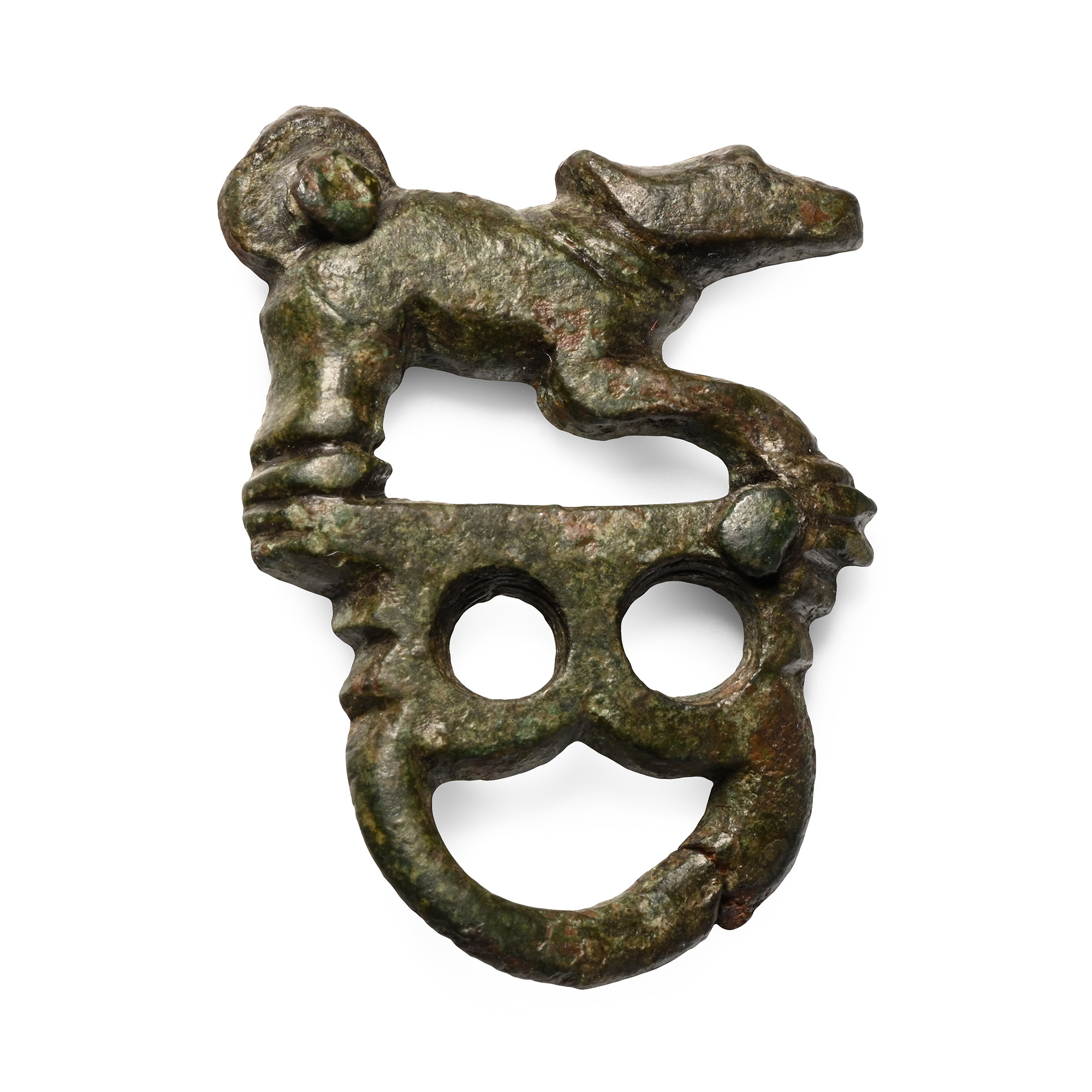
Roman Bronze Military Buckle with Dog
2ND-3RD CENTURY A.D.
1 3/8 in. (9.03 grams, 34 mm).
An openwork D-shaped buckle with plate formed as a standing figure of a dog; accompanied by a handwritten note 'Roman Military. Bronze female baldrick mount surrmounted with a running hound. 3rd-4th cent. A.D. Rare.' [No Reserve]
ProvenanceEx property of an Essex, UK, gentleman collector.
From the private collection of a Colchester, UK, gentleman.
TimeLine Auctions follows a vetting process to ensure the authenticity and legality of all items, reinforcing our commitment to integrity and responsible trading. Each antiquity, antique, and coin lot undergoes thorough examination by a vetting committee of at least ten external specialists, professional trade association members, scientists, and archaeologists: Our Vetting Process
AUCTIONS:
TimeLine is a leading auction house specialising in antiquities, ancient art, collectables, natural history, coins, medals, and books. Our auctions offer museums, collectors, historians, and enthusiasts the opportunity to acquire unique and historically significant pieces.
-
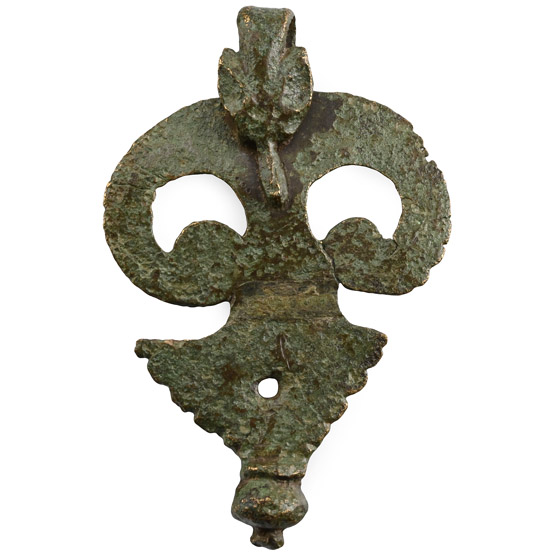
Roman Bronze Military Pendant
Circa 2nd-3rd century A.D.Sold for (Inc. bp): £33
Formed as a leaf with lobed scrolls above, looped suspension point with wolf-head detailing; knop finial below. 4.66 grams, 46.6 mm
Ex German art market, 2000s. Acquired from an EU collector living in London. From the collection of a Surrey, UK, gentleman. -
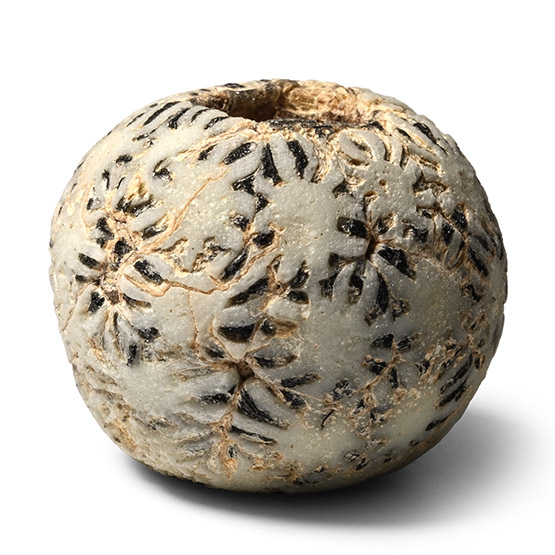
Roman Glass Bead with Millefiore Stars
1st-3rd century A.D.Sold for (Inc. bp): £59
Spherical in form with wide perforation; millefiore star designs in the glass surface. 16.34 grams, 25 mm
London collection, 1979-1983. -
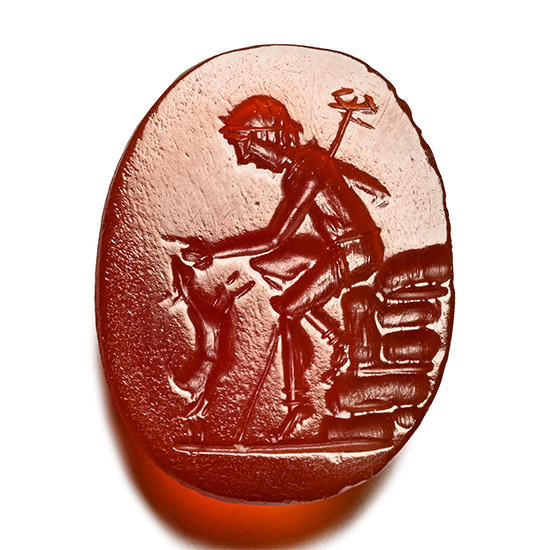
Roman Carnelian Gemstone with Seated Mercury and Goat
2nd century A.D.Sold for (Inc. bp): £260
Plano-convex in section with intaglio scene of a profile male on a baseline resting on a pile of stones, staff (thyrsus?) resting on his shoulder, leaning forward towards a rearing goat; surface repolished; supplied with a museum-quality impression. 1.03 grams, 15 mm
Private collection, England.
