
Loading, please wait...

LOT 0816
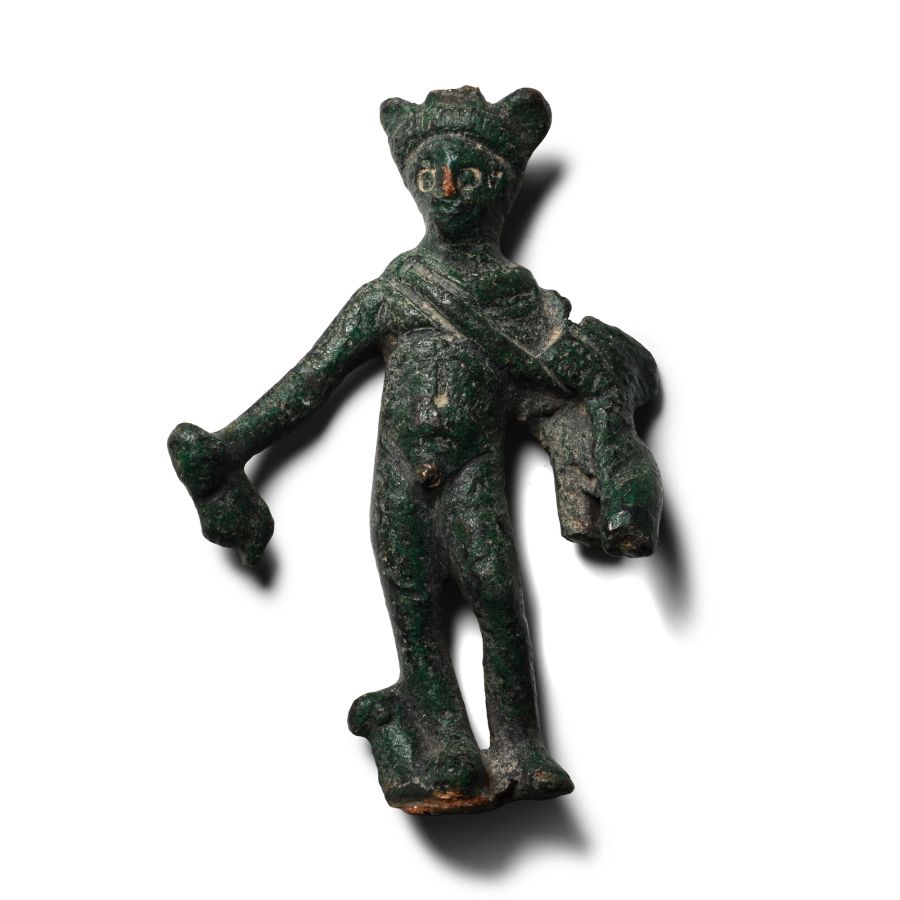
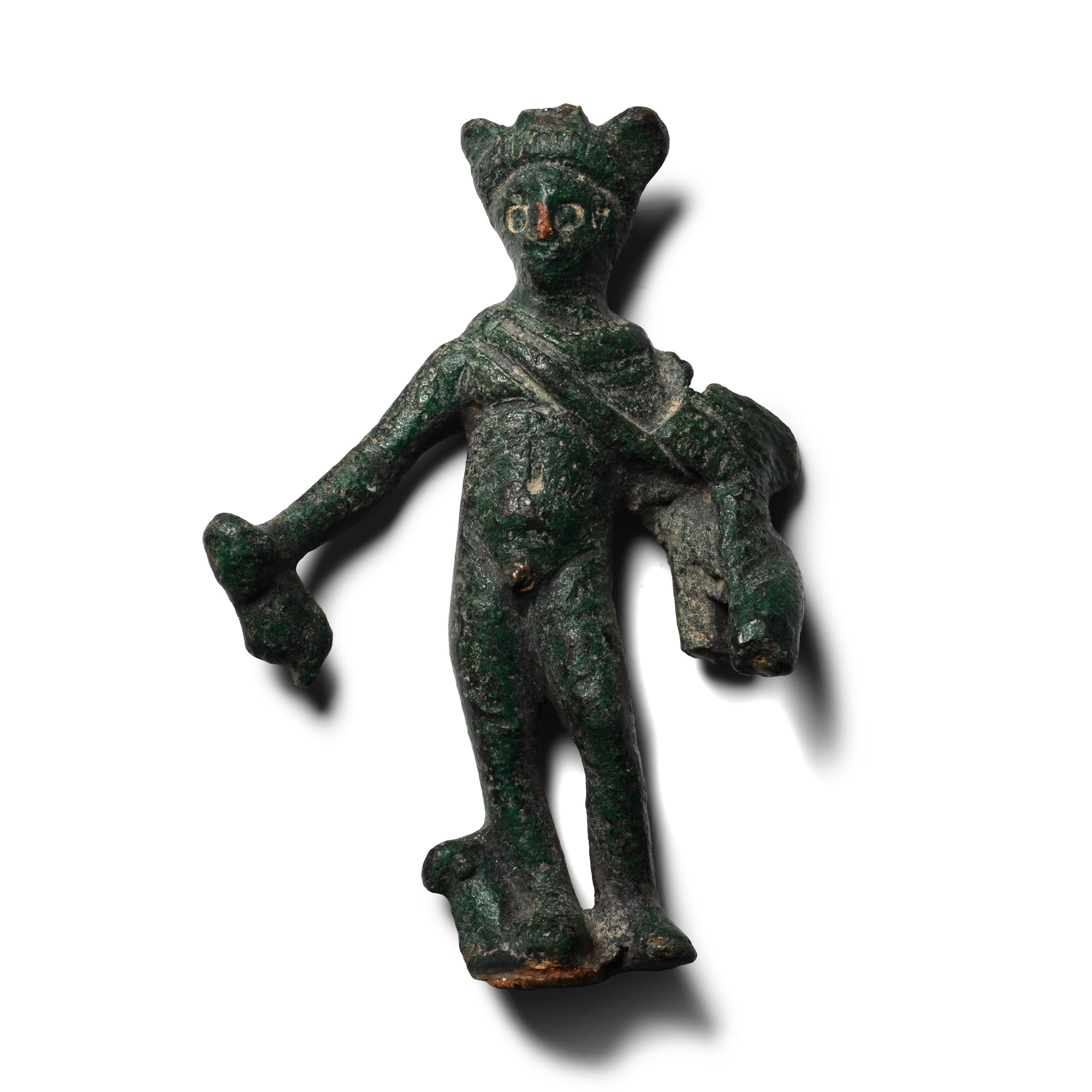
Roman Bronze Mercury Statuette
PROVINCIAL, 1ST-4TH CENTURY A.D.
2 5/8 in. (48 grams, 67 mm).
Modelled in the round nude with winged petasos, coin-bag in the proper right hand, caduceus resting on the left forearm, short mantle over left shoulder.
ProvenanceFrom the collection of a gentleman, acquired on the London art market in the 1990s.
CONDITIONTimeLine Auctions follows a vetting process to ensure the authenticity and legality of all items, reinforcing our commitment to integrity and responsible trading. Each antiquity, antique, and coin lot undergoes thorough examination by a vetting committee of at least ten external specialists, professional trade association members, scientists, and archaeologists: Our Vetting Process
AUCTIONS:
TimeLine is a leading auction house specialising in antiquities, ancient art, collectables, natural history, coins, medals, and books. Our auctions offer museums, collectors, historians, and enthusiasts the opportunity to acquire unique and historically significant pieces.
-
Roman Bronze Rat-Tailed Spoon
3rd-4th century A.D.Sold for (Inc. bp): £208
With shallow oval bowl and a round-section tapering handle. 14.6 grams, 14.5 cm
Ex German art market, 2000s. Acquired from an EU collector living in London. From the collection of Surrey, UK, gentleman. -
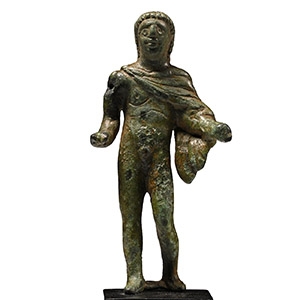
Roman Bronze Statuette of Hermes
2nd-3rd century A.D.Sold for (Inc. bp): £390
Standing nude with left leg bent, arms extended, mantle draped from the right shoulder, hair combed forward from the crown; mounted on a custom-made stand. 100 grams total, 10 cm including stand
From a collection acquired on the UK art market from various auction houses and collections mostly before 2000. From an important Cambridgeshire estate; thence by descent.
Despite the lack of specific attributes related to Hermes, the pose of the statue, with the right hand advanced to hold the sacculus, the cloak thrown over the right shoulder and then folded over the left would lean towards an interpretation of the statuette as an ex voto related to the god of thieves. The statuette seems to originate from a Gallo-Roman workshop. A similar drapery on the chest is also found on a Mercury/Hermes in the Museum of Besancon. -
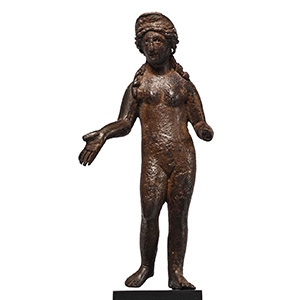
Roman Bronze 'Thames' Statuette of Venus
2nd-3rd century A.D.Sold for (Inc. bp): £1,690
The goddess modelled nude in contrapposto stance; the right hand extended to hold a patera (absent); the hair dressed in a chignon with diadem and two lateral twisted locks; loops to the ears for attachment of separate earrings; eyes modelled oversize to accept silver appliqués; mounted on a custom-made stand. 249 grams total, 14.5cm including stand
Found by Nigel Mills, Thames, UK. From a collection acquired on the UK art market from various auction houses and collections mostly before 2000. From an important Cambridgeshire estate; thence by descent.
In this type of sculptures of the goddess, the deity appears diademed, entirely naked, her hair curled behind a chignon from which braids fall to her shoulders. In her left hand, missing here, the goddess usually carried a fruit, flanked by a marine figure wrapped around a pole.
