
Loading, please wait...
LOT 0930
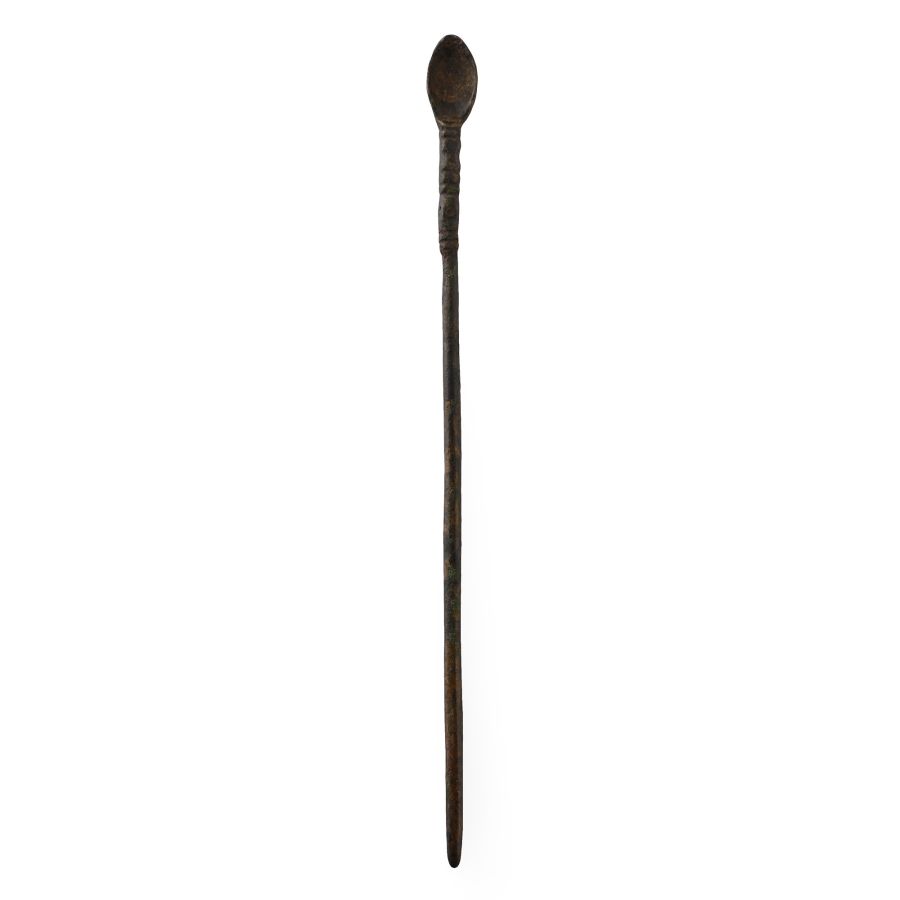
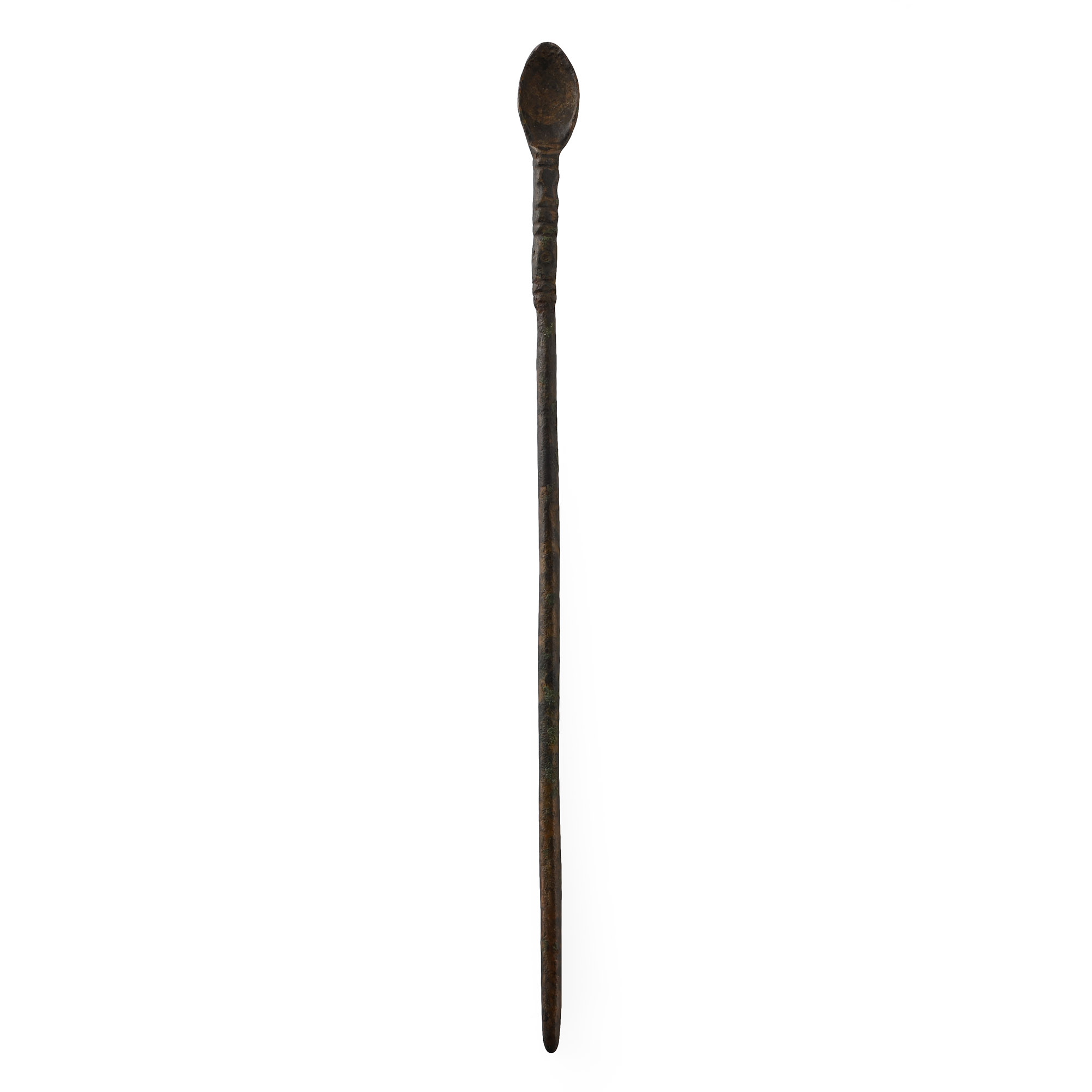
Roman Bronze Medical Spoon
1ST-4TH CENTURY A.D.
6 3/8 in. (11.9 grams, 16.1 cm).
Cosmetic or medical cochlearium with narrow shallow bowl and spike handle. [No Reserve]
ProvenanceAcquired on the UK art market during the late 20th century.
From the private collection of David King (1940-2024), Hoddesdon, Hertfordshire, UK.
This lot is accompanied by an illustrated lot declaration signed by the Head of the Antiquities Department, Dr Raffaele D'Amato.
TimeLine Auctions follows a vetting process to ensure the authenticity and legality of all items, reinforcing our commitment to integrity and responsible trading. Each antiquity, antique, and coin lot undergoes thorough examination by a vetting committee of at least ten external specialists, professional trade association members, scientists, and archaeologists: Our Vetting Process
AUCTIONS:
TimeLine is a leading auction house specialising in antiquities, ancient art, collectables, natural history, coins, medals, and books. Our auctions offer museums, collectors, historians, and enthusiasts the opportunity to acquire unique and historically significant pieces.
-
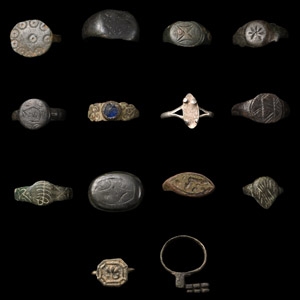
Roman and Later Bronze and Silver Ring Collection
1st-16th century A.D.Sold for (Inc. bp): £260
Comprising: a key ring, eleven rings with decorative motifs on the bezels, a ring set with blue glass, and a silver ring with lentoid claw bezel. 45 grams total, 16-24 mm
Ex German art market, 2000s. Acquired from an EU collector living in London. From the collection of a Surrey, UK, gentleman. This lot is accompanied by an illustrated lot declaration signed by the Head of the Antiquities Department, Dr Raffaele D'Amato. -
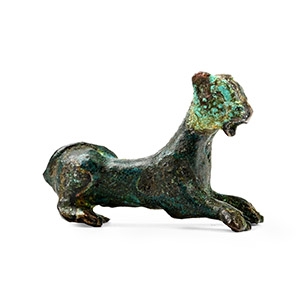
Roman Bronze Panther Statuette
3rd-4th century A.D.Sold for (Inc. bp): £104
Modelled in the round reclining feline with tail looped around the body. 21.6 grams, 40 mm
Acquired on the UK art market during the late 20th century. From the private collection of David King (1940-2024), Hoddesdon, Hertfordshire, UK. This lot is accompanied by an illustrated lot declaration signed by the Head of the Antiquities Department, Dr Raffaele D'Amato. -
.jpg)
Roman Bronze Figure of a Bathing Young Girl
3rd-4th century A.D.Estimate: £3,000 - 4,000 (‡+bp*)
Opening Bid: £1,500
Standing nude female figure with hair dressed in a chignon, left hand clasped to the chest and right arm bent; mounted on a tiered display stand. 448 grams total, 17.4 cm including stand
Acquired in the late 1980s. Private collection, since the late 1990s. This lot has been checked against the Interpol Database of stolen works of art and is accompanied by a search certificate number no.12862-241687. This lot has been cleared against the Art Loss Register database, and is accompanied by an illustrated lot declaration signed by the Head of the Antiquities Department, Dr Raffaele D'Amato.
The girl is depicted in the act of girding her chest with a fascia, similar to the one illustrated in the famous mosaics of Piazza Armerina, where the band is worn together with a subligaculum that covers her lower parts. It is modelled after a real two-piece bath costume of the ancient Romans.
