
Loading, please wait...
LOT 0770
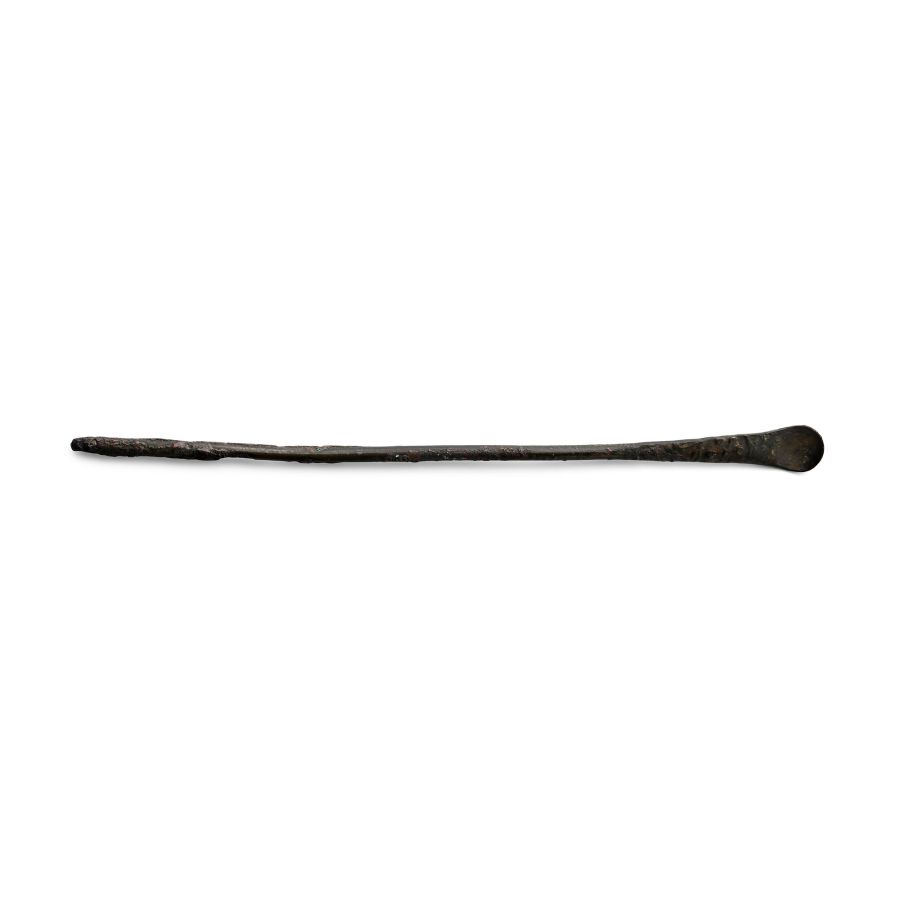
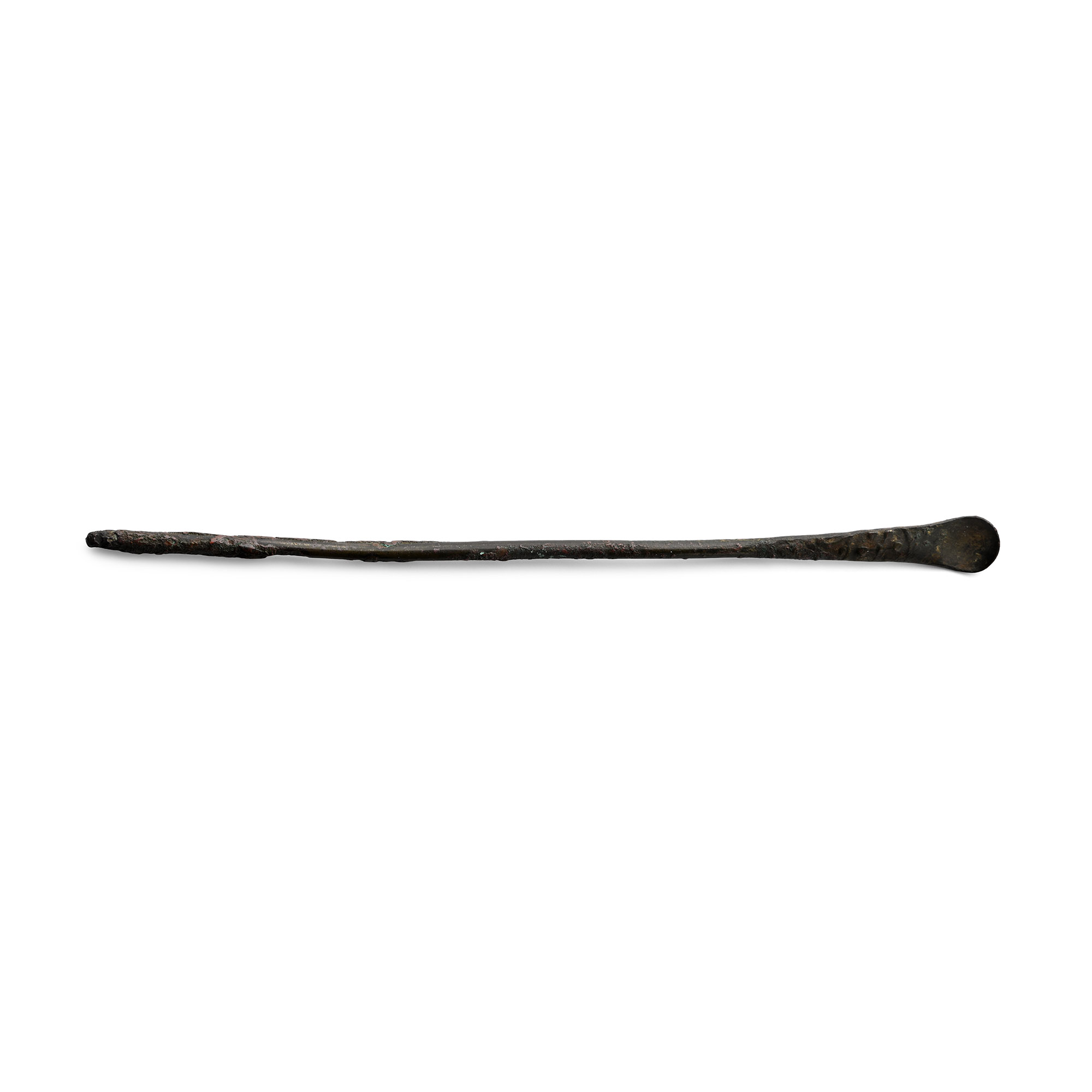
Roman Bronze Medical Spoon
1ST-4TH CENTURY A.D.
6 1/8 in. (10 grams, 15.5 cm).
Comprising a round-section shank and flat tapering head with shallow bowl. [No Reserve]
ProvenanceAcquired on the UK art market during the late 20th century.
From the private collection of David King (1940-2024), Hoddesdon, Hertfordshire, UK.
This lot is accompanied by an illustrated lot declaration signed by the Head of the Antiquities Department, Dr Raffaele D'Amato.
See Milne, J.S., Surgical Instruments in Greek and Roman Times, Oxford, 1907.
CONDITIONTimeLine Auctions follows a vetting process to ensure the authenticity and legality of all items, reinforcing our commitment to integrity and responsible trading. Each antiquity, antique, and coin lot undergoes thorough examination by a vetting committee of at least ten external specialists, professional trade association members, scientists, and archaeologists: Our Vetting Process
AUCTIONS:
TimeLine is a leading auction house specialising in antiquities, ancient art, collectables, natural history, coins, medals, and books. Our auctions offer museums, collectors, historians, and enthusiasts the opportunity to acquire unique and historically significant pieces.
-
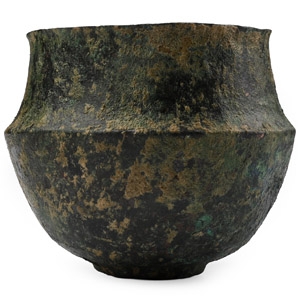
Roman Bronze Medical Blood-Letting Vessel
1st-4th century A.D.Sold for (Inc. bp): £1,300
Made from thin sheet bronze with small disc base, carination to the sidewall, scooped neck. 78 grams, 86 mm
Ex German art market, 2000s. Acquired from an EU collector living in London. From the collection of a Surrey, UK, gentleman. This lot is accompanied by an illustrated lot declaration signed by the Head of the Antiquities Department, Dr Raffaele D'Amato.
A 'bleeding-cup' which was used by physicians for drawing blood from their patients. -
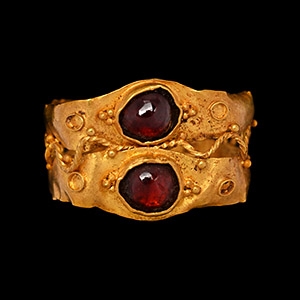
Roman Gold Ring with Garnets
2nd-3rd century A.D.Estimate: £800 - 1,000 (‡+bp*)
Opening Bid: £400
Comprising two parallel hoops connected with angled filigree struts with a granule to each node, annulets to the shoulders, irregular circular cells each set with a cabochon garnet; hoop cracked at underside. 1.38 grams, 17.03 mm overall, 14.85 mm internal diameter (approximate size British G 1/2, USA 3 1/2, Europe 5.55, Japan 5)
Acquired in the 1992. Private collection, Switzerland, thence by descent. Private collection, since the late 1990s. This lot is accompanied by an illustrated lot declaration signed by the Head of the Antiquities Department, Dr Raffaele D'Amato. -
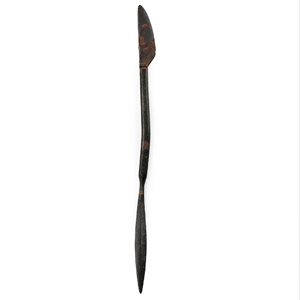
Roman Bronze Medical Scalpel Implement
1st-4th century A.D.Sold for (Inc. bp): £143
Single-edged blade with scooped forward edge attached to an octagonal-section shank with lanceolate probe to the other end. 12 grams, 14 cm
Ex German art market, 2000s. Acquired from an EU collector living in London. From the collection of a Surrey, UK, gentleman. This lot is accompanied by an illustrated lot declaration signed by the Head of the Antiquities Department, Dr Raffaele D'Amato.
