
Loading, please wait...
LOT 0895
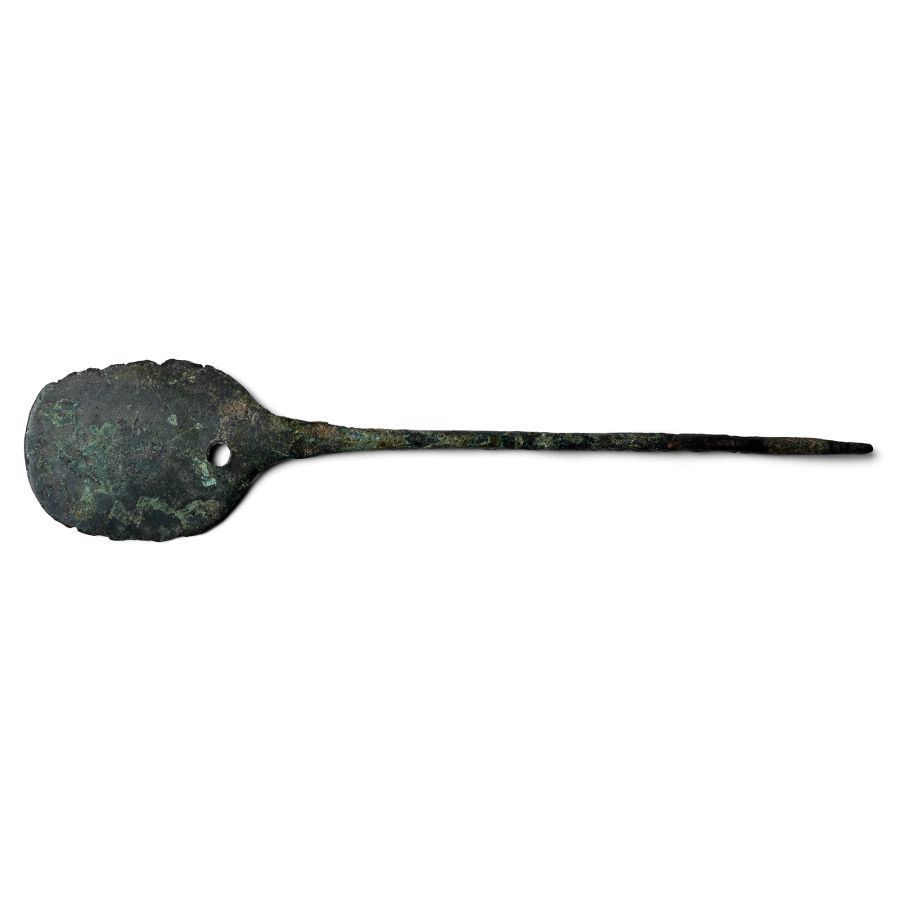
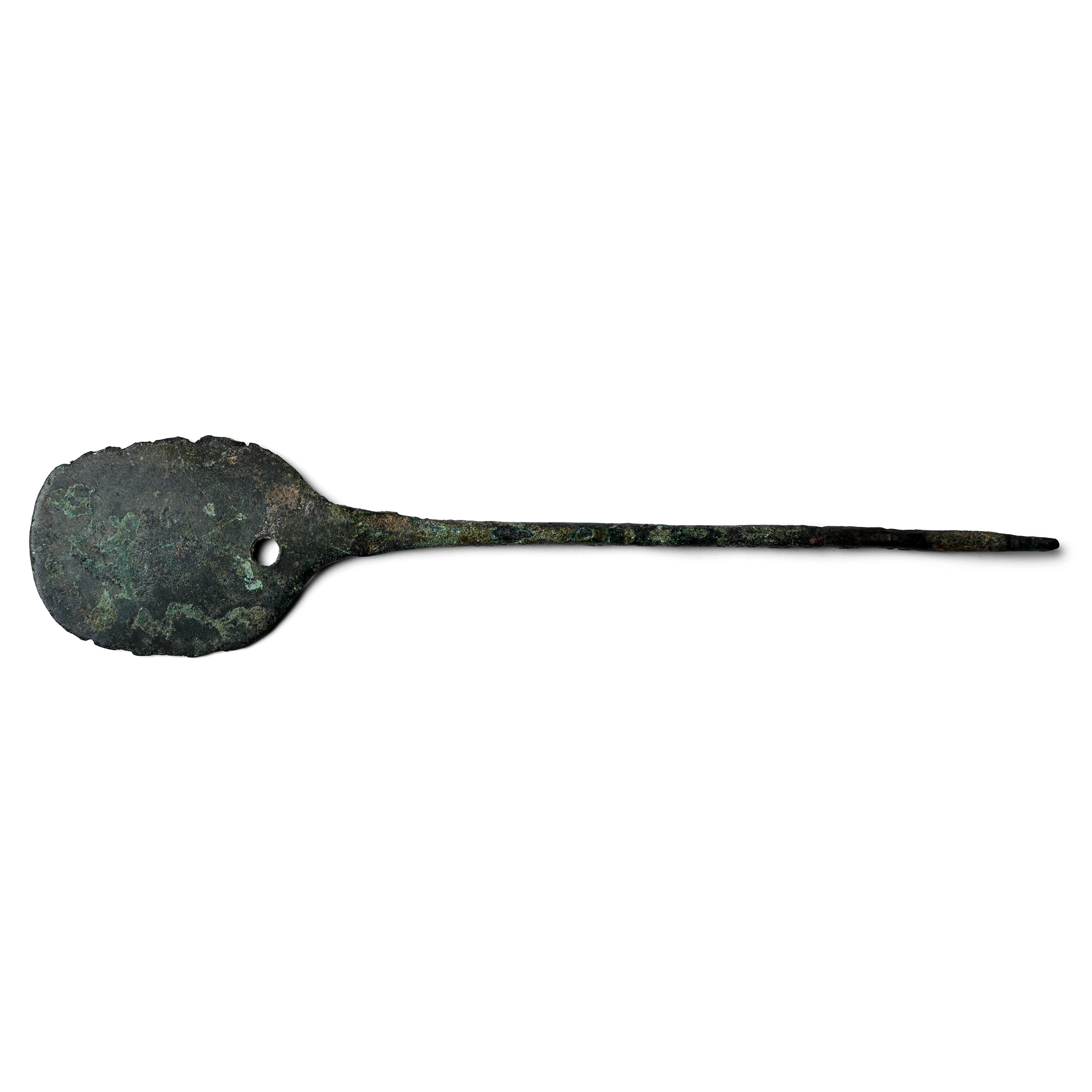
Roman Bronze Medical Spatula
1ST-4TH CENTURY A.D.
4 3/4 in. (9.55 grams, 12.1 cm).
Featuring a tapering round-section handle with a pointed finial, the other end discoid and pierced through the upper part. [No Reserve]
ProvenanceFrom the private collection of a European gentleman (1942-2024), formed since the 1970s.
CONDITIONTimeLine Auctions follows a vetting process to ensure the authenticity and legality of all items, reinforcing our commitment to integrity and responsible trading. Each antiquity, antique, and coin lot undergoes thorough examination by a vetting committee of at least ten external specialists, professional trade association members, scientists, and archaeologists: Our Vetting Process
AUCTIONS:
TimeLine is a leading auction house specialising in antiquities, ancient art, collectables, natural history, coins, medals, and books. Our auctions offer museums, collectors, historians, and enthusiasts the opportunity to acquire unique and historically significant pieces.
-
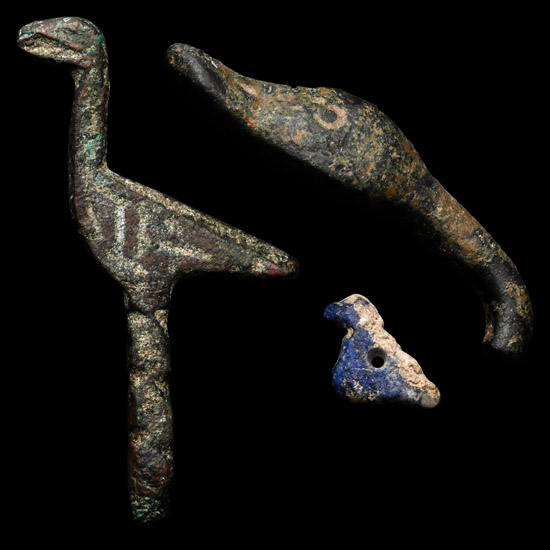
Roman Bronze and Lapis Bird Finial and Bead Group
3rd-4th century A.D.Sold for (Inc. bp): £46
Comprising: a pin finial formed as a bird with a long neck; a finial formed as a swan's head; a small lapis lazuli bead formed as a dove, pierced through the body. 11.1 grams total, 11-38 mm
From the private collection of a European gentleman (1942-2024), formed since the 1970s. -
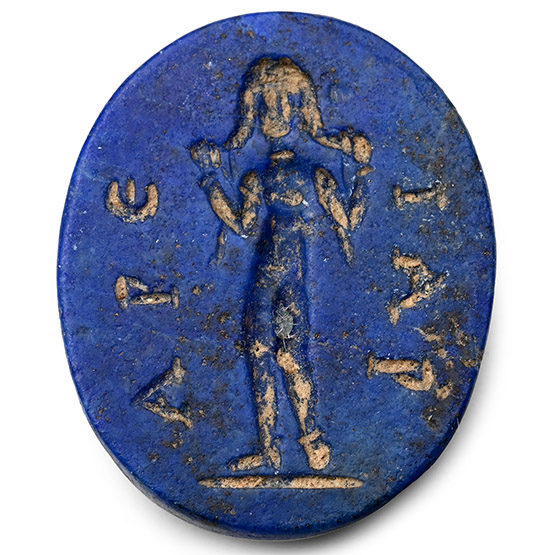
Roman Lapis Lazuli Gnostic Gemstone with Aphrodite Anadyomene
4th-5th century A.D.Sold for (Inc. bp): £715
Ellipsoid in plan with enigmatic Greek legend 'BPE/IMW' to underside, facing figure of Aphrodite Anadyomene to obverse on baseline with Greek legend 'APE IAP', possibly an abbreviation for ΑΡ[ΌΡΙΦ]ΡΑ[Σ]Ι[Σ]. 1.38 grams, 17 mm
Private collection, acquired on the German art market in 1993; thence by descent.
The gemstone belongs to a series of blue gemstones, usually of lapis lazuli or blue glass, showing the famous image of Aphrodite Anadyomene ('rising from the sea'). In some of these gemstones, we find the magical word arôriphrasis, which transliterates an Egyptian title of the goddess Hathor as 'The Lady of the Blue Stone'. Since Hathor and Aphrodite were assimilated in Graeco-Roman Egypt, there is some logic to the appearance of the name and Aphrodite on these stones. -
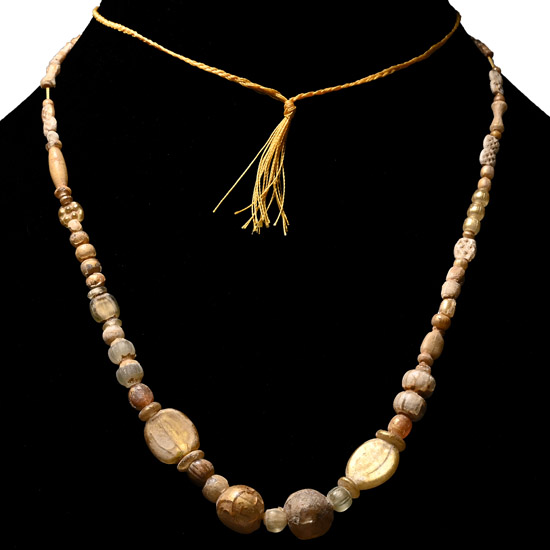
Roman Glass Bead Necklace String
1st-4th century A.D.Sold for (Inc. bp): £65
Formed of attractive yellow and gold-coloured feature beads, including beads with raised bosses, large tabular collared beads, and two large spherical beads at the centre; restrung. 18.2 grams, 40.5 cm
From the private collection of a European gentleman (1942-2024), formed since the 1970s.
