
Loading, please wait...
LOT 0856
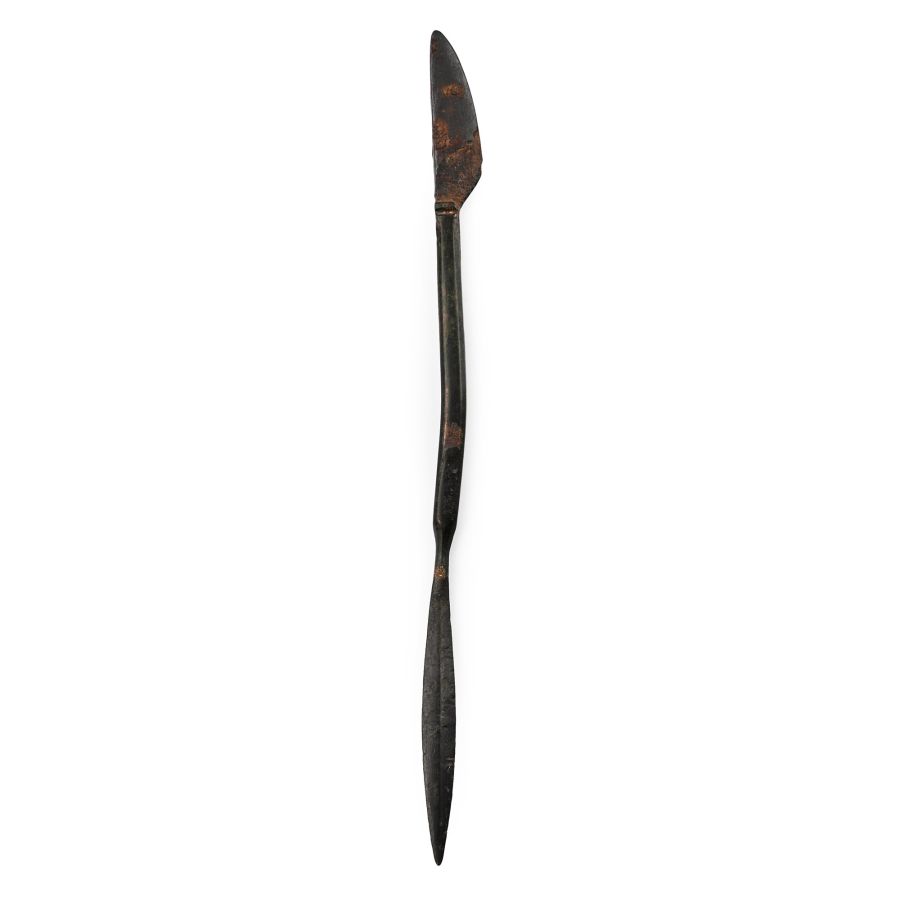
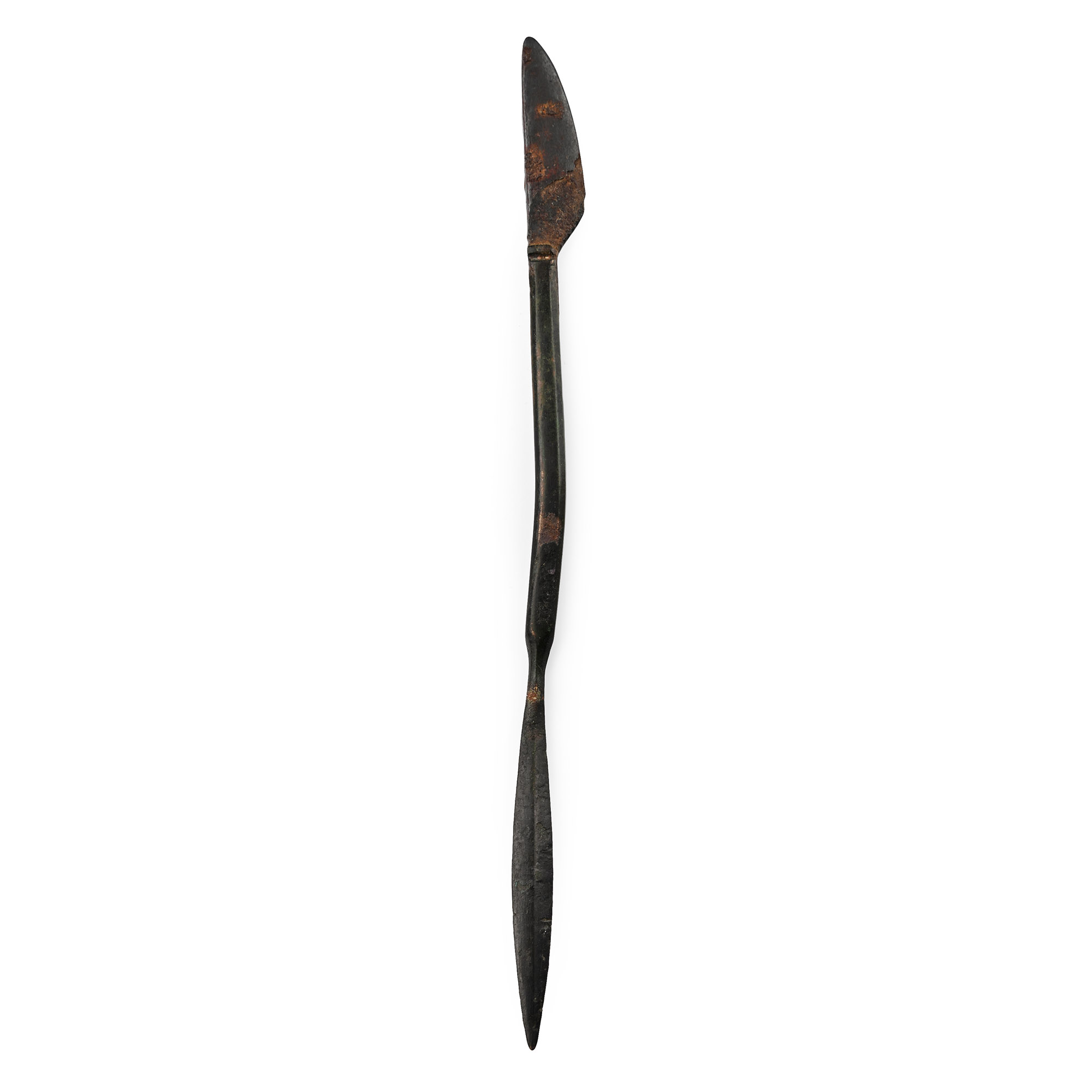
Roman Bronze Medical Scalpel Implement
1ST-4TH CENTURY A.D.
5 1/2 in. (12 grams, 14 cm).
Single-edged blade with scooped forward edge attached to an octagonal-section shank with lanceolate probe to the other end.
ProvenanceEx German art market, 2000s.
Acquired from an EU collector living in London.
From the collection of a Surrey, UK, gentleman.
This lot is accompanied by an illustrated lot declaration signed by the Head of the Antiquities Department, Dr Raffaele D'Amato.
TimeLine Auctions follows a vetting process to ensure the authenticity and legality of all items, reinforcing our commitment to integrity and responsible trading. Each antiquity, antique, and coin lot undergoes thorough examination by a vetting committee of at least ten external specialists, professional trade association members, scientists, and archaeologists: Our Vetting Process
AUCTIONS:
TimeLine is a leading auction house specialising in antiquities, ancient art, collectables, natural history, coins, medals, and books. Our auctions offer museums, collectors, historians, and enthusiasts the opportunity to acquire unique and historically significant pieces.
-
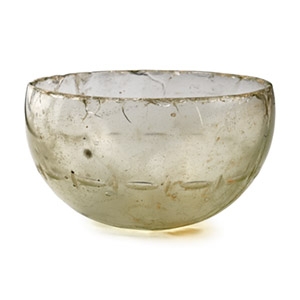
Roman Colourless Glass Bowl with Etched and Grooved Decoration
1st century B.C.-1st century A.D.Estimate: £500 - 700 (+bp*)
Opening Bid: £125
Hemispherical in profile with wheel-cut dimples to the foot, band of alternating horizontal and vertical strokes below the equator; repaired; supplied with a display stand. 108 grams, 91 mm wide (235 grams total, 91 mm wide including stand)
Mayfair, London, UK, gallery, 2000s. Ex Surrey, UK, gentleman. This lot is accompanied by an illustrated lot declaration signed by the Head of the Antiquities Department, Dr Raffaele D'Amato. -
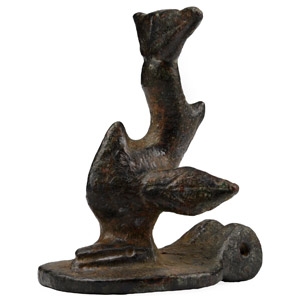
Roman Bronze Oil Lamp Lid with Dolphin
2nd-4th century A.D.Estimate: £150 - 200 (+bp*)
Opening Bid: £75
Discoid lid with hinge plates on the rear edge, stylised dolphin balancing on its elongated snout, large pectoral fins. 49 grams, 43 mm
Ex German art market, 2000s. Acquired from an EU collector living in London. From the collection of a Surrey, UK, gentleman. This lot is accompanied by an illustrated lot declaration signed by the Head of the Antiquities Department, Dr Raffaele D'Amato. -
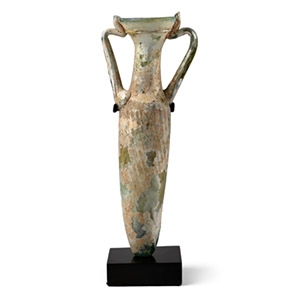
Roman Fine Glass Amphora
1st-3rd century A.D.Sold for (Inc. bp): £1,170
Aqua glass with sloping rounded shoulder, tubular body tapering to a rounded base, cylindrical neck and everted rim, applied scrolling handles; iridescent surfaces; mounted on a custom-made stand. 250 grams total, 22.3 cm including stand
Ex Mayfair, London, UK, gallery, 1990s-2000s. From an important collection of glass, the property of a London gentleman. This lot is accompanied by an illustrated lot declaration signed by the Head of the Antiquities Department, Dr Raffaele D'Amato.
