
Loading, please wait...
LOT 0683
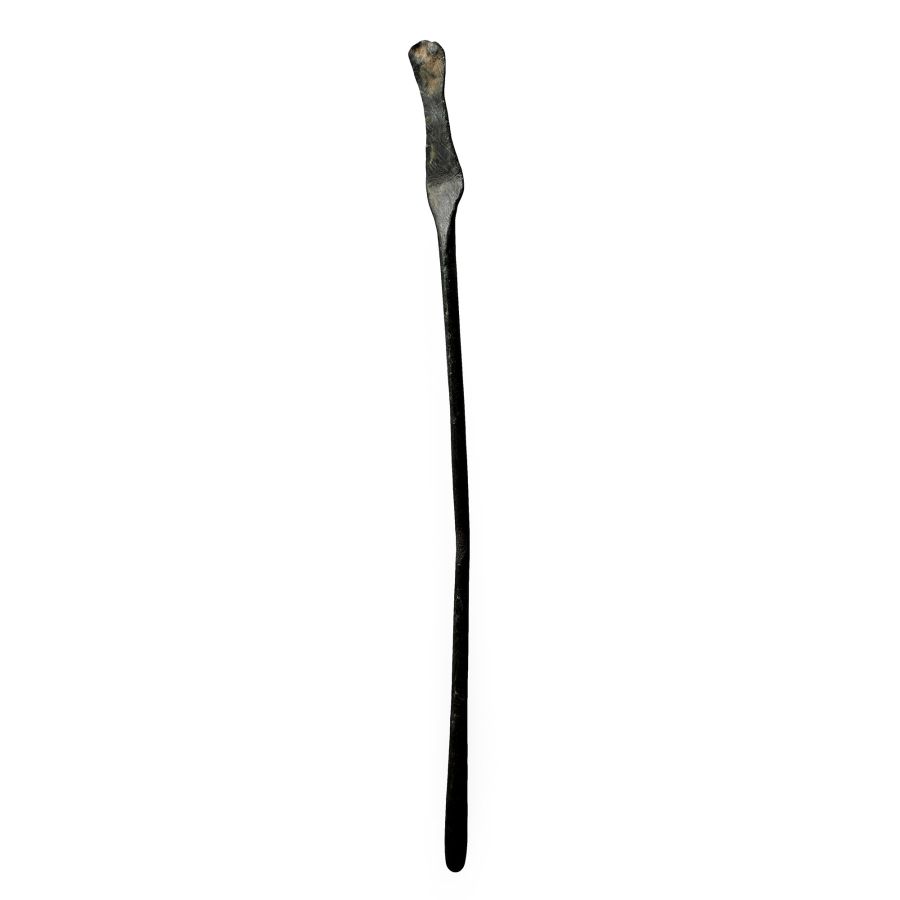
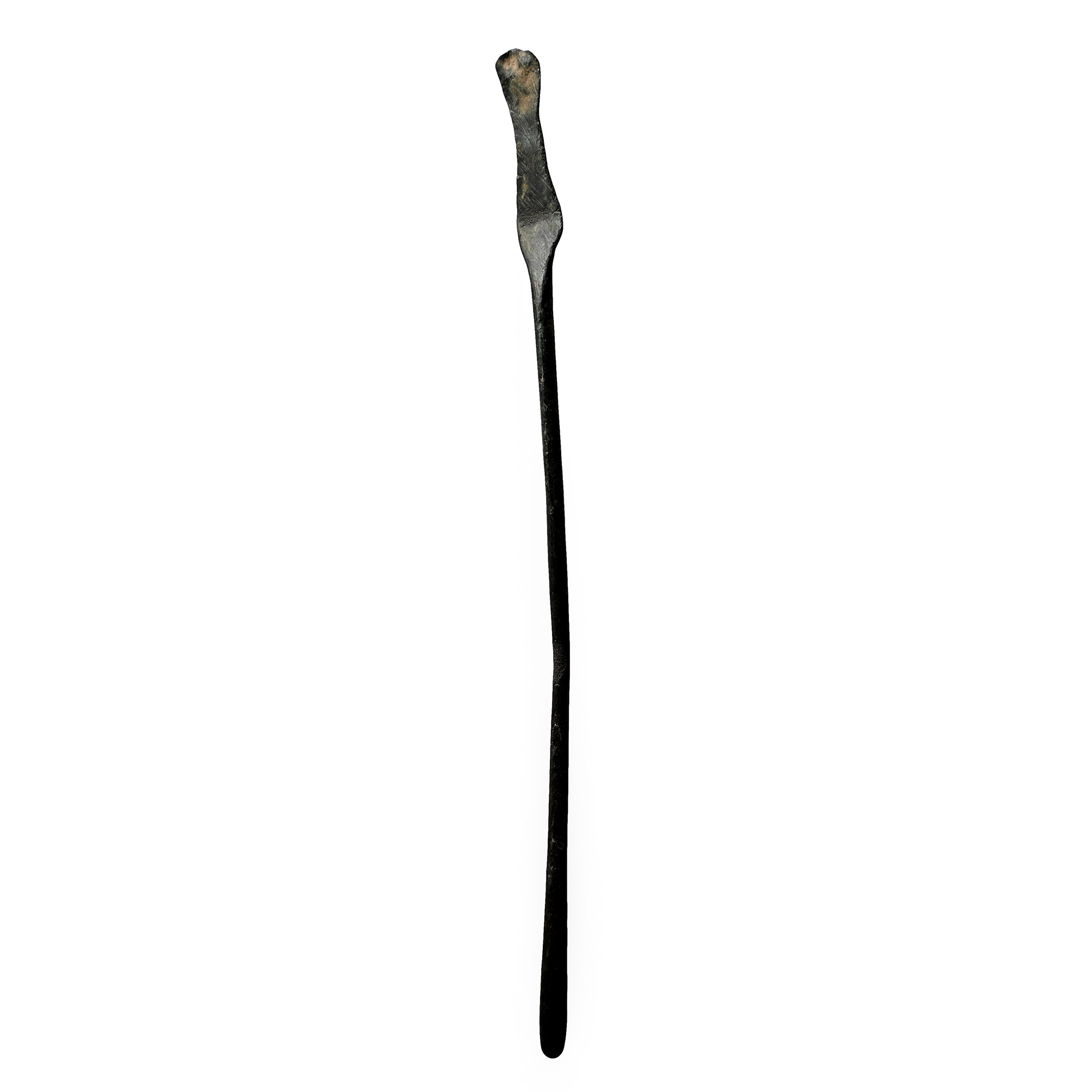
Roman Bronze Medical Ligula Instrument
CIRCA 4TH CENTURY A.D.
5 3/8 in. (6.03 grams, 13.7 cm).
Comprising a long shaft with a spatulate finial at one end and the other rounded. [No Reserve]
ProvenanceEx P. Chapman collection, 1980s-1990s.
CONDITIONTimeLine Auctions follows a vetting process to ensure the authenticity and legality of all items, reinforcing our commitment to integrity and responsible trading. Each antiquity, antique, and coin lot undergoes thorough examination by a vetting committee of at least ten external specialists, professional trade association members, scientists, and archaeologists: Our Vetting Process
AUCTIONS:
TimeLine is a leading auction house specialising in antiquities, ancient art, collectables, natural history, coins, medals, and books. Our auctions offer museums, collectors, historians, and enthusiasts the opportunity to acquire unique and historically significant pieces.
-
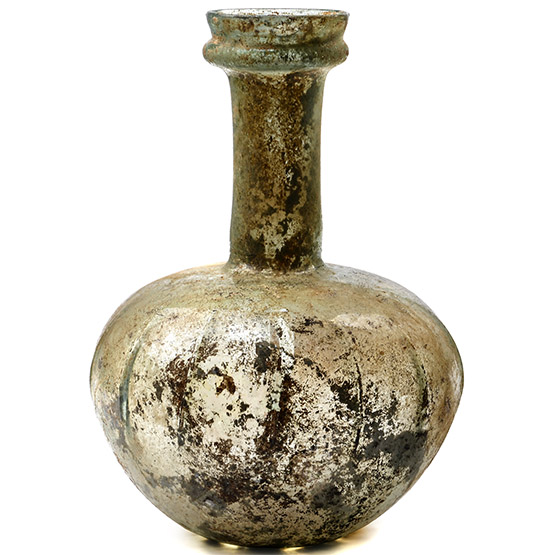
Roman Ribbed Glass Bottle
4th-5th century A.D.Estimate: £400 - 600 (‡+bp*)
Opening Bid: £200
With globular body, dimple foot, slight vertical ribbing to body, broad funicular mouth with folded rim. 174 grams, 19 cm
Acquired in the late 1980s. Private collection, thence by descent. Private collection, since the late 1990s.
Similar vessels (bottles) were found in 4th-5th century tombs at Beit Ras, Jordan, and from Samaria-Sebaste, Israel. The most recognisable characteristic of these bottles was the faint ribs on the body. The type survived until the Arab conquest in the 7th century A.D. -
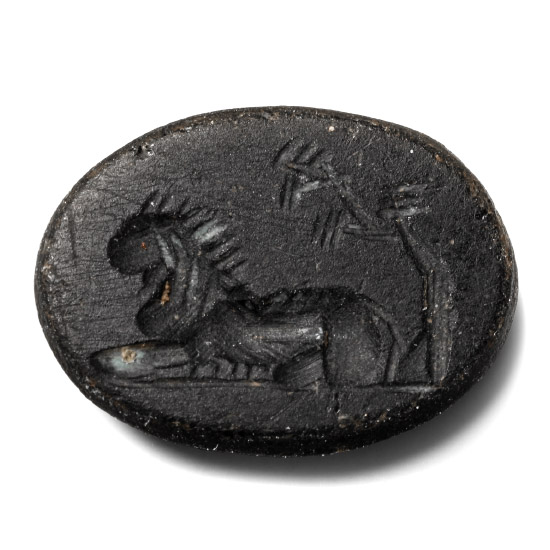
Roman Black Gemstone with Recumbent Lion
2nd-3rd century A.D.Sold for (Inc. bp): £72
Ellipsoid type with incuse design of a lion at rest beneath a tree on a baseline; supplied with a museum-quality impression. 0.53 grams, 13 mm
From the private collection of a European gentleman (1942-2024), formed since the 1970s. -
.jpg)
Roman Glass Cameo with a Julio-Claudian Prince, Possibly Drusus
1st century A.D.Sold for (Inc. bp): £650
Featuring a vibrant green-blue base with a white frontal bust of a young male with his head turned slightly to the right, big eyes and a small mouth. 1.6 grams, 18 mm
UK private collection, acquired on the French art market in the 2000s.
Although the portrait is partially damaged, its style and composition are Augustan. Based on its resemblance to the portrait of Agrippa—though appearing more youthful—it could represent one of his sons, Gaius or Lucius Caesar.
