
Loading, please wait...
LOT 0701
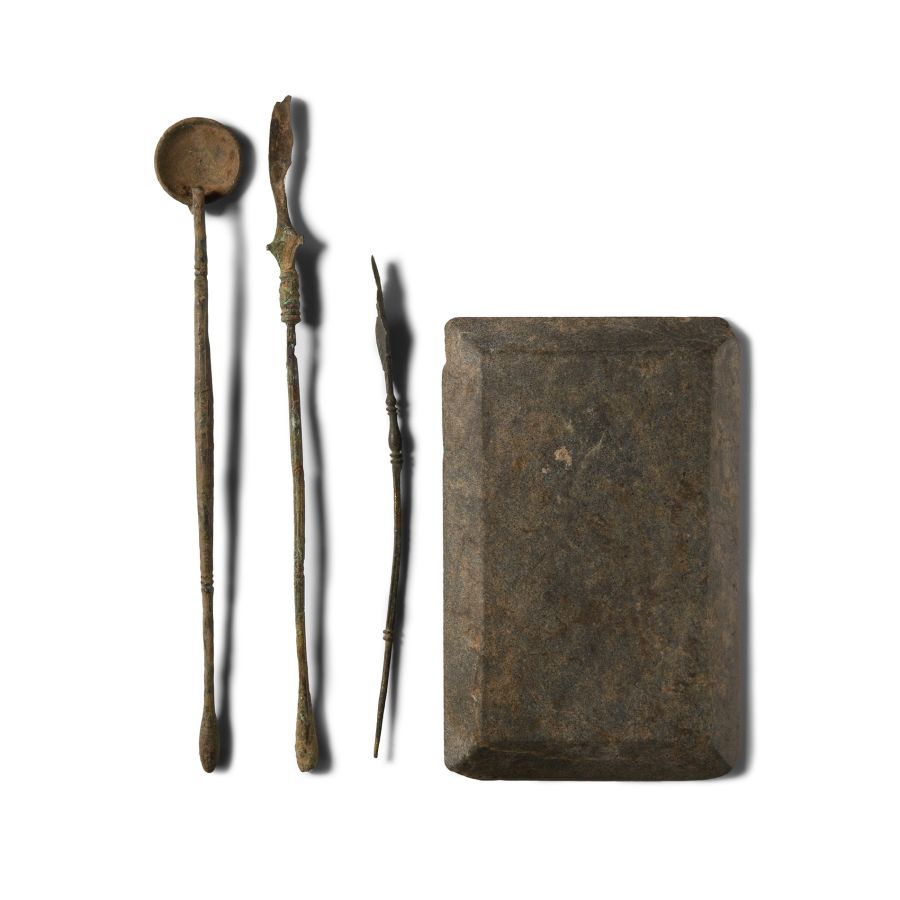
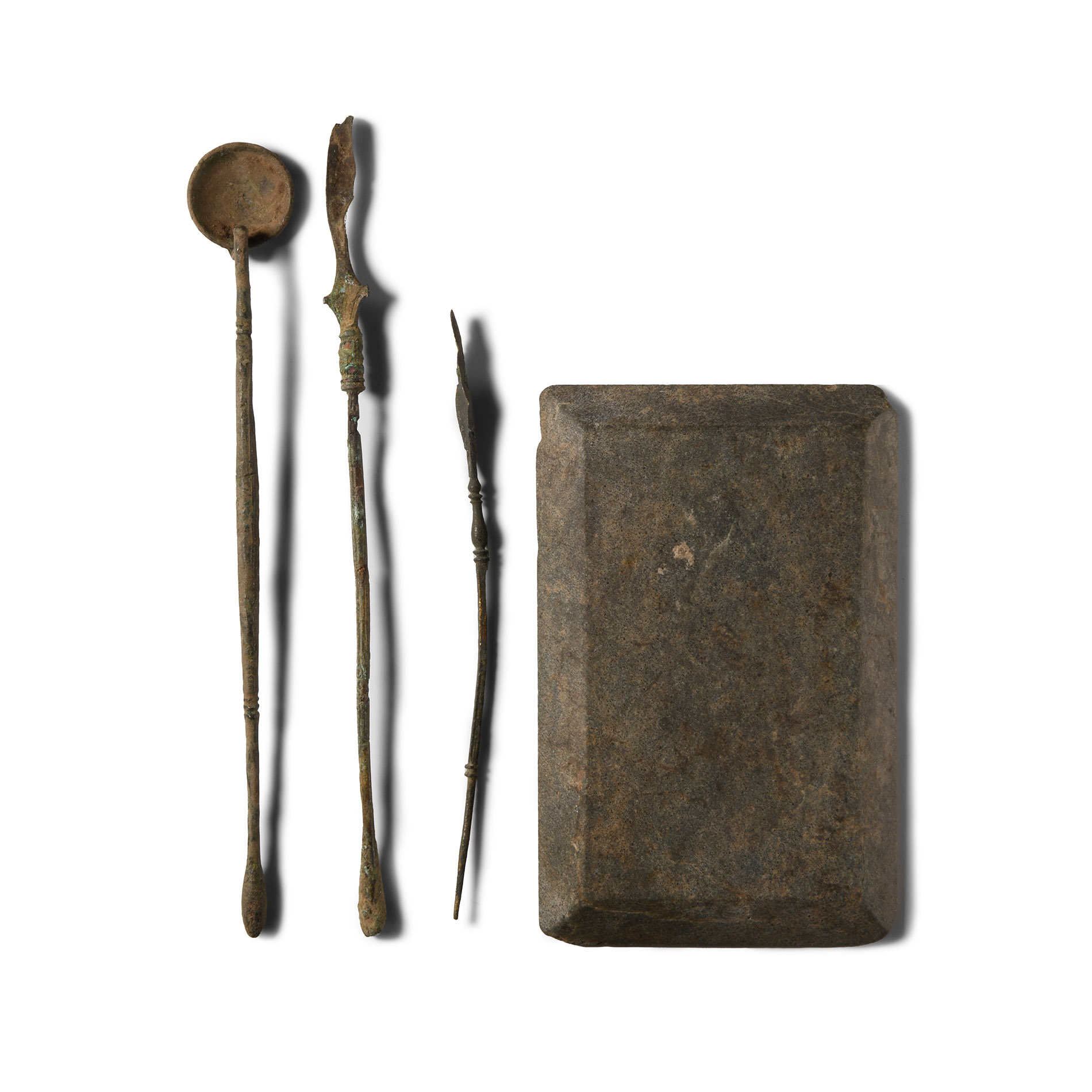
Roman Bronze Medical Implements and Palette
1ST-4TH CENTURY A.D.
4 1/2 - 6 3/4 in. (221 grams total, 11.5 - 17 cm).
Comprising a rectangular palette with bevelled edges; spoon with circular bowl, collared stem with expanded waist and finial formed as a probe; a scoop probe with remains of elongated shallow scoop, expanded neck with collars, slender ribbed stem and bulbous probe to terminal; scoop with leaf-shaped bowl and balustered stem. [4]
ProvenanceAcquired before 2000.
From the collection of a European gentleman living in the UK.
TimeLine Auctions follows a vetting process to ensure the authenticity and legality of all items, reinforcing our commitment to integrity and responsible trading. Each antiquity, antique, and coin lot undergoes thorough examination by a vetting committee of at least ten external specialists, professional trade association members, scientists, and archaeologists: Our Vetting Process
AUCTIONS:
TimeLine is a leading auction house specialising in antiquities, ancient art, collectables, natural history, coins, medals, and books. Our auctions offer museums, collectors, historians, and enthusiasts the opportunity to acquire unique and historically significant pieces.
LOT 0701
Roman Bronze Medical Implements and Palette
Estimate £200 - 300€230 - 350 (for guidance only)$270 - 410 (for guidance only)
-
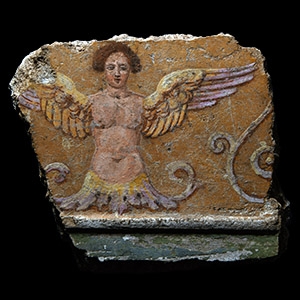
Roman Polychrome Wall Painting Fragment with Winged Siren
Late 1st century B.C.-early 2nd century A.D.Sold for (Inc. bp): £20,800
Decorated with a frieze of partially preserved acanthus volutes from which emerges a figure of a winged female, possibly a siren, the body and the head of a woman with brown hair, the outstretched wings in pink and yellow; ochre background, cream-coloured line border with a green raised edge (part of the wall) below; mounted on a custom-made display stand. 979 grams total, 16 cm high including stand
From a European collection formed in the 19th century or earlier, based on the custom-made tooled leather box similar to another fragment kept in a case of similar manufacture with a label reading 'Fragment de Pompéi provenant de la vente Préat 1868' sold at Sotheby's New York, 12 December 2013, lot 84. Mitsukoshi department store, Nihonbashi, Tokyo, by 1974. Japanese art market, 1974-1978. Accompanied by an academic report by Dr Raffaele D'Amato. This lot has been checked against the Interpol Database of stolen works of art and is accompanied by search certificate number no 11828-207723.
This painted stucco was probably part of a decorative frame. Such decorations can be seen on the famous Villa of Oplontis, where the painted walls of the Triclinium nr. 14 have been divided thrice by columns with a sphinx as ornament on the top of the pillar, decorated with acanthus scrolls and sirens beneath the sphinxes. -
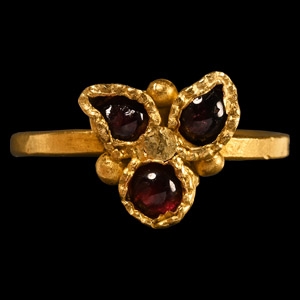
Roman Gold and Garnet Floral Ring
1st century B.C. and laterSold for (Inc. bp): £1,170
Bezel formed as one circular and two piriform gold cells with large granules between and granulation to the rim of each cell; inset garnet cabochons, with later rectangular-section hoop. 2.39 grams, 21.13 mm overall, 16.53 mm internal diameter (approximate size British L 1/2, USA 6, Europe 11.87, Japan 11)
From a late Japanese specialist collector, 1970-2000s. -
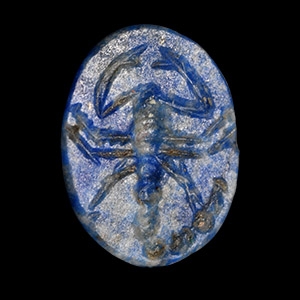
Roman Gemstone with Scorpion
2nd-4th century A.D. or laterSold for (Inc. bp): £130
Composed of an oval-shaped body, possibly sodalite, displaying an intaglio scorpion; accompanied by a museum-quality impression. 0.82 grams, 15 mm
Acquired on the European art market in the late 1960s-early 1970s.
