
Loading, please wait...
LOT 0636
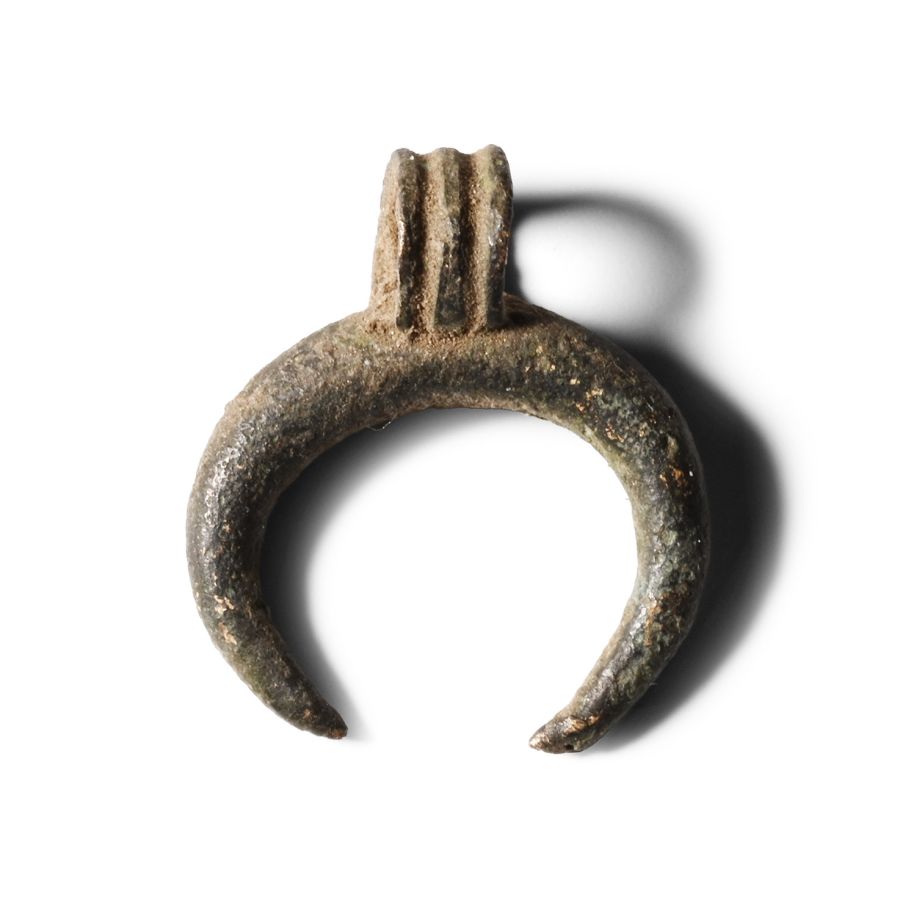
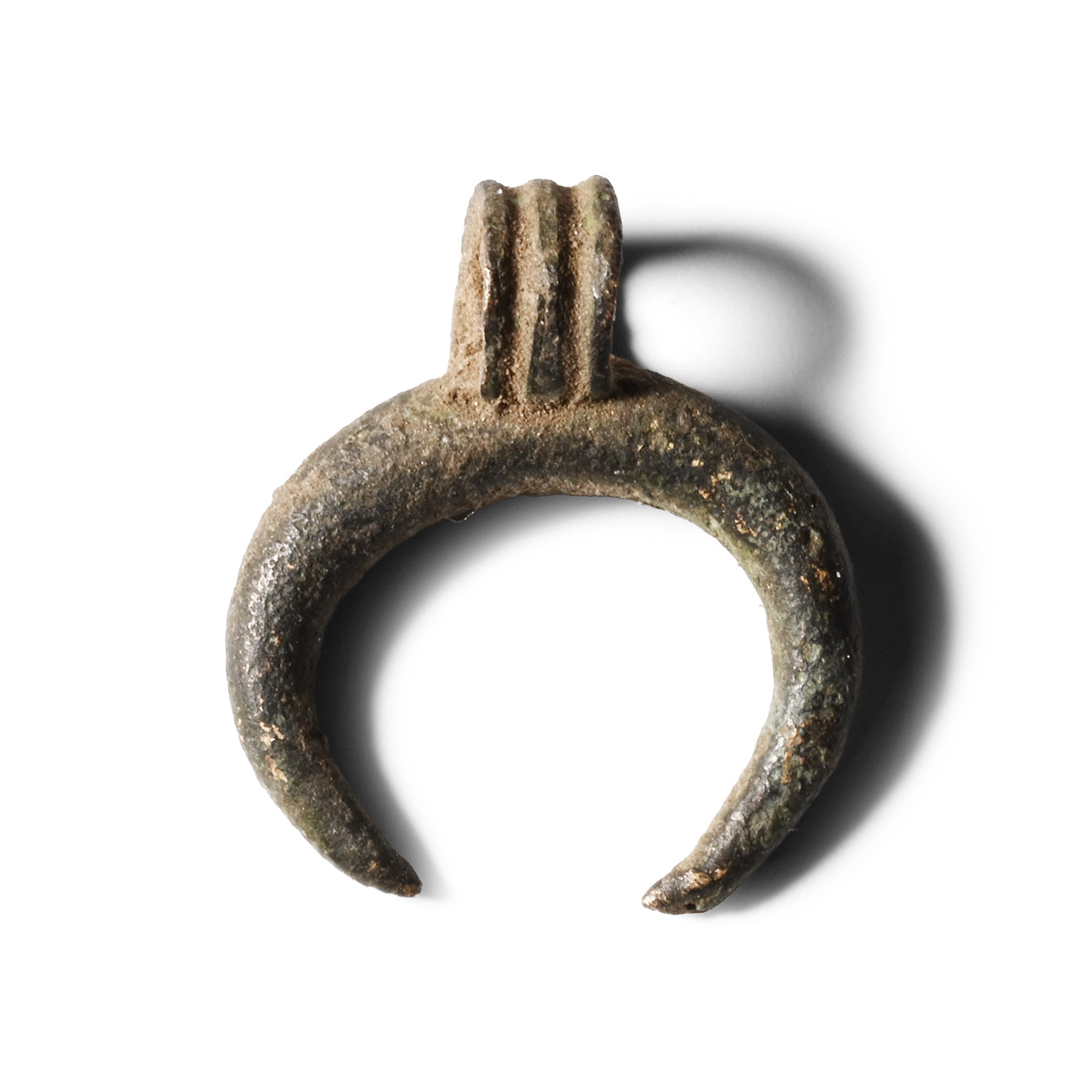
Roman Bronze Lunar Pendant
CIRCA 1ST-3RD CENTURY A.D.
1 in. (3.7 grams, 23 mm).
The crescentic body with tapering round-section arms and an integral ribbed suspension loop. [No Reserve]
ProvenanceAcquired on the UK art market before 2000.
Property of a Surrey, UK, collector.
TimeLine Auctions follows a vetting process to ensure the authenticity and legality of all items, reinforcing our commitment to integrity and responsible trading. Each antiquity, antique, and coin lot undergoes thorough examination by a vetting committee of at least ten external specialists, professional trade association members, scientists, and archaeologists: Our Vetting Process
AUCTIONS:
TimeLine is a leading auction house specialising in antiquities, ancient art, collectables, natural history, coins, medals, and books. Our auctions offer museums, collectors, historians, and enthusiasts the opportunity to acquire unique and historically significant pieces.
-
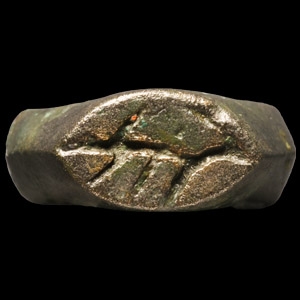
Roman Period Bronze Ring with Antelope
1st century B.C.Sold for (Inc. bp): £20
D-section hoop and tall scaphoid bezel, intaglio design of an antelope. 10.82 grams, 26.08 mm overall, 15.94 mm internal diameter (approximate size British K, USA 5 1/4, Europe 9.95, Japan 9)
Ex old English collection. London art market, pre 2000. Property of a London, UK, gentleman. -
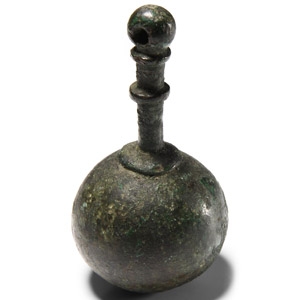
Roman Bronze Trade Weight
Circa 4th-6th century A.D.Sold for (Inc. bp): £91
Comprising a spherical body with shank and pierced knop finial; old collector's label with inked 'ancient Roman / 1st cent. / Exe. minster'. 351 grams, 10.4 cm
From a North London, UK, collection. Ex Simmons Gallery, London E11, UK.
The weight was inserted inside the shaft of a steelyard arm, calibrated on three or more sides with lines and Roman numerals, each providing different scales of pondera (weights). -
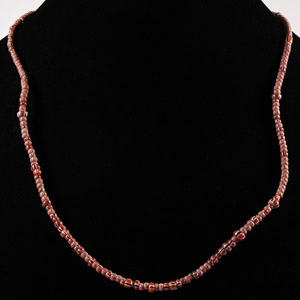
Roman Glass Bead Necklace
1st century A.D. or laterSold for (Inc. bp): £59
Restrung with a modern screw clasp; composed mainly of opaque glass beads of squat, spherical form, displaying a frieze of polychrome vertical stripes. 13.7 grams, 60 cm long
UK gallery, early 2000s.
