
Loading, please wait...
LOT 0134
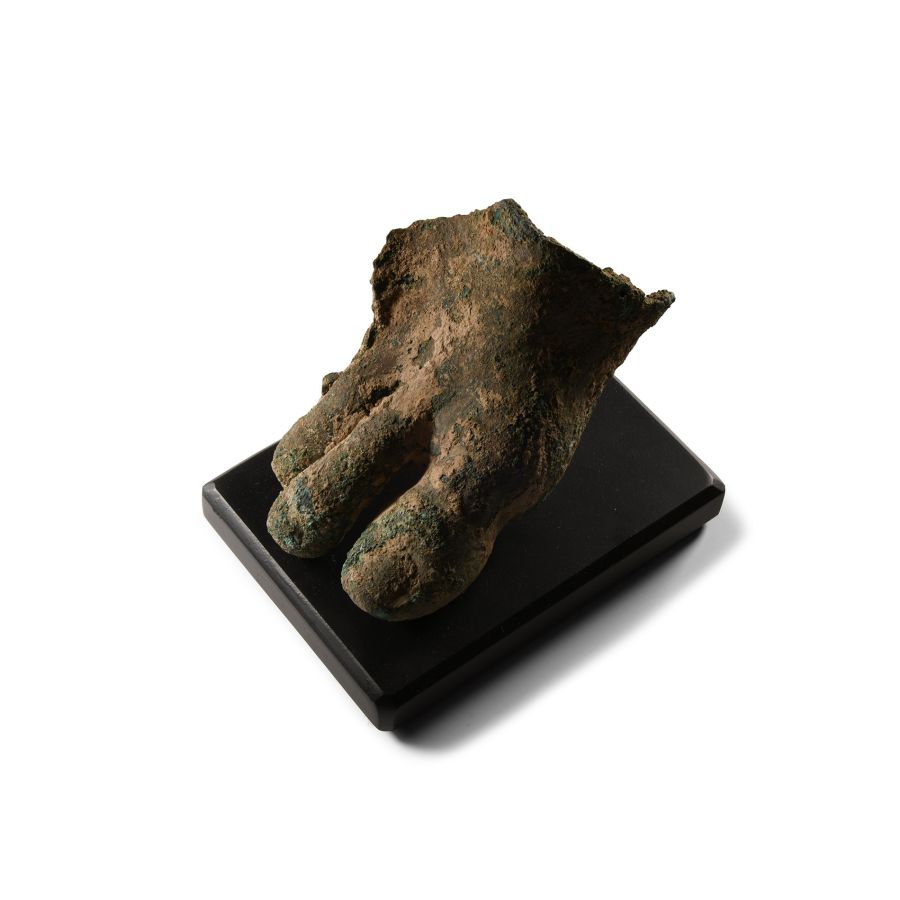
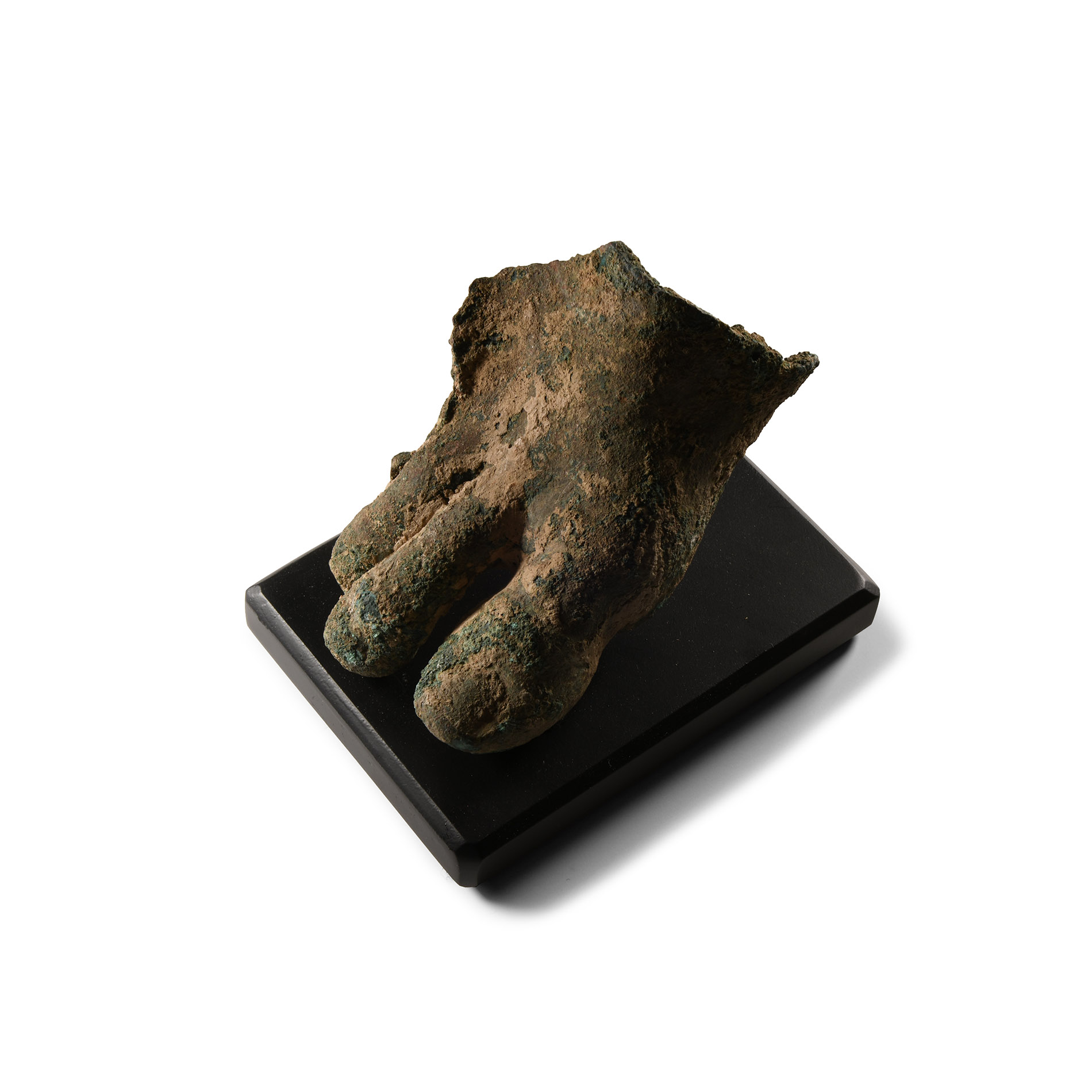
Roman Bronze Lower Part of a Right Foot
1ST-3RD CENTURY A.D.
5 1/8 in. (627 grams, 13 cm).
With finely modelled anatomical details, the second toe longer to emphasise the physical perfection of the physique.
ProvenanceAcquired in Europe before 2001.
Private collection, Europe.
Cf. Boucher, S. and Tassinari, S., Bronzes Antiques I, Inscriptions, Statuaire, Vaisselle, Paris, 1976, p.91, no.86, for a similar fragment.
CONDITIONTimeLine Auctions follows a vetting process to ensure the authenticity and legality of all items, reinforcing our commitment to integrity and responsible trading. Each antiquity, antique, and coin lot undergoes thorough examination by a vetting committee of at least ten external specialists, professional trade association members, scientists, and archaeologists: Our Vetting Process
AUCTIONS:
TimeLine is a leading auction house specialising in antiquities, ancient art, collectables, natural history, coins, medals, and books. Our auctions offer museums, collectors, historians, and enthusiasts the opportunity to acquire unique and historically significant pieces.
-
Roman Bronze Bracelet Group
1st-4th century A.D.Sold for (Inc. bp): £85
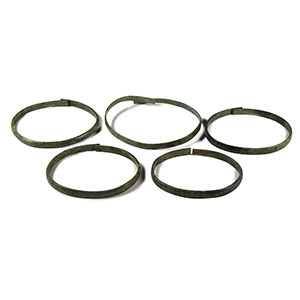
Comprising five with round-section bodies and squared terminals; the surface decorated with engraved lines and dots. 72 grams total, 63-75 mm
From the family collection of a Surrey gentleman since before 1960.
Bracelets were worn in Rome by ladies of rank, but it was considered a mark of effeminacy for civilian men to use such female ornaments (Suetonius, Caligula, 52; Nero, 30). The armillae (or psellia in Greek) were rings and bracelets worn by women in the Graeco-Roman world on both legs and arms. Homer mentions them (elikas) as being part of the hairstyle of the divine Aphrodite, thus giving an almost sacred character to these objects. There were different types, the most common consisting of a more or less thick metal wire, or a flat or cylindrical circle, like our examples. -
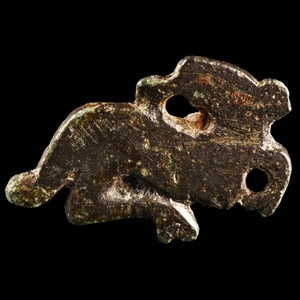
Roman Bronze Hare Plate Brooch
2nd century A.D.Sold for (Inc. bp): £20
With silvered finish, legs extended and head reversed, pin-lug and catch to the reverse. 6.9 grams, 31 mm
Ex DRG Coins and Antiquities, Essex, UK. Ex private Merseyside, UK, collection. -
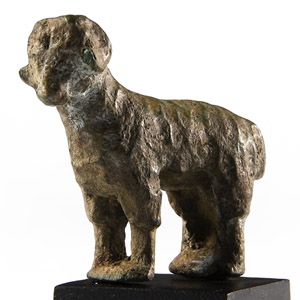
Roman Bronze Ram Statuette
1st-4th century A.D.Estimate: £180 - 240 (+bp*)
Opening Bid: £100
Modelled standing in the round with naturalistic detailing, with head turned slightly left with curled horns. 36.2 grams, 40 mm
‘The Ancient Menagerie Collection’ formerly the property of a Cambridgeshire lady, collected since the 1990s and acquired from auctions and dealers throughout Europe and the USA, now ex London collection.
