
Loading, please wait...
LOT 0118
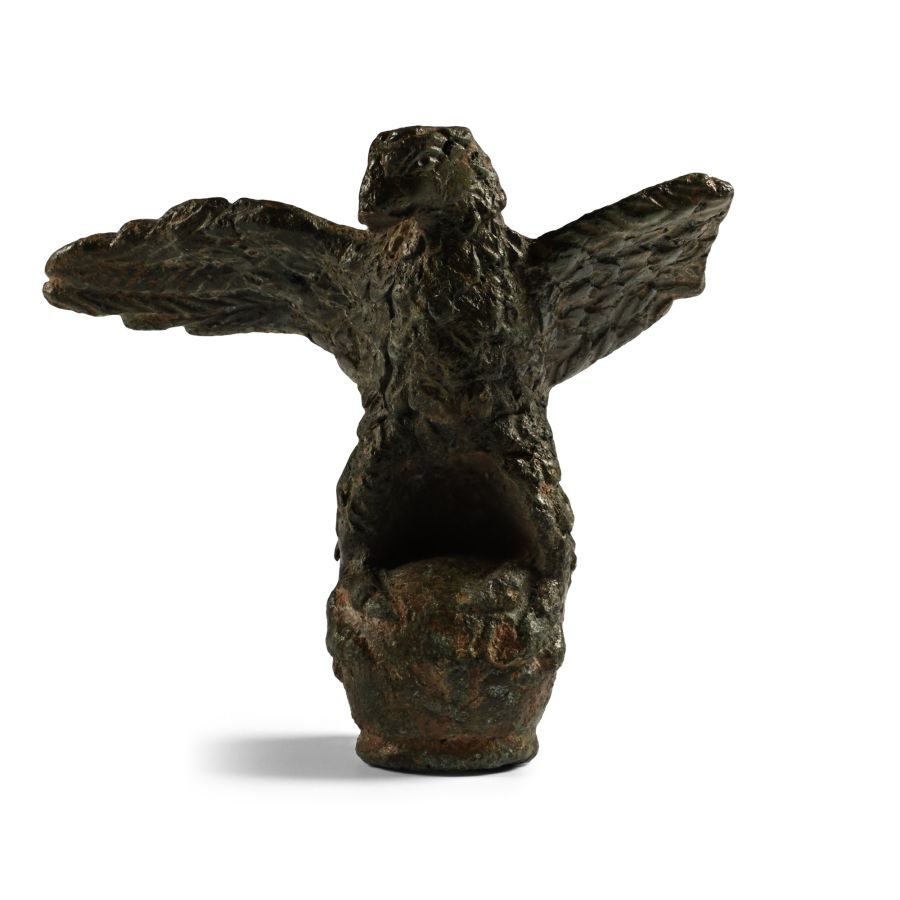
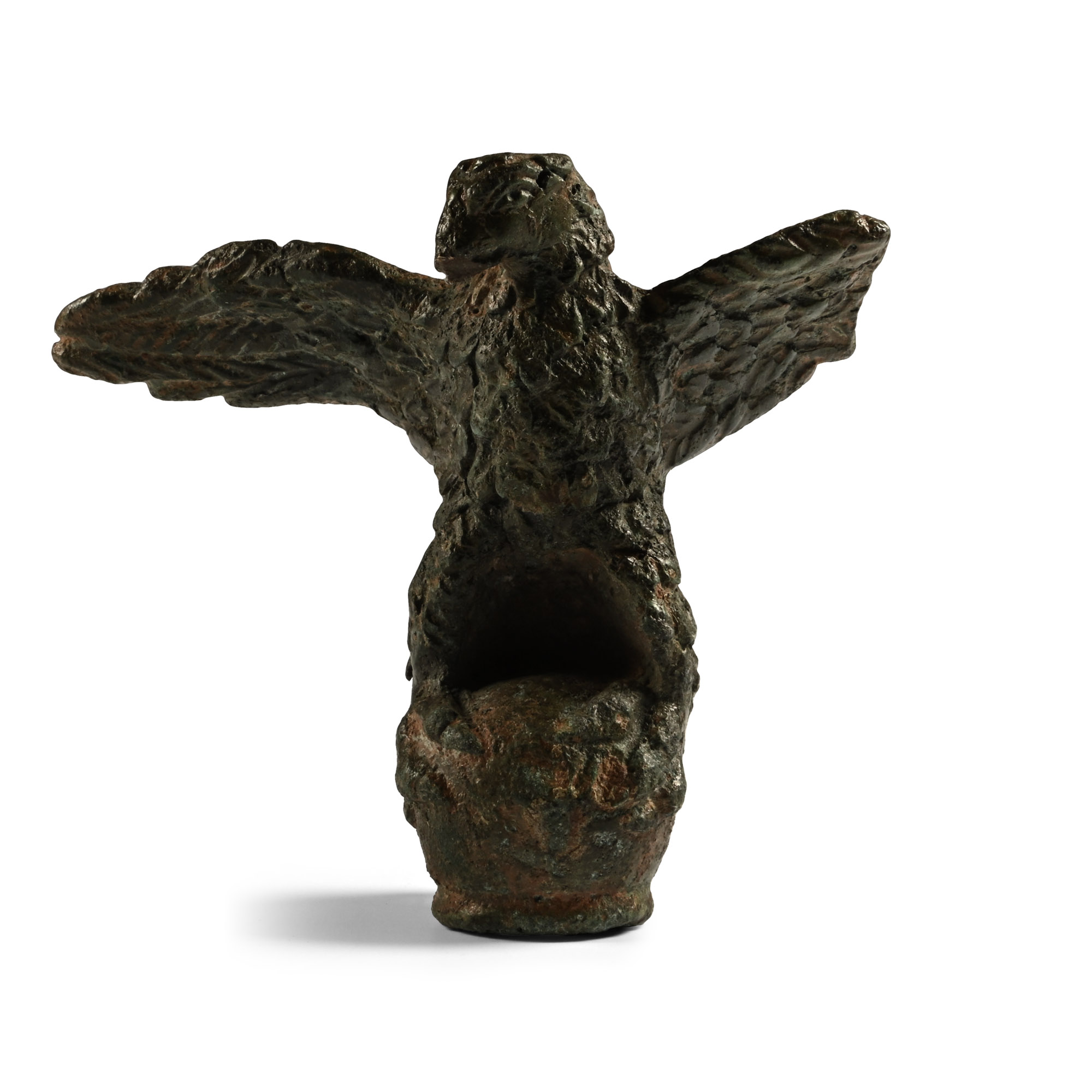
Roman Bronze Legionary Eagle Staff Finial
2ND-3RD CENTURY A.D.
3 1/8 in. (236 grams, 81 mm).
Comprising a hollow-formed knop with collar to the socket, eagle modelled in the round perching on the knop with wings spread and head turned; socket behind the shoulders.
ProvenanceAcquired in the mid 1980s-1990s.
Private collection, Switzerland, thence by descent.
Private collection, since the late 1990s.
This lot has been checked against the Interpol Database of stolen works of art and is accompanied by search certificate number no.12238-222314.
This lot has been cleared against the Art Loss Register database, and is accompanied by an illustrated lot declaration signed by the Head of the Antiquities Department, Dr Raffaele D’Amato.
Cf. Rolland, H., Bronzes Antiques de Haute Provence, Paris, 1965, item 271, for type.
CONDITIONTimeLine Auctions follows a vetting process to ensure the authenticity and legality of all items, reinforcing our commitment to integrity and responsible trading. Each antiquity, antique, and coin lot undergoes thorough examination by a vetting committee of at least ten external specialists, professional trade association members, scientists, and archaeologists: Our Vetting Process
AUCTIONS:
TimeLine is a leading auction house specialising in antiquities, ancient art, collectables, natural history, coins, medals, and books. Our auctions offer museums, collectors, historians, and enthusiasts the opportunity to acquire unique and historically significant pieces.
LOT 0118
Roman Bronze Legionary Eagle Staff Finial
Estimate £1,500 - 2,000€1,740 - 2,320 (for guidance only)$2,030 - 2,700 (for guidance only)
-
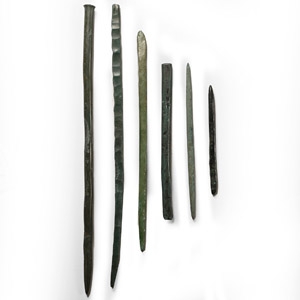
Roman Group of Bronze Stylus and Other Tools
1st-4th century A.D.Sold for (Inc. bp): £117
Including square- and round-section awl, spike and other tools. 88 grams total, 6.2-16.6 cm
Ex German collection, 1990s. This lot is accompanied by an illustrated lot declaration signed by the Head of the Antiquities Department, Dr Raffaele D’Amato. -
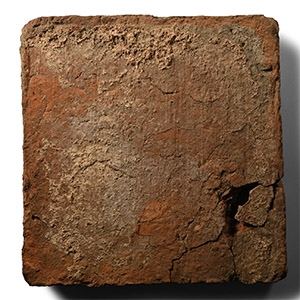
Large Roman 'Wingham Villa' Terracotta Hypocaust Brick
1st-4th century A.D.Sold for (Inc. bp): £169
A massive parallelepiped block, square in section, grey-brown in colour. 2.79 kg, 19.5 x 20.2 cm
Found near Wingham, Kent, UK. From the collection of a late East Anglian teacher and antiquarian who retired to the Isle of Wight in Hampshire, UK. He amassed a large collection of objects between the 1960s-1980s. This lot is accompanied by an illustrated lot declaration signed by the Head of the Antiquities Department, Dr Raffaele D’Amato.
In Kent, nearby Dover, there is the site of a Roman villa located in a field named The Vineyards. The site was excavated in 1881-82 during which time a hypocaust, tessellated pavement, bath house and a quern were found. The hypocaust was dated to two periods and a quern was found on a tessellated pavement. -
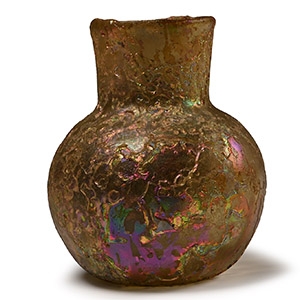
Roman Yellow Glass Spherical Bottle
2nd-4th century A.D.Sold for (Inc. bp): £221
Spherical, slightly squat body with dimpled underside to base; short, flared cylindrical neck; deposits remaining in the interior, and iridescence to the exterior. 43.9 grams, 71 mm
Old collection label "1769". Ex Viviane Alioth. This lot is accompanied by an illustrated lot declaration signed by the Head of the Antiquities Department, Dr Raffaele D’Amato.
